
 My Inquiry
 My Account


STMicroelectronics LNBP20PD
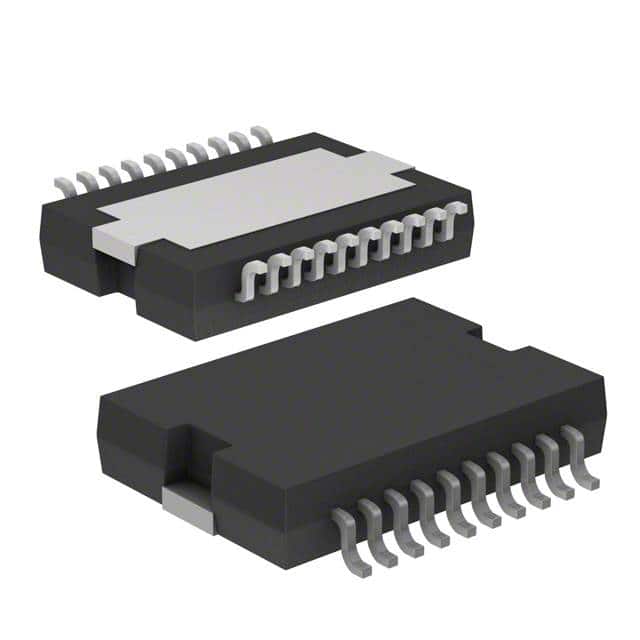
- Part No.:
- LNBP20PD
- Manufacturer:
- STMicroelectronics
- Category:
- Special Purpose Regulators
- Package:
- 20-SOIC (0.433", 11.00mm Width) Exposed Pad
- Datasheet:
-
 LNBP20PD.pdf
- Description:
- IC REG CONV SAT 1OUT POWERSO-20
- Quantity:
- Payment:

- Shipping:

Inventory:3,235
Please send an inquiry. Send us your inquiry, and we will respond immediately.
Product details
Overview
LNBP20PD from STMicroelectronics is a monolithic linear voltage regulator in PowerSO-20 package, designed to power and control two LNB downconverters via coaxial cable in satellite receivers. It delivers selectable 13 V or 18 V (typ.) outputs per port, integrates a factory-trimmed 22 kHz tone oscillator (±2 kHz tolerance), supports dynamic overload protection with 4.7 µF CEXT timing, and features dual supply inputs (VCC1 ≥16 V, VCC2 ≥23 V) for optimized dissipation in analog/digital satellite receiver front-ends.
For engineers reviewing the LNBP20PD datasheet, LNBP20PD pinout, LNBP20PD application, or LNBP20PD equivalent, key selection criteria include dual-LNB port logic control (OSEL/VSEL/EN), 22 kHz tone modulation capability (ENT pin), cable length compensation (LLC), auxiliary analog modulation input (EXTM), and diagnostic open-collector overload flag (OLF).
Technical Context
The LNBP20PD implements parallel-interface LNB supply control with independent logic-selectable output ports (LNBA/LNBB), where voltage (13/14/18/19 V) and port assignment are determined by VSEL, OSEL, LLC, and EN states per truth table. Its internal dual-supply switch automatically selects VCC1 (for ≤14 V outputs) or VCC2 (for ≥18 V outputs) to minimize power loss.
Dynamic overcurrent protection operates via external capacitor CEXT (e.g., 4.7 µF sets ~1200 ms cycle), enabling automatic on/off cycling (ton ≈ toff/15) during sustained overload while maintaining thermal shutdown at 150 °C. The built-in 22 kHz oscillator starts rapidly to support DiSEqC™ burst encoding, and the MI-to-LNBA bypass switch enables slave operation in dual-receiver single-dish systems.
Key Specifications
| Parameter | Value and Actual Design Meaning |
|---|---|
| Output Voltage | 13 V or 18 V (typ.), adjustable to 14 V or 19 V with LLC = HIGH for coaxial voltage drop compensation |
| Tone Frequency | 22 kHz (typ.), factory trimmed ±2 kHz - no external components required for DiSEqC™ tone generation |
| Max Output Current | 650 mA (typ.), internally limited with dynamic short-circuit protection |
| Supply Inputs | VCC1: 15–25 V (used for 13/14 V outputs); VCC2: 22–25 V (used for 18/19 V outputs) |
| Overload Cycle Time | ~1200 ms total (toff + ton) with 4.7 µF CEXT - reduces average power dissipation during fault |
| Backward Current Limit | ≤3 mA max when EN = LOW - prevents interference when sharing coaxial lines with other receivers |
| Thermal Shutdown | Triggers at 150 °C junction temperature - protects die during sustained overload or poor heatsinking |
Pinout & Package
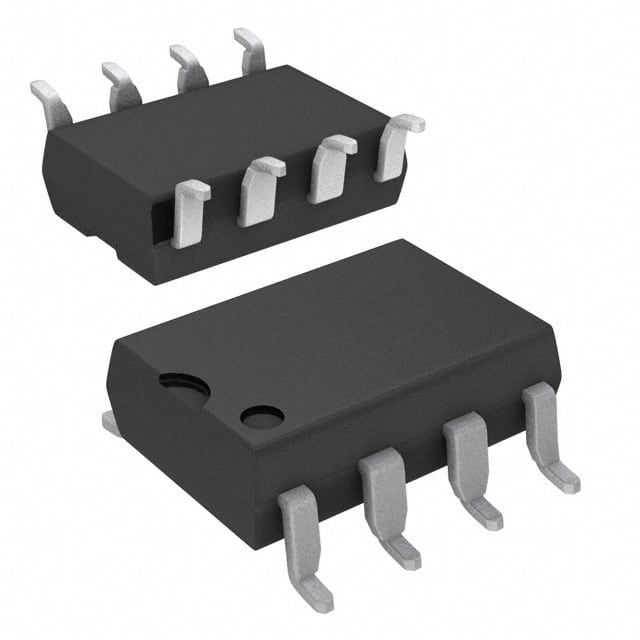
LNBP20PD is housed in PowerSO-20 surface-mount package (15.8–16.0 mm × 13.9–14.5 mm × 3.6 mm height), with exposed die pad for thermal conduction. Pin 1 is VCC1; pin 20 is GND (internally connected to die frame). Thermal resistance junction-to-case is 2 °C/W.
| Pin/Terminal | Circuit Role | Design Meaning |
|---|---|---|
| VCC1 | Primary supply input | 15–25 V source used for 13/14 V outputs; lower-voltage rail minimizes dissipation |
| VCC2 | Secondary supply input | 22–25 V source used for 18/19 V outputs; internal switch selects optimal rail |
| LNBA / LNBB | LNB output ports | Logic-selectable active port delivers regulated voltage; second port disabled per OSEL state |
| VSEL | Voltage selection control | LOW = 13/14 V; HIGH = 18/19 V - sets base output level before LLC compensation |
| OSEL | Port selection control | LOW = LNBA active; HIGH = LNBB active - enables dual-antenna or redundancy configuration |
| ENT | Tone enable input | HIGH activates 22 kHz square-wave modulation (±0.3 V, 50% duty) for DiSEqC™ signaling |
| CEXT | Overload timing capacitor | Connects to GND; 4.7 µF sets ~1100 ms off-time and ~73 ms on-time for dynamic recovery |
| OLF | Overload flag output | Open-collector; pulls LOW during overcurrent or thermal fault - enables system-level diagnostics |
| MI | Master input | When EN = LOW, routes MI voltage to LNBA - enables slave operation in shared-coax setups |
Key Features
| Feature | Design Value |
|---|---|
| Dual LNB port logic control | Independent selection of active port (LNBA/LNBB) and output voltage (13/14/18/19 V) via 4-pin parallel interface |
| Factory-trimmed 22 kHz oscillator | ±2 kHz accuracy eliminates calibration components and supports reliable DiSEqC™ burst encoding |
| Dynamic overload protection | Auto-cycling shutdown/recovery (toff/ton ratio ≈15:1) with user-set timing - sustains functionality under intermittent faults |
| Cable length compensation | LLC pin adds +1 V (typ.) to selected output - corrects coaxial IR drop without external circuitry |
| Auxiliary analog modulation | EXTM pin accepts AC-coupled signal (400 mVPP, 400 Ω Zin) for proprietary LNB control beyond DiSEqC™ |
Applications
| Dual-Antenna Satellite Receiver | Single-Dish Dual-Receiver System |
|---|---|
|
Use Scenario: Consumer satellite receiver with two independent antenna inputs (e.g., Astra + Hotbird) feeding separate tuners. IC Role / Device Role / Timing Role: LNBP20PD powers and controls both LNBs via coaxial cables, using OSEL to route 13/18 V and ENT to modulate 22 kHz tone per tuner request. Use Value: Eliminates need for discrete regulators and tone generators; parallel control pins simplify MCU GPIO usage versus serial alternatives. |
Use Scenario: Two satellite receivers sharing one dish/LNB via coaxial splitter, requiring coordinated power and control handoff. IC Role / Device Role / Timing Role: LNBP20PD operates in slave mode (EN = LOW), routing MI voltage to LNBA via internal bypass switch while disabling local regulation. Use Value: Prevents bus contention and backward current injection (<3 mA) - enables safe multi-receiver coaxial sharing without external diodes. |
| DiSEqC™-Compliant Set-Top Box | LNB Diagnostic-Enabled Receiver |
|
Use Scenario: Digital satellite receiver implementing DiSEqC™ 1.x unidirectional command protocol for LNB polarization and band switching. IC Role / Device Role / Timing Role: LNBP20PD generates precise 22 kHz tone (ENT-controlled) and switches 13/18 V (VSEL) to select vertical/horizontal polarization. Use Value: Fast oscillator start-up ensures clean tone bursts matching DiSEqC™ timing specs - no external crystal or RC network needed. |
Use Scenario: Professional satellite installation tool or field-service receiver requiring real-time LNB fault detection. IC Role / Device Role / Timing Role: LNBP20PD monitors output current via CEXT timing and reports faults via OLF pin - open-collector output interfaces directly to MCU interrupt. Use Value: Enables automated LNB short-circuit diagnosis without oscilloscope; 1200 ms cycle allows firmware to log fault duration and type. |
Equivalent & Alternatives
The following parts are listed as comparable options for similar LNB supply and control applications.
| Alternative Part | Technical Difference | Application Difference | Selection Advice |
|---|---|---|---|
| LNBP10SP-TR | PowerSO-10 package; lacks OSEL, MI, EXTM, LLC, and OLF pins - supports only single LNB port and basic 13/18 V control | Targeted at cost-sensitive single-antenna receivers without DiSEqC™ diagnostics or dual-LNB coordination | Select when board space and BOM count are critical, and slave operation, auxiliary modulation, or overload flag are unnecessary |
| LNBP15SP-TR | PowerSO-10 package; includes OLF and CEXT but omits MI, EXTM, and LLC - supports overload diagnostics but not slave mode or cable compensation | Suitable for single-LNB receivers needing fault reporting but not multi-receiver coordination or analog modulation | Choose when diagnostic capability is required in compact form factor, but full LNBP20PD feature set is over-specified |
Compared with LNBP10SP-TR and LNBP15SP-TR, LNBP20PD provides full dual-port control, slave-mode bypass, and analog modulation - making it the only option among the three supporting professional-grade DiSEqC™-enabled dual-antenna receivers with diagnostics and coax compensation.
Availability
LNBP20PD is available at Aetrix Electronics and suitable for satellite receiver design, DiSEqC™-compliant set-top boxes, and professional LNB diagnostic equipment requiring stable component supply across production lifecycles.
Supply support for LNBP20PD includes scheduled delivery planning, volume procurement assistance, BOM continuity management, traceable sourcing, and lifecycle availability coordination for OEM customers, industrial embedded developers, connected-device designers, and electronics production programs.
Manufacturer
STMicroelectronics is a global semiconductor leader headquartered in Geneva, Switzerland, designing and manufacturing analog, microcontroller, power, and sensor solutions for industrial, automotive, and consumer markets.
LNBP20PD belongs to ST's LNBP1X series of LNB power and control ICs, engineered specifically for high-reliability satellite receiver front-ends requiring integrated voltage regulation, 22 kHz tone generation, and robust fault management over long coaxial runs.
FAQ
What is the purpose of the MI (Master Input) pin on LNBP20PD?
The MI pin enables slave operation in shared-coaxial systems: when EN is LOW, an internal electronic switch connects MI to LNBA, allowing a master receiver to power and control the LNB while LNBP20PD remains in low-backward-current standby (≤3 mA). This avoids signal contention and supports multi-receiver installations on a single dish.
How does the CEXT capacitor affect overload protection behavior?
The capacitor between CEXT and GND sets the off-time (toff) of the dynamic overload protection circuit. With 4.7 µF, toff is ~1100 ms and ton is ~73 ms (toff/15), resulting in a full cycle of ~1200 ms. Larger values increase fault-hold time but reduce recovery frequency; smaller values shorten protection duration and may cause nuisance tripping under capacitive loads.
Can LNBP20PD generate DiSEqC™ Level 2.x bidirectional communication?
No. LNBP20PD supports only unidirectional DiSEqC™ 1.x tone-based signaling (22 kHz burst modulation via ENT). Bidirectional Level 2.x compliance requires external components - including a dedicated bus transceiver, level-shifting circuitry, and bidirectional data line management - as explicitly noted in the datasheet footnote (a).
What thermal management is required for continuous 500 mA operation at 18 V output?
At 500 mA and 18 V output with VCC2 = 23 V, power dissipation is ~2.5 W. With RthJC = 2 °C/W, junction-to-case rise is ~5 °C - so a modest heatsink (RthCA ≤ 20 °C/W) keeps Tj < 85 °C at 25 °C ambient. The internal 150 °C thermal shutdown provides safety margin, but sustained operation above 100 °C case temperature requires active cooling or derating.
LNBP20PD Specifications
- Product attributes
- Attribute value
- Manufacturer:
- STMicroelectronics
- Series:
- -
- Package/Case:
- 20-SOIC (0.433", 11.00mm Width) Exposed Pad
- Packaging:
- Tube
- Product Status:
- Obsolete
- Applications:
- Converter, Analog and Digital Satellite STB Receivers/SatTV
- Voltage - Input:
- 15V ~ 25V
- Number of Outputs:
- 1
- Voltage - Output:
- 13V, 18V
- Operating Temperature:
- 0°C ~ 85°C
- Grade:
- -
- Qualification:
- -
- Mounting Type:
- Surface Mount
- Supplier Device Package:
- PowerSO-20
LNBP20PD FAQ
1.How can I place an order for LNBP20PD through Aetrix?
Please submit a Request for Quotation (RFQ) for LNBP20PD on Aetrix. Our sales agent will provide a competitive quotation and guide you through the order confirmation once you accept the terms.
2.Are the price and stock information for LNBP20PD reliable?
The price and inventory of LNBP20PD are updated periodically and may fluctuate due to market conditions. Stock and pricing data are typically refreshed every 24 hours. Quotation validity for LNBP20PD is usually 5 days.
3.What payment methods are accepted for LNBP20PD?
We accept Wire Transfer, PayPal, Credit Card, Western Union, MoneyGram, and Escrow for LNBP20PD transactions.
Note: Certain payment methods may incur a processing fee.
4.How is shipping managed for LNBP20PD?
LNBP20PD orders can be shipped via leading logistics carriers, including DHL, UPS, FedEx, TNT, or Registered Mail.
Once your LNBP20PD order is processed, you will receive an email with the shipment details and tracking number.
Note: Tracking information may take up to 24 hours to appear. Express delivery typically takes 3–5 business days.
5.How can I obtain technical support or documentation for LNBP20PD?
For technical support, including LNBP20PD datasheets, pinout diagrams, or application guidance, please contact our engineering support team. They can provide detailed documentation and assistance for your LNBP20PD requirements.
6.How does Aetrix verify that LNBP20PD is sourced from the original manufacturer or authorized distributors?
All LNBP20PD products on Aetrix are procured from qualified distributors and authorized channels. Our dedicated quality assurance team conducts strict verification, including traceability checks and, if necessary, third-party testing. This ensures that LNBP20PD meets industry standards.
7.What is the process for return or replacement of LNBP20PD?
All LNBP20PD units undergo pre-shipment inspection (PSI). If there is an issue with LNBP20PD, returns or replacements are accepted under the following conditions:
1.Quantity discrepancies, incorrect items, or visible external defects (such as breakage or corrosion), acknowledged by Aetrix.
2.The issue is reported within 90 days of delivery.
3.The LNBP20PD part is unused and in its original packaging.
Return procedure for LNBP20PD:
1.Submit a request within 90 days.
2.Obtain a Return Material Authorization (RMA) from Aetrix.
LNBP20PD Tags
-
TPS51206DSQR
Texas Instruments
-
TPS51200DRCR
Texas Instruments
-
TPS51200DRCT
Texas Instruments
-
TPS62740DSSR
Texas Instruments
-
TPS51100DGQR
Texas Instruments
-
NCP51200MNTXG
onsemi
-
NCP51400MNTXG
onsemi
-
RT9026GSP
Richtek USA Inc.
-
LP2998MRX/NOPB
Texas Instruments
-
TPS51200QDRCRQ1
Texas Instruments
-
DPA423GN-TL
Power Integrations
-
LM10011SD/NOPB
Texas Instruments
Tech Hub

A practical engineering and sourcing framework covering lifecycle verification, lifetime-buy calculations, replacement qualification, supplier checks and counterfeit-risk controls.

TTL and CMOS logic families differ in thresholds, loading, output drive, power and timing. This engineering guide compares 74HC and 74HCT, calculates noise margins and checks 3.3 V/5 V compatibility.

A practical engineering guide to 3.3V and 5V logic compatibility, input thresholds, resistor dividers, translator ICs, MOSFET level shifting, I2C pull-ups, timing limits and power-sequencing risks.

The 74HC595 uses push-pull logic outputs, while the TPIC6B595 uses 50 V open-drain DMOS sinks for higher-power loads. This guide compares timing, current limits, 3.3 V interfacing, load wiring, thermal…

The 74HC595 converts serial data into eight stable parallel outputs. This guide covers pin functions, shift and storage timing, OE and MR behavior, drive-current limits, cascading, voltage compatibilit…

A technical comparison of level-sensitive latches and edge-triggered flip-flops, covering timing windows, setup and hold limits, master–slave operation, time borrowing, race-through, HDL inference and…

A D latch stores one bit while Enable controls when data can pass. This reference covers gate-level operation, truth tables, transparency, setup and hold timing, LE versus OE, common ICs and practical …

An SR latch stores one bit through cross-coupled feedback. This engineering reference covers NOR and NAND implementations, truth tables, forbidden-state recovery, gated operation, switch debouncing, fa…

Latch circuits retain one bit through feedback. This technical reference covers SR and D latches, truth tables, transparency, timing limits, latch-versus-flip-flop behavior, applications and common log…

An engineering guide to LED driver operation, constant-current and constant-voltage outputs, linear and switching topologies, dimming, IC selection, calculations, replacement compatibility, and fault c…


