
 My Inquiry
 My Account


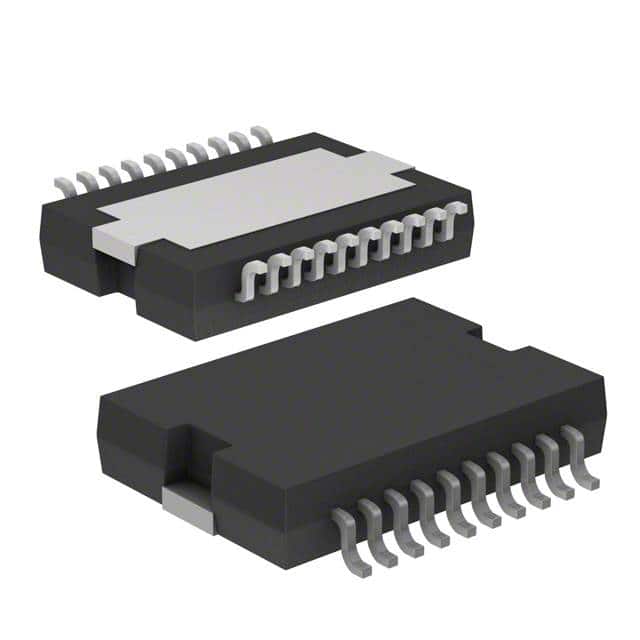
STMicroelectronics LNBP21PD-TR
- Part No.:
- LNBP21PD-TR
- Manufacturer:
- STMicroelectronics
- Category:
- Special Purpose Regulators
- Package:
- 20-SOIC (0.433", 11.00mm Width) Exposed Pad
- Datasheet:
-
 LNBP21PD-TR.pdf
- Description:
- IC REG CONV SAT 1OUT POWERSO-20
- Quantity:
- Payment:

- Shipping:

Inventory:4,901
Please send an inquiry. Send us your inquiry, and we will respond immediately.
Product details
Overview
LNBP21PD-TR from STMicroelectronics is a monolithic LNB power supply and control IC in PowerSO-20 package, integrating DC/DC step-up controller, linear post-regulator, 22kHz tone generator/detector, I²C interface, DiSEqC 2.x bidirectional support, loop-through switch, and comprehensive protection (overcurrent, overtemperature, short-circuit, UVLO). It delivers regulated 13V/18V output with ±1V cable compensation and supports satellite STB, PC TV cards, and multiswitch systems.
For engineers reviewing the LNBP21PD-TR datasheet, LNBP21PD-TR pinout, LNBP21PD-TR application, or LNBP21PD-TR equivalent, this IC enables complete LNB interface design with single 12V input, precise 22kHz tone generation (20–24kHz), dynamic pulsed current limiting (900ms off-time), and real-time diagnostics via 6-bit I²C system register - critical for DiSEqC-compliant satellite receiver development.
Technical Context
The LNBP21PD-TR implements a two-stage regulation architecture: an internal DC/DC step-up controller adjusts VUP to minimize dropout across the linear post-regulator, enabling high-efficiency operation from 8–15V input. Its 22kHz oscillator is factory-trimmed (typ. 22kHz, ±2kHz) and supports both continuous tone (TEN bit) and DiSEqC-encoded modulation (DSQIN pin).
Bidirectional DiSEqC 2.x is enabled by dedicated hardware blocks: DSQIN accepts PWK-encoded data for tone modulation, while DETIN/DSQOUT provide AC-coupled tone detection and open-collector decoded output. The System Register (SR) provides real-time status of overload (OLF) and overtemperature (OTF) flags, with EN bit controlling standby mode and loop-through switch closure between LT1/LT2.
Key Specifications
| Parameter | Value and Actual Design Meaning |
|---|---|
| Output Voltage | 13V or 18V (typ.), selectable via VSEL bit; +1V cable compensation via LLC bit for coaxial voltage drop mitigation |
| Tone Frequency | 22kHz (20–24kHz range), factory-trimmed oscillator supporting DiSEqC encoding and continuous tone modes |
| Current Limit | 400–550mA (ISEL=HIGH) or 500–650mA (ISEL=LOW); SOA-type short-circuit protection at 200mA/300mA |
| Protection Modes | Pulsed current limiting (900ms off-time, 90ms on-time) or static clamp; thermal shutdown at 150°C (hysteresis 15°C) |
| I²C Interface | Standard-compliant 2-wire bus (SDA/SCL), 500kHz max clock, 4 selectable addresses via ADDR pin voltage levels |
| Supply Range | 8–15V VCC input with 6.7V UVLO threshold and 500mV hysteresis for robust power-on reset behavior |
| Package | PowerSO-20 (thermally enhanced), Rthj-case = 2°C/W, rated for -40°C to +125°C junction operation |
Pinout & Package
LNBP21PD-TR is housed in a thermally optimized PowerSO-20 package (20-pin, exposed die pad), designed for high-power LNB supply applications requiring low thermal resistance (Rthj-case = 2°C/W) and robust ESD protection (4kV HBM on power pins).
| Pin/Terminal | Circuit Role | Design Meaning |
|---|---|---|
| VCC | Primary Supply Input | 8–15V DC input; requires 220µF + 470nF bypass to GND for stable pre-regulation |
| OUT | LNB Output Port | Regulated 13V/18V output with ±1V adjustment; connects directly to LNB via coaxial cable |
| LT1 / LT2 | Loop-Through Switch Terminals | Internally shorted in standby (EN=0); supports up to 900mA slave-mode current flow between receivers |
| DSQIN | DiSEqC Encoding Input | Accepts PWK data from µController to modulate 22kHz carrier when TEN=0; must be grounded if unused |
| DETIN / DSQOUT | Tone Detection Interface | AC-coupled 22kHz tone detector input (DETIN); open-collector decoded output (DSQOUT, active-low) |
| SDA / SCL | I²C Bus Interface | Bidirectional data/clock lines compliant with standard I²C timing; require external pull-ups |
| EXTM | External Modulation Input | AC-coupled analog modulation port (260Ω impedance, 6× gain); left open if unused |
Key Features
| Feature | Design Value |
|---|---|
| Integrated DiSEqC 2.x Transceiver | Dedicated DSQIN/DETIN/DSQOUT hardware enables full bidirectional protocol implementation without external logic |
| Dynamic Pulsed Current Limiting | 900ms off-time + 90ms on-time cycling reduces average power dissipation during sustained short-circuit events |
| Cable Length Compensation | +1V output boost (LLC bit) compensates for coaxial voltage drop, maintaining LNB compliance over long runs |
| Real-Time Diagnostics | OLF and OTF bits in System Register report active overload or overtemperature conditions for firmware monitoring |
| Flexible I²C Addressing | Four selectable addresses (0001000–0001011) via ADDR pin voltage thresholds simplify multi-device bus design |
Applications
| Satellite Set-Top Box (STB) | PC-Based TV Tuner Card |
|---|---|
|
Use Scenario: Integrated LNB power and control in consumer-grade DVB-S/S2 receivers with DiSEqC 1.x/2.x switching. IC Role / Device Role / Timing Role: Primary LNB supply regulator and DiSEqC transceiver; generates and detects 22kHz tone for antenna positioning and multiswitch selection. Use Value: Eliminates discrete DC/DC + linear regulator + tone generator design, reducing BOM count and PCB area while ensuring ETSI EN 301 428 compliance. |
Use Scenario: Low-profile satellite TV reception in desktop/laptop environments using PCIe or USB tuner cards. IC Role / Device Role / Timing Role: Compact LNB interface IC providing regulated 13/18V output and I²C-controlled DiSEqC signaling from host CPU. Use Value: Enables single-chip LNB control with minimal external components (no external MOSFET driver or tone oscillator required), easing miniaturization. |
| Multiswitch Distribution Hub | Professional Satellite Monitoring System |
|
Use Scenario: Centralized LNB power distribution in multi-satellite installations serving multiple receivers via passive/active multiswitches. IC Role / Device Role / Timing Role: Master LNB supply node with loop-through capability (LT1→LT2) for cascading slave receivers in daisy-chain topologies. Use Value: Supports up to 900mA loop-through current in standby mode, enabling seamless integration into hierarchical DiSEqC networks without external buffering. |
Use Scenario: Field-deployable satellite signal analyzers requiring robust LNB interfacing under variable ambient temperatures. IC Role / Device Role / Timing Role: Thermally protected LNB controller with diagnostic feedback (OTF/OLF flags) for remote health monitoring and fault logging. Use Value: Junction temperature monitoring (150°C shutdown, 140°C recovery) and traceable overcurrent events enable predictive maintenance in unattended deployments. |
Equivalent & Alternatives
The following parts are listed as comparable options for similar LNB supply and control applications.
| Alternative Part | Technical Difference | Application Difference | Selection Advice |
|---|---|---|---|
| MAX2102ETJ+ | Single 5V input only; no integrated step-up converter; requires external 13/18V generation; lacks built-in 22kHz detector | Targeted at low-voltage embedded systems with pre-regulated supplies; unsuitable for direct 12V satellite receiver designs | Select when system already provides stable 5V rail and DiSEqC encoding is handled externally |
| LMX2594RHBR | RF synthesizer IC; no LNB power regulation, no DiSEqC interface, no protection circuitry; operates at GHz frequencies | Designed for local oscillator synthesis in satellite transceivers-not an LNB supply IC | Not a functional alternative; misapplication risk due to fundamental role mismatch |
Compared with MAX2102ETJ+, LNBP21PD-TR integrates step-up conversion, tone generation/detection, and diagnostics in one PowerSO-20 package-reducing external component count by >70% and eliminating need for separate protection ICs in 12V-input satellite receivers.
Availability
LNBP21PD-TR is available at Aetrix Electronics and suitable for satellite STB receivers, PC TV tuner cards, multiswitch distribution hubs, and professional satellite monitoring systems requiring stable component supply, thermal resilience, and DiSEqC 2.x interoperability.
Supply support for LNBP21PD-TR includes scheduled delivery planning, volume procurement assistance, BOM continuity management, traceable sourcing, and lifecycle availability coordination for OEM customers, industrial embedded developers, connected-device designers, and electronics production programs.
Manufacturer
STMicroelectronics is a global semiconductor leader headquartered in Geneva, Switzerland, delivering innovative solutions across automotive, industrial, and consumer markets with emphasis on power efficiency and system integration.
LNBP21PD-TR belongs to ST's LNBP series of LNB interface ICs, engineered specifically for satellite receiver applications demanding compact, reliable, and standards-compliant power and control of low-noise block downconverters.
FAQ
What is the function of the EXTM pin on LNBP21PD-TR?
The EXTM pin is an AC-coupled external analog modulation input with 260Ω impedance and 6× gain, allowing injection of custom modulation signals (e.g., proprietary remote protocols) onto the LNB output. It requires a DC-blocking capacitor and remains inactive (high-impedance) when left open. This feature enables future-proofing for non-DiSEqC LNB control schemes without modifying the core IC design.
How does the pulsed current limiting (PCL) mode operate during overload?
In PCL mode (PCL=0), the LNBP21PD-TR cycles between 900ms shutdown (toff) and 90ms active periods (ton) when overload is detected, with OLF flag set high. After a full ton with no overload, normal operation resumes and OLF resets. This reduces average power dissipation versus static clamping, but may cause startup issues with highly capacitive loads-so initial power-on should use static mode (PCL=1) before switching.
Can LNBP21PD-TR support DiSEqC 2.x without external components?
No. While LNBP21PD-TR provides all internal DiSEqC 2.x modulation/demodulation functions, full hardware compliance requires external components: LR termination (15Ω resistor + 270µH choke) on the OUT pin to meet EUTELSAT source impedance requirements at 22kHz, plus AC coupling capacitors on DETIN and DSQIN. These are specified in ST's application note AN2478 and Figure 5 of the datasheet.
What is the significance of the ADDR pin voltage thresholds?
The ADDR pin selects one of four I²C addresses (0001000–0001011) based on applied voltage: 0–0.7V (0001000), 1.3–1.7V (0001001), 2.3–2.7V (0001010), or 3.3–5V (0001011). This allows up to four LNBP21PD-TR devices on the same I²C bus-essential for multi-LNB or multi-satellite receiver architectures where independent control of each LNB is required.
LNBP21PD-TR Specifications
- Product attributes
- Attribute value
- Manufacturer:
- STMicroelectronics
- Series:
- -
- Package/Case:
- 20-SOIC (0.433", 11.00mm Width) Exposed Pad
- Packaging:
- Tape & Reel (TR)
- Product Status:
- Obsolete
- Applications:
- Converter, Analog and Digital Satellite STB Receivers/SatTV
- Voltage - Input:
- 8V ~ 15V
- Number of Outputs:
- 1
- Voltage - Output:
- 13V, 18V
- Operating Temperature:
- 0°C ~ 85°C
- Grade:
- -
- Qualification:
- -
- Mounting Type:
- Surface Mount
- Supplier Device Package:
- PowerSO-20
LNBP21PD-TR FAQ
1.How can I place an order for LNBP21PD-TR through Aetrix?
Please submit a Request for Quotation (RFQ) for LNBP21PD-TR on Aetrix. Our sales agent will provide a competitive quotation and guide you through the order confirmation once you accept the terms.
2.Are the price and stock information for LNBP21PD-TR reliable?
The price and inventory of LNBP21PD-TR are updated periodically and may fluctuate due to market conditions. Stock and pricing data are typically refreshed every 24 hours. Quotation validity for LNBP21PD-TR is usually 5 days.
3.What payment methods are accepted for LNBP21PD-TR?
We accept Wire Transfer, PayPal, Credit Card, Western Union, MoneyGram, and Escrow for LNBP21PD-TR transactions.
Note: Certain payment methods may incur a processing fee.
4.How is shipping managed for LNBP21PD-TR?
LNBP21PD-TR orders can be shipped via leading logistics carriers, including DHL, UPS, FedEx, TNT, or Registered Mail.
Once your LNBP21PD-TR order is processed, you will receive an email with the shipment details and tracking number.
Note: Tracking information may take up to 24 hours to appear. Express delivery typically takes 3–5 business days.
5.How can I obtain technical support or documentation for LNBP21PD-TR?
For technical support, including LNBP21PD-TR datasheets, pinout diagrams, or application guidance, please contact our engineering support team. They can provide detailed documentation and assistance for your LNBP21PD-TR requirements.
6.How does Aetrix verify that LNBP21PD-TR is sourced from the original manufacturer or authorized distributors?
All LNBP21PD-TR products on Aetrix are procured from qualified distributors and authorized channels. Our dedicated quality assurance team conducts strict verification, including traceability checks and, if necessary, third-party testing. This ensures that LNBP21PD-TR meets industry standards.
7.What is the process for return or replacement of LNBP21PD-TR?
All LNBP21PD-TR units undergo pre-shipment inspection (PSI). If there is an issue with LNBP21PD-TR, returns or replacements are accepted under the following conditions:
1.Quantity discrepancies, incorrect items, or visible external defects (such as breakage or corrosion), acknowledged by Aetrix.
2.The issue is reported within 90 days of delivery.
3.The LNBP21PD-TR part is unused and in its original packaging.
Return procedure for LNBP21PD-TR:
1.Submit a request within 90 days.
2.Obtain a Return Material Authorization (RMA) from Aetrix.
LNBP21PD-TR Tags
-
TPS51206DSQR
Texas Instruments
-
TPS51200DRCR
Texas Instruments
-
TPS51200DRCT
Texas Instruments
-
TPS62740DSSR
Texas Instruments
-
TPS51100DGQR
Texas Instruments
-
NCP51200MNTXG
onsemi
-
NCP51400MNTXG
onsemi
-
RT9026GSP
Richtek USA Inc.
-
LP2998MRX/NOPB
Texas Instruments
-
TPS51200QDRCRQ1
Texas Instruments
-
DPA423GN-TL
Power Integrations
-
LM10011SD/NOPB
Texas Instruments
Tech Hub

A practical engineering and sourcing framework covering lifecycle verification, lifetime-buy calculations, replacement qualification, supplier checks and counterfeit-risk controls.

TTL and CMOS logic families differ in thresholds, loading, output drive, power and timing. This engineering guide compares 74HC and 74HCT, calculates noise margins and checks 3.3 V/5 V compatibility.

A practical engineering guide to 3.3V and 5V logic compatibility, input thresholds, resistor dividers, translator ICs, MOSFET level shifting, I2C pull-ups, timing limits and power-sequencing risks.

The 74HC595 uses push-pull logic outputs, while the TPIC6B595 uses 50 V open-drain DMOS sinks for higher-power loads. This guide compares timing, current limits, 3.3 V interfacing, load wiring, thermal…

The 74HC595 converts serial data into eight stable parallel outputs. This guide covers pin functions, shift and storage timing, OE and MR behavior, drive-current limits, cascading, voltage compatibilit…

A technical comparison of level-sensitive latches and edge-triggered flip-flops, covering timing windows, setup and hold limits, master–slave operation, time borrowing, race-through, HDL inference and…

A D latch stores one bit while Enable controls when data can pass. This reference covers gate-level operation, truth tables, transparency, setup and hold timing, LE versus OE, common ICs and practical …

An SR latch stores one bit through cross-coupled feedback. This engineering reference covers NOR and NAND implementations, truth tables, forbidden-state recovery, gated operation, switch debouncing, fa…

Latch circuits retain one bit through feedback. This technical reference covers SR and D latches, truth tables, transparency, timing limits, latch-versus-flip-flop behavior, applications and common log…

An engineering guide to LED driver operation, constant-current and constant-voltage outputs, linear and switching topologies, dimming, IC selection, calculations, replacement compatibility, and fault c…


