
 My Inquiry
 My Account


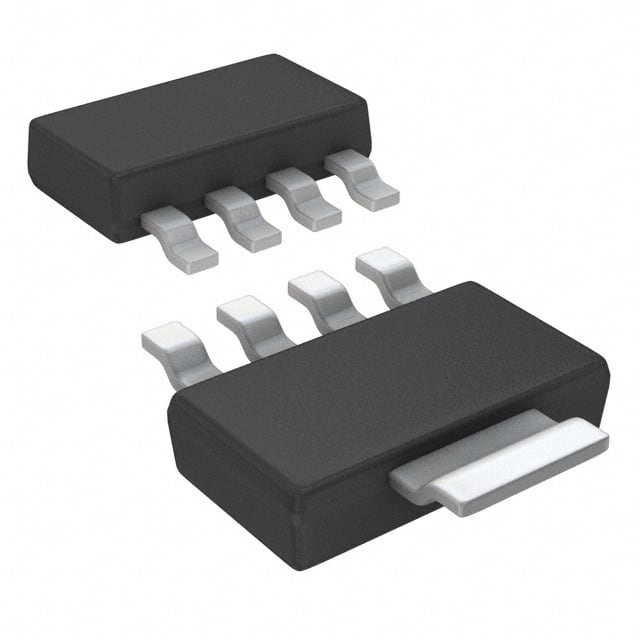
Texas Instruments LP3875EMP-2.5/NOPB
- Part No.:
- LP3875EMP-2.5/NOPB
- Manufacturer:
- Texas Instruments
- Package:
- TO-261-5, TO-261AB
- Datasheet:
-
 LP3875EMP-2.5/NOPB.pdf
- Description:
- IC REG LINEAR 2.5V 1.5A SOT223-5
- Quantity:
- Payment:

- Shipping:

Inventory:2,680
Please send an inquiry. Send us your inquiry, and we will respond immediately.
Product details
Overview
LP3875EMP-2.5/NOPB from Texas Instruments is a 2.5-V, 1.5-A ultra-low-dropout linear regulator in TO-263 (DDPAK) package, featuring 380 mV dropout at full load, ±1.5% output voltage accuracy, and remote voltage sense (SENSE) capability for precision regulation at point-of-load. It operates from 2.5 V to 7 V input and delivers stable power to microprocessor cores and DSPs in space-constrained industrial and battery-powered systems.
For engineers reviewing the LP3875EMP-2.5/NOPB datasheet, LP3875EMP-2.5/NOPB pinout, LP3875EMP-2.5/NOPB application, or LP3875EMP-2.5/NOPB equivalent, key selection criteria include dropout performance at 1.5 A, SENSE pin implementation for remote load regulation, thermal resistance (RθJA = 40.3°C/W), shutdown quiescent current (10 nA), and error flag behavior under undervoltage conditions.
Technical Context
The LP3875EMP-2.5/NOPB uses a CMOS-based PMOS pass transistor architecture enabling ultra-low dropout and load-independent quiescent current. Its dedicated SENSE pin allows closed-loop feedback directly at the remote load, decoupling regulation accuracy from PCB trace IR drop-critical for high-current, low-voltage rails where even 50 mΩ trace resistance causes >75 mV error at 1.5 A.
It integrates overtemperature and overcurrent protection with thermal shutdown, short-circuit current limiting (3.2 A peak), and an open-drain ERROR flag that asserts low when output falls >10% below nominal. Shutdown is controlled via a logic-compatible SD pin requiring external 10-kΩ pullup.
Key Specifications
| Parameter | Value and Actual Design Meaning |
|---|---|
| Output Voltage | Fixed 2.5 V ±1.5% at 25°C; ±3.0% over –40°C to 125°C - ensures stable core supply for 2.5-V logic and analog circuitry. |
| Max Output Current | 1.5 A DC - supports high-current digital loads including microprocessor I/O banks and FPGA auxiliary rails. |
| Dropout Voltage | 380 mV typical at 1.5 A - enables operation from single-cell Li-ion (3.0 V min) or 3.3-V intermediate bus with ≥0.83 V headroom. |
| Ground Pin Current | 6 mA typical at 1.5 A - minimizes wasted power in ground path; critical for efficiency-sensitive portable designs. |
| Shutdown IQ | 10 nA typical - reduces battery drain during system sleep modes; extends shelf life and standby time. |
| PSRR | 57 dB at 120 Hz with 0.5-V headroom - suppresses ripple from switching pre-regulators feeding the LDO. |
| Thermal Resistance | RθJA = 40.3°C/W (TO-263) - defines maximum power dissipation limit (e.g., 1.5 W allowable at 25°C ambient before thermal shutdown). |
Pinout & Package
LP3875EMP-2.5/NOPB is housed in a 5-pin DDPAK/TO-263 package (body size 10.16 mm × 8.42 mm) with exposed thermal pad for enhanced heat transfer. The package is RoHS-compliant and lead-free (NOPB suffix).
| Pin/Terminal | Circuit Role | Design Meaning |
|---|---|---|
| SD (Pin 1) | Shutdown control input | CMOS-compatible enable signal; must be pulled high via 10-kΩ resistor; drives device into 10-nA shutdown state when low. |
| IN (Pin 2) | Input supply connection | Accepts 2.5 V–7 V input; connects to upstream power source or switching converter output. |
| GND (Pin 3) | Power ground reference | Common return path for input, output, and internal circuitry; requires low-impedance PCB plane connection. |
| OUT (Pin 4) | Regulated output terminal | Delivers 2.5 V to load; output capacitor must be placed ≤1 cm away with dedicated ground trace. |
| SENSE (Pin 5) | Remote voltage sense input | Connects directly to load point to compensate for PCB trace resistance; improves load regulation by >90% vs. OUT-only feedback. |
Key Features
| Feature | Design Value |
|---|---|
| Ultra-low dropout | 380 mV at 1.5 A enables use with tight-input-margin supplies such as partially discharged batteries or post-regulated switcher outputs. |
| Remote sense (SENSE) | Eliminates voltage error caused by PCB trace resistance - essential for maintaining 2.5 V ±37.5 mV at 1.5 A across 25 mΩ of routing. |
| 10-nA shutdown current | Reduces system standby power to negligible levels - critical for always-on IoT sensors and battery-backed memory retention. |
| Integrated ERROR flag | Open-drain output signals undervoltage condition (10% drop) with built-in hysteresis - simplifies system monitoring without external comparators. |
| Overtemperature/overcurrent protection | Self-protecting operation prevents damage during fault conditions; thermal shutdown cycles output to limit average power dissipation. |
Applications
| Microprocessor Core Supply | GTL/GTL+ Bus Termination |
|---|---|
Use Scenario: Powering 2.5-V CPU core or cache rail in embedded controllers where input is derived from a 3.3-V buck converter. IC Role / Device Role / Timing Role: Primary low-noise, high-PSRR post-regulator delivering clean, tightly regulated 2.5 V with fast transient response to dynamic current demands. Use Value: Maintains <±37.5 mV output tolerance under 1.5-A step load while rejecting >57 dB of switching ripple from upstream converter. | Use Scenario: Providing termination voltage for GTL/GTL+ signaling buses in telecom line cards operating from 3.3-V backplane. IC Role / Device Role / Timing Role: Precision 2.5-V reference source for active bus terminators requiring stable voltage independent of board layout parasitics. Use Value: SENSE pin connection to termination point ensures <±1.5% regulation at load, eliminating timing skew caused by trace IR drop. |
| DSP I/O Power Rail | Battery-Powered Instrumentation |
Use Scenario: Supplying 2.5-V I/O banks of a high-speed DSP in test equipment with strict noise and stability requirements. IC Role / Device Role / Timing Role: Low-noise linear regulator with 150 µVRMS output noise (10 Hz–100 kHz) and 73 dB PSRR at 120 Hz. Use Value: Prevents signal integrity degradation in analog front-end sampling paths by suppressing power-supply-induced jitter. | Use Scenario: Regulating power for portable gas analyzers using single-cell Li-ion (2.7–4.2 V) with multi-year battery life target. IC Role / Device Role / Timing Role: Main system regulator with 10-nA shutdown mode and 380-mV dropout enabling operation down to 2.875 V input. Use Value: Extends usable battery capacity by >12% compared to standard LDOs with 500-mV dropout, while minimizing self-heating in sealed enclosures. |
Equivalent & Alternatives
The following parts are listed as comparable options for similar LDO regulator applications.
| Alternative Part | Technical Difference | Application Difference | Selection Advice |
|---|---|---|---|
| TSS721AIPW | Fixed 2.5-V output, 1.5-A rating, but no SENSE pin; RθJA = 65°C/W (TSSOP); higher dropout (500 mV @1.5 A) | Lacks remote sensing - unsuitable for point-of-load regulation; better suited for compact PCBs where layout minimizes trace resistance. | Select when board area is constrained and load is adjacent to regulator; avoid when trace resistance exceeds 10 mΩ. |
| TPS7A4701RGWR | Adjustable output (1.4–20.5 V), 1-A max, ultra-low noise (4.7 µVRMS), no SENSE, RθJA = 46°C/W (QFN) | Lower noise and higher PSRR, but lower current rating and no fixed 2.5-V option - requires external resistors and adds BOM complexity. | Select for ultra-low-noise analog rails where 2.5 V is generated via resistor divider; not drop-in for high-current digital loads. |
Compared with TSS721AIPW and TPS7A4701RGWR, LP3875EMP-2.5/NOPB uniquely combines fixed 2.5-V output, 1.5-A capability, integrated SENSE functionality, and industry-leading 380-mV dropout - making it the only choice for high-current, point-of-load regulated 2.5-V supplies where layout constraints prevent ideal placement.
Availability
LP3875EMP-2.5/NOPB is available at Aetrix Electronics and suitable for microprocessor core supplies, GTL bus terminators, DSP I/O rails, battery-powered instrumentation, and industrial embedded controllers requiring stable component supply across long production lifecycles.
Supply support for LP3875EMP-2.5/NOPB includes scheduled delivery planning, volume procurement assistance, BOM continuity management, traceable sourcing, and lifecycle availability coordination for OEM customers, industrial embedded developers, connected-device designers, and electronics production programs.
Manufacturer
Texas Instruments is a global semiconductor company designing analog ICs, embedded processors, and system-on-chip solutions for industrial, automotive, and personal electronics markets.
The LP387x product line was engineered specifically for high-current, ultra-low-dropout linear regulation in battery-powered and space-constrained systems - emphasizing fast transient response, remote sensing, and nanoscale shutdown current.
FAQ
What is the minimum input voltage required for LP3875EMP-2.5/NOPB to maintain regulation?
The LP3875EMP-2.5/NOPB requires a minimum input voltage of 2.5 V per datasheet specification, but actual minimum is determined by dropout: VIN(MIN) = VOUT + VDROPOUT. At 1.5 A load, VDROPOUT = 380 mV typical, so VIN(MIN) ≈ 2.88 V. Below this, output voltage drops nonlinearly. LP3875EMP-2.5/NOPB will remain functional down to 2.5 V input but cannot sustain full 1.5-A load at that level.
How should the SENSE pin be connected in LP3875EMP-2.5/NOPB for optimal performance?
The SENSE pin of LP3875EMP-2.5/NOPB must be connected directly to the load's power input node - not to the OUT pin - to enable remote voltage regulation. If unused, tie SENSE to OUT. Avoid sharing the SENSE trace with other signals; use a dedicated low-impedance path. LP3875EMP-2.5/NOPB's internal amplifier compares SENSE to internal reference, adjusting OUT to maintain 2.5 V precisely at the load point.
Does LP3875EMP-2.5/NOPB require external capacitors, and what are the minimum values?
Yes - LP3875EMP-2.5/NOPB requires both input and output capacitors for stability. Minimum CIN = 10 µF (ceramic, tantalum, or electrolytic); minimum COUT = 10 µF tantalum recommended, with ESR between 100 mΩ and 4 Ω. Ceramic capacitors may be used if X7R/X5R dielectric and sufficient capacitance margin are applied. LP3875EMP-2.5/NOPB becomes unstable outside these ranges.
What happens to the ERROR flag on LP3875EMP-2.5/NOPB during shutdown?
When the SD pin is pulled low to activate shutdown mode, the ERROR flag on LP3875EMP-2.5/NOPB is forced invalid (high-impedance) to conserve power. The flag resumes normal operation only after SD returns high and the device exits shutdown. During active operation, ERROR asserts low when output falls >10% below 2.5 V due to input undervoltage, overload, or thermal limit - with 5% hysteresis to prevent chatter. LP3875EMP-2.5/NOPB does not drive ERROR during shutdown.
Can LP3875EMP-2.5/NOPB be used in parallel for higher current capability?
No - LP3875EMP-2.5/NOPB is not designed for parallel operation. Its internal error amplifier and pass transistor lack current-sharing circuitry. Attempting to parallel units risks thermal runaway and unequal current distribution due to minor output voltage mismatches (±1.5%). For >1.5-A requirements, select a higher-current LDO or redesign with a switching solution. LP3875EMP-2.5/NOPB must be used as a single-channel regulator.
LP3875EMP-2.5/NOPB Specifications
- Product attributes
- Attribute value
- Manufacturer:
- Texas Instruments
- Series:
- -
- Package/Case:
- TO-261-5, TO-261AB
- Packaging:
- Tape & Reel (TR)
- Product Status:
- Active
- Output Configuration:
- Positive
- Output Type:
- Fixed
- Number of Regulators:
- 1
- Voltage - Input (Max):
- 7V
- Voltage - Output (Min/Fixed):
- 2.5V
- Voltage - Output (Max):
- -
- Voltage Dropout (Max):
- 0.55V @ 1.5A
- Current - Output:
- 1.5A
- Current - Quiescent (Iq):
- 5 mA
- Current - Supply (Max):
- 15 mA
- PSRR:
- 73dB ~ 57dB (120Hz)
- Control Features:
- Enable
- Protection Features:
- Over Current, Over Temperature, Short Circuit
- Operating Temperature:
- -40°C ~ 125°C
- Grade:
- -
- Qualification:
- -
- Mounting Type:
- Surface Mount
- Supplier Device Package:
- SOT-223-5
LP3875EMP-2.5/NOPB FAQ
1.How can I place an order for LP3875EMP-2.5/NOPB through Aetrix?
Please submit a Request for Quotation (RFQ) for LP3875EMP-2.5/NOPB on Aetrix. Our sales agent will provide a competitive quotation and guide you through the order confirmation once you accept the terms.
2.Are the price and stock information for LP3875EMP-2.5/NOPB reliable?
The price and inventory of LP3875EMP-2.5/NOPB are updated periodically and may fluctuate due to market conditions. Stock and pricing data are typically refreshed every 24 hours. Quotation validity for LP3875EMP-2.5/NOPB is usually 5 days.
3.What payment methods are accepted for LP3875EMP-2.5/NOPB?
We accept Wire Transfer, PayPal, Credit Card, Western Union, MoneyGram, and Escrow for LP3875EMP-2.5/NOPB transactions.
Note: Certain payment methods may incur a processing fee.
4.How is shipping managed for LP3875EMP-2.5/NOPB?
LP3875EMP-2.5/NOPB orders can be shipped via leading logistics carriers, including DHL, UPS, FedEx, TNT, or Registered Mail.
Once your LP3875EMP-2.5/NOPB order is processed, you will receive an email with the shipment details and tracking number.
Note: Tracking information may take up to 24 hours to appear. Express delivery typically takes 3–5 business days.
5.How can I obtain technical support or documentation for LP3875EMP-2.5/NOPB?
For technical support, including LP3875EMP-2.5/NOPB datasheets, pinout diagrams, or application guidance, please contact our engineering support team. They can provide detailed documentation and assistance for your LP3875EMP-2.5/NOPB requirements.
6.How does Aetrix verify that LP3875EMP-2.5/NOPB is sourced from the original manufacturer or authorized distributors?
All LP3875EMP-2.5/NOPB products on Aetrix are procured from qualified distributors and authorized channels. Our dedicated quality assurance team conducts strict verification, including traceability checks and, if necessary, third-party testing. This ensures that LP3875EMP-2.5/NOPB meets industry standards.
7.What is the process for return or replacement of LP3875EMP-2.5/NOPB?
All LP3875EMP-2.5/NOPB units undergo pre-shipment inspection (PSI). If there is an issue with LP3875EMP-2.5/NOPB, returns or replacements are accepted under the following conditions:
1.Quantity discrepancies, incorrect items, or visible external defects (such as breakage or corrosion), acknowledged by Aetrix.
2.The issue is reported within 90 days of delivery.
3.The LP3875EMP-2.5/NOPB part is unused and in its original packaging.
Return procedure for LP3875EMP-2.5/NOPB:
1.Submit a request within 90 days.
2.Obtain a Return Material Authorization (RMA) from Aetrix.
LP3875EMP-2.5/NOPB Tags
-
MIC5504-1.8YM5-TR
Microchip Technology
-
MIC5504-3.3YM5-TR
Microchip Technology
-
MIC5365-3.0YC5-TR
Microchip Technology
-
MIC5365-1.8YC5-TR
Microchip Technology
-
MIC5365-2.5YC5-TR
Microchip Technology
-
MIC5365-3.3YC5-TR
Microchip Technology
-
MIC5365-3.3YD5-TR
Microchip Technology
-
MIC5317-3.3YM5-TR
Microchip Technology
-
TLV1117LV33DCYR
Texas Instruments
-
MIC5317-3.3YMT-TZ
Microchip Technology
-
MIC5528-3.3YMT-TR
Microchip Technology
-
TLV75801PDRVR
Texas Instruments
Tech Hub
A D latch stores one bit while Enable controls when data can pass. This reference covers gate-level operation, truth tables, transparency, setup and hold timing, LE versus OE, common ICs and practical …
An SR latch stores one bit through cross-coupled feedback. This engineering reference covers NOR and NAND implementations, truth tables, forbidden-state recovery, gated operation, switch debouncing, fa…

Latch circuits retain one bit through feedback. This technical reference covers SR and D latches, truth tables, transparency, timing limits, latch-versus-flip-flop behavior, applications and common log…

An engineering guide to LED driver operation, constant-current and constant-voltage outputs, linear and switching topologies, dimming, IC selection, calculations, replacement compatibility, and fault c…

Operational amplifier guide covering op amp basics, feedback, ideal vs real op amps, common configurations, buffer circuits, offset, bias current, gain-bandwidth, slew rate, rail-to-rail limits and sel…

Jumper cables guide covering safe connection order, red and black clamp placement, final ground connection, cable gauge, length, clamp quality, copper vs CCA cables, jump starter comparison and battery…

LDO regulator guide covering low dropout voltage, power dissipation, thermal design, PSRR, output noise, capacitor stability, adjustable LDO circuits, LDO vs buck converter and datasheet selection chec…

Conditional Access Module guide covering CAM meaning, CI/CI+ interface, smart card authorization, DVB security workflow, TV and set-top box compatibility, internal electronics, ESD protection, connecto…

Guide to electronic component obsolescence covering EOL risk, PCN/PDN notices, last-time buy planning, replacement options, form-fit-function validation, counterfeit risk and BOM lifecycle management.

18650 battery guide covering lithium-ion cell basics, 3.6V/3.7V voltage, 4.2V charging, mAh and Wh capacity, protected cells, chargers, BMS, series-parallel packs, holders, welding and sourcing checks.…


