
 My Inquiry
 My Account


Texas Instruments LP3944ISQX
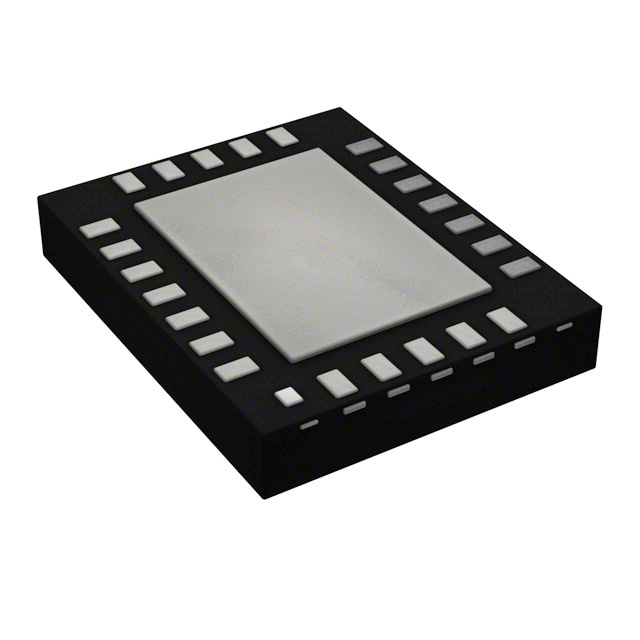
- Part No.:
- LP3944ISQX
- Manufacturer:
- Texas Instruments
- Category:
- LED Drivers
- Package:
- 24-WFQFN Exposed Pad
- Datasheet:
-
 LP3944ISQX.pdf
- Description:
- IC LED DRIVER PS I2C 25MA 24WQFN
- Quantity:
- Payment:

- Shipping:

Inventory:1,140
Please send an inquiry. Send us your inquiry, and we will respond immediately.
Product details
Overview
LP3944ISQX from Texas Instruments is an 8-channel I²C-compatible LED driver IC with programmable PWM dimming, open-drain outputs (25 mA per channel), internal oscillator, and integrated power-on reset. It drives RGB/white/blue LEDs in mobile accessories and enables GPIO expansion via unused LED pins. Designed for low-bus-traffic LED control in space-constrained portable devices.
For engineers reviewing the LP3944ISQX datasheet, LP3944ISQX pinout, LP3944ISQX application, or LP3944ISQX equivalent, key selection criteria include its WQFN-24 package, dual-dimming-rate capability (6.25 ms–1.6 s), SMBus/I²C address configuration (A2–A0), 2.3–5.5 V operation, and 200 mA total package sink current limit.
Technical Context
The LP3944ISQX integrates a precision internal oscillator and two independent prescaler-PWM register pairs (PSC0/PWM0 and PSC1/PWM1) to generate two distinct dimming frequencies and duty cycles. Each of the eight open-drain outputs is individually configurable via selector registers (LS0/LS1) into one of four states: high-impedance (off), active-low (on), DIM0 rate, or DIM1 rate.
It implements standard SMBus/I²C protocol with 400 kHz max clock frequency, supports auto-increment addressing across nine registers (0x00–0x09), and includes hardware reset (active-low RST) with 10 ns minimum pulse width. All digital inputs (A0–A2, SCL, SDA, RST) tolerate up to 6 V, while LED outputs support 0.4 V VOL at 25 mA (VDD = 5.0 V).
Key Specifications
| Parameter | Value and Actual Design Meaning |
|---|---|
| VDD Range | 2.3 V to 5.5 V - Supports direct connection to 3.3 V or 5 V system rails without level shifting. |
| LED Sink Current | 25 mA per pin, 200 mA total - Enables driving multiple standard LEDs per channel with thermal derating. |
| Dimming Period Range | 6.25 ms to 1.6 s - Achieved via 8-bit prescaler registers (PSC0/PSC1); allows slow blinking or fast PWM flicker suppression. |
| Duty Cycle Resolution | 0% to 100% in 0.39% steps - Set by 8-bit PWM0/PWM1 registers; supports precise brightness control. |
| I²C Clock Frequency | Up to 400 kHz - Compatible with standard-mode I²C buses; reduces configuration time vs. bit-banged GPIO solutions. |
| Operating Temp | −40°C to +85°C - Qualified for consumer and industrial portable equipment environments. |
| Package Thermal Resistance | θJA = 37°C/W - Requires exposed thermal pad soldering for reliable 200 mA operation at ambient ≤85°C. |
Pinout & Package
LP3944ISQX uses a 24-pin WQFN package (RTW0024A), 4.0 × 4.0 mm, 0.5 mm pitch, with exposed thermal pad. Pin 1 is located in quadrant Q1; the thermal pad must be soldered to PCB ground for thermal and mechanical integrity.
| Pin/Terminal | Circuit Role | Design Meaning |
|---|---|---|
| LED0–LED7 | Open-drain LED driver outputs | Sink up to 25 mA each; default high-impedance; driven low to illuminate connected cathode LEDs. |
| GND | Ground reference | Primary return path for all currents; connects to thermal pad for heat dissipation. |
| RST | Active-low hardware reset | Holding ≤0.8 V for ≥10 ns forces device into default state (all LEDs off, registers reset). |
| SCL / SDA | I²C serial interface lines | Support standard-mode (400 kHz) communication; require external pull-ups to VDD. |
| VDD | Power supply input | Supplies internal logic and output drivers; must be decoupled with ≥1 µF ceramic capacitor near pin. |
| A0–A2 | I²C slave address inputs | Set bits 1–3 of 7-bit address (base 0x60); allow up to 8 devices on same bus. |
| NC (Pins 10–17) | No-connect terminals | Internally unconnected; must remain floating or tied to GND/VDD per layout best practice-no functional role. |
Key Features
| Feature | Design Value |
|---|---|
| Dual independent dimming rates | Two fully programmable PWM channels (DIM0/DIM1) enable simultaneous slow blink + fast fade effects on different LEDs. |
| Low I²C bus overhead | After initial setup, single-byte commands toggle LED states-eliminates continuous bus traffic required by shift-register drivers. |
| GPIO expansion capability | Unused LEDx pins function as general-purpose open-drain I/O, adding up to 8 flexible digital interfaces without extra ICs. |
| Integrated power-on reset | Internal POR circuit holds device in reset until VDD ≥ 1.96 V, ensuring predictable startup behavior without external RC network. |
| Flexible I²C addressing | A0–A2 pins support 8 unique addresses (0x60–0x67), enabling multi-device configurations in compact systems like phone accessories. |
Applications
| Cellular Phone Accessories | Digital Camera Indicator Lamps |
|---|---|
Use Scenario: RGB LED notification ring on Bluetooth headsets or charging docks. IC Role / Device Role / Timing Role: LED driver with synchronized multi-color flashing and battery-efficient dimming. Use Value: Reduces host MCU GPIO count and I²C bandwidth usage while enabling rich visual feedback with minimal firmware overhead. | Use Scenario: Status LEDs indicating recording mode, low battery, or memory full on compact cameras. IC Role / Device Role / Timing Role: Low-power indicator controller with programmable blink patterns and brightness levels. Use Value: Eliminates need for discrete transistors and timing resistors; supports factory-programmed visual alerts via I²C during production test. |
| Portable Gaming Toys | USB-C Peripheral Status Panels |
Use Scenario: Animated light effects on handheld game controllers or interactive plush toys. IC Role / Device Role / Timing Role: Programmable fun-light engine with two independent dimming engines for layered animation. Use Value: Enables complex LED sequences (e.g., breathing + pulsing) using only two register writes-no real-time MCU intervention required. | Use Scenario: Multi-color status display on USB-C hubs or docking stations showing power delivery, data speed, and port activity. IC Role / Device Role / Timing Role: I²C-addressable LED driver with GPIO expansion for button sensing or auxiliary signaling. Use Value: Integrates LED control and input monitoring in one 4×4 mm package, saving board area versus discrete driver + I/O expander solutions. |
Equivalent & Alternatives
The following parts are listed as comparable options for similar LED driver applications.
| Alternative Part | Technical Difference | Application Difference | Selection Advice |
|---|---|---|---|
| TLC59116IPWR | 16-channel I²C LED driver with higher current (25 mA/channel), no GPIO expansion, fixed 12-bit PWM resolution. | Better suited for high-channel-count displays; lacks dual-dimming-rate flexibility and general-purpose I/O capability. | Select when >8 channels or finer PWM granularity (0.0024% step) is required; not drop-in due to different register map and pinout. |
| PCA9635D,118 | 16-channel Fm+ I²C LED driver with 12-bit PWM, no internal oscillator, requires external clock or I²C command pacing. | Targets high-fidelity lighting where precise timing synchronization matters more than autonomous dimming. | Choose for Fm+ (1 MHz) bus compatibility or when external clock control is preferred; differs in reset behavior and address scheme. |
Compared with TLC59116IPWR and PCA9635D,118, the LP3944ISQX uniquely combines dual independent dimming engines, GPIO expansion, and internal oscillator in a compact WQFN-24 package-making it optimal for cost-sensitive, space-constrained portable products needing rich LED effects with minimal host intervention.
Availability
LP3944ISQX is available at Aetrix Electronics and suitable for cellular phone accessories, portable gaming devices, digital camera indicators, and USB-C peripheral status panels requiring stable component supply and long-term manufacturability.
Supply support for LP3944ISQX includes scheduled delivery planning, volume procurement assistance, BOM continuity management, traceable sourcing, and lifecycle availability coordination for OEM customers, industrial embedded developers, connected-device designers, and electronics production programs.
Manufacturer
Texas Instruments is a global semiconductor company headquartered in Dallas, Texas, delivering analog and embedded processing solutions for industrial, automotive, personal electronics, and communications markets.
The LP3944ISQX belongs to TI's LED driver product line, engineered specifically for low-pin-count, low-bus-traffic LED control in battery-powered portable devices-emphasizing integration, configurability, and ease of implementation.
FAQ
What is the maximum total current the LP3944ISQX can sink across all channels?
The LP3944ISQX supports up to 25 mA per LED output pin, with a hard limit of 200 mA total package sink current. This means no more than eight channels may operate simultaneously at full 25 mA, and thermal design (including proper soldering of the exposed thermal pad) is essential to sustain this load at ambient temperatures up to +85°C. Exceeding 200 mA risks thermal shutdown or parametric drift.
Does the LP3944ISQX require an external clock source?
No, the LP3944ISQX does not require an external clock source. It contains an internal precision oscillator that generates all timing signals needed for PWM dimming and register operation. This eliminates external crystal or RC networks, simplifying BOM and layout-especially critical in ultra-compact portable designs where board space is at a premium.
Can unused LED pins on the LP3944ISQX be used as general-purpose I/O?
Yes, unused LEDx pins on the LP3944ISQX function as general-purpose open-drain I/O. When configured in high-impedance state via the LS0/LS1 selector registers, they can serve as inputs (with external pull-up) or outputs (sinking current to GND). This provides up to eight additional flexible digital interfaces-ideal for button sensing, status signaling, or simple peripheral control without adding a separate I/O expander IC.
What I²C address options are supported by the LP3944ISQX?
The LP3944ISQX supports seven user-configurable I²C slave addresses (0x60–0x66) via pins A0, A1, and A2. Address bit 7 is fixed at '1', bits 6–4 are hardwired to '100', and bits 3–1 are set by A2–A0. The eighth address (0x67) is reserved for special functions and not available for standard write operations. This allows up to seven LP3944ISQX devices on a single I²C bus without address conflict.
How does the LP3944ISQX reduce I²C bus traffic compared to traditional LED drivers?
The LP3944ISQX reduces I²C bus traffic by implementing autonomous PWM generation internally. After initial configuration of prescaler and PWM registers, the host MCU sends only single-byte commands (e.g., "turn LED3 on" or "cycle LED5 at DIM1 rate")-no continuous streaming of timing data is needed. In contrast, shift-register-based drivers require full byte-by-byte updates for every frame, increasing bus load by orders of magnitude during dynamic LED effects.
LP3944ISQX Specifications
- Product attributes
- Attribute value
- Manufacturer:
- Texas Instruments
- Series:
- -
- Package/Case:
- 24-WFQFN Exposed Pad
- Packaging:
- Tape & Reel (TR)
- Product Status:
- Obsolete
- Type:
- Power Switch
- Topology:
- Shift Register
- Internal Switch(s):
- Yes
- Number of Outputs:
- 8
- Voltage - Supply (Min):
- 2.3V
- Voltage - Supply (Max):
- 5.5V
- Voltage - Output:
- -
- Current - Output / Channel:
- 25mA
- Frequency:
- -
- Dimming:
- I2C, SMBus
- Applications:
- Camera Flash
- Operating Temperature:
- -40°C ~ 85°C (TA)
- Grade:
- -
- Qualification:
- -
- Mounting Type:
- Surface Mount
- Supplier Device Package:
- 24-WQFN (4x4)
LP3944ISQX FAQ
1.How can I place an order for LP3944ISQX through Aetrix?
Please submit a Request for Quotation (RFQ) for LP3944ISQX on Aetrix. Our sales agent will provide a competitive quotation and guide you through the order confirmation once you accept the terms.
2.Are the price and stock information for LP3944ISQX reliable?
The price and inventory of LP3944ISQX are updated periodically and may fluctuate due to market conditions. Stock and pricing data are typically refreshed every 24 hours. Quotation validity for LP3944ISQX is usually 5 days.
3.What payment methods are accepted for LP3944ISQX?
We accept Wire Transfer, PayPal, Credit Card, Western Union, MoneyGram, and Escrow for LP3944ISQX transactions.
Note: Certain payment methods may incur a processing fee.
4.How is shipping managed for LP3944ISQX?
LP3944ISQX orders can be shipped via leading logistics carriers, including DHL, UPS, FedEx, TNT, or Registered Mail.
Once your LP3944ISQX order is processed, you will receive an email with the shipment details and tracking number.
Note: Tracking information may take up to 24 hours to appear. Express delivery typically takes 3–5 business days.
5.How can I obtain technical support or documentation for LP3944ISQX?
For technical support, including LP3944ISQX datasheets, pinout diagrams, or application guidance, please contact our engineering support team. They can provide detailed documentation and assistance for your LP3944ISQX requirements.
6.How does Aetrix verify that LP3944ISQX is sourced from the original manufacturer or authorized distributors?
All LP3944ISQX products on Aetrix are procured from qualified distributors and authorized channels. Our dedicated quality assurance team conducts strict verification, including traceability checks and, if necessary, third-party testing. This ensures that LP3944ISQX meets industry standards.
7.What is the process for return or replacement of LP3944ISQX?
All LP3944ISQX units undergo pre-shipment inspection (PSI). If there is an issue with LP3944ISQX, returns or replacements are accepted under the following conditions:
1.Quantity discrepancies, incorrect items, or visible external defects (such as breakage or corrosion), acknowledged by Aetrix.
2.The issue is reported within 90 days of delivery.
3.The LP3944ISQX part is unused and in its original packaging.
Return procedure for LP3944ISQX:
1.Submit a request within 90 days.
2.Obtain a Return Material Authorization (RMA) from Aetrix.
LP3944ISQX Tags
-
BCR402RE6327HTSA1
Infineon Technologies

-
BCR430UXTSA2
Infineon Technologies
-
BCR420UE6433HTMA1
Infineon Technologies
-
BCR420UE6327HTSA1
Infineon Technologies
-
BCR421UE6327HTSA1
Infineon Technologies
-
LYT1604D-TL
Power Integrations

-
HV9910CLG-G
Microchip Technology
-
CL2N8-G
Microchip Technology
-
BCR420UW6-7
Diodes Incorporated
-
BCR421UW6-7
Diodes Incorporated
-
BCR420UFD-7
Diodes Incorporated
-
BCR421UFD-7
Diodes Incorporated
Tech Hub

A practical engineering guide to 3.3V and 5V logic compatibility, input thresholds, resistor dividers, translator ICs, MOSFET level shifting, I2C pull-ups, timing limits and power-sequencing risks.

The 74HC595 uses push-pull logic outputs, while the TPIC6B595 uses 50 V open-drain DMOS sinks for higher-power loads. This guide compares timing, current limits, 3.3 V interfacing, load wiring, thermal…

The 74HC595 converts serial data into eight stable parallel outputs. This guide covers pin functions, shift and storage timing, OE and MR behavior, drive-current limits, cascading, voltage compatibilit…

A technical comparison of level-sensitive latches and edge-triggered flip-flops, covering timing windows, setup and hold limits, master–slave operation, time borrowing, race-through, HDL inference and…

A D latch stores one bit while Enable controls when data can pass. This reference covers gate-level operation, truth tables, transparency, setup and hold timing, LE versus OE, common ICs and practical …

An SR latch stores one bit through cross-coupled feedback. This engineering reference covers NOR and NAND implementations, truth tables, forbidden-state recovery, gated operation, switch debouncing, fa…

Latch circuits retain one bit through feedback. This technical reference covers SR and D latches, truth tables, transparency, timing limits, latch-versus-flip-flop behavior, applications and common log…

An engineering guide to LED driver operation, constant-current and constant-voltage outputs, linear and switching topologies, dimming, IC selection, calculations, replacement compatibility, and fault c…

Operational amplifier guide covering op amp basics, feedback, ideal vs real op amps, common configurations, buffer circuits, offset, bias current, gain-bandwidth, slew rate, rail-to-rail limits and sel…

Jumper cables guide covering safe connection order, red and black clamp placement, final ground connection, cable gauge, length, clamp quality, copper vs CCA cables, jump starter comparison and battery…


