
 My Inquiry
 My Account


Texas Instruments LP3958TLX/NOPB
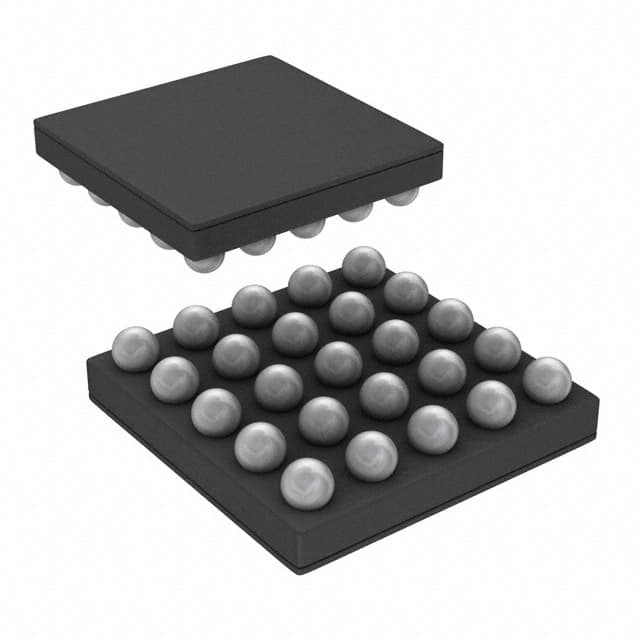
- Part No.:
- LP3958TLX/NOPB
- Manufacturer:
- Texas Instruments
- Category:
- LED Drivers
- Package:
- 25-WFBGA
- Datasheet:
-
 LP3958TLX/NOPB.pdf
- Description:
- IC LED DRV RGLTR I2C 25USMD
- Quantity:
- Payment:

- Shipping:

Inventory:1,882
Please send an inquiry. Send us your inquiry, and we will respond immediately.
Product details
Overview
LP3958TLX/NOPB from Texas Instruments is a lighting management unit (LMU) for portable electronics, integrating a high-efficiency boost converter and dual-display + triple-keypad LED drivers. It delivers up to 18 V output from 3.0–5.5 V input, supports 25 mA per MAIN/SUB white LED string, and drives three keypad LED outputs in switch or constant-current mode with I²C control. Used in cellular phones and MP3 players for backlight and keypad illumination.
For engineers reviewing the LP3958TLX/NOPB datasheet, LP3958TLX/NOPB pinout, LP3958TLX/NOPB application, or LP3958TLX/NOPB equivalent, this page provides verified technical context, real-world operating parameters, validated pin functions, confirmed alternative parts, and supply-chain support details specific to LP3958TLX/NOPB's role in compact portable lighting systems.
Technical Context
The LP3958TLX/NOPB integrates a 1 MHz current-programmed mode (CPM) boost converter with programmable 8–18 V output, overvoltage/overcurrent protection, and active load for light-load stability. Its dual 8-bit IDAC backlight drivers deliver precise 0.1 mA steps up to 25.5 mA per MAIN/SUB output, with optional matched 8-LED operation via DISPL bit.
Three keypad LED outputs (KEY1–KEY3) support both switch-mode (3.5 Ω RSW) and constant-current mode (set by RKEY and register-controlled scaling), with overlapping/non-overlapping PWM timing at 20 kHz. Control is fully I²C-compatible (SCL/SDA), with GPIO[0]/PWM enabling external dimming modulation.
Key Specifications
| Parameter | Value and Actual Design Meaning |
|---|---|
| Boost Output Voltage | Programmable 8–18 V in 10 steps; enables driving 4-series white LEDs from single Li-ion cell. |
| Main/Sub LED Current | 0–25.5 mA per channel (8-bit DAC); supports 4-LED strings with <1% matching error when DISPL=1. |
| Keypad LED Drive | Three independent outputs; 15 mA max per channel in constant-current mode; 60 mA in switch mode. |
| Switching Frequency | 1.0 MHz ±7%; set by external 82 kΩ resistor on IRT pin; reduces EMI and enables small 10 µH inductor. |
| I²C Interface | Standard-mode (100 kHz) compatible; 2-wire control of all registers including fade, brightness, and enable states. |
| Package | 25-bump DSBGA (2.54 mm × 2.54 mm × 0.6 mm); optimized for ultra-thin portable PCBs with thermal pad grounding. |
| Operating Temp | −30°C to +85°C ambient; thermal shutdown engages at 150°C junction temperature. |
Pinout & Package
LP3958TLX/NOPB uses a 25-bump thin DSBGA package (YZR0025) with 0.4 mm pitch and exposed thermal pad on bottom side. Pin mapping follows standard top-view alphanumeric grid (A1–E5).
| Pin/Terminal | Circuit Role | Design Meaning |
|---|---|---|
| SW | Boost Power Switch Output | Drives external inductor; requires low-ESR ceramic capacitor and EMI filter near pin. |
| FB | Boost Feedback Input | Senses output voltage divider; sets regulated boost level via internal 8-bit register. |
| MAIN / SUB | Backlight LED Current Sinks | Constant-current outputs for display strings; each supports 0–25.5 mA with 0.1 mA resolution. |
| KEY1 / KEY2 / KEY3 | Keypad LED Outputs | Configurable as switch (3.5 Ω) or current sink (15 mA max); support PWM dimming and balance/brightness control. |
| VDD1 / VDD2 / VDDIO | Power Inputs | VDD1/VDD2: 3.0–5.5 V core supplies; VDDIO: 1.65–VDD1 logic supply for I/O buffers. |
| SCL / SDA | I²C Interface | 2-wire serial control bus; supports full register access including fade, current, and enable states. |
| GPIO[0]/PWM | Multi-function I/O | Configurable as general-purpose input/output or external PWM dimming input for KEY/MAIN/SUB. |
| GND_SW / GND_WLED / GND_KEY / GND | Dedicated Ground Returns | Separate ground paths minimize noise coupling between boost, backlight, keypad, and core circuits. |
Key Features
| Feature | Design Value |
|---|---|
| Integrated High-Voltage Boost | Generates 8–18 V from 3–5.5 V input; eliminates need for external DC/DC controller in space-constrained designs. |
| Dual Backlight Drivers with Matching | MAIN and SUB outputs track within 0.2% when DISPL=1, enabling uniform brightness across 8-LED displays. |
| Auto-Fade Timing Control | Configurable 0.65 s or 1.3 s full-scale fade-in/out via SLOPE bit; eliminates MCU firmware overhead for smooth transitions. |
| Triple Keypad LED Flexibility | Each KEY output independently configurable for switch or constant-current mode, plus overlapping/non-overlapping PWM timing. |
| Thermal & Electrical Protection | Includes overvoltage, overcurrent, feedback-break, and duty-cycle limiting; thermal shutdown at 150°C with hysteresis. |
Applications
| Cellular Phone Keypad Illumination | MP3 Player Display Backlight |
|---|---|
Use Scenario: Illuminating mechanical keypad buttons in low-light conditions while minimizing power draw from Li-ion battery. IC Role / Device Role / Timing Role: LP3958TLX/NOPB acts as standalone keypad LED controller, generating PWM timing and current regulation without MCU intervention. Use Value: Enables 3-string independent brightness/balance control (up to 15 mA per string) with logarithmic dimming and overlapping mode for consistent perceived intensity. |
Use Scenario: Driving 4-white-LED main display backlight in portable audio player with smooth on/off transitions. IC Role / Device Role / Timing Role: LP3958TLX/NOPB serves as constant-current sink for MAIN output, controlled via I²C register writes or external PWM on GPIO[0]. Use Value: Provides 0.1 mA resolution dimming (0–25.5 mA), auto-fade (0.65/1.3 s), and <0.2% current matching to eliminate visible brightness gradients. |
| Digital Camera Secondary Display | Handheld PDA Keypad + Status Indicators |
Use Scenario: Powering small secondary OLED/LCD status display requiring stable 18 V bias and precise current control. IC Role / Device Role / Timing Role: LP3958TLX/NOPB operates SUB output as dedicated current sink, using same boost rail as MAIN but with independent 8-bit DAC setting. Use Value: Delivers 0–25.5 mA with ±5% tolerance at 12.8 mA and 400–600 mV saturation voltage-ensuring reliable LED conduction even at low forward voltages. |
Use Scenario: Simultaneously managing keypad illumination and system-status LEDs (e.g., power, Bluetooth, battery) in resource-limited embedded UI. IC Role / Device Role / Timing Role: LP3958TLX/NOPB uses KEY1–KEY3 for keypad and GPIO[1]/GPIO[2] as general-purpose status indicators, all coordinated via single I²C bus. Use Value: Reduces BOM count by consolidating LED drive, boost conversion, and I/O into one 2.54 mm × 2.54 mm package-critical for sub-10 mm thickness requirements. |
Equivalent & Alternatives
The following parts are listed as comparable options for similar lighting management applications.
| Alternative Part | Technical Difference | Application Difference | Selection Advice |
|---|---|---|---|
| LP55231RSBT | 3-channel RGB LED driver with integrated 1.2 A buck-boost; no dedicated keypad LED outputs or I²C fade engine. | Targets color-tunable lighting; lacks LP3958TLX/NOPB's keypad-specific timing modes and 8–18 V boost range. | Choose LP55231RSBT only if RGB control and higher current (>25 mA) per channel are required; not drop-in for keypad+backlight dual-role use. |
| TPS61165DRVR | Single-output WLED driver with 36 V boost; no keypad LED support, no I²C interface, no fade or balance features. | Designed for large LCD backlights only; requires external MCU for dimming and sequencing. | Use TPS61165DRVR when only main display backlight is needed and system-level control is acceptable; LP3958TLX/NOPB remains superior for integrated keypad+display solutions. |
Compared with LP55231RSBT and TPS61165DRVR, LP3958TLX/NOPB uniquely combines dual-display backlight control, triple-keypad LED timing, auto-fade, and I²C register-based configuration in a single 2.54 mm × 2.54 mm package-making it the only option for compact portable devices requiring co-managed illumination subsystems.
Availability
LP3958TLX/NOPB is available at Aetrix Electronics and suitable for cellular phone keypad illumination, MP3 player display backlight, digital camera secondary display, and handheld PDA UI lighting requiring stable component supply and long-term lifecycle support.
Supply support for LP3958TLX/NOPB includes scheduled delivery planning, volume procurement assistance, BOM continuity management, traceable sourcing, and lifecycle availability coordination for OEM customers, industrial embedded developers, connected-device designers, and electronics production programs.
Manufacturer
Texas Instruments is a global semiconductor leader specializing in analog and embedded processing technologies, with decades of expertise in power management and portable system solutions.
LP3958TLX/NOPB belongs to TI's Lighting Management Unit product line, designed specifically for space-constrained portable electronics requiring integrated boost conversion, multi-string LED drive, and intelligent illumination control-all in a wafer-level chip-scale package.
FAQ
What is the maximum output voltage capability of the LP3958TLX/NOPB boost converter?
The LP3958TLX/NOPB boost converter supports programmable output voltages from 8 V to 18 V in 10 discrete steps, set via the 8-bit Boost Output register (address 0DH). This range allows direct driving of 4-series white LEDs from a single Li-ion cell (3.0–4.5 V), with internal overvoltage protection limiting output to prevent damage to downstream LEDs or circuitry. The typical accuracy is ±3.5% across temperature and input voltage variations.
How does the LP3958TLX/NOPB handle keypad LED current regulation in constant-current mode?
In constant-current mode, the LP3958TLX/NOPB sets maximum keypad LED current using an external resistor (RKEY) connected to the IKEY pin and internal register scaling. The formula is IMAX = 100 × 1.23 V / (RKEY + 50 Ω), yielding values like 14.9 mA with 8.2 kΩ. Each KEY output (KEY1–KEY3) can then be scaled to 25%, 50%, 75%, or 100% of IMAX via the Keypad Max Current Register (02H), ensuring precise per-channel control without external ballast resistors.
Can the LP3958TLX/NOPB drive more than four LEDs per backlight string?
No-the LP3958TLX/NOPB is specified to drive up to four white LEDs per string on MAIN and SUB outputs, based on its 18 V maximum boost output and typical white LED forward voltage (~3.2–3.6 V per diode). While the DISPL bit enables MAIN and SUB to share the same 8-bit DAC for 8-LED total operation, each string remains limited to four LEDs to maintain sufficient headroom for current regulation and saturation voltage margin (≥400 mV at 25 mA).
What is the function of the GPIO[0]/PWM pin on the LP3958TLX/NOPB?
The GPIO[0]/PWM pin on the LP3958TLX/NOPB serves dual roles: as a general-purpose bidirectional I/O or as an external PWM input for modulating LED brightness. When EN_PWM_PIN (register 06H, bit 4) is set high, the pin accepts active-high PWM signals that directly control KEY1–KEY3 or MAIN/SUB outputs-either overriding internal PWM (KEYP_PWM = 0) or modulating it (KEYP_PWM = 1). This enables hardware-level dimming synchronized to system clocks without MCU intervention.
Does the LP3958TLX/NOPB support automatic fade-in and fade-out for backlight LEDs?
Yes-the LP3958TLX/NOPB includes dedicated hardware fade control for MAIN and SUB backlight outputs. Enabling EN_FADE (bit 3 of register 03H) initiates linear current ramping; SLOPE (bit 5) selects full-scale transition times of either 0.65 s or 1.3 s. Fade direction (in/out) is determined by target vs. current register value. This feature operates autonomously after configuration, eliminating MCU polling or timer overhead while ensuring smooth visual transitions during power-up/down or UI state changes.
LP3958TLX/NOPB Specifications
- Product attributes
- Attribute value
- Manufacturer:
- Texas Instruments
- Series:
- -
- Package/Case:
- 25-WFBGA
- Packaging:
- Tape & Reel (TR)
- Product Status:
- Obsolete
- Type:
- DC DC Regulator
- Topology:
- Step-Up (Boost)
- Internal Switch(s):
- Yes
- Number of Outputs:
- 5
- Voltage - Supply (Min):
- 3V
- Voltage - Supply (Max):
- 5.5V
- Voltage - Output:
- 18V
- Current - Output / Channel:
- 1.15A (Switch)
- Frequency:
- 1MHz
- Dimming:
- I2C
- Applications:
- Backlight
- Operating Temperature:
- -30°C ~ 85°C (TA)
- Grade:
- -
- Qualification:
- -
- Mounting Type:
- Surface Mount
- Supplier Device Package:
- 25-uSMD
LP3958TLX/NOPB FAQ
1.How can I place an order for LP3958TLX/NOPB through Aetrix?
Please submit a Request for Quotation (RFQ) for LP3958TLX/NOPB on Aetrix. Our sales agent will provide a competitive quotation and guide you through the order confirmation once you accept the terms.
2.Are the price and stock information for LP3958TLX/NOPB reliable?
The price and inventory of LP3958TLX/NOPB are updated periodically and may fluctuate due to market conditions. Stock and pricing data are typically refreshed every 24 hours. Quotation validity for LP3958TLX/NOPB is usually 5 days.
3.What payment methods are accepted for LP3958TLX/NOPB?
We accept Wire Transfer, PayPal, Credit Card, Western Union, MoneyGram, and Escrow for LP3958TLX/NOPB transactions.
Note: Certain payment methods may incur a processing fee.
4.How is shipping managed for LP3958TLX/NOPB?
LP3958TLX/NOPB orders can be shipped via leading logistics carriers, including DHL, UPS, FedEx, TNT, or Registered Mail.
Once your LP3958TLX/NOPB order is processed, you will receive an email with the shipment details and tracking number.
Note: Tracking information may take up to 24 hours to appear. Express delivery typically takes 3–5 business days.
5.How can I obtain technical support or documentation for LP3958TLX/NOPB?
For technical support, including LP3958TLX/NOPB datasheets, pinout diagrams, or application guidance, please contact our engineering support team. They can provide detailed documentation and assistance for your LP3958TLX/NOPB requirements.
6.How does Aetrix verify that LP3958TLX/NOPB is sourced from the original manufacturer or authorized distributors?
All LP3958TLX/NOPB products on Aetrix are procured from qualified distributors and authorized channels. Our dedicated quality assurance team conducts strict verification, including traceability checks and, if necessary, third-party testing. This ensures that LP3958TLX/NOPB meets industry standards.
7.What is the process for return or replacement of LP3958TLX/NOPB?
All LP3958TLX/NOPB units undergo pre-shipment inspection (PSI). If there is an issue with LP3958TLX/NOPB, returns or replacements are accepted under the following conditions:
1.Quantity discrepancies, incorrect items, or visible external defects (such as breakage or corrosion), acknowledged by Aetrix.
2.The issue is reported within 90 days of delivery.
3.The LP3958TLX/NOPB part is unused and in its original packaging.
Return procedure for LP3958TLX/NOPB:
1.Submit a request within 90 days.
2.Obtain a Return Material Authorization (RMA) from Aetrix.
LP3958TLX/NOPB Tags
-
BCR402RE6327HTSA1
Infineon Technologies

-
BCR430UXTSA2
Infineon Technologies
-
BCR420UE6433HTMA1
Infineon Technologies
-
BCR420UE6327HTSA1
Infineon Technologies
-
BCR421UE6327HTSA1
Infineon Technologies
-
LYT1604D-TL
Power Integrations

-
HV9910CLG-G
Microchip Technology
-
CL2N8-G
Microchip Technology
-
BCR420UW6-7
Diodes Incorporated
-
BCR421UW6-7
Diodes Incorporated
-
BCR420UFD-7
Diodes Incorporated
-
BCR421UFD-7
Diodes Incorporated
Tech Hub

A practical engineering guide to 3.3V and 5V logic compatibility, input thresholds, resistor dividers, translator ICs, MOSFET level shifting, I2C pull-ups, timing limits and power-sequencing risks.

The 74HC595 uses push-pull logic outputs, while the TPIC6B595 uses 50 V open-drain DMOS sinks for higher-power loads. This guide compares timing, current limits, 3.3 V interfacing, load wiring, thermal…

The 74HC595 converts serial data into eight stable parallel outputs. This guide covers pin functions, shift and storage timing, OE and MR behavior, drive-current limits, cascading, voltage compatibilit…

A technical comparison of level-sensitive latches and edge-triggered flip-flops, covering timing windows, setup and hold limits, master–slave operation, time borrowing, race-through, HDL inference and…

A D latch stores one bit while Enable controls when data can pass. This reference covers gate-level operation, truth tables, transparency, setup and hold timing, LE versus OE, common ICs and practical …

An SR latch stores one bit through cross-coupled feedback. This engineering reference covers NOR and NAND implementations, truth tables, forbidden-state recovery, gated operation, switch debouncing, fa…

Latch circuits retain one bit through feedback. This technical reference covers SR and D latches, truth tables, transparency, timing limits, latch-versus-flip-flop behavior, applications and common log…

An engineering guide to LED driver operation, constant-current and constant-voltage outputs, linear and switching topologies, dimming, IC selection, calculations, replacement compatibility, and fault c…

Operational amplifier guide covering op amp basics, feedback, ideal vs real op amps, common configurations, buffer circuits, offset, bias current, gain-bandwidth, slew rate, rail-to-rail limits and sel…

Jumper cables guide covering safe connection order, red and black clamp placement, final ground connection, cable gauge, length, clamp quality, copper vs CCA cables, jump starter comparison and battery…


