
 My Inquiry
 My Account


Texas Instruments LP55281TL/NOPB
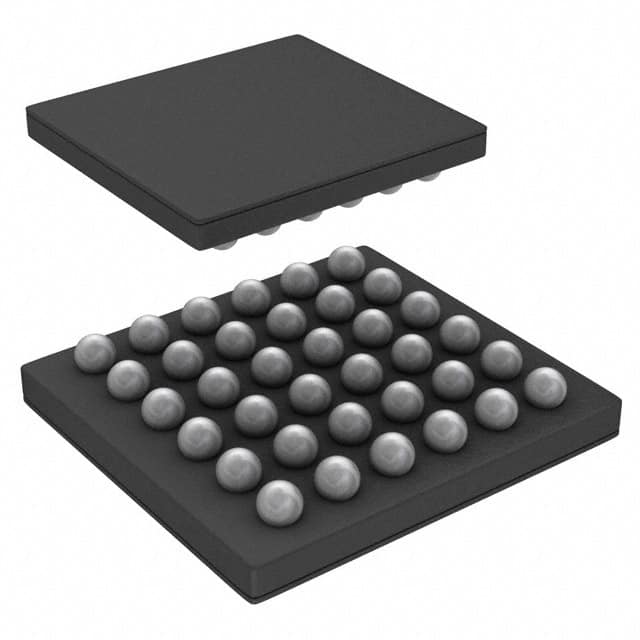
- Part No.:
- LP55281TL/NOPB
- Manufacturer:
- Texas Instruments
- Category:
- LED Drivers
- Package:
- 36-WFBGA, DSBGA
- Datasheet:
-
 LP55281TL/NOPB.pdf
- Description:
- IC LED DRV RGLTR I2C 36DSBGA
- Quantity:
- Payment:

- Shipping:

Inventory:1,241
Please send an inquiry. Send us your inquiry, and we will respond immediately.
Product details
Overview
LP55281TL/NOPB from Texas Instruments is a 12-channel RGB/white-LED driver IC with integrated magnetic boost DC-DC converter, SPI/I²C interface, and audio-synchronized LED control. It drives four independent RGB LED sets (R1–R4, G1–G4, B1–B4) plus one dedicated ALED output, supports 4–5.3 V boost output, 300–400 mA max load current, and 9.92–39.68 kHz programmable PWM frequency for handheld lighting applications.
For engineers reviewing the LP55281TL/NOPB datasheet, LP55281TL/NOPB pinout, LP55281TL/NOPB application, or LP55281TL/NOPB equivalent, key selection criteria include boost voltage programmability (8-bit register), dual audio sync inputs (ASE1/ASE2), LED connectivity test capability, and DSBGA-36 package compatibility with space-constrained mobile designs.
Technical Context
The LP55281TL/NOPB integrates a current-programmed mode (CPM) magnetic boost converter with pulse-skipping elimination, enabling stable 4–5.3 V output from 3–4.5 V Li-ion input. Its 12-channel RGB sink drivers use a shared external RRGB resistor (8.2 kΩ typical) and per-channel 6-bit PWM registers for precise current control.
Audio synchronization is implemented digitally via dual stereo analog inputs (ASE1/ASE2), peak detection, AGC, and DC removal (–3 dB at 500 Hz), driving the ALED output with four selectable brightness refresh frequencies. Interface flexibility includes SPI (up to 13 MHz) or I²C (400 kHz) with two I²C addresses and asynchronous NRST reset.
Key Specifications
| Parameter | Value and Actual Design Meaning |
|---|---|
| Boost Output Voltage | Programmable 4.0–5.3 V in 9 steps via 8-bit register; enables consistent LED forward voltage margin across battery discharge. |
| Max Load Current | 300 mA at 5 V output or 400 mA at 4 V output; supports high-brightness RGB clusters without external boost stages. |
| PWM Frequency | Selectable 9.92 / 19.84 / 39.68 kHz; avoids audible noise while maintaining flicker-free illumination. |
| Interface Support | SPI (13 MHz max) or I²C (400 kHz); dual I²C addresses allow multiple devices on same bus without address conflict. |
| Audio Sync Inputs | Two differential-capable analog inputs (ASE1/ASE2), 0–1.6 VPP; enables stereo-aware light effects with automatic gain control and digital peak detection. |
| Package | 36-pin DSBGA, 2.982 mm × 2.982 mm; ultra-compact footprint optimized for thin mobile PCBs with minimal external components. |
| Thermal Resistance | RθJA = 48.9°C/W (YPG); ensures reliable operation up to 85°C ambient with internal thermal shutdown at 160°C. |
Pinout & Package
LP55281TL/NOPB uses a 36-pin DSBGA (YPG/DSBGA) package with 0.4 mm pitch, body size 2.982 mm × 2.982 mm, and bottom-side ball layout optimized for thermal dissipation and compact routing.
| Pin/Terminal | Circuit Role | Design Meaning |
|---|---|---|
| VDD1, VDD2, VDDIO, VDDA | Power supply rails | VDD1/VDD2: core logic supply (2.7–5.5 V); VDDIO: I/O buffer supply (1.65–VDD1); VDDA: internal LDO output (2.8 V ±3%) for analog blocks. |
| R1–R4, G1–G4, B1–B4 | RGB LED sink outputs | 12 individually PWM-controllable current sinks; each set enabled via EN_RGBx bit; sink current set by RRGB and IPLS bits. |
| ALED | Audio-sync LED output | Dedicated current sink (13.2 mA typical) driven by digital audio processing path; supports real-time light-to-sound mapping. |
| ASE1, ASE2 | Analog audio inputs | High-impedance (10–15 kΩ) stereo inputs; mixed internally for mono sync; accept 0–1.6 VPP signals with DC removal. |
| SCK/SCL, SI/A0, SS/SDA, SO | Serial interface pins | Configurable for SPI (4-wire) or I²C (2-wire); IF_SEL selects mode; supports daisy-chain or multi-drop topology. |
| NRST | Asynchronous reset | Active-low reset (VIH ≥1.2 V, VIL ≤0.5 V); minimum 10 µs pulse width required for reliable initialization. |
| SW, FB | Boost converter terminals | SW: internal NMOS switch node; FB: resistive divider feedback for output voltage regulation; requires external 4.7 µH inductor and 10 µF capacitors. |
| IRGB, IRT | Current-setting resistors | IRGB sets RGB sink current scale (1.23 V / RRGB); IRT sets boost oscillator frequency (82 kΩ → 2 MHz default). |
Key Features
| Feature | Design Value |
|---|---|
| Integrated magnetic boost converter | Eliminates need for external boost IC; delivers 4–5.3 V at up to 400 mA with >79% efficiency at 3.6 V input and 300 mA load. |
| Per-channel 6-bit PWM control | Enables 64-step brightness resolution per LED channel (R/G/B), supporting smooth color mixing and gradient effects. |
| Dual audio sync inputs with AGC | Allows robust light response to varying audio source levels without manual gain tuning; supports both mono and stereo input sources. |
| LED connectivity test function | Verifies open/short faults on all 13 outputs (12 RGB + ALED) via serial interface-critical for production line testing and field diagnostics. |
| Flexible interface selection | Single hardware pin (IF_SEL) switches between SPI and I²C modes; simplifies firmware reuse across platform variants. |
Applications
| Smartphone Status Lighting | Wearable Fitness Tracker UI |
|---|---|
Use Scenario: Dynamic notification lighting on smartphone bezels or camera ring using RGB LEDs. IC Role / Device Role / Timing Role: LP55281TL/NOPB acts as primary LED driver and audio-reactive controller, managing 12 channels independently with synchronized PWM timing to minimize current spikes. Use Value: Enables rich visual feedback (e.g., breathing effects, color transitions) while maintaining <1 µA standby current and leveraging built-in audio sync for media playback cues. | Use Scenario: Real-time heart-rate visualization and activity alerts on small-form-factor wearable displays. IC Role / Device Role / Timing Role: LP55281TL/NOPB serves as compact RGB driver with ultra-low quiescent current (350 µA no-boost mode), interfacing directly to MCU over I²C in space-limited layouts. Use Value: Delivers precise color accuracy and flicker-free illumination using per-channel 6-bit PWM, reducing external component count versus discrete driver solutions. |
| Portable Media Player Effects | IoT Smart Speaker Ambient Lighting |
Use Scenario: Audio-responsive LED rings on MP3 players that pulse in time with music beat and spectrum. IC Role / Device Role / Timing Role: LP55281TL/NOPB functions as audio-synchronized LED engine, digitizing ASE1/ASE2 inputs and driving ALED + RGB outputs with programmable refresh rates. Use Value: Provides deterministic light-to-sound latency (<10 ms) and automatic gain scaling-eliminating need for host MCU audio preprocessing. | Use Scenario: Multi-zone ambient lighting behind smart speaker fabric grilles, reacting to voice assistant status and audio playback. IC Role / Device Role / Timing Role: LP55281TL/NOPB operates as standalone lighting controller, using its internal oscillator and register-based sequencing to run lighting patterns without continuous MCU intervention. Use Value: Reduces host processor load and power consumption via autonomous pattern execution and low-power standby modes (1 µA). |
Equivalent & Alternatives
The following parts are listed as comparable options for similar RGB LED driver applications.
| Alternative Part | Technical Difference | Application Difference | Selection Advice |
|---|---|---|---|
| LP5562TMX/NOPB | 12-channel RGB driver with higher max current (60 mA/channel), integrated 1.8-V LDO, and enhanced audio sync with FFT-based analysis. | Targets premium smartphones requiring richer audio visualization and tighter color consistency across temperature. | Choose LP5562TMX/NOPB when higher per-channel current, wider input voltage range (2.7–5.5 V), or advanced spectral sync is required. |
| LP55231TP/NOPB | 9-channel RGB driver with identical DSBGA-36 package, but lacks ALED output and audio sync; uses simpler 4-bit PWM. | Suitable for cost-sensitive portable devices needing basic RGB control without audio features. | Choose LP55231TP/NOPB when audio synchronization is unnecessary and lower channel count suffices for design goals. |
Compared with LP5562TMX/NOPB, LP55281TL/NOPB offers lower system cost and smaller die size while retaining full audio sync functionality; compared with LP55231TP/NOPB, it adds dedicated ALED output and stereo audio support-making it optimal for mid-tier consumer audio-visual devices.
Availability
LP55281TL/NOPB is available at Aetrix Electronics and suitable for smartphone status lighting, wearable fitness tracker UI, portable media player effects, and IoT smart speaker ambient lighting requiring stable component supply and long-term industrial availability.
Supply support for LP55281TL/NOPB includes scheduled delivery planning, volume procurement assistance, BOM continuity management, traceable sourcing, and lifecycle availability coordination for OEM customers, industrial embedded developers, connected-device designers, and electronics production programs.
Manufacturer
Texas Instruments is a global semiconductor company specializing in analog and embedded processing technologies, with leadership in power management, signal chain, and interface solutions.
The LP55281TL/NOPB belongs to TI's LP55xx family of highly integrated LED drivers designed specifically for space-constrained, battery-powered consumer electronics requiring dynamic lighting and audio-reactive capabilities.
FAQ
What is the maximum output voltage setting for the LP55281TL/NOPB boost converter?
The LP55281TL/NOPB boost converter supports programmable output voltage from 4.0 V to 5.3 V in nine discrete steps via the 8-bit BOOST OUTPUT register (00h = 4.0 V, FFh = 5.3 V). The default factory setting is 3Fh (5.0 V), and the output is regulated using an internal error amplifier and external FB resistor divider. This range ensures compatibility with common white and RGB LED forward voltages across battery discharge cycles.
How does the LP55281TL/NOPB implement audio synchronization without external DSP?
The LP55281TL/NOPB implements audio synchronization entirely on-die using dual analog inputs (ASE1/ASE2), a 10-bit ADC, digital DC removal (–3 dB at 500 Hz), automatic gain control (AGC), and a peak detector. These blocks feed a dedicated ALED control engine that maps audio amplitude to LED brightness in real time-requiring no host MCU audio processing. The LP55281TL/NOPB supports four selectable refresh frequencies and stereo-to-mono mixing, enabling responsive light effects directly from line-level or headphone signals.
Can the LP55281TL/NOPB drive LEDs from an external supply instead of its internal boost converter?
Yes, the LP55281TL/NOPB can drive RGB LEDs from either its internal boost output or an external supply. The R1–R4, G1–G4, and B1–B4 outputs are current sinks referenced to their respective ground pins (GND_RGB1, GND_RGB2), allowing connection to external voltage rails up to 6 V. When using external supply, the internal boost converter may be disabled (EN_BOOST = 0) to reduce power consumption. This flexibility supports hybrid lighting architectures where some LEDs use boost power and others use system rail voltage.
What is the purpose of the IRGB and IRT pins on the LP55281TL/NOPB?
The IRGB pin sets the full-scale current for all 12 RGB sink outputs via an external resistor (RRGB), establishing the reference for the current mirror array (IRGB = 1.23 V / RRGB). The IRT pin sets the boost converter switching frequency using an external timing resistor (RRT); with RRT = 82 kΩ, the default frequency is 2 MHz. Both pins use precision internal voltage references (1.23 V and 1.25 V respectively), enabling accurate, temperature-stable current and frequency control without trimming.
Does the LP55281TL/NOPB support LED open-circuit or short-circuit fault detection?
Yes, the LP55281TL/NOPB includes built-in LED connectivity test functionality accessible via its serial interface. By activating the test mode, the device sequentially applies test currents to each of the 13 outputs (R1–R4, G1–G4, B1–B4, ALED) and monitors resulting voltage levels to detect opens (no current flow) or shorts (excessive current). This feature is used during manufacturing test and field diagnostics, eliminating the need for external test circuitry and reducing BOM cost and board area.
LP55281TL/NOPB Specifications
- Product attributes
- Attribute value
- Manufacturer:
- Texas Instruments
- Series:
- -
- Package/Case:
- 36-WFBGA, DSBGA
- Packaging:
- Tape & Reel (TR)
- Product Status:
- Active
- Type:
- DC DC Regulator
- Topology:
- Step-Up (Boost)
- Internal Switch(s):
- Yes
- Number of Outputs:
- 12
- Voltage - Supply (Min):
- 3V
- Voltage - Supply (Max):
- 5.5V
- Voltage - Output:
- 4V ~ 5.3V
- Current - Output / Channel:
- 40mA
- Frequency:
- 2MHz
- Dimming:
- I2C, SPI
- Applications:
- Backlight
- Operating Temperature:
- -30°C ~ 85°C (TA)
- Grade:
- -
- Qualification:
- -
- Mounting Type:
- Surface Mount
- Supplier Device Package:
- 36-DSBGA
LP55281TL/NOPB FAQ
1.How can I place an order for LP55281TL/NOPB through Aetrix?
Please submit a Request for Quotation (RFQ) for LP55281TL/NOPB on Aetrix. Our sales agent will provide a competitive quotation and guide you through the order confirmation once you accept the terms.
2.Are the price and stock information for LP55281TL/NOPB reliable?
The price and inventory of LP55281TL/NOPB are updated periodically and may fluctuate due to market conditions. Stock and pricing data are typically refreshed every 24 hours. Quotation validity for LP55281TL/NOPB is usually 5 days.
3.What payment methods are accepted for LP55281TL/NOPB?
We accept Wire Transfer, PayPal, Credit Card, Western Union, MoneyGram, and Escrow for LP55281TL/NOPB transactions.
Note: Certain payment methods may incur a processing fee.
4.How is shipping managed for LP55281TL/NOPB?
LP55281TL/NOPB orders can be shipped via leading logistics carriers, including DHL, UPS, FedEx, TNT, or Registered Mail.
Once your LP55281TL/NOPB order is processed, you will receive an email with the shipment details and tracking number.
Note: Tracking information may take up to 24 hours to appear. Express delivery typically takes 3–5 business days.
5.How can I obtain technical support or documentation for LP55281TL/NOPB?
For technical support, including LP55281TL/NOPB datasheets, pinout diagrams, or application guidance, please contact our engineering support team. They can provide detailed documentation and assistance for your LP55281TL/NOPB requirements.
6.How does Aetrix verify that LP55281TL/NOPB is sourced from the original manufacturer or authorized distributors?
All LP55281TL/NOPB products on Aetrix are procured from qualified distributors and authorized channels. Our dedicated quality assurance team conducts strict verification, including traceability checks and, if necessary, third-party testing. This ensures that LP55281TL/NOPB meets industry standards.
7.What is the process for return or replacement of LP55281TL/NOPB?
All LP55281TL/NOPB units undergo pre-shipment inspection (PSI). If there is an issue with LP55281TL/NOPB, returns or replacements are accepted under the following conditions:
1.Quantity discrepancies, incorrect items, or visible external defects (such as breakage or corrosion), acknowledged by Aetrix.
2.The issue is reported within 90 days of delivery.
3.The LP55281TL/NOPB part is unused and in its original packaging.
Return procedure for LP55281TL/NOPB:
1.Submit a request within 90 days.
2.Obtain a Return Material Authorization (RMA) from Aetrix.
LP55281TL/NOPB Tags
-
BCR402RE6327HTSA1
Infineon Technologies

-
BCR430UXTSA2
Infineon Technologies
-
BCR420UE6433HTMA1
Infineon Technologies
-
BCR420UE6327HTSA1
Infineon Technologies
-
BCR421UE6327HTSA1
Infineon Technologies
-
LYT1604D-TL
Power Integrations

-
HV9910CLG-G
Microchip Technology
-
CL2N8-G
Microchip Technology
-
BCR420UW6-7
Diodes Incorporated
-
BCR421UW6-7
Diodes Incorporated
-
BCR420UFD-7
Diodes Incorporated
-
BCR421UFD-7
Diodes Incorporated
Tech Hub

A practical engineering guide to 3.3V and 5V logic compatibility, input thresholds, resistor dividers, translator ICs, MOSFET level shifting, I2C pull-ups, timing limits and power-sequencing risks.

The 74HC595 uses push-pull logic outputs, while the TPIC6B595 uses 50 V open-drain DMOS sinks for higher-power loads. This guide compares timing, current limits, 3.3 V interfacing, load wiring, thermal…

The 74HC595 converts serial data into eight stable parallel outputs. This guide covers pin functions, shift and storage timing, OE and MR behavior, drive-current limits, cascading, voltage compatibilit…

A technical comparison of level-sensitive latches and edge-triggered flip-flops, covering timing windows, setup and hold limits, master–slave operation, time borrowing, race-through, HDL inference and…

A D latch stores one bit while Enable controls when data can pass. This reference covers gate-level operation, truth tables, transparency, setup and hold timing, LE versus OE, common ICs and practical …

An SR latch stores one bit through cross-coupled feedback. This engineering reference covers NOR and NAND implementations, truth tables, forbidden-state recovery, gated operation, switch debouncing, fa…

Latch circuits retain one bit through feedback. This technical reference covers SR and D latches, truth tables, transparency, timing limits, latch-versus-flip-flop behavior, applications and common log…

An engineering guide to LED driver operation, constant-current and constant-voltage outputs, linear and switching topologies, dimming, IC selection, calculations, replacement compatibility, and fault c…

Operational amplifier guide covering op amp basics, feedback, ideal vs real op amps, common configurations, buffer circuits, offset, bias current, gain-bandwidth, slew rate, rail-to-rail limits and sel…

Jumper cables guide covering safe connection order, red and black clamp placement, final ground connection, cable gauge, length, clamp quality, copper vs CCA cables, jump starter comparison and battery…


