
 My Inquiry
 My Account


Texas Instruments LP5864MRSMR

- Part No.:
- LP5864MRSMR
- Manufacturer:
- Texas Instruments
- Category:
- LED Drivers
- Package:
- 32-VFQFN Exposed Pad
- Datasheet:
-
 LP5864MRSMR.pdf
- Description:
- 4 18 LED MATRIX DRIVER WITH 8-B
- Quantity:
- Payment:

- Shipping:

Inventory:1,189
Please send an inquiry. Send us your inquiry, and we will respond immediately.
Product details
Overview
LP5864MRSMR from Texas Instruments is a 4 × 18 LED matrix driver IC with 18 precision constant-current sinks and 4 high-side PMOS scan switches, supporting up to 72 individually addressable LED dots or 24 RGB pixels. It delivers 0.1–50 mA per sink (VCC ≥ 3.3 V), ±5% device-to-device and channel-to-channel current accuracy, and operates across –40°C to +85°C (extended –55°C to +125°C). It enables high-fidelity LED animation in compact audio peripherals and smart home interfaces.
For engineers reviewing the LP5864MRSMR datasheet, LP5864MRSMR pinout, LP5864MRSMR application, or LP5864MRSMR equivalent, key selection criteria include its dual I²C/SPI interface (1 MHz / 12 MHz), 8-/16-bit per-dot PWM dimming with >20 kHz frequency to eliminate audible noise, full SRAM-based frame control, and integrated open/short detection for reliability-critical lighting systems.
Technical Context
The LP5864MRSMR implements time-multiplexed matrix driving using four programmable high-side PMOS switches (SW0–SW3) and 18 current sinks (CS0–CS17), enabling configurable 1–4-line scanning. Its internal 32-MHz oscillator feeds configurable PWM generators with phase-shift capability to balance transient power and suppress ghosting.
It integrates deghosting circuitry (upside/downside), low-brightness compensation across three current-sink groups, and full addressable SRAM for partial or full frame updates-reducing host MCU bandwidth demand while maintaining precise per-dot analog (8-bit DC, 7-bit CC, 3-bit MC) and PWM control.
Key Specifications
| Parameter | Value and Actual Design Meaning |
|---|---|
| VCC / VLED Range | 2.7 V to 5.5 V - supports single-supply operation across common logic and LED rail voltages |
| Constant Current Range | 0.1 mA to 50 mA per sink (VCC ≥ 3.3 V) - enables wide dynamic range for dimmable monochrome or RGB LEDs |
| Current Accuracy | ±5% device-to-device and channel-to-channel error - ensures uniform brightness without external calibration |
| PWM Frequency | 62.5 kHz or 125 kHz - eliminates audible noise and enables smooth, flicker-free animation |
| Interface Speed | I²C up to 400 kHz; SPI up to 12 MHz - balances simplicity and throughput for real-time frame updates |
| Operating Temp | –55°C to +125°C - qualified for extended industrial and automotive-adjacent environments |
| Supply Current | ≤2 µA shutdown, ≤10 µA standby, 4.3–6 mA active (all channels @ 5 mA) - minimizes system power in always-on UIs |
Pinout & Package
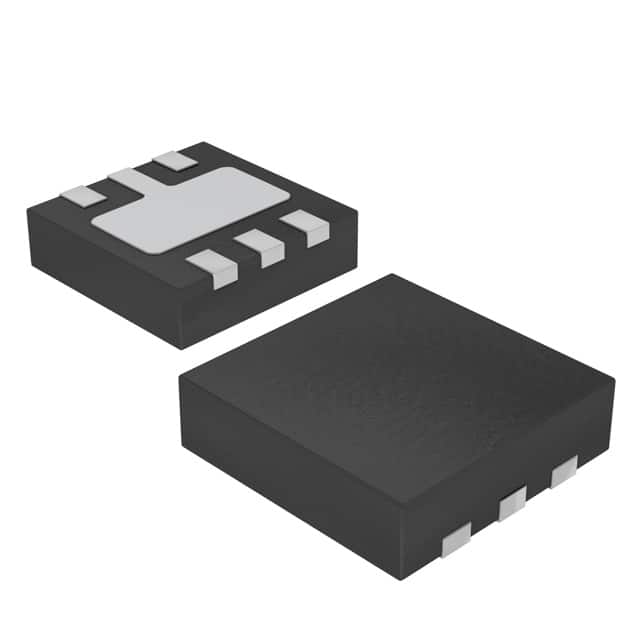
VQFN-32 package with 4 mm × 4 mm body and exposed thermal pad; RoHS-compliant, moisture-sensitive level 2a.
| Pin/Terminal | Circuit Role | Design Meaning |
|---|---|---|
| VCC | Device core supply | Power input for digital logic and internal LDO; requires 1-μF decoupling to GND |
| VLED | High-side switch supply | Input for 4 PMOS scan drivers; independent of VCC to optimize LED forward voltage headroom |
| VIO_EN | Digital I/O supply & chip enable | 1.65–5.5 V logic rail; also serves as hardware enable - low = shutdown |
| CS0–CS17 | Constant-current sink outputs | 18 open-drain outputs; each drives cathode of LED dot in multiplexed matrix |
| SW0–SW3 | High-side PMOS scan switches | 4 anode-select lines; support 1–4 line scanning; RDS(on) = 310–570 mΩ (VLED = 2.7–5 V) |
| SDA_MOSI / SCL_SCLK / ADDR0_MISO / ADDR1_SS / IFS / VSYNC | Dual-mode serial interface | Configurable I²C (IFS = low) or SPI (IFS = high); VSYNC enables synchronized multi-chip display mode |
| VCAP | Internal LDO output | Stabilized 1.78 V supply for analog blocks; requires 1-μF capacitor to GND |
Key Features
| Feature | Design Value |
|---|---|
| Per-dot 8-/16-bit PWM dimming | Enables >65k grayscale levels per LED with >20 kHz frequency - no audible whine, no visible flicker |
| Full SRAM frame buffer | Reduces host data traffic by allowing partial updates; supports real-time animation without frame tearing |
| Integrated deghosting | Active upside (scan-line discharge) and downside (current-sink precharge) cancellation - eliminates crosstalk in dense matrices |
| Three-group low-brightness compensation | Corrects color shift and non-uniformity at <10% duty cycle across CS0–CS17 grouped into RGB-aligned sets |
| LED open/short detection | Hardware-level fault monitoring per sink using VLOD_TH (0.25 V) and VLSD_TH (VLED – 1 V) thresholds |
Applications
| Keyboard & Gaming Peripherals | Smart Speakers & Audio Devices |
|---|---|
Use Scenario: RGB backlighting for mechanical keyboards and programmable gaming mice with dynamic lighting effects. IC Role / Device Role / Timing Role: LED matrix driver providing per-key dot control via SPI at ≥10 kHz update rate. Use Value: Enables smooth, synchronized animations with zero audible noise and consistent brightness across 72+ keys. | Use Scenario: Status and feedback illumination on voice-controlled smart speakers and wireless soundbars. IC Role / Device Role / Timing Role: Constant-current sink driver managing multi-color ring or bar indicators with I²C interface. Use Value: Delivers uniform color rendering and low-power standby (<10 µA) for always-listening devices. |
| Home Appliance UI Panels | Pro Audio & Broadcast Equipment |
Use Scenario: Touch-sensitive control panels on refrigerators, ovens, and HVAC systems with animated status icons. IC Role / Device Role / Timing Role: Time-multiplexed LED driver supporting 24 RGB pixels with thermal-aware current regulation. Use Value: Maintains brightness consistency over –40°C to +85°C ambient and survives repeated thermal cycling. | Use Scenario: Channel metering, mute indicators, and transport controls on DJ mixers and broadcast consoles. IC Role / Device Role / Timing Role: High-speed PWM controller synchronizing LED response to audio signal envelope via VSYNC. Use Value: Achieves sub-100 µs latency between audio event and visual feedback with glitch-free transitions. |
Equivalent & Alternatives
The following parts are listed as comparable options for similar LED matrix driver applications.
| Alternative Part | Technical Difference | Application Difference | Selection Advice |
|---|---|---|---|
| LP5864RSMR | Same silicon, standard temperature grade (–40°C to +85°C); identical pinout, registers, and electrical specs | Lacks extended temperature qualification; unsuitable for under-hood or industrial edge deployments | Select LP5864RSMR only when ambient operating range stays within commercial limits |
| LP5866MDBTR | 6-scan-line variant (108 LED dots); TSSOP-38 package; higher pin count and larger footprint | Supports denser displays but requires PCB redesign and higher layout complexity | Choose LP5866MDBTR only when >72 dots are required and board space allows TSSOP-38 |
Compared with LP5864RSMR, LP5864MRSMR adds extended temperature operation (–55°C to +125°C) without sacrificing performance or compatibility; versus LP5866MDBTR, it offers identical feature depth in a smaller VQFN-32 package optimized for space-constrained consumer electronics.
Availability
LP5864MRSMR is available at Aetrix Electronics and suitable for keyboard backlighting, smart speaker status indication, and pro-audio metering requiring stable component supply across extended temperature ranges and long production lifecycles.
Supply support for LP5864MRSMR includes scheduled delivery planning, volume procurement assistance, BOM continuity management, traceable sourcing, and lifecycle availability coordination for OEM customers, industrial embedded developers, connected-device designers, and electronics production programs.
Manufacturer
Texas Instruments is a global semiconductor leader delivering analog, embedded processing, and connectivity solutions with emphasis on reliability, precision, and energy efficiency.
The LP586x family was designed specifically for high-density, low-noise LED matrix applications in human-interface devices-prioritizing per-pixel control fidelity, thermal robustness, and minimal host MCU overhead.
FAQ
What is the maximum LED dot count supported by LP5864MRSMR?
The LP5864MRSMR supports up to 72 LED dots using its 4 high-side scan switches (SW0–SW3) and 18 constant-current sinks (CS0–CS17) in time-multiplexed matrix configuration. This equates to 24 RGB pixels when arranged as 3-color clusters. The LP5864MRSMR achieves this without external components, leveraging internal SRAM and programmable scan-line control to minimize host interface bandwidth.
Does LP5864MRSMR support both I²C and SPI interfaces simultaneously?
No - LP5864MRSMR uses a single hardware interface configurable as either I²C or SPI via the IFS pin. When IFS is low, SDA_MOSI and SCL_SCLK operate as I²C data/clock with 1-MHz max speed; when IFS is high, they become SPI MOSI/SCLK with 12-MHz max speed. ADDR0_MISO and ADDR1_SS serve dual roles as I²C address pins or SPI MISO/SS, ensuring pin compatibility across modes.
How does LP5864MRSMR handle LED open and short circuit detection?
LP5864MRSMR implements hardware-based per-sink fault detection: open-circuit detection triggers when sink voltage exceeds 0.25 V (VLOD_TH), and short-circuit detection activates when voltage drops below (VLED – 1 V) (VLSD_TH). These thresholds are fixed and monitored continuously during active operation. Detected faults are reported via status registers readable over I²C/SPI, enabling fail-safe UI behavior without host polling overhead.
What thermal performance can be expected from LP5864MRSMR in a typical 4-layer PCB layout?
In a standard 4-layer PCB with 1-in² 2-oz copper thermal pad connected to internal ground planes, LP5864MRSMR exhibits RθJB = 12.3°C/W and RθJA = 32.9°C/W. At full load (72 LEDs @ 10 mA), junction temperature rise remains below 45°C above ambient - well within the 150°C absolute max, even at +125°C ambient. Thermal shutdown activates at 150°C with 15°C hysteresis (THYS) to prevent cycling.
Can LP5864MRSMR drive RGB LEDs with independent color control?
Yes - LP5864MRSMR supports true per-color control via three independent 7-bit Color Current (CC) registers (CC_Group1–3), mapped to predefined current-sink groups (e.g., CS0/CS3/CS6… for red). Combined with global 3-bit Maximum Current (MC) and per-sink 8-bit Dot Current (DC), it enables precise white-point tuning, gamma correction, and dynamic color mixing across 24 RGB pixels without external DACs or current-setting resistors.
LP5864MRSMR Specifications
- Product attributes
- Attribute value
- Manufacturer:
- Texas Instruments
- Series:
- -
- Package/Case:
- 32-VFQFN Exposed Pad
- Packaging:
- Tape & Reel (TR)
- Product Status:
- Active
- Type:
- Linear
- Topology:
- Constant Current
- Internal Switch(s):
- Yes
- Number of Outputs:
- 18
- Voltage - Supply (Min):
- 2.7V
- Voltage - Supply (Max):
- 5.5V
- Voltage - Output:
- 2.7V ~ 5.5V
- Current - Output / Channel:
- 50mA
- Frequency:
- 31.2MHz
- Dimming:
- Analog, I2C, PWM, SPI
- Applications:
- General Purpose
- Operating Temperature:
- -55°C ~ 125°C (TA)
- Grade:
- -
- Qualification:
- -
- Mounting Type:
- Surface Mount
- Supplier Device Package:
- 32-VQFN (4x4)
LP5864MRSMR FAQ
1.How can I place an order for LP5864MRSMR through Aetrix?
Please submit a Request for Quotation (RFQ) for LP5864MRSMR on Aetrix. Our sales agent will provide a competitive quotation and guide you through the order confirmation once you accept the terms.
2.Are the price and stock information for LP5864MRSMR reliable?
The price and inventory of LP5864MRSMR are updated periodically and may fluctuate due to market conditions. Stock and pricing data are typically refreshed every 24 hours. Quotation validity for LP5864MRSMR is usually 5 days.
3.What payment methods are accepted for LP5864MRSMR?
We accept Wire Transfer, PayPal, Credit Card, Western Union, MoneyGram, and Escrow for LP5864MRSMR transactions.
Note: Certain payment methods may incur a processing fee.
4.How is shipping managed for LP5864MRSMR?
LP5864MRSMR orders can be shipped via leading logistics carriers, including DHL, UPS, FedEx, TNT, or Registered Mail.
Once your LP5864MRSMR order is processed, you will receive an email with the shipment details and tracking number.
Note: Tracking information may take up to 24 hours to appear. Express delivery typically takes 3–5 business days.
5.How can I obtain technical support or documentation for LP5864MRSMR?
For technical support, including LP5864MRSMR datasheets, pinout diagrams, or application guidance, please contact our engineering support team. They can provide detailed documentation and assistance for your LP5864MRSMR requirements.
6.How does Aetrix verify that LP5864MRSMR is sourced from the original manufacturer or authorized distributors?
All LP5864MRSMR products on Aetrix are procured from qualified distributors and authorized channels. Our dedicated quality assurance team conducts strict verification, including traceability checks and, if necessary, third-party testing. This ensures that LP5864MRSMR meets industry standards.
7.What is the process for return or replacement of LP5864MRSMR?
All LP5864MRSMR units undergo pre-shipment inspection (PSI). If there is an issue with LP5864MRSMR, returns or replacements are accepted under the following conditions:
1.Quantity discrepancies, incorrect items, or visible external defects (such as breakage or corrosion), acknowledged by Aetrix.
2.The issue is reported within 90 days of delivery.
3.The LP5864MRSMR part is unused and in its original packaging.
Return procedure for LP5864MRSMR:
1.Submit a request within 90 days.
2.Obtain a Return Material Authorization (RMA) from Aetrix.
LP5864MRSMR Tags
-
BCR402RE6327HTSA1
Infineon Technologies

-
BCR430UXTSA2
Infineon Technologies
-
BCR420UE6433HTMA1
Infineon Technologies
-
BCR420UE6327HTSA1
Infineon Technologies
-
BCR421UE6327HTSA1
Infineon Technologies
-
LYT1604D-TL
Power Integrations

-
HV9910CLG-G
Microchip Technology

-
CL2N8-G
Microchip Technology
-
BCR420UW6-7
Diodes Incorporated
-
BCR421UW6-7
Diodes Incorporated
-
BCR420UFD-7
Diodes Incorporated
-
BCR421UFD-7
Diodes Incorporated
Tech Hub

A practical engineering guide to 3.3V and 5V logic compatibility, input thresholds, resistor dividers, translator ICs, MOSFET level shifting, I2C pull-ups, timing limits and power-sequencing risks.

The 74HC595 uses push-pull logic outputs, while the TPIC6B595 uses 50 V open-drain DMOS sinks for higher-power loads. This guide compares timing, current limits, 3.3 V interfacing, load wiring, thermal…

The 74HC595 converts serial data into eight stable parallel outputs. This guide covers pin functions, shift and storage timing, OE and MR behavior, drive-current limits, cascading, voltage compatibilit…

A technical comparison of level-sensitive latches and edge-triggered flip-flops, covering timing windows, setup and hold limits, master–slave operation, time borrowing, race-through, HDL inference and…

A D latch stores one bit while Enable controls when data can pass. This reference covers gate-level operation, truth tables, transparency, setup and hold timing, LE versus OE, common ICs and practical …

An SR latch stores one bit through cross-coupled feedback. This engineering reference covers NOR and NAND implementations, truth tables, forbidden-state recovery, gated operation, switch debouncing, fa…

Latch circuits retain one bit through feedback. This technical reference covers SR and D latches, truth tables, transparency, timing limits, latch-versus-flip-flop behavior, applications and common log…

An engineering guide to LED driver operation, constant-current and constant-voltage outputs, linear and switching topologies, dimming, IC selection, calculations, replacement compatibility, and fault c…

Operational amplifier guide covering op amp basics, feedback, ideal vs real op amps, common configurations, buffer circuits, offset, bias current, gain-bandwidth, slew rate, rail-to-rail limits and sel…

Jumper cables guide covering safe connection order, red and black clamp placement, final ground connection, cable gauge, length, clamp quality, copper vs CCA cables, jump starter comparison and battery…


