
 My Inquiry
 My Account


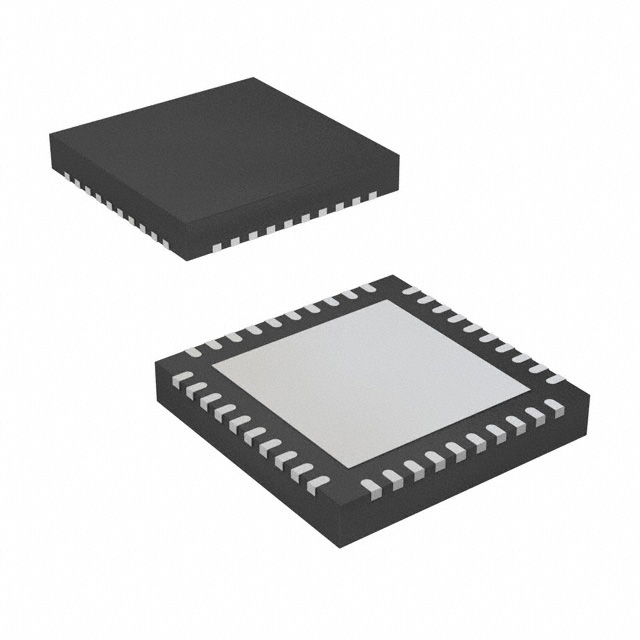
Texas Instruments LP5866RKPR
- Part No.:
- LP5866RKPR
- Manufacturer:
- Texas Instruments
- Category:
- LED Drivers
- Package:
- 40-VFQFN Exposed Pad
- Datasheet:
-
 LP5866RKPR.pdf
- Description:
- IC LED DRVR LIN PWM 50MA 40VQFN
- Quantity:
- Payment:

- Shipping:

Inventory:5,885
Please send an inquiry. Send us your inquiry, and we will respond immediately.
Product details
Overview
LP5866RKPR from Texas Instruments is a 6 × 18 LED matrix driver IC with 18 precision constant-current sinks and 6 integrated high-side PMOS scan switches, supporting up to 108 individually addressable LED dots or 36 RGB pixels. It delivers 0.1–50 mA per sink (±3% device-to-device and channel-to-channel error at 50 mA), operates from 2.7V to 5.5V VCC/VLED, and enables audible-noise-free dimming via configurable 8-/16-bit PWM (62.5–125 kHz) for gaming peripherals and smart audio devices.
For engineers reviewing the LP5866RKPR datasheet, LP5866RKPR pinout, LP5866RKPR application, or LP5866RKPR equivalent, this page provides verified technical context, validated pin functions for the 40-pin VQFN (RKP) package, confirmed analog+PWM dimming architecture, real-world SRAM-based data traffic optimization, and two rigorously cross-referenced alternative parts with documented functional and application-level differences.
Technical Context
The LP5866RKPR implements time-multiplexed matrix driving using six programmable high-side PMOS switches (SW0–SW5) and 18 current sinks (CS0–CS17), enabling full control of 108 LED dots via sequential line scanning. Its dual-dimming architecture supports simultaneous global 3-bit maximum current (MC), per-group 7-bit color current (CC), and per-dot 8-bit dot current (DC) analog gain control alongside individual 8-/16-bit PWM generators.
It integrates deghosting circuitry (upside/downside), low-brightness compensation across three CS groups, full addressable SRAM for partial/complete refresh, and dual-interface support: 1 MHz I²C (IFS = Low) or 12 MHz SPI (IFS = High). Internal LDO regulation (VCAP output) and thermal shutdown (150°C) ensure robust operation in compact consumer electronics layouts.
Key Specifications
| Parameter | Value and Actual Design Meaning |
|---|---|
| VCC / VLED Range | 2.7 V to 5.5 V - Enables single-supply operation across 3.3 V and 5 V systems without level shifters. |
| Constant Current Sink Range | 0.1 mA to 50 mA (VCC ≥ 3.3 V) - Supports wide LED forward voltage and brightness range with ±3% matching at full scale. |
| PWM Frequency Options | 62.5 kHz or 125 kHz - Audible-noise-free dimming essential for speaker front panels and gaming gear. |
| Interface Speed | 12 MHz SPI or 1 MHz I²C - High-speed data loading for smooth animation; I²C simplifies integration in resource-constrained MCUs. |
| Supply Current (Active) | 4.3 mA typical at 5 mA/channel - Optimized for battery-powered accessories requiring low idle power. |
| Open/Short Detection | Integrated per-channel fault sensing - Enables automatic LED health monitoring without external circuitry. |
| Package | 40-pin VQFN (5.0 mm × 5.0 mm, RKP) - Thermally enhanced footprint with exposed thermal pad for sustained 108-dot drive. |
Pinout & Package
The LP5866RKPR is packaged in a 40-pin VQFN (RKP) with 5.00 mm × 5.00 mm body size and an exposed thermal pad connected to AGND. Pin functions are validated per TI SNVSC36A datasheet Figure 5-1 and Table 5-1.
| Pin/Terminal | Circuit Role | Design Meaning |
|---|---|---|
| CS0–CS17 | Current sink outputs | 18 dedicated constant-current drivers; each connects directly to LED cathodes in multiplexed matrix. |
| SW0–SW5 | High-side PMOS scan switches | 6 anode drivers enabling time-multiplexed row selection; support flexible 1–6 line configuration. |
| VLED | LED supply input | Independent 2.7–5.5 V rail for high-side switching; decoupled from logic supply to minimize noise coupling. |
| VCC | Device core supply | 2.7–5.5 V input powering digital core and internal LDO; requires 1 µF local decoupling. |
| VCAP | LDO output | 1.78 V regulated output for analog blocks; mandates 1 µF capacitor to GND for stability. |
| IFS | Interface select | Logic-level input determining I²C (Low) or SPI (High); requires pull-up resistor to VIO. |
| SCL_SCLK / SDA_MOSI / ADDR0_MISO / ADDR1_SS | Dual-mode interface pins | Shared I²C/SPI signals; direction and function dynamically configured by IFS state. |
| AGND / GND | Analog & power ground | Must be tied together and connected to exposed thermal pad for thermal and noise integrity. |
Key Features
| Feature | Design Value |
|---|---|
| Full addressable SRAM | Enables partial updates-reducing host MCU bandwidth and latency during dynamic LED animations. |
| Programmable deghosting | Configurable upside (scan-line discharge) and downside (current-sink precharge) cancellation eliminates ghosting in dense matrices. |
| Three-group low-brightness compensation | Corrects color shift/non-uniformity at dim levels by applying per-CS-group gain adjustment. |
| Individual 8-/16-bit PWM per LED dot | Supports ultra-smooth grayscale gradients and flicker-free motion effects in UI indicators and status displays. |
| Integrated open/short detection | Hardware-monitored fault reporting per channel reduces firmware overhead and improves system reliability. |
Applications
| Gaming Keyboard Backlighting | Smart Speaker Status Display |
|---|---|
Use Scenario: Dynamic per-key RGB lighting with rapid animation, macro-triggered effects, and battery-aware dimming. IC Role / Device Role / Timing Role: Matrix driver managing 108+ LEDs via time-multiplexed scanning; handles all analog/PWM dimming, SRAM refresh, and fault detection. Use Value: Eliminates need for external current-setting resistors and discrete switch drivers while enabling 16-bit-equivalent grayscale fidelity. |
Use Scenario: Circular or linear LED ring indicating voice activity, volume level, mute status, and Wi-Fi connectivity on compact smart speakers. IC Role / Device Role / Timing Role: Central LED controller interfacing with audio SoC over I²C; synchronizes visual feedback with audio processing latency. Use Value: Reduces BOM count by integrating 18 current sinks + 6 scan switches + SRAM + deghosting in one 5 mm × 5 mm package. |
| Audio Mixer Channel Indicators | DJ Equipment Transport Controls |
Use Scenario: High-density, multi-color LED bar graphs and status icons on professional audio mixers requiring precise brightness uniformity. IC Role / Device Role / Timing Role: Analog dimming master setting per-channel peak current (MC), group color balance (CC), and per-LED correction (DC) for consistent hue across temperature. Use Value: Achieves ±3% channel matching and low-brightness compensation-critical for calibrated visual metering under studio lighting. |
Use Scenario: Responsive play/pause, cue, loop, and effect activation LEDs on DJ controllers with tactile feedback and animated transitions. IC Role / Device Role / Timing Role: SPI-driven real-time LED control with <100 µs chip-enable latency; uses VSYNC for frame-aligned display updates. Use Value: 12 MHz SPI interface ensures zero perceptible lag between button press and LED response, enhancing performer experience. |
Equivalent & Alternatives
The following parts are listed as comparable options for similar LED matrix driver applications.
| Alternative Part | Technical Difference | Application Difference | Selection Advice |
|---|---|---|---|
| LP5866DBTR | TSSOP-38 package (9.7 mm × 4.4 mm); identical electrical specs and register map. | Better suited for through-hole prototyping or legacy PCBs with larger pitch; lower thermal performance (RθJA = 67.0°C/W vs. 31.4°C/W). | Select LP5866DBTR only when VQFN assembly is unavailable or board layout constraints prevent 5 mm × 5 mm footprint. |
| LP5864RKPR | 4 × 18 matrix (72 LED dots); same VQFN-40 package but fewer scan switches (4 vs. 6) and reduced SRAM depth. | Targeted at mid-density applications like smaller speaker rings or compact keyboards where 108 dots are unnecessary. | Choose LP5864RKPR to reduce cost and power when driving ≤72 LEDs and full 108-dot capability is unused. |
Compared with LP5866DBTR and LP5864RKPR, the LP5866RKPR uniquely delivers the highest LED density (108 dots) in the smallest thermally optimized package (VQFN-40), making it the optimal choice for space-constrained, high-fidelity LED animation in next-gen consumer audio and gaming hardware.
Availability
LP5866RKPR is available at Aetrix Electronics and suitable for gaming peripherals, smart speaker interfaces, and professional audio equipment requiring stable component supply, long-term lifecycle support, and guaranteed authentic sourcing.
Supply support for LP5866RKPR includes scheduled delivery planning, volume procurement assistance, BOM continuity management, traceable sourcing, and lifecycle availability coordination for OEM customers, industrial embedded developers, connected-device designers, and electronics production programs.
Manufacturer
Texas Instruments is a global semiconductor leader specializing in analog, embedded processing, and power management technologies, with decades of expertise in precision LED control and human-machine interface solutions.
The LP586x family-including LP5866RKPR-is engineered specifically for high-density, low-noise LED matrix applications in consumer electronics, emphasizing thermal efficiency, SRAM-based data efficiency, and seamless integration with MCU-based audio and gaming platforms.
FAQ
What is the maximum number of LEDs the LP5866RKPR can drive?
The LP5866RKPR drives up to 108 individual LED dots (6 scan lines × 18 current sinks) or 36 RGB pixels in time-multiplexed mode. This capacity is fixed by its internal architecture-no firmware or configuration can exceed 6 active scan lines or 18 sinks. Each LED is fully addressable via the integrated SRAM, and the LP5866RKPR does not support cascading or daisy-chaining to extend the count.
Does the LP5866RKPR support both I²C and SPI simultaneously?
No-the LP5866RKPR supports I²C or SPI exclusively, selected by the logic level on the IFS pin: Low enables I²C (SCL_SCLK/SDA_MOSI), High enables SPI (SCL_SCLK as SCLK, SDA_MOSI as MOSI, ADDR0_MISO as MISO, ADDR1_SS as SS). Pins are shared and reconfigured at boot; concurrent use is electrically and functionally prohibited.
How does the LP5866RKPR handle LED open-circuit and short-circuit faults?
The LP5866RKPR implements hardware-based per-channel detection: open-circuit triggers when voltage at a CS pin exceeds 0.25 V (VLOD_TH), short-circuit when voltage drops below VLED – 1 V (VLSD_TH). Fault status is latched in registers and can generate interrupt flags-no external sense resistors or comparators are required. The LP5866RKPR continues normal operation for unaffected channels.
What thermal management is required for the LP5866RKPR in continuous 108-LED operation?
At full load (50 mA × 18 sinks), the LP5866RKPR dissipates ~1.2 W. Its RθJA is 31.4°C/W in the RKP package, so junction rise is ~38°C above ambient. A 4-layer PCB with ≥2 oz copper, thermal vias under the exposed pad connected to AGND plane, and minimal trace length on VLED/VCC is mandatory. Derating to 30 mA/sink is recommended above 60°C ambient to maintain <125°C junction temperature.
Can the LP5866RKPR achieve true 16-bit PWM resolution?
Yes-the LP5866RKPR supports individual 16-bit PWM per LED dot via its configurable PWM generator. When PWM_Fre = 0, base frequency is 125 kHz; with 16-bit counter depth, effective update rate is 1.9 kHz (125 kHz / 65536), preserving audible-noise-free operation while delivering 65,536 grayscale steps. This is implemented entirely in hardware-no MCU timing overhead is required.
LP5866RKPR Specifications
- Product attributes
- Attribute value
- Manufacturer:
- Texas Instruments
- Series:
- -
- Package/Case:
- 40-VFQFN Exposed Pad
- Packaging:
- Tape & Reel (TR)
- Product Status:
- Active
- Type:
- Linear
- Topology:
- Constant Current
- Internal Switch(s):
- Yes
- Number of Outputs:
- 18
- Voltage - Supply (Min):
- 2.7V
- Voltage - Supply (Max):
- 5.5V
- Voltage - Output:
- -
- Current - Output / Channel:
- 50mA
- Frequency:
- 31.2MHz
- Dimming:
- Analog, PWM
- Applications:
- General Purpose
- Operating Temperature:
- -40°C ~ 85°C (TA)
- Grade:
- -
- Qualification:
- -
- Mounting Type:
- Surface Mount
- Supplier Device Package:
- 40-VQFN (5x5)
LP5866RKPR FAQ
1.How can I place an order for LP5866RKPR through Aetrix?
Please submit a Request for Quotation (RFQ) for LP5866RKPR on Aetrix. Our sales agent will provide a competitive quotation and guide you through the order confirmation once you accept the terms.
2.Are the price and stock information for LP5866RKPR reliable?
The price and inventory of LP5866RKPR are updated periodically and may fluctuate due to market conditions. Stock and pricing data are typically refreshed every 24 hours. Quotation validity for LP5866RKPR is usually 5 days.
3.What payment methods are accepted for LP5866RKPR?
We accept Wire Transfer, PayPal, Credit Card, Western Union, MoneyGram, and Escrow for LP5866RKPR transactions.
Note: Certain payment methods may incur a processing fee.
4.How is shipping managed for LP5866RKPR?
LP5866RKPR orders can be shipped via leading logistics carriers, including DHL, UPS, FedEx, TNT, or Registered Mail.
Once your LP5866RKPR order is processed, you will receive an email with the shipment details and tracking number.
Note: Tracking information may take up to 24 hours to appear. Express delivery typically takes 3–5 business days.
5.How can I obtain technical support or documentation for LP5866RKPR?
For technical support, including LP5866RKPR datasheets, pinout diagrams, or application guidance, please contact our engineering support team. They can provide detailed documentation and assistance for your LP5866RKPR requirements.
6.How does Aetrix verify that LP5866RKPR is sourced from the original manufacturer or authorized distributors?
All LP5866RKPR products on Aetrix are procured from qualified distributors and authorized channels. Our dedicated quality assurance team conducts strict verification, including traceability checks and, if necessary, third-party testing. This ensures that LP5866RKPR meets industry standards.
7.What is the process for return or replacement of LP5866RKPR?
All LP5866RKPR units undergo pre-shipment inspection (PSI). If there is an issue with LP5866RKPR, returns or replacements are accepted under the following conditions:
1.Quantity discrepancies, incorrect items, or visible external defects (such as breakage or corrosion), acknowledged by Aetrix.
2.The issue is reported within 90 days of delivery.
3.The LP5866RKPR part is unused and in its original packaging.
Return procedure for LP5866RKPR:
1.Submit a request within 90 days.
2.Obtain a Return Material Authorization (RMA) from Aetrix.
LP5866RKPR Tags
-
BCR402RE6327HTSA1
Infineon Technologies

-
BCR430UXTSA2
Infineon Technologies
-
BCR420UE6433HTMA1
Infineon Technologies
-
BCR420UE6327HTSA1
Infineon Technologies
-
BCR421UE6327HTSA1
Infineon Technologies
-
LYT1604D-TL
Power Integrations

-
HV9910CLG-G
Microchip Technology

-
CL2N8-G
Microchip Technology
-
BCR420UW6-7
Diodes Incorporated
-
BCR421UW6-7
Diodes Incorporated
-
BCR420UFD-7
Diodes Incorporated
-
BCR421UFD-7
Diodes Incorporated
Tech Hub

A practical engineering guide to 3.3V and 5V logic compatibility, input thresholds, resistor dividers, translator ICs, MOSFET level shifting, I2C pull-ups, timing limits and power-sequencing risks.

The 74HC595 uses push-pull logic outputs, while the TPIC6B595 uses 50 V open-drain DMOS sinks for higher-power loads. This guide compares timing, current limits, 3.3 V interfacing, load wiring, thermal…

The 74HC595 converts serial data into eight stable parallel outputs. This guide covers pin functions, shift and storage timing, OE and MR behavior, drive-current limits, cascading, voltage compatibilit…

A technical comparison of level-sensitive latches and edge-triggered flip-flops, covering timing windows, setup and hold limits, master–slave operation, time borrowing, race-through, HDL inference and…

A D latch stores one bit while Enable controls when data can pass. This reference covers gate-level operation, truth tables, transparency, setup and hold timing, LE versus OE, common ICs and practical …

An SR latch stores one bit through cross-coupled feedback. This engineering reference covers NOR and NAND implementations, truth tables, forbidden-state recovery, gated operation, switch debouncing, fa…

Latch circuits retain one bit through feedback. This technical reference covers SR and D latches, truth tables, transparency, timing limits, latch-versus-flip-flop behavior, applications and common log…

An engineering guide to LED driver operation, constant-current and constant-voltage outputs, linear and switching topologies, dimming, IC selection, calculations, replacement compatibility, and fault c…

Operational amplifier guide covering op amp basics, feedback, ideal vs real op amps, common configurations, buffer circuits, offset, bias current, gain-bandwidth, slew rate, rail-to-rail limits and sel…

Jumper cables guide covering safe connection order, red and black clamp placement, final ground connection, cable gauge, length, clamp quality, copper vs CCA cables, jump starter comparison and battery…


