
 My Inquiry
 My Account


Texas Instruments LP8725TLE-A/NOPB
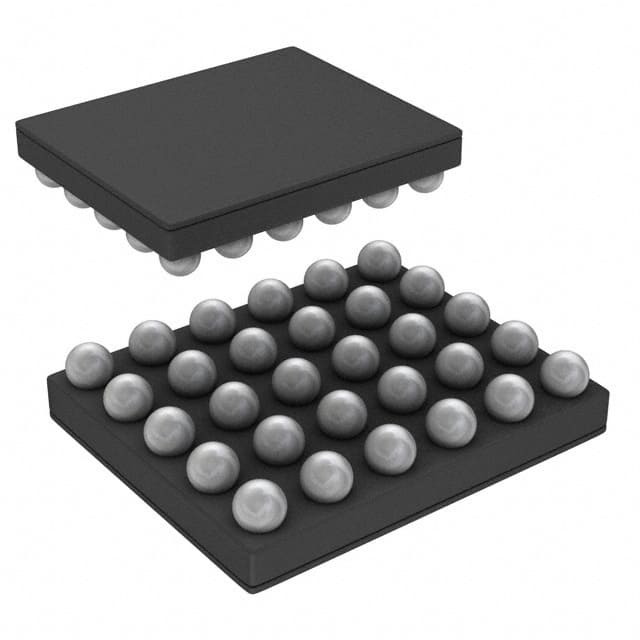
- Part No.:
- LP8725TLE-A/NOPB
- Manufacturer:
- Texas Instruments
- Category:
- Special Purpose Regulators
- Package:
- 30-WFBGA, DSBGA
- Datasheet:
-
 LP8725TLE-A/NOPB.pdf
- Description:
- IC REG CTRLR/CONV 9OUT 30DSBGA
- Quantity:
- Payment:

- Shipping:

Inventory:492
Please send an inquiry. Send us your inquiry, and we will respond immediately.
Product details
Overview
LP8725TLE-A/NOPB from Texas Instruments is a programmable power management unit (PMU) integrating two 600-mA step-down DC-DC converters (configurable up to 800 mA), three digital LDOs (300 mA each), two low-noise analog 300-mA LDOs, and two low-input/low-output regulators - all controlled via I²C interface for dynamic voltage scaling and configurable power-on sequencing in multimedia processor subsystems.
For engineers reviewing the LP8725TLE-A/NOPB datasheet, LP8725TLE-A/NOPB pinout, LP8725TLE-A/NOPB application, or LP8725TLE-A/NOPB equivalent, key selection considerations include its 30-bump DSBGA package (0.5 mm pitch), ±2% output voltage accuracy across buck and LDO rails, 10 μVrms analog LDO noise, thermal shutdown protection, and dual configuration modes (SUB_PMU or stand-alone PMU) determined by CONFIG pin wiring.
Technical Context
The LP8725TLE-A/NOPB operates in two hardware-configurable modes: SUB_PMU (CONFIG = GND) with EN/PWR_ON control and automatic standby entry, or full PMU mode (CONFIG = VIN1) supporting PS_HOLD-based system-level power hold and coordinated reset assertion. Startup and shutdown sequences are register-programmable with typical 64 µs time steps and fixed default orders dependent on DEFSEL pin state.
It implements Dynamic Voltage Scaling (DVS) for BUCK1 using either internal register control or external DVS pin logic, supports fault detection (e.g., short-circuit-induced RESET_N assertion), and delivers high PSRR and ultra-low noise ideal for powering sensitive analog blocks like ADCs, PLLs, and camera ISPs alongside digital cores.
Key Specifications
| Parameter | Value and Actual Design Meaning |
|---|---|
| Buck Output Current | 600 mA per channel (configurable up to 800 mA); enables compact 1-µH inductor designs at 4-MHz switching frequency. |
| Digital LDO Current | 300 mA per LDO (LDO1–LDO5); supports independent rail powering for multi-voltage SoC domains. |
| Analog LDO Noise | 10 μVrms; ensures clean supply for precision analog circuits without additional filtering. |
| Output Voltage Accuracy | ±2% typ. for all buck and LDO outputs; reduces margining requirements in tight-tolerance systems. |
| Package | 30-bump DSBGA, 0.5-mm pitch; provides minimal footprint (2.15 × 2.15 mm) for space-constrained portable designs. |
| I²C Interface | Standard-mode compatible (100 kHz); allows host processor to reconfigure voltages, sequencing, and enable states dynamically. |
| Startup Delay | 30 ms typ. after EN or PWR_ON assertion; synchronizes power delivery with system controller timing budgets. |
Pinout & Package
LP8725TLE-A/NOPB uses a 30-bump DSBGA package (2.15 mm × 2.15 mm, 0.5 mm pitch) with bottom-side solder balls. Pin functions are defined by physical location and CONFIG pin state (GND or VIN1), enabling dual operational modes.
| Pin/Terminal | Circuit Role | Design Meaning |
|---|---|---|
| CONFIG (E2) | Mode Selection Input | Hardwired to GND for SUB_PMU (EN-controlled) or VIN1 for PMU (PWR_ON/PS_HOLD-controlled); determines register map and reset behavior. |
| B2_EN/PS_HOLD (B3) | Mode-Dependent Control | In SUB_PMU: BUCK2 enable (logical OR with register bit); in PMU: system power-hold signal that must stay high to maintain IDLE mode. |
| EN/PWR_ON (E3) | Power Enable Input | In SUB_PMU: active-high enable for full startup sequence; in PMU: initiates 30-ms debounced power-on after rising edge. |
| RESET_N (C3) | Open-Drain Reset Output | Asserted low during UVLO, thermal shutdown, or output fault; requires external 10-kΩ pull-up for proper logic level. |
| SDA / SCL (C4 / D4) | I²C Data/Clock | Open-drain data line (1.5-kΩ pull-up required) and CMOS clock input; enables real-time voltage and sequencing reconfiguration. |
Key Features
| Feature | Design Value |
|---|---|
| Configurable Power Modes | SUB_PMU (module-level) or full PMU (processor-level) operation selected by CONFIG pin wiring - no firmware change needed. |
| Programmable Sequencing | Register-defined startup/shutdown order with 64-µs resolution; eliminates need for external sequencer ICs or complex RC networks. |
| Dual-Voltage BUCK Support | BUCK1 supports two user-defined output voltages (V1/V2) switched via DVS pin or register - enables dynamic core voltage scaling during runtime. |
| Low-Noise Analog Regulation | 10 μVrms output noise on analog LDOs (LDO2, LDO4, LDO5) - meets stringent noise requirements for RF front-ends and high-resolution ADCs. |
| Fault Monitoring | Automatic RESET_N assertion on BUCK/LDO short-circuit or undervoltage; provides fail-safe system reset without host intervention. |
Applications
| Mobile Camera Module | Portable Media Player |
|---|---|
Use Scenario: Powering image sensor, ISP, and flash LED driver in a compact camera subsystem. IC Role / Device Role / Timing Role: SUB_PMU delivering sequenced 1.2-V (sensor), 2.8-V (ISP), and 3.3-V (flash) rails with <30-ms startup alignment to host processor commands. Use Value: Eliminates discrete LDOs and sequencing logic; 10 μVrms analog LDO noise prevents image banding and color artifacts. | Use Scenario: Supplying multiple voltage domains (core, memory, audio codec, display backlight) in a battery-powered media player. IC Role / Device Role / Timing Role: Stand-alone PMU managing 1.0-V CPU core, 1.8-V memory, 3.3-V audio, and 5.0-V backlight via I²C-dynamic reconfiguration. Use Value: ±2% output accuracy reduces voltage margining; DVS support extends battery life during variable workload conditions. |
| Wireless Handheld Terminal | Industrial HMI Display |
Use Scenario: Powering ARM-based application processor, Wi-Fi/BT combo module, and capacitive touch controller in rugged handheld terminal. IC Role / Device Role / Timing Role: Dual-mode PMU operating in SUB_PMU for peripheral modules and full PMU for main SoC - sharing one I²C bus. Use Value: 30-bump DSBGA minimizes PCB area; thermal shutdown protection ensures reliability under sustained RF transmit loads. | Use Scenario: Providing stable, low-noise power to FPGA, LCD timing controller, and touch screen digitizer in factory-floor HMI. IC Role / Device Role / Timing Role: Configured as SUB_PMU to power FPGA I/O banks (1.8 V), core (1.0 V), and display interface (3.3 V) with reverse-order shutdown to prevent latch-up. Use Value: Programmable sequencing avoids supply-rail contention; LILO regulators support ultra-low-dropout operation from partially discharged 3.6-V Li-ion cells. |
Equivalent & Alternatives
The following parts are listed as comparable options for similar power management applications.
| Alternative Part | Technical Difference | Application Difference | Selection Advice |
|---|---|---|---|
| LP8725-A/NOPB | Default startup disables BUCK1 and LDO3 unless enabled via pin or register; different default voltage sets (e.g., BUCK1 = 1.1 V/1.0 V vs. LP8725's 1.0 V/1.2 V). | Optimized for subsystems requiring selective rail activation (e.g., camera only when triggered), not full-SoC power-up. | Select LP8725-A/NOPB when default OFF-state for BUCK1/LDO3 reduces quiescent current in always-on modules. |
| LP8725-C/NOPB | Enables all LDOs and BUCKs by default; fixed 1.2-V/1.8-V BUCK outputs; no DVS pin support - voltage selection purely register-based. | Targeted at fixed-voltage applications (e.g., legacy media processors) where dynamic scaling is unnecessary. | Choose LP8725-C/NOPB for simplified bring-up in designs with static voltage requirements and no runtime DVS needs. |
Compared with LP8725TLE-A/NOPB, LP8725-A/NOPB offers lower default active rail count for reduced idle power, while LP8725-C/NOPB removes external DVS dependency for deterministic voltage control - both retain identical pinout, package, and I²C register structure but differ in factory-default configuration and sequencing behavior.
Availability
LP8725TLE-A/NOPB is available at Aetrix Electronics and suitable for mobile camera modules, portable media players, wireless handheld terminals, and industrial HMI displays requiring stable component supply, long-term lifecycle support, and guaranteed traceable sourcing.
Supply support for LP8725TLE-A/NOPB includes scheduled delivery planning, volume procurement assistance, BOM continuity management, traceable sourcing, and lifecycle availability coordination for OEM customers, industrial embedded developers, connected-device designers, and electronics production programs.
Manufacturer
Texas Instruments is a global semiconductor leader specializing in analog, embedded processing, and power management technologies with decades of automotive, industrial, and consumer design expertise.
The LP8725 product line was engineered specifically for power-constrained multimedia subsystems - delivering integrated, sequenced, and low-noise regulation to replace discrete PMU solutions in portable and embedded applications.
FAQ
What is the package type and dimensions of the LP8725TLE-A/NOPB?
The LP8725TLE-A/NOPB uses a 30-bump DSBGA package measuring 2.15 mm × 2.15 mm with 0.5-mm ball pitch. This compact footprint supports high-density PCB layouts in space-limited portable devices while maintaining thermal performance through exposed die pad connectivity.
How does the CONFIG pin determine LP8725TLE-A/NOPB operating mode?
The CONFIG pin (E2) selects between SUB_PMU mode (hardwired to GND) and full PMU mode (hardwired to VIN1). In SUB_PMU mode, EN/PWR_ON initiates startup and RESET_N asserts after 30 ms; in PMU mode, PWR_ON triggers debounced startup and PS_HOLD sustains operation - altering register defaults and reset timing.
Does LP8725TLE-A/NOPB support dynamic voltage scaling, and how is it implemented?
Yes, LP8725TLE-A/NOPB supports Dynamic Voltage Scaling for BUCK1 via either the DVS pin (C2) or I²C register control (REG 0x00<2>). When DVS=1, BUCK1 outputs BUCK1_V1; when DVS=0, it outputs BUCK1_V2 - enabling real-time core voltage adjustment without interrupting system operation.
What are the default output voltages for LP8725TLE-A/NOPB when DEFSEL = VIN1?
With DEFSEL = VIN1, LP8725TLE-A/NOPB defaults to BUCK1 = 1.0 V / 1.2 V (DVS-selectable), BUCK2 = 1.8 V, LDO1 = 2.8 V, LDO2 = 1.8 V, LDO3 = 3.3 V, LDO4 = 3.3 V, LDO5 = 2.8 V, LILO1 = 1.2 V, and LILO2 = 1.2 V - all enabled at power-on unless modified via I²C or pin control.
Can LP8725TLE-A/NOPB be used without I²C configuration?
Yes, LP8725TLE-A/NOPB operates fully from hardware pin strapping (CONFIG, DEFSEL, DVS, EN/PWR_ON, B2_EN/PS_HOLD, LDO3_EN) and internal default registers. I²C is optional for runtime reconfiguration - default startup sequence, voltages, and enable states function autonomously upon power application.
LP8725TLE-A/NOPB Specifications
- Product attributes
- Attribute value
- Manufacturer:
- Texas Instruments
- Series:
- -
- Package/Case:
- 30-WFBGA, DSBGA
- Packaging:
- Tape & Reel (TR)
- Product Status:
- Active
- Applications:
- Controller/Converter, Multimedia Processors
- Voltage - Input:
- 2.6V ~ 4.5V
- Number of Outputs:
- 9
- Voltage - Output:
- 0.8V ~ 3.3V
- Operating Temperature:
- -40°C ~ 85°C
- Grade:
- -
- Qualification:
- -
- Mounting Type:
- Surface Mount
- Supplier Device Package:
- 30-DSBGA
LP8725TLE-A/NOPB FAQ
1.How can I place an order for LP8725TLE-A/NOPB through Aetrix?
Please submit a Request for Quotation (RFQ) for LP8725TLE-A/NOPB on Aetrix. Our sales agent will provide a competitive quotation and guide you through the order confirmation once you accept the terms.
2.Are the price and stock information for LP8725TLE-A/NOPB reliable?
The price and inventory of LP8725TLE-A/NOPB are updated periodically and may fluctuate due to market conditions. Stock and pricing data are typically refreshed every 24 hours. Quotation validity for LP8725TLE-A/NOPB is usually 5 days.
3.What payment methods are accepted for LP8725TLE-A/NOPB?
We accept Wire Transfer, PayPal, Credit Card, Western Union, MoneyGram, and Escrow for LP8725TLE-A/NOPB transactions.
Note: Certain payment methods may incur a processing fee.
4.How is shipping managed for LP8725TLE-A/NOPB?
LP8725TLE-A/NOPB orders can be shipped via leading logistics carriers, including DHL, UPS, FedEx, TNT, or Registered Mail.
Once your LP8725TLE-A/NOPB order is processed, you will receive an email with the shipment details and tracking number.
Note: Tracking information may take up to 24 hours to appear. Express delivery typically takes 3–5 business days.
5.How can I obtain technical support or documentation for LP8725TLE-A/NOPB?
For technical support, including LP8725TLE-A/NOPB datasheets, pinout diagrams, or application guidance, please contact our engineering support team. They can provide detailed documentation and assistance for your LP8725TLE-A/NOPB requirements.
6.How does Aetrix verify that LP8725TLE-A/NOPB is sourced from the original manufacturer or authorized distributors?
All LP8725TLE-A/NOPB products on Aetrix are procured from qualified distributors and authorized channels. Our dedicated quality assurance team conducts strict verification, including traceability checks and, if necessary, third-party testing. This ensures that LP8725TLE-A/NOPB meets industry standards.
7.What is the process for return or replacement of LP8725TLE-A/NOPB?
All LP8725TLE-A/NOPB units undergo pre-shipment inspection (PSI). If there is an issue with LP8725TLE-A/NOPB, returns or replacements are accepted under the following conditions:
1.Quantity discrepancies, incorrect items, or visible external defects (such as breakage or corrosion), acknowledged by Aetrix.
2.The issue is reported within 90 days of delivery.
3.The LP8725TLE-A/NOPB part is unused and in its original packaging.
Return procedure for LP8725TLE-A/NOPB:
1.Submit a request within 90 days.
2.Obtain a Return Material Authorization (RMA) from Aetrix.
LP8725TLE-A/NOPB Tags
-
TPS51206DSQR
Texas Instruments
-
TPS51200DRCR
Texas Instruments
-
TPS51200DRCT
Texas Instruments
-
TPS62740DSSR
Texas Instruments
-
TPS51100DGQR
Texas Instruments
-
NCP51200MNTXG
onsemi
-
NCP51400MNTXG
onsemi
-
RT9026GSP
Richtek USA Inc.
-
LP2998MRX/NOPB
Texas Instruments
-
TPS51200QDRCRQ1
Texas Instruments
-
DPA423GN-TL
Power Integrations
-
LM10011SD/NOPB
Texas Instruments
Tech Hub

A practical engineering guide to 3.3V and 5V logic compatibility, input thresholds, resistor dividers, translator ICs, MOSFET level shifting, I2C pull-ups, timing limits and power-sequencing risks.

The 74HC595 uses push-pull logic outputs, while the TPIC6B595 uses 50 V open-drain DMOS sinks for higher-power loads. This guide compares timing, current limits, 3.3 V interfacing, load wiring, thermal…

The 74HC595 converts serial data into eight stable parallel outputs. This guide covers pin functions, shift and storage timing, OE and MR behavior, drive-current limits, cascading, voltage compatibilit…

A technical comparison of level-sensitive latches and edge-triggered flip-flops, covering timing windows, setup and hold limits, master–slave operation, time borrowing, race-through, HDL inference and…

A D latch stores one bit while Enable controls when data can pass. This reference covers gate-level operation, truth tables, transparency, setup and hold timing, LE versus OE, common ICs and practical …

An SR latch stores one bit through cross-coupled feedback. This engineering reference covers NOR and NAND implementations, truth tables, forbidden-state recovery, gated operation, switch debouncing, fa…

Latch circuits retain one bit through feedback. This technical reference covers SR and D latches, truth tables, transparency, timing limits, latch-versus-flip-flop behavior, applications and common log…

An engineering guide to LED driver operation, constant-current and constant-voltage outputs, linear and switching topologies, dimming, IC selection, calculations, replacement compatibility, and fault c…

Operational amplifier guide covering op amp basics, feedback, ideal vs real op amps, common configurations, buffer circuits, offset, bias current, gain-bandwidth, slew rate, rail-to-rail limits and sel…

Jumper cables guide covering safe connection order, red and black clamp placement, final ground connection, cable gauge, length, clamp quality, copper vs CCA cables, jump starter comparison and battery…


