
 My Inquiry
 My Account


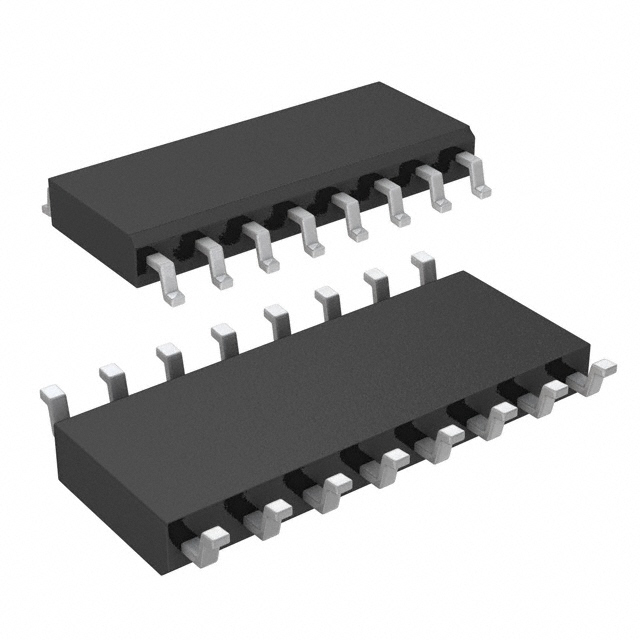
Analog Devices Inc. LT1186FIS#TRPBF
- Part No.:
- LT1186FIS#TRPBF
- Manufacturer:
- Analog Devices Inc.
- Category:
- Lighting, Ballast Controllers
- Package:
- 16-SOIC (0.154", 3.90mm Width)
- Datasheet:
-
 LT1186FIS#TRPBF.pdf
- Description:
- IC CCFL CNTRL 225KHZ 16SOIC
- Quantity:
- Payment:

- Shipping:

Inventory:3,008
Please send an inquiry. Send us your inquiry, and we will respond immediately.
Product details
Overview
LT1186FIS#TRPBF from Analog Devices (formerly Linear Technology) is an 8-bit DAC-programmable CCFL switching regulator for cold cathode fluorescent lamp backlight control in portable displays. It integrates a 200kHz current-mode PWM controller, high-current NPN switch (1.25A min), precision 50µA full-scale DAC, and dual-mode digital interface (SPI or pulse). It operates from 4.5V–30V battery input and 3.3V/5V logic supply, delivering up to 6mA lamp current with open-lamp protection and shutdown retention.
For engineers reviewing the LT1186FIS#TRPBF datasheet, LT1186FIS#TRPBF pinout, LT1186FIS#TRPBF application, or LT1186FIS#TRPBF equivalent, key selection criteria include grounded/floating lamp configuration support, 8-bit DAC programming resolution, 200kHz fixed-frequency operation, ICCFL input current range (0–50µA), and SO-16 package compatibility with notebook backlight power designs.
Technical Context
The LT1186FIS#TRPBF implements fixed-frequency (175–240kHz) current-mode control with cycle-by-cycle current limiting and internal slope compensation for stability at >50% duty cycles. Its DAC output drives the ICCFL pin to set lamp current via a 0.465V summing node, enabling precise "bits-to-nits" intensity control without external op-amps.
It supports two mutually exclusive digital interfaces: standard SPI (8-bit serial load/readback with CS/CLK/DIN/DOUT) and pulse mode (1-wire increment-only or 2-wire increment/decrement via DIN/CLK), with mode selected at power-up by CS level. The IC includes integrated open-lamp protection via BULB/BAT voltage clamp and thermal shutdown.
Key Specifications
| Parameter | Value and Actual Design Meaning |
|---|---|
| DAC Resolution | 8-bit - enables 256 discrete lamp current steps for smooth brightness transitions without hysteresis. |
| DAC Full-Scale Current | 48.5–51.5 µA - directly programs 0–6mA lamp current in typical display configurations. |
| Switching Frequency | 175–240 kHz - minimizes magnetic component size while avoiding audible noise and EMI-sensitive bands. |
| Supply Voltage Range | VCC: 3.0–6.5V; BAT: 4.5–30V - supports dual-rail operation in battery-powered systems with wide input variation. |
| Quiescent Current | 6 mA typical - ensures low standby power draw during active backlight control. |
| Shutdown Current | 35 µA typical - reduces system power consumption during display-off states while retaining DAC setting. |
| Switch Current Limit | 1.25–3.0 A - scales with duty cycle (e.g., 1.25A at 50%, 0.9A at 75%) for robust overcurrent protection. |
| Operating Temperature | –40°C to +100°C - qualified for industrial-grade portable electronics including notebooks and retail terminals. |
Pinout & Package
The LT1186FIS#TRPBF is housed in a 16-pin narrow SOIC (SO-16) package with exposed pad not electrically connected. Pin functions are validated per Linear Technology's official datasheet revision (DC2010).
| Pin/Terminal | Circuit Role | Design Meaning |
|---|---|---|
| CCFL PGND (1) | Emiter of internal NPN power switch | Provides high-current return path and internal switch-current sensing; requires star-ground layout separation from AGND. |
| ICCFL (2) | DAC programming current input | Regulated 0.465V summing node accepting 0–50µA DAC current to set lamp current; defines "bits-to-nits" transfer function. |
| DIO (3) | Lamp current sense common | Connects to low-side lamp terminal in grounded-lamp config; conducts bidirectional half-wave lamp current for averaging. |
| CCFL VC (4) | Lamp current comparator input | High-impedance node where DAC-sourced current nulls against lamp-sense current; capacitor here sets loop compensation. |
| AGND (5) | Analog ground reference | Low-current reference for 1.24V bandgap and ICCFL summing; must be isolated from PGND to prevent regulation error. |
| SHDN (6) | Active-low shutdown control | Pulling low disables switching and reduces supply current to 35µA; DAC state retained for instant resume. |
| CLK (7) | Digital interface clock | Schmitt-trigger input synchronizing SPI data shifts or pulse-mode counter increments/decrements. |
| CS (8) | Chip select / mode select | Logic-high at power-up selects pulse mode; logic-low enables SPI mode until VCC reset. |
| DIN / UP/DN (9) | Digital data input or direction control | In SPI: serial data input; in pulse mode: logic level determines 1-wire (UP only) or 2-wire (UP/DN) operation. |
| DOUT (10) | Digital data output | Three-state SPI readback output; high-impedance in pulse mode - no functional role there. |
| IOUT (11) | DAC current output | Delivers 48.5–51.5µA full-scale current; tied internally to ICCFL to close lamp current programming loop. |
| VCC (12) | Logic supply input | 3.0–6.5V input powering internal 2.4V LDO; quiescent current stable across this range. |
| ROYER (13) | Floating-lamp primary current sense | Inverting input of high-side current amplifier used only in floating-lamp configs; connects to Royer center tap. |
| BAT (14) | Battery supply input | 4.5–30V input powering Royer converter; also non-inverting input for floating-lamp sensing and open-lamp clamp. |
| BULB (15) | Open-lamp protection comparator input | Monitors voltage across Royer primary; activates clamp when BULB–BAT exceeds ~7V to prevent transformer overvoltage. |
| CCFL VSW (16) | Internal switch collector | Drives Royer transformer primary; rated for ≥60V breakdown and ≥1.25A continuous current with forced beta ~50. |
Key Features
| Feature | Design Value |
|---|---|
| Dual digital interface modes | Configurable SPI (full 8-bit load/readback) or pulse mode (1-/2-wire increment/decrement) - reduces MCU GPIO count and firmware complexity. |
| Grounded/floating lamp support | Single IC supports both lamp topologies: grounded-lamp uses DIO for half-wave averaging; floating-lamp uses ROYER/BAT for primary-side sensing - maximizes design flexibility. |
| Open-lamp protection | Integrated BULB–BAT comparator clamps CCFL VC when lamp disconnects - prevents uncontrolled voltage rise and transformer damage. |
| DAC state retention in shutdown | 8-bit DAC setting preserved during SHDN assertion - enables instant brightness restore on wake-up without MCU reprogramming. |
| Current-mode control with slope compensation | Ensures stable operation up to 85% duty cycle - eliminates need for external compensation components and simplifies loop design. |
| Wide battery input range | 4.5–30V BAT operation accommodates single-cell Li-ion to multi-cell lead-acid - suitable for diverse portable platforms. |
Applications
| Notebook Computers | Portable Instruments |
|---|---|
Use Scenario: Backlight dimming in 10–17-inch LCD panels with battery life optimization. IC Role / Device Role / Timing Role: CCFL current regulator with DAC-programmed intensity control and open-lamp fault detection. Use Value: Enables 256-step smooth brightness adjustment without pop-on, while maintaining 90% efficiency and <35µA shutdown current. |
Use Scenario: High-contrast display backlight in handheld test equipment operating across –40°C to +85°C. IC Role / Device Role / Timing Role: Fixed-frequency current-mode CCFL driver with thermal shutdown and wide-input operation. Use Value: Delivers stable lamp current despite battery voltage sag and temperature drift, extending usable runtime and display reliability. |
| Retail Terminals | Industrial HMI Panels |
Use Scenario: Always-on customer-facing displays in kiosks requiring long-term lamp life and consistent luminance. IC Role / Device Role / Timing Role: Programmable CCFL controller with grounded-lamp configuration and lamp current monitoring. Use Value: Precise 0–50µA DAC programming ensures repeatable brightness calibration and mitigates lamp aging effects. |
Use Scenario: Ruggedized operator interface in factory environments with EMI-sensitive surroundings. IC Role / Device Role / Timing Role: Floating-lamp CCFL driver using ROYER/BAT sensing to minimize stray capacitance losses. Use Value: Symmetric differential lamp drive reduces frame-coupled noise and improves illumination uniformity in metal-enclosed HMIs. |
Equivalent & Alternatives
The following parts are listed as comparable options for similar CCFL backlight regulator applications.
| Alternative Part | Technical Difference | Application Difference | Selection Advice |
|---|---|---|---|
| LT1186FCS#PBF | Commercial temperature grade (0°C to +100°C) vs. industrial (–40°C to +100°C); identical electrical specs and pinout. | Suitable for consumer notebooks but not extended-temperature industrial instruments or automotive-adjacent retail terminals. | Select LT1186FIS#TRPBF when operation below –40°C or long-term reliability under thermal cycling is required. |
| LT1186FIS8#TRPBF | Same industrial temp grade and SO-16 package, but includes internal 8-bit DAC with different IOUT bias structure - not pin-compatible. | Requires PCB redesign due to altered pin mapping (e.g., DOUT repurposed); no shared footprint or interconnect. | Choose LT1186FIS#TRPBF for drop-in replacement in existing SO-16 layouts; avoid LT1186FIS8#TRPBF without schematic/layout revision. |
Compared with LT1186FCS#PBF, the LT1186FIS#TRPBF provides guaranteed operation down to –40°C for harsh environments, while LT1186FIS8#TRPBF offers a different DAC architecture incompatible with legacy board designs - making LT1186FIS#TRPBF the sole direct industrial-grade replacement.
Availability
LT1186FIS#TRPBF is available at Aetrix Electronics and suitable for notebook computers, portable instruments, and retail terminals requiring stable component supply with industrial temperature qualification and tape-and-reel packaging.
Supply support for LT1186FIS#TRPBF includes scheduled delivery planning, volume procurement assistance, BOM continuity management, traceable sourcing, and lifecycle availability coordination for OEM customers, industrial embedded developers, connected-device designers, and electronics production programs.
Manufacturer
Analog Devices acquired Linear Technology in 2017 and maintains full technical and manufacturing continuity for legacy Linear products including the LT1186F series.
The LT1186F product line was designed specifically for high-efficiency, digitally programmable CCFL backlight control in space-constrained portable electronics - emphasizing low quiescent current, dual-lamp topology support, and robust fault protection.
FAQ
What is the primary function of the LT1186FIS#TRPBF in a display system?
The LT1186FIS#TRPBF serves as a programmable CCFL switching regulator that controls lamp current for LCD backlighting. It converts DC battery power into high-voltage AC for the CCFL using a Royer converter, with intensity precisely set via its integrated 8-bit DAC. The LT1186FIS#TRPBF enables smooth, hysteresis-free dimming from zero to full brightness while providing open-lamp protection and thermal safety.
Does the LT1186FIS#TRPBF support both grounded and floating lamp configurations?
Yes, the LT1186FIS#TRPBF natively supports both configurations. In grounded-lamp mode, DIO connects to the lamp's low side and senses half-wave current; in floating-lamp mode, ROYER and BAT pins sense primary-side Royer current, and DIO is grounded. The LT1186FIS#TRPBF's internal circuitry adapts automatically - no external component changes are needed to switch between topologies.
How does the LT1186FIS#TRPBF retain DAC settings during shutdown?
The LT1186FIS#TRPBF retains its 8-bit DAC counter value in shutdown mode because its internal register is powered by a dedicated bias network independent of the main switching regulator. When SHDN is pulled low, the 2.4V LDO and oscillator disable, reducing supply current to 35µA, but the DAC latch remains energized. Upon SHDN release, the LT1186FIS#TRPBF resumes operation at the exact prior brightness level without MCU intervention.
What are the key timing requirements for the SPI interface of the LT1186FIS#TRPBF?
The LT1186FIS#TRPBF SPI interface requires CLK frequency ≤2MHz, with minimum tCKS (CLK↓ before CS↓) of 150ns, tCSS (CS↓ before CLK↑) of 400ns, and tDV (CS↓ to DOUT valid) of 150ns. All timings are measured at 0.8V (low-to-high) and 2.0V (high-to-low) thresholds. These values ensure reliable 8-bit data loading and previous-value readback without metastability in microcontroller implementations.
Can the LT1186FIS#TRPBF be used with a 3.3V logic supply and 12V battery input simultaneously?
Yes, the LT1186FIS#TRPBF is explicitly designed for dual-supply operation: VCC accepts 3.3V (or 5V) for logic and internal regulation, while BAT accepts 12V (or 4.5–30V) to power the Royer converter. The internal 2.4V LDO isolates logic functions from battery rail noise, and quiescent current remains stable across the full VCC range - confirming robust coexistence of 3.3V logic and 12V battery inputs in the LT1186FIS#TRPBF.
LT1186FIS#TRPBF Specifications
- Product attributes
- Attribute value
- Manufacturer:
- Analog Devices Inc.
- Series:
- Bits-to-Nits™
- Package/Case:
- 16-SOIC (0.154", 3.90mm Width)
- Packaging:
- Tape & Reel (TR)
- Product Status:
- Active
- Type:
- CCFL Controller
- Frequency:
- 175kHz ~ 225kHz
- Voltage - Supply:
- 4.5V ~ 30V
- Current - Supply:
- 6 mA
- Current - Output Source/Sink:
- -
- Dimming:
- No
- Operating Temperature:
- -40°C ~ 100°C
- Grade:
- -
- Qualification:
- -
- Mounting Type:
- Surface Mount
- Supplier Device Package:
- 16-SO
LT1186FIS#TRPBF FAQ
1.How can I place an order for LT1186FIS#TRPBF through Aetrix?
Please submit a Request for Quotation (RFQ) for LT1186FIS#TRPBF on Aetrix. Our sales agent will provide a competitive quotation and guide you through the order confirmation once you accept the terms.
2.Are the price and stock information for LT1186FIS#TRPBF reliable?
The price and inventory of LT1186FIS#TRPBF are updated periodically and may fluctuate due to market conditions. Stock and pricing data are typically refreshed every 24 hours. Quotation validity for LT1186FIS#TRPBF is usually 5 days.
3.What payment methods are accepted for LT1186FIS#TRPBF?
We accept Wire Transfer, PayPal, Credit Card, Western Union, MoneyGram, and Escrow for LT1186FIS#TRPBF transactions.
Note: Certain payment methods may incur a processing fee.
4.How is shipping managed for LT1186FIS#TRPBF?
LT1186FIS#TRPBF orders can be shipped via leading logistics carriers, including DHL, UPS, FedEx, TNT, or Registered Mail.
Once your LT1186FIS#TRPBF order is processed, you will receive an email with the shipment details and tracking number.
Note: Tracking information may take up to 24 hours to appear. Express delivery typically takes 3–5 business days.
5.How can I obtain technical support or documentation for LT1186FIS#TRPBF?
For technical support, including LT1186FIS#TRPBF datasheets, pinout diagrams, or application guidance, please contact our engineering support team. They can provide detailed documentation and assistance for your LT1186FIS#TRPBF requirements.
6.How does Aetrix verify that LT1186FIS#TRPBF is sourced from the original manufacturer or authorized distributors?
All LT1186FIS#TRPBF products on Aetrix are procured from qualified distributors and authorized channels. Our dedicated quality assurance team conducts strict verification, including traceability checks and, if necessary, third-party testing. This ensures that LT1186FIS#TRPBF meets industry standards.
7.What is the process for return or replacement of LT1186FIS#TRPBF?
All LT1186FIS#TRPBF units undergo pre-shipment inspection (PSI). If there is an issue with LT1186FIS#TRPBF, returns or replacements are accepted under the following conditions:
1.Quantity discrepancies, incorrect items, or visible external defects (such as breakage or corrosion), acknowledged by Aetrix.
2.The issue is reported within 90 days of delivery.
3.The LT1186FIS#TRPBF part is unused and in its original packaging.
Return procedure for LT1186FIS#TRPBF:
1.Submit a request within 90 days.
2.Obtain a Return Material Authorization (RMA) from Aetrix.
LT1186FIS#TRPBF Tags
-
HV833MG-G
Microchip Technology
-
HV857MG-G
Microchip Technology
-
MIC4826YMM-TR
Microchip Technology

-
HV823LG-G
Microchip Technology
-
IR2156STRPBF
Infineon Technologies
-
BTS712204ESAXUMA1
Infineon Technologies
-
UC3872DW
Texas Instruments
-
MAX14514ETD+
Analog Devices Inc./Maxim Integrated
-
MAX14521EETG+
Analog Devices Inc./Maxim Integrated
-
HV857LMG-G
Microchip Technology
-
HV860K7-G
Microchip Technology
-
MIC4832YMM
Microchip Technology
Tech Hub

A practical engineering guide to 3.3V and 5V logic compatibility, input thresholds, resistor dividers, translator ICs, MOSFET level shifting, I2C pull-ups, timing limits and power-sequencing risks.

The 74HC595 uses push-pull logic outputs, while the TPIC6B595 uses 50 V open-drain DMOS sinks for higher-power loads. This guide compares timing, current limits, 3.3 V interfacing, load wiring, thermal…

The 74HC595 converts serial data into eight stable parallel outputs. This guide covers pin functions, shift and storage timing, OE and MR behavior, drive-current limits, cascading, voltage compatibilit…

A technical comparison of level-sensitive latches and edge-triggered flip-flops, covering timing windows, setup and hold limits, master–slave operation, time borrowing, race-through, HDL inference and…

A D latch stores one bit while Enable controls when data can pass. This reference covers gate-level operation, truth tables, transparency, setup and hold timing, LE versus OE, common ICs and practical …

An SR latch stores one bit through cross-coupled feedback. This engineering reference covers NOR and NAND implementations, truth tables, forbidden-state recovery, gated operation, switch debouncing, fa…

Latch circuits retain one bit through feedback. This technical reference covers SR and D latches, truth tables, transparency, timing limits, latch-versus-flip-flop behavior, applications and common log…

An engineering guide to LED driver operation, constant-current and constant-voltage outputs, linear and switching topologies, dimming, IC selection, calculations, replacement compatibility, and fault c…

Operational amplifier guide covering op amp basics, feedback, ideal vs real op amps, common configurations, buffer circuits, offset, bias current, gain-bandwidth, slew rate, rail-to-rail limits and sel…

Jumper cables guide covering safe connection order, red and black clamp placement, final ground connection, cable gauge, length, clamp quality, copper vs CCA cables, jump starter comparison and battery…


