
 My Inquiry
 My Account


Analog Devices Inc. LT1999CMS8-20#PBF
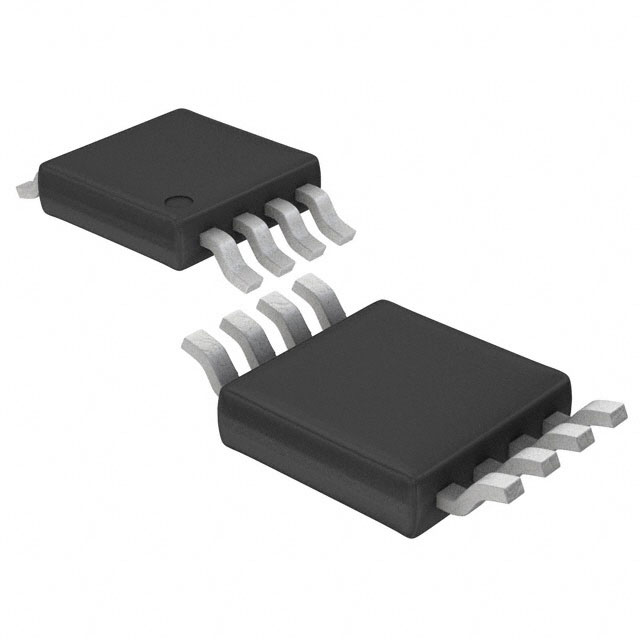
- Part No.:
- LT1999CMS8-20#PBF
- Manufacturer:
- Analog Devices Inc.
- Category:
- Instrumentation, Op Amps, Buffer Amps
- Package:
- 8-TSSOP, 8-MSOP (0.118", 3.00mm Width)
- Datasheet:
-
 LT1999CMS8-20#PBF.pdf
- Description:
- IC CURRENT SENSE 1 CIRCUIT 8MSOP
- Quantity:
- Payment:

- Shipping:

Inventory:479
Please send an inquiry. Send us your inquiry, and we will respond immediately.
Product details
Overview
LT1999CMS8-20#PBF from Analog Devices is a high-speed, bidirectional current sense amplifier with 20V/V fixed gain, –5V to 80V input common mode range, 2MHz bandwidth, and ±0.5% gain accuracy. It senses current via external shunt resistor and outputs a voltage referenced to mid-supply or external REF, enabling precise H-bridge motor current monitoring in industrial power supplies.
For engineers reviewing the LT1999CMS8-20#PBF datasheet, LT1999CMS8-20#PBF pinout, LT1999CMS8-20#PBF application, or LT1999CMS8-20#PBF equivalent, key selection criteria include its FMEA-optimized MSOP-8 pinout option, 1.55mA supply current at 5V, shutdown mode (<10µA), and AEC-Q100 qualification for automotive-grade reliability in high-side/low-side sensing.
Technical Context
The LT1999CMS8-20#PBF employs a transconductance-based input stage with matched 4kΩ input resistors and an on-chip 80kΩ feedback resistor (RG) to achieve its 20V/V gain. Its differential input structure enables seamless operation across –5V to 80V common mode, with diode-assisted biasing below V+ to maintain continuity.
It features a rail-to-rail output stage capable of sourcing 31mA and sinking 26mA, with 0.5% settling time of 2.5µs for ±2V steps and sub-microsecond turn-on/off timing. The REF pin supports external reference override while maintaining 62dB rejection at 3.25V offset.
Key Specifications
| Parameter | Value and Actual Design Meaning |
|---|---|
| Gain | 20V/V fixed, enabling ±0.2V full-scale differential input for ±4V output swing with 2.5V REF |
| Common Mode Range | –5V to 80V, supporting direct high-side sensing in 48V industrial systems without level-shifting |
| Bandwidth | 2MHz small-signal, sufficient for PWM current loop monitoring up to 200kHz switching frequencies |
| Gain Accuracy | ±0.5% max over temperature, ensuring <10mV error in 2V full-scale output for precision control |
| Input Offset Voltage | ±1.5mV max, contributing ≤30mV output error at 20× gain under worst-case conditions |
| Supply Current | 1.55mA typical at 5V, enabling low-power operation in always-on battery monitoring circuits |
| Shutdown Current | <10µA, reducing system standby power by >99% when current sensing is inactive |
Pinout & Package
LT1999CMS8-20#PBF is housed in an 8-lead plastic MSOP package (MS8), 3mm × 3mm, 0.65mm pitch, with thermal resistance θJA = 300°C/W. The part uses the original MSOP pinout (not FMEA-optimized variant), confirmed by order code "CMS8" and marking "LTFNZ".
| Pin/Terminal | Circuit Role | Design Meaning |
|---|---|---|
| V+ (Pins 1, 4) | Power supply input | Internally tied pins accepting 4.5V–5.5V; dual connection improves PSRR and reduces supply impedance |
| +IN (Pin 2) | Positive sense input | Differential input terminal connected to shunt high-side; matched 4kΩ impedance ensures CMRR integrity |
| –IN (Pin 3) | Negative sense input | Differential input terminal connected to shunt low-side; symmetric layout minimizes thermal EMF errors |
| GND (Pin 5) | Analog ground reference | Return path for internal bias currents and REF divider; must be star-connected to shunt ground |
| REF (Pin 6) | Output common-mode reference | Sets output midpoint; open-circuit default is 2.5V; externally driven to shift output range or reject noise |
| OUT (Pin 7) | Amplified current-sense output | Low-impedance voltage output driving ≥1kΩ loads directly; requires series resistor for >200pF capacitive loads |
| SHDN (Pin 8) | Active-low shutdown control | Pulled to GND ≤0.5V to enter <10µA shutdown; floating or pulled high enables operation via 2µA internal pull-up |
Key Features
| Feature | Design Value |
|---|---|
| Bidirectional sensing | Outputs positive/negative voltage relative to REF to indicate current direction-enables regenerative braking detection in motor drives |
| FMEA-compatible pinout option | Available in alternate MSOP pinout (LT1999CMS8-20F#PBF) with NC on Pin 3 to prevent short-circuit failure modes in safety-critical systems |
| High-voltage transient immunity | 4kV HBM / 1kV CDM ESD rating ensures robustness against board-level electrostatic discharge during handling and operation |
| Wide temperature operation | Specified from 0°C to 70°C (C-grade); functional from –55°C to 150°C per MP-grade characterization, supporting under-hood automotive use |
| AC CMRR >80dB @100kHz | Maintains accuracy in noisy PWM environments-critical for accurate current reconstruction in switching power supplies |
Applications
| H-Bridge Motor Control | Solenoid Current Sense |
|---|---|
Use Scenario: Monitoring bidirectional armature current in brushed DC motor drivers with PWM commutation. IC Role / Device Role / Timing Role: High-side or low-side current sense amplifier providing real-time magnitude/direction feedback to MCU PWM controller. Use Value: Enables precise torque control and overcurrent protection with 2µs step response and <0.5% gain error across –5V to 80V bus voltages. | Use Scenario: Detecting energization/de-energization current in automotive solenoid valves (e.g., transmission shift solenoids). IC Role / Device Role / Timing Role: Bidirectional current monitor interfacing solenoid coil to microcontroller ADC input. Use Value: Confirms valve actuation state and detects open/short faults using polarity-sensitive output with ±1.5mV offset stability over temperature. |
| High Voltage Data Acquisition | PWM Control Loops |
Use Scenario: Isolated current measurement in 48V/60V industrial power distribution units where galvanic isolation is cost-prohibitive. IC Role / Device Role / Timing Role: Precision analog front-end converting shunt voltage to clean, referenced output for SAR ADC sampling. Use Value: Delivers 2MHz bandwidth and 96dB DC CMRR to resolve µA-level current changes amid 80V common-mode noise without optocouplers. | Use Scenario: Real-time current feedback in digitally controlled buck/boost converters operating at 100–500kHz switching frequencies. IC Role / Device Role / Timing Role: Fast-settling current sense amplifier feeding ADC or comparator in inner current-control loop. Use Value: 2.5µs 0.5% settling time and 2MHz bandwidth support stable current-mode control with minimal phase lag at high switching speeds. |
Equivalent & Alternatives
The following parts are listed as comparable options for similar current sense amplifier applications.
| Alternative Part | Technical Difference | Application Difference | Selection Advice |
|---|---|---|---|
| INA240A1QDRQ1 | 20V/V gain, –4V to 80V CMR, 4.5MHz bandwidth, 1.1mV max VOS, automotive AEC-Q100 Grade 1 | Higher bandwidth and lower offset but requires external REF decoupling; no integrated mid-supply divider | Preferred for new automotive designs requiring higher speed and tighter offset, with layout allowance for external REF filtering |
| MAX4080TASA+ | 20V/V gain, –5V to 76V CMR, 2.5MHz bandwidth, 0.5mV max VOS, SO-8 package only | SO-8 footprint (S8), no MSOP option; lacks shutdown pin and FMEA pinout variants | Selected when SO-8 compatibility is mandatory and shutdown functionality is not required |
Compared with LT1999CMS8-20#PBF, INA240A1QDRQ1 offers faster response and lower offset but demands more careful REF routing, while MAX4080TASA+ provides superior offset performance in legacy SO-8 layouts but forfeits MSOP space savings and FMEA-safe pinout options.
Availability
LT1999CMS8-20#PBF is available at Aetrix Electronics and suitable for H-bridge motor control, solenoid actuation, and high-voltage data acquisition requiring stable component supply across industrial and automotive production cycles.
Supply support for LT1999CMS8-20#PBF includes scheduled delivery planning, volume procurement assistance, BOM continuity management, traceable sourcing, and lifecycle availability coordination for OEM customers, industrial embedded developers, connected-device designers, and electronics production programs.
Manufacturer
Analog Devices is a global leader in high-performance analog, mixed-signal, and digital signal processing semiconductors, serving industrial, automotive, communications, and healthcare markets.
The LT1999 product line delivers high-voltage, high-accuracy current sensing for demanding power conversion and motor control applications, emphasizing wide common-mode range, bidirectional capability, and robustness in harsh electrical environments.
FAQ
What is the exact gain tolerance and temperature drift behavior of the LT1999CMS8-20#PBF?
The LT1999CMS8-20#PBF has a guaranteed gain accuracy of ±0.5% over its full operating temperature range (0°C to 70°C), with typical gain of 20V/V. Gain drift is not separately specified, but gain error remains within ±0.5% across temperature due to matched on-chip resistor ratios. This ensures consistent scaling of shunt voltage to output regardless of ambient conditions, critical for closed-loop current regulation in the LT1999CMS8-20#PBF.
Can the LT1999CMS8-20#PBF operate with a 3.3V supply instead of the nominal 5V?
The LT1999CMS8-20#PBF is specified for 4.5V to 5.5V operation and is not characterized or guaranteed below 4.5V. While limited functionality may occur at 3.3V, output swing, CMR, and gain accuracy degrade significantly-and the internal 2µA SHDN pull-up cannot reliably activate the device. For 3.3V systems, the LT1999CMS8-20#PBF must be powered from a dedicated 5V rail or replaced with a 3.3V-compatible alternative.
How does the REF pin function in the LT1999CMS8-20#PBF, and what happens if left unconnected?
When left unconnected, the REF pin of the LT1999CMS8-20#PBF defaults to mid-supply (2.5V) via internal 160kΩ resistors between V+ and GND. This sets the output common-mode level. Driving REF externally allows output level shifting-for example, to match ADC input range-but requires staying within 1.125V to (V+ – 1.125V). The LT1999CMS8-20#PBF maintains 62dB REF rejection even with 3.25V offsets.
Is the LT1999CMS8-20#PBF pin-compatible with the LT1999IMS8-20#PBF or LT1999HMS8-20#PBF?
Yes-the LT1999CMS8-20#PBF, LT1999IMS8-20#PBF, and LT1999HMS8-20#PBF share identical MSOP-8 packaging, pinout, and electrical interface. They differ only in temperature grade (0°C–70°C, –40°C–85°C, and –40°C–125°C respectively) and screening/test coverage. No PCB layout change is needed when upgrading from C-grade to I- or H-grade versions of the LT1999CMS8-20#PBF.
Does the LT1999CMS8-20#PBF support high-side sensing in 48V battery systems, and what protection does it offer?
Yes-the LT1999CMS8-20#PBF supports high-side sensing up to +80V common mode, fully covering 48V battery systems including load-dump transients. Its inputs feature ESD clamps rated for –5.25V to +88V, and it withstands 4kV HBM/1kV CDM. Differential input protection prevents damage from shunt resistor faults, making the LT1999CMS8-20#PBF suitable for automotive 48V mild-hybrid applications.
LT1999CMS8-20#PBF Specifications
- Product attributes
- Attribute value
- Manufacturer:
- Analog Devices Inc.
- Series:
- -
- Package/Case:
- 8-TSSOP, 8-MSOP (0.118", 3.00mm Width)
- Packaging:
- Tube
- Product Status:
- Active
- Amplifier Type:
- Current Sense
- Number of Circuits:
- 1
- Output Type:
- -
- Slew Rate:
- 3V/µs
- Gain Bandwidth Product:
- -
- -3db Bandwidth:
- 2 MHz
- Current - Input Bias:
- 137.5 µA
- Voltage - Input Offset:
- 500 µV
- Current - Supply:
- 5.8mA
- Current - Output / Channel:
- -
- Voltage - Supply Span (Min):
- 4.5 V
- Voltage - Supply Span (Max):
- 5.5 V
- Operating Temperature:
- 0°C ~ 70°C
- Grade:
- -
- Qualification:
- -
- Mounting Type:
- Surface Mount
- Supplier Device Package:
- 8-MSOP
LT1999CMS8-20#PBF FAQ
1.How can I place an order for LT1999CMS8-20#PBF through Aetrix?
Please submit a Request for Quotation (RFQ) for LT1999CMS8-20#PBF on Aetrix. Our sales agent will provide a competitive quotation and guide you through the order confirmation once you accept the terms.
2.Are the price and stock information for LT1999CMS8-20#PBF reliable?
The price and inventory of LT1999CMS8-20#PBF are updated periodically and may fluctuate due to market conditions. Stock and pricing data are typically refreshed every 24 hours. Quotation validity for LT1999CMS8-20#PBF is usually 5 days.
3.What payment methods are accepted for LT1999CMS8-20#PBF?
We accept Wire Transfer, PayPal, Credit Card, Western Union, MoneyGram, and Escrow for LT1999CMS8-20#PBF transactions.
Note: Certain payment methods may incur a processing fee.
4.How is shipping managed for LT1999CMS8-20#PBF?
LT1999CMS8-20#PBF orders can be shipped via leading logistics carriers, including DHL, UPS, FedEx, TNT, or Registered Mail.
Once your LT1999CMS8-20#PBF order is processed, you will receive an email with the shipment details and tracking number.
Note: Tracking information may take up to 24 hours to appear. Express delivery typically takes 3–5 business days.
5.How can I obtain technical support or documentation for LT1999CMS8-20#PBF?
For technical support, including LT1999CMS8-20#PBF datasheets, pinout diagrams, or application guidance, please contact our engineering support team. They can provide detailed documentation and assistance for your LT1999CMS8-20#PBF requirements.
6.How does Aetrix verify that LT1999CMS8-20#PBF is sourced from the original manufacturer or authorized distributors?
All LT1999CMS8-20#PBF products on Aetrix are procured from qualified distributors and authorized channels. Our dedicated quality assurance team conducts strict verification, including traceability checks and, if necessary, third-party testing. This ensures that LT1999CMS8-20#PBF meets industry standards.
7.What is the process for return or replacement of LT1999CMS8-20#PBF?
All LT1999CMS8-20#PBF units undergo pre-shipment inspection (PSI). If there is an issue with LT1999CMS8-20#PBF, returns or replacements are accepted under the following conditions:
1.Quantity discrepancies, incorrect items, or visible external defects (such as breakage or corrosion), acknowledged by Aetrix.
2.The issue is reported within 90 days of delivery.
3.The LT1999CMS8-20#PBF part is unused and in its original packaging.
Return procedure for LT1999CMS8-20#PBF:
1.Submit a request within 90 days.
2.Obtain a Return Material Authorization (RMA) from Aetrix.
LT1999CMS8-20#PBF Tags

-
LM358DT
STMicroelectronics

-
LM358DR
Texas Instruments
-
LM2904DR
Texas Instruments
-
LM358ADR
Texas Instruments
-
LM2904DGKR
Texas Instruments
-
LM324DR
Texas Instruments
-
MCP6006T-E/OT
Microchip Technology
-
MCP6006UT-E/OT
Microchip Technology
-
LM324PWR
Texas Instruments
-
LM2902PWR
Texas Instruments
-
LM2902DR
Texas Instruments
-
LM358P
Texas Instruments
Tech Hub

A practical engineering guide to 3.3V and 5V logic compatibility, input thresholds, resistor dividers, translator ICs, MOSFET level shifting, I2C pull-ups, timing limits and power-sequencing risks.

The 74HC595 uses push-pull logic outputs, while the TPIC6B595 uses 50 V open-drain DMOS sinks for higher-power loads. This guide compares timing, current limits, 3.3 V interfacing, load wiring, thermal…

The 74HC595 converts serial data into eight stable parallel outputs. This guide covers pin functions, shift and storage timing, OE and MR behavior, drive-current limits, cascading, voltage compatibilit…

A technical comparison of level-sensitive latches and edge-triggered flip-flops, covering timing windows, setup and hold limits, master–slave operation, time borrowing, race-through, HDL inference and…

A D latch stores one bit while Enable controls when data can pass. This reference covers gate-level operation, truth tables, transparency, setup and hold timing, LE versus OE, common ICs and practical …

An SR latch stores one bit through cross-coupled feedback. This engineering reference covers NOR and NAND implementations, truth tables, forbidden-state recovery, gated operation, switch debouncing, fa…

Latch circuits retain one bit through feedback. This technical reference covers SR and D latches, truth tables, transparency, timing limits, latch-versus-flip-flop behavior, applications and common log…

An engineering guide to LED driver operation, constant-current and constant-voltage outputs, linear and switching topologies, dimming, IC selection, calculations, replacement compatibility, and fault c…

Operational amplifier guide covering op amp basics, feedback, ideal vs real op amps, common configurations, buffer circuits, offset, bias current, gain-bandwidth, slew rate, rail-to-rail limits and sel…

Jumper cables guide covering safe connection order, red and black clamp placement, final ground connection, cable gauge, length, clamp quality, copper vs CCA cables, jump starter comparison and battery…


