
 My Inquiry
 My Account


Analog Devices Inc. LT3380EUJM#PBF
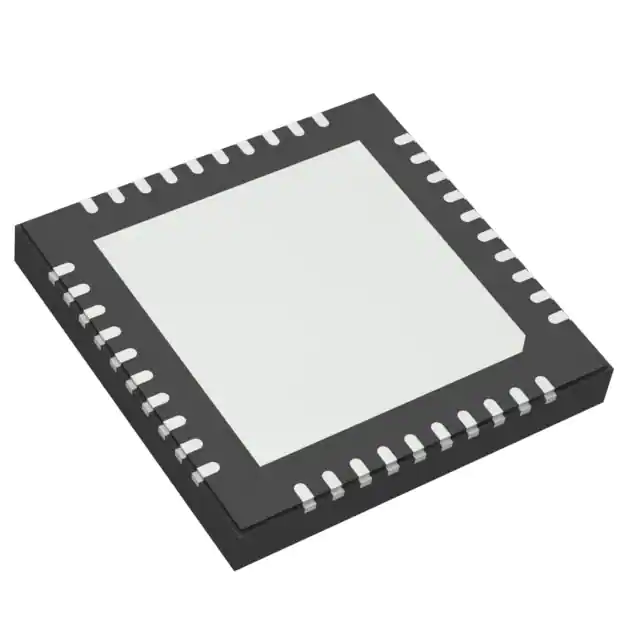
- Part No.:
- LT3380EUJM#PBF
- Manufacturer:
- Analog Devices Inc.
- Category:
- Voltage Regulators - Linear + Switching
- Package:
- 40-WFQFN Exposed Pad
- Datasheet:
-
 LT3380EUJM#PBF.pdf
- Description:
- IC REG QD BUCK/LNR 2.25MHZ 40QFN
- Quantity:
- Payment:

- Shipping:

Inventory:3,884
Please send an inquiry. Send us your inquiry, and we will respond immediately.
Product details
Overview
LT3380EUJM#PBF from Analog Devices is a multioutput power management IC integrating four synchronous buck DC/DC converters (2.5A, 2.5A, 1.5A, 1.5A) and three 300mA LDO regulators with I²C programmability, designed for portable application processor systems requiring tightly sequenced, dynamically scalable voltage rails.
For engineers reviewing the LT3380EUJM#PBF datasheet, LT3380EUJM#PBF pinout, LT3380EUJM#PBF application, or LT3380EUJM#PBF equivalent, key selection criteria include I²C-configurable dynamic voltage scaling, autonomous power-down sequencing across four time slots, 12µA standby current, and side-wettable 40-lead 6mm × 6mm QFN packaging for automotive-grade optical inspection.
Technical Context
The LT3380EUJM#PBF implements four independent buck regulators with selectable 2.25MHz/1.125MHz switching frequency, 100% duty cycle capability, and programmable soft-start via feedback reference ramping (0.8V/ms for bucks, 10V/ms for LDOs). Each buck features PMOS/NMOS RDS(ON) of 120mΩ/70mΩ (Buck1/Buck2) or 160mΩ/80mΩ (Buck3/Buck4), supporting high-efficiency operation across 2.7V–5.5V input.
Three LDOs include two adjustable (725mV reference, resistor-programmable) and one fixed 1.8V output, each with 300mA capacity, 210–350mV dropout at full load, and independent enable/control via pin-strapping or I²C registers. Fault reporting includes IRQ and PGOOD open-drain outputs with configurable thresholds and status registers.
Key Specifications
| Parameter | Value and Actual Design Meaning |
|---|---|
| Input Voltage Range | 2.7V to 5.5V on VIN; supports core, memory, I/O, and SoC rail generation from single supply |
| Buck Output Currents | 2.5A (Buck1/Buck2), 1.5A (Buck3/Buck4); enables high-current digital domain regulation |
| LDO Output Currents | 300mA per LDO; sufficient for low-noise analog sensor, RF, or interface supplies |
| Standby Current | 12µA typical; minimizes battery drain during system sleep states |
| Switching Frequency | Selectable 2.25MHz or 1.125MHz; allows optimization of inductor size vs. efficiency |
| I²C Interface | Standard-mode (400kHz), DVDD-referenced logic; enables real-time DVS, sequencing, and fault monitoring |
| Operating Temperature | –40°C to +125°C junction; qualified for industrial and extended-temperature embedded applications |
Pinout & Package
The LT3380EUJM#PBF is housed in a 40-lead plastic side-wettable QFN package (6mm × 6mm) with exposed thermal pad (Pin 41 = GND), optimized for automated optical inspection and thermal performance (θJA = 33°C/W).
| Pin/Terminal | Circuit Role | Design Meaning |
|---|---|---|
| FB_B1–FB_B4 | Buck feedback inputs | Set output voltage via resistor divider; 725mV reference enables precise regulation across load/temperature |
| FB_L1, FB_L2 | LDO1/LDO2 feedback inputs | Enable resistor-programmable outputs (e.g., VLDO = (1+R1/R2) × 725mV) |
| LDO1–LDO3 | LDO output terminals | LDO3 fixed at 1.8V; LDO1/LDO2 adjustable; all require ≥1µF ceramic output capacitance |
| EN_B1–EN_B4, EN_L1–EN_L3 | Independent regulator enables | Active-high with internal weak pull-down; supports pin-strapped or I²C-controlled sequencing |
| PWR_ON | Master power-on control | Delays enable activation by 3ms after rising edge; inhibits all regulators when low |
| IRQ, PGOOD | Open-drain status outputs | IRQ signals undervoltage, overtemperature, or power-good faults; PGOOD asserts only when all enabled rails are in regulation |
| SDA, SCL, DVDD | I²C interface pins | DVDD sets logic level (1.6V–5.5V); supports standard-mode communication for register read/write |
Key Features
| Feature | Design Value |
|---|---|
| I²C-programmable dynamic voltage scaling | Adjusts buck output voltages in real time via DAC-controlled feedback reference (412.5mV–800mV range) |
| Four-slot autonomous power-down sequencing | Off-sequencing timing controlled via I²C command registers-no external timing components required |
| Side-wettable QFN package | Enables automated optical inspection of solder joints on production PCBs, improving automotive AEC-Q100 compliance confidence |
| 12µA VIN standby current | Reduces quiescent power loss during system suspend, extending battery life in portable applications |
| Configurable operating modes per buck | Per-regulator selection of pulse-skipping, Burst Mode®, or forced continuous mode optimizes light-load vs. full-load efficiency |
Applications
| Mobile Application Processor Power | Automotive Infotainment System |
|---|---|
Use Scenario: Powering ARM-based application processors (e.g., Qualcomm Snapdragon, NXP i.MX) with multiple voltage domains (core, GPU, DDR, I/O). IC Role / Device Role / Timing Role: Centralized PMIC managing startup sequence, dynamic voltage scaling during CPU frequency transitions, and coordinated shutdown. Use Value: Reduces BOM count by consolidating seven rails into one IC; I²C control enables software-defined power policies without hardware changes. | Use Scenario: Supplying head unit SoCs, display drivers, audio codecs, and CAN transceivers in AEC-Q100-compliant infotainment modules. IC Role / Device Role / Timing Role: Automotive-grade power manager delivering sequenced, monitored, and fault-reporting rails under wide temperature and vibration conditions. Use Value: Side-wettable QFN ensures solder joint reliability; 125°C operation and IRQ/PGOOD support ASIL-B functional safety diagnostics. |
| Industrial Edge AI Gateway | High-Density FPGA Power System |
Use Scenario: Powering heterogeneous compute platforms (CPU + FPGA + AI accelerator) in factory-floor gateways with strict thermal and EMI constraints. IC Role / Device Role / Timing Role: Multi-rail regulator providing independently controllable, low-noise supplies with fast transient response for mixed-signal subsystems. Use Value: 2.25MHz switching enables compact 1µH inductors; LDOs deliver clean analog bias for ADCs and sensors without switching noise coupling. | Use Scenario: Generating core (0.85V), auxiliary (1.2V), I/O (1.8V/3.3V), and configuration (1.8V) rails for Xilinx Zynq or Intel Agilex FPGAs. IC Role / Device Role / Timing Role: Configurable PMIC enabling FPGA configuration voltage sequencing, dynamic core voltage adjustment during partial reconfiguration, and rail-specific fault isolation. Use Value: Four-buck architecture matches FPGA rail count; I²C register access allows runtime voltage tuning aligned with bitstream requirements. |
Equivalent & Alternatives
The following parts are listed as comparable options for similar multi-output PMIC applications.
| Alternative Part | Technical Difference | Application Difference | Selection Advice |
|---|---|---|---|
| TPS659122YFFR | 6-buck + 8-LDO architecture; 1.8V fixed LDOs only; no side-wettable QFN; max 125°C operation | Targets TI-based Sitara AMx processors; lacks 150°C option and optical inspection support | Preferred where higher LDO count and TI ecosystem integration outweigh package and temp grade needs |
| MAX20029ATI+T | 4-buck + 3-LDO; AEC-Q100 Grade 0 (–40°C to +150°C); 2.2MHz fixed frequency; no I²C DVS | Designed for automotive ADAS cameras; uses SPI instead of I²C; no dynamic voltage scaling capability | Chosen when SPI interface and Grade 0 temp are mandatory, and DVS is not required |
Compared with TPS659122YFFR and MAX20029ATI+T, the LT3380EUJM#PBF uniquely combines I²C-based dynamic voltage scaling, side-wettable QFN for automotive optical inspection, and a balanced 4-buck/3-LDO topology optimized for portable application processors-making it distinct for systems requiring software-defined power policy execution and production traceability.
Availability
LT3380EUJM#PBF is available at Aetrix Electronics and suitable for mobile application processor power, automotive infotainment systems, industrial edge AI gateways, and high-density FPGA power systems requiring stable component supply and long-term design-in support.
Supply support for LT3380EUJM#PBF includes scheduled delivery planning, volume procurement assistance, BOM continuity management, traceable sourcing, and lifecycle availability coordination for OEM customers, industrial embedded developers, connected-device designers, and electronics production programs.
Manufacturer
Analog Devices is a global leader in high-performance analog, mixed-signal, and digital signal processing semiconductors, serving precision, industrial, communications, and automotive markets.
The LT3380EUJM#PBF belongs to Analog Devices' Power Management IC product line, engineered specifically for advanced portable and automotive application processor platforms needing integrated, I²C-configurable, multi-rail power solutions with robust thermal and reliability specifications.
FAQ
What is the maximum junction temperature rating for the LT3380EUJM#PBF?
The LT3380EUJM#PBF is rated for –40°C to +125°C operating junction temperature and is part of the LT3380E grade. It is not the H-grade (150°C) variant; the #PBF suffix confirms its industrial temperature qualification. The LT3380EUJM#PBF maintains full electrical specifications across this range, with thermal derating applied above 125°C per Analog Devices' reliability guidelines.
Does the LT3380EUJM#PBF support dynamic voltage scaling (DVS) for all four buck regulators?
Yes, the LT3380EUJM#PBF supports independent dynamic voltage scaling for all four buck regulators via I²C-accessible DAC registers that adjust the internal feedback reference from 412.5mV to 800mV. This enables real-time output voltage changes-critical for CPU/GPU frequency scaling-without external component modification. Each buck's DVS is fully configurable through dedicated command registers (BUCK1[7:0]–BUCK4[7:0]).
How does the LT3380EUJM#PBF handle power-on sequencing without external circuitry?
The LT3380EUJM#PBF implements dual sequencing methods: pin-strapped (via interconnect of EN outputs to upstream EN inputs) and I²C-programmable (using SEQx registers). For off-sequencing, it provides four discrete time slots controlled exclusively via I²C commands-eliminating need for RC timers or dedicated sequencer ICs. The PWR_ON pin adds master-level delay (3ms) before any enable activation.
What is the purpose of the side-wettable flanks on the LT3380EUJM#PBF QFN package?
The side-wettable flanks on the LT3380EUJM#PBF's 40-lead 6mm × 6mm QFN package enable automated optical inspection (AOI) of solder fillets along the vertical edges of the leads. This feature is critical for automotive AEC-Q100 compliance, as it verifies solder joint integrity post-reflow-reducing field failure risk in high-reliability applications where X-ray inspection may be impractical or cost-prohibitive.
Can the LT3380EUJM#PBF's LDO3 output be adjusted, or is it strictly fixed at 1.8V?
LDO3 on the LT3380EUJM#PBF is strictly fixed at 1.8V (±3% over temperature and line/load), with no external feedback or I²C adjustment capability. In contrast, LDO1 and LDO2 are resistor-programmable using the 725mV internal reference (VLDO = (1 + R1/R2) × 725mV). This fixed LDO3 simplifies supply design for standardized interfaces like SDIO or USB PHY analog rails.
LT3380EUJM#PBF Specifications
- Product attributes
- Attribute value
- Manufacturer:
- Analog Devices Inc.
- Series:
- -
- Package/Case:
- 40-WFQFN Exposed Pad
- Packaging:
- Tube
- Product Status:
- Active
- Topology:
- Step-Down (Buck)
- Number of Outputs:
- 4
- Frequency - Switching:
- 1.12MHz, 2.25MHz
- Voltage/Current - Output 1:
- 0.725V ~ 5.5V, 2.5A
- Voltage/Current - Output 2:
- 0.725V ~ 5.5V, 2.5A
- Voltage/Current - Output 3:
- 1.8V, 1.5A
- w/LED Driver:
- No
- w/Supervisor:
- No
- w/Sequencer:
- No
- Voltage - Supply:
- 2.7V ~ 5.5V
- Operating Temperature:
- -40°C ~ 125°C (TJ)
- Grade:
- -
- Qualification:
- -
- Mounting Type:
- Surface Mount, Wettable Flank
- Supplier Device Package:
- 40-QFN (6x6)
LT3380EUJM#PBF FAQ
1.How can I place an order for LT3380EUJM#PBF through Aetrix?
Please submit a Request for Quotation (RFQ) for LT3380EUJM#PBF on Aetrix. Our sales agent will provide a competitive quotation and guide you through the order confirmation once you accept the terms.
2.Are the price and stock information for LT3380EUJM#PBF reliable?
The price and inventory of LT3380EUJM#PBF are updated periodically and may fluctuate due to market conditions. Stock and pricing data are typically refreshed every 24 hours. Quotation validity for LT3380EUJM#PBF is usually 5 days.
3.What payment methods are accepted for LT3380EUJM#PBF?
We accept Wire Transfer, PayPal, Credit Card, Western Union, MoneyGram, and Escrow for LT3380EUJM#PBF transactions.
Note: Certain payment methods may incur a processing fee.
4.How is shipping managed for LT3380EUJM#PBF?
LT3380EUJM#PBF orders can be shipped via leading logistics carriers, including DHL, UPS, FedEx, TNT, or Registered Mail.
Once your LT3380EUJM#PBF order is processed, you will receive an email with the shipment details and tracking number.
Note: Tracking information may take up to 24 hours to appear. Express delivery typically takes 3–5 business days.
5.How can I obtain technical support or documentation for LT3380EUJM#PBF?
For technical support, including LT3380EUJM#PBF datasheets, pinout diagrams, or application guidance, please contact our engineering support team. They can provide detailed documentation and assistance for your LT3380EUJM#PBF requirements.
6.How does Aetrix verify that LT3380EUJM#PBF is sourced from the original manufacturer or authorized distributors?
All LT3380EUJM#PBF products on Aetrix are procured from qualified distributors and authorized channels. Our dedicated quality assurance team conducts strict verification, including traceability checks and, if necessary, third-party testing. This ensures that LT3380EUJM#PBF meets industry standards.
7.What is the process for return or replacement of LT3380EUJM#PBF?
All LT3380EUJM#PBF units undergo pre-shipment inspection (PSI). If there is an issue with LT3380EUJM#PBF, returns or replacements are accepted under the following conditions:
1.Quantity discrepancies, incorrect items, or visible external defects (such as breakage or corrosion), acknowledged by Aetrix.
2.The issue is reported within 90 days of delivery.
3.The LT3380EUJM#PBF part is unused and in its original packaging.
Return procedure for LT3380EUJM#PBF:
1.Submit a request within 90 days.
2.Obtain a Return Material Authorization (RMA) from Aetrix.
LT3380EUJM#PBF Tags

-
TPS6521905RHBR
Texas Instruments
-
MIC3385YHL-TR
Microchip Technology
-
A4402ELPTR-T
Allegro MicroSystems
-
LM26480SQ-AA/NOPB
Texas Instruments
-
A4402KLPTR-T
Allegro MicroSystems
-
BD71847AMWV-E2
ROHM Semiconductor
-
ADP5040ACPZ-1-R7
Analog Devices Inc.
-
LT3048IDC#TRPBF
Analog Devices Inc.
-
ADP5037ACPZ-R7
Analog Devices Inc.
-
XRP7714ILB-F
MaxLinear, Inc.
-
LTC3260EDE#TRPBF
Analog Devices Inc.
-
LTC3260EMSE#PBF
Analog Devices Inc.
Tech Hub

A practical engineering guide to 3.3V and 5V logic compatibility, input thresholds, resistor dividers, translator ICs, MOSFET level shifting, I2C pull-ups, timing limits and power-sequencing risks.

The 74HC595 uses push-pull logic outputs, while the TPIC6B595 uses 50 V open-drain DMOS sinks for higher-power loads. This guide compares timing, current limits, 3.3 V interfacing, load wiring, thermal…

The 74HC595 converts serial data into eight stable parallel outputs. This guide covers pin functions, shift and storage timing, OE and MR behavior, drive-current limits, cascading, voltage compatibilit…

A technical comparison of level-sensitive latches and edge-triggered flip-flops, covering timing windows, setup and hold limits, master–slave operation, time borrowing, race-through, HDL inference and…

A D latch stores one bit while Enable controls when data can pass. This reference covers gate-level operation, truth tables, transparency, setup and hold timing, LE versus OE, common ICs and practical …

An SR latch stores one bit through cross-coupled feedback. This engineering reference covers NOR and NAND implementations, truth tables, forbidden-state recovery, gated operation, switch debouncing, fa…

Latch circuits retain one bit through feedback. This technical reference covers SR and D latches, truth tables, transparency, timing limits, latch-versus-flip-flop behavior, applications and common log…

An engineering guide to LED driver operation, constant-current and constant-voltage outputs, linear and switching topologies, dimming, IC selection, calculations, replacement compatibility, and fault c…

Operational amplifier guide covering op amp basics, feedback, ideal vs real op amps, common configurations, buffer circuits, offset, bias current, gain-bandwidth, slew rate, rail-to-rail limits and sel…

Jumper cables guide covering safe connection order, red and black clamp placement, final ground connection, cable gauge, length, clamp quality, copper vs CCA cables, jump starter comparison and battery…


