
 My Inquiry
 My Account


Analog Devices Inc. LT3688EUF#PBF
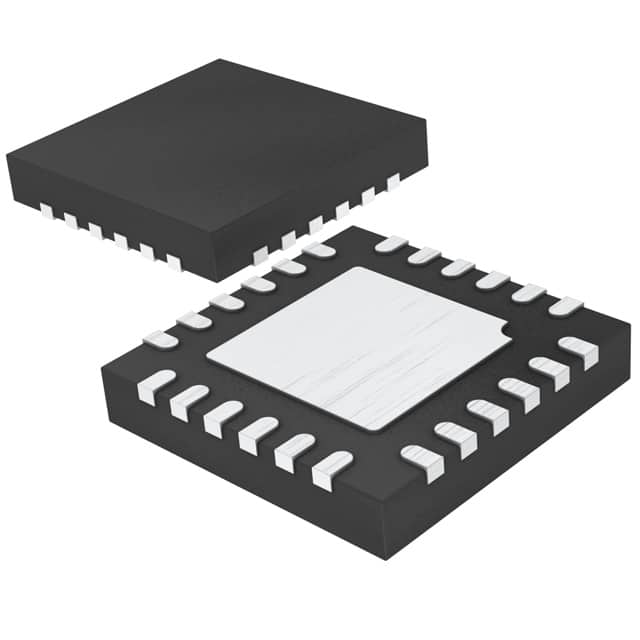
- Part No.:
- LT3688EUF#PBF
- Manufacturer:
- Analog Devices Inc.
- Package:
- 24-WFQFN Exposed Pad
- Datasheet:
-
 LT3688EUF#PBF.pdf
- Description:
- IC REG BUCK ADJ 800MA DL 24QFN
- Quantity:
- Payment:

- Shipping:

Inventory:182
Please send an inquiry. Send us your inquiry, and we will respond immediately.
Product details
Overview
LT3688EUF#PBF from Analog Devices (formerly Linear Technology) is a dual monolithic step-down switching regulator IC with integrated 800mA power switches, programmable power-on reset timers, and a window watchdog timer. It operates from 3.8V to 36V input, delivers adjustable 5V/3.3V outputs, and maintains <25mVP-P output ripple in Burst Mode® at 115μA quiescent current - ideal for automotive ECU and industrial μProcessor supervisory power supplies.
For engineers reviewing the LT3688EUF#PBF datasheet, LT3688EUF#PBF pinout, LT3688EUF#PBF application, or LT3688EUF#PBF equivalent, key selection criteria include its dual-channel 800mA regulation capability, 350kHz–2.2MHz synchronizable switching frequency, ±2% FB voltage accuracy, 24-pin 4mm × 4mm QFN package with exposed thermal pad, and independent CPOR/CWDT capacitor-programmable timing.
Technical Context
The LT3688EUF#PBF implements constant-frequency current-mode control per channel with internal slope compensation and VC-clamped current limiting. Each regulator features independent RUN/SS pins for soft-start control, BST-driven NPN power switches, and DA-pin-based valley-current fault protection up to 1.2A.
Its supervisory functions include two independent power-on reset comparators (90% VFB threshold, ±2% accuracy), an open-drain RST1/RST2 interface, and a window watchdog timer with programmable upper/lower boundaries (tWDU/tWDL) via CWDT capacitor - all operating over –40°C to 125°C junction temperature.
Key Specifications
| Parameter | Value and Actual Design Meaning |
|---|---|
| Input Voltage Range | 3.8V to 36V - supports wide-range industrial and automotive battery inputs without external pre-regulation. |
| Output Current per Channel | 800mA - sufficient to power dual-core microcontrollers or FPGA I/O banks directly. |
| Switching Frequency Range | 350kHz to 2.2MHz - adjustable via RT resistor; enables optimization of inductor size vs. efficiency tradeoff. |
| Feedback Voltage Accuracy | 0.790V to 0.814V (±2%) - ensures tight output regulation across temperature and load for reliable μP supply sequencing. |
| Burst Mode Quiescent Current | 115μA at 12VIN → 3.3V/5V - enables ultra-low standby power in always-on systems. |
| Reset Threshold Accuracy | 90% of VFB ±2% - guarantees glitch-immune POR assertion during brownout conditions. |
| Watchdog Window Timing | tWDU = 20ms / tWDL = 1.25ms (CWDT = 1000pF) - provides robust supervision against runaway or stalled firmware execution. |
Pinout & Package
LT3688EUF#PBF is housed in a thermally enhanced 24-lead (4mm × 4mm) plastic QFN package with exposed GND pad (Pin 25), θJA = 37°C/W. The package requires soldering the exposed pad to PCB ground plane for electrical integrity and thermal performance.
| Pin/Terminal | Circuit Role | Design Meaning |
|---|---|---|
| RT (Pin 1) | Oscillator frequency programming | Resistor-to-GND sets switching frequency from 350kHz to 2.2MHz; critical for EMI and component sizing. |
| SYNC (Pin 2) | External clock synchronization input | Accepts logic-level signal ≥150ns pulse width; enables noise reduction in multi-rail systems. |
| EN/UVLO (Pin 3) | Enable and undervoltage lockout | 1.25V threshold enables startup only when VIN ≥3.5V; prevents erratic operation during brownout. |
| FB1/FB2 (Pins 4, 12) | Output voltage feedback sensing | Regulates to 0.800V reference; resistor dividers set 5V/3.3V outputs with ±2% accuracy. |
| RUN/SS1/RUN/SS2 (Pins 5, 11) | Soft-start timing control | Capacitor-to-GND programs independent soft-start delay; prevents inrush current on power-up. |
| BST1/BST2 (Pins 3, 10) | Bootstrap drive voltage supply | Charges external 0.22μF capacitor to drive internal NPN switches; enables high-efficiency saturation. |
| SW1/SW2 (Pins 4, 9) | Power switch node | Connects to inductor and catch diode; carries high di/dt switching current; layout critical for EMI. |
| RST1/RST2 (Pins 14, 13) | Open-drain reset outputs | Pull low if respective VOUT drops >10%; require external pull-up for μP reset assertion. |
| WDO (Pin 15) | Watchdog timeout output | Active-low open-drain signal pulses low on watchdog violation; duration = 1/8 × tWDU. |
| WDI (Pin 17) | Watchdog input trigger | Accepts negative edges from μP; monitors inter-edge timing against tWDL/tWDU window. |
| CWDT (Pin 21) | Watchdog timing capacitor | Single capacitor sets both fast/slow watchdog boundaries; enables precise firmware supervision. |
| CPOR1/CPOR2 (Pins 20, 18) | Power-on reset timing capacitors | Independent capacitors program reset timeout per channel (e.g., 23.5ms @ 4700pF). |
| CONFIG (Pin 7) | Startup sequence configuration | Three states (VIN/GND/floating) define channel enable order and RST/WDT activation logic. |
| GND (Pin 25) | Power and signal ground | Exposed thermal pad must be electrically connected to PCB ground plane for thermal and electrical performance. |
Key Features
| Feature | Design Value |
|---|---|
| Dual independent 800mA regulators | Enables single-chip dual-rail power for 5V/3.3V μP systems without discrete DC/DC converters. |
| Programmable window watchdog timer | Prevents false triggers by requiring WDI edges within user-defined tWDL–tWDU window - superior to simple timeout watchdogs. |
| Two independently programmable POR timers | Supports staggered or simultaneous rail sequencing via CPOR1/CPOR2 capacitors - critical for complex SoC boot requirements. |
| Burst Mode® with <25mVP-P ripple | Maintains low-noise output under light load while achieving 115μA IQ - eliminates need for LDO post-regulation in standby mode. |
| DA-pin valley-current fault protection | Disables switching if catch diode current exceeds 1.2A, enabling short-circuit survival without external current sense. |
| BIAS pin for reduced input quiescent current | Draws bias current from regulated output (≥3V) instead of VIN, improving system efficiency in multi-rail designs. |
Applications
| Automotive Engine Control Unit (ECU) | Industrial PLC Power Management |
|---|---|
Use Scenario: Powers main MCU and CAN transceiver in under-hood ECU with 12V/24V battery input subject to load dump and cold cranking. IC Role / Device Role / Timing Role: Dual-channel regulator provides isolated 5V (MCU core) and 3.3V (peripheral I/O) rails; RST1/RST2 ensure deterministic reset during voltage transients; watchdog monitors firmware liveliness. Use Value: 36V max input withstands load dump; ±2% reset threshold prevents spurious resets; 115μA Burst Mode extends battery life in sleep mode. | Use Scenario: Supplies field-programmable gate array (FPGA) and real-time controller in modular PLC backplane with 24V DC input. IC Role / Device Role / Timing Role: Generates tightly regulated 3.3V and 1.8V (via external divider) rails; CONFIG pin configures sequential startup; CPOR1/CPOR2 enforce safe power-up sequencing. Use Value: Independent soft-start prevents inrush-induced bus droop; DA-pin protection survives output shorts during field wiring faults; QFN package enables compact board layout. |
| High-Reliability Medical Monitoring System | Ruggedized IoT Edge Gateway |
Use Scenario: Powers safety-critical ARM Cortex-M7 processor and analog front-end in portable patient monitor operating from 12V sealed lead-acid battery. IC Role / Device Role / Timing Role: Dual regulator delivers 3.3V (processor) and 5V (USB host); window watchdog detects firmware hangs; RST outputs feed system-level safety logic. Use Value: 125°C rated operation ensures reliability in enclosed enclosures; ±2% reset accuracy meets IEC 62304 Class C requirements; low ripple avoids ADC measurement errors. | Use Scenario: Provides primary power to cellular modem, sensor hub, and secure element in outdoor-mounted smart utility meter. IC Role / Device Role / Timing Role: Regulates 3.3V for RF section and 5V for backup SRAM; CWDT capacitor tunes watchdog window to match modem firmware cycle time. Use Value: 36V input range accommodates solar + battery hybrid sources; exposed QFN pad enables passive cooling in sealed housing; BIAS pin reduces overall system power draw. |
Equivalent & Alternatives
The following parts are listed as comparable options for similar dual-output supervisory regulator applications.
| Alternative Part | Technical Difference | Application Difference | Selection Advice |
|---|---|---|---|
| LTC3631EMSE#PBF | Single 1.5A buck regulator with integrated POR but no watchdog timer; 3mm × 4mm MSOP-10 package. | Lacks dual-channel output and window watchdog - suitable only for simpler single-rail systems without firmware supervision. | Select when cost and board space are constrained and watchdog functionality is handled externally. |
| TPS65217CRSLR | Quad-buck PMIC with integrated fuel gauge and RTC; 48-pin QFN; requires external POR/watchdog IC. | Higher integration but no on-chip watchdog or programmable POR; adds complexity for non-battery applications. | Choose for battery-powered portable devices needing fuel gauging, not for industrial/microcontroller-only use cases. |
Compared with LTC3631EMSE#PBF and TPS65217CRSLR, the LT3688EUF#PBF uniquely combines dual 800mA regulation, independent POR timing, and window watchdog supervision in a single 4mm × 4mm QFN - eliminating need for discrete supervisors and reducing BOM count in μP-centric designs.
Availability
LT3688EUF#PBF is available at Aetrix Electronics and suitable for automotive electronic control units, industrial programmable logic controllers, and high-reliability microprocessor systems requiring stable component supply across extended temperature ranges.
Supply support for LT3688EUF#PBF includes scheduled delivery planning, volume procurement assistance, BOM continuity management, traceable sourcing, and lifecycle availability coordination for OEM customers, industrial embedded developers, connected-device designers, and electronics production programs.
Manufacturer
Analog Devices (acquired Linear Technology in 2017) is a global leader in high-performance analog, mixed-signal, and power management semiconductors.
The LT3688EUF#PBF belongs to Linear's high-voltage monolithic buck regulator family, designed specifically for demanding automotive and industrial applications requiring integrated power sequencing and microprocessor supervision.
FAQ
What is the maximum input voltage rating for the LT3688EUF#PBF?
The LT3688EUF#PBF has an absolute maximum input voltage rating of 36V on the VIN pin, and it operates continuously over a functional input range of 3.8V to 36V. This makes it suitable for 12V and 24V automotive and industrial systems, including those subject to load dump transients. Exceeding 36V risks permanent damage per Absolute Maximum Ratings.
How does the LT3688EUF#PBF implement watchdog supervision?
The LT3688EUF#PBF implements a window watchdog timer that monitors negative edges on the WDI pin. It enforces both a minimum (tWDL) and maximum (tWDU) time between successive edges using a single CWDT capacitor. If edges occur too close together or too far apart, WDO pulses low for 1/8 × tWDU, providing more robust fault detection than simple timeout watchdogs.
Can the LT3688EUF#PBF generate 1.8V output?
Yes, the LT3688EUF#PBF can generate 1.8V output by configuring the FB1 or FB2 feedback divider to set VOUT = 0.800V × (1 + R1/R2). Its ±2% FB voltage accuracy and current-mode architecture maintain regulation stability at 1.8V/800mA, as confirmed in Typical Performance Characteristics (Figure G03). External compensation may be required for optimal transient response.
What is the purpose of the CONFIG pin on the LT3688EUF#PBF?
The CONFIG pin on the LT3688EUF#PBF selects one of three startup sequencing modes: tied to VIN (channel 2 starts after FB1 reaches 0.72V), tied to GND (both RST pins assert until both FB pins rise above 0.72V), or floating (coincident channel start). This enables flexible power-up behavior for complex SoCs and multi-rail systems without external logic.
Does the LT3688EUF#PBF require external catch diodes?
Yes, the LT3688EUF#PBF requires external Schottky catch diodes connected to DA1/DA2 pins. The datasheet specifies B140HB as a typical part. These diodes provide the freewheeling path during switch off-time; omitting them causes catastrophic failure. The DA pin monitors diode current and disables switching if it exceeds 1.2A, protecting against short-circuit faults.
LT3688EUF#PBF Specifications
- Product attributes
- Attribute value
- Manufacturer:
- Analog Devices Inc.
- Series:
- -
- Package/Case:
- 24-WFQFN Exposed Pad
- Packaging:
- Tube
- Product Status:
- Active
- Function:
- Step-Down
- Output Configuration:
- Positive
- Topology:
- Buck
- Output Type:
- Adjustable
- Number of Outputs:
- 2
- Voltage - Input (Min):
- 3.8V
- Voltage - Input (Max):
- 36V
- Voltage - Output (Min/Fixed):
- 0.8V
- Voltage - Output (Max):
- 36V
- Current - Output:
- 800mA
- Frequency - Switching:
- 500kHz ~ 2.1MHz
- Synchronous Rectifier:
- No
- Operating Temperature:
- -40°C ~ 125°C (TJ)
- Grade:
- -
- Qualification:
- -
- Mounting Type:
- Surface Mount
- Supplier Device Package:
- 24-QFN (4x4)
LT3688EUF#PBF FAQ
1.How can I place an order for LT3688EUF#PBF through Aetrix?
Please submit a Request for Quotation (RFQ) for LT3688EUF#PBF on Aetrix. Our sales agent will provide a competitive quotation and guide you through the order confirmation once you accept the terms.
2.Are the price and stock information for LT3688EUF#PBF reliable?
The price and inventory of LT3688EUF#PBF are updated periodically and may fluctuate due to market conditions. Stock and pricing data are typically refreshed every 24 hours. Quotation validity for LT3688EUF#PBF is usually 5 days.
3.What payment methods are accepted for LT3688EUF#PBF?
We accept Wire Transfer, PayPal, Credit Card, Western Union, MoneyGram, and Escrow for LT3688EUF#PBF transactions.
Note: Certain payment methods may incur a processing fee.
4.How is shipping managed for LT3688EUF#PBF?
LT3688EUF#PBF orders can be shipped via leading logistics carriers, including DHL, UPS, FedEx, TNT, or Registered Mail.
Once your LT3688EUF#PBF order is processed, you will receive an email with the shipment details and tracking number.
Note: Tracking information may take up to 24 hours to appear. Express delivery typically takes 3–5 business days.
5.How can I obtain technical support or documentation for LT3688EUF#PBF?
For technical support, including LT3688EUF#PBF datasheets, pinout diagrams, or application guidance, please contact our engineering support team. They can provide detailed documentation and assistance for your LT3688EUF#PBF requirements.
6.How does Aetrix verify that LT3688EUF#PBF is sourced from the original manufacturer or authorized distributors?
All LT3688EUF#PBF products on Aetrix are procured from qualified distributors and authorized channels. Our dedicated quality assurance team conducts strict verification, including traceability checks and, if necessary, third-party testing. This ensures that LT3688EUF#PBF meets industry standards.
7.What is the process for return or replacement of LT3688EUF#PBF?
All LT3688EUF#PBF units undergo pre-shipment inspection (PSI). If there is an issue with LT3688EUF#PBF, returns or replacements are accepted under the following conditions:
1.Quantity discrepancies, incorrect items, or visible external defects (such as breakage or corrosion), acknowledged by Aetrix.
2.The issue is reported within 90 days of delivery.
3.The LT3688EUF#PBF part is unused and in its original packaging.
Return procedure for LT3688EUF#PBF:
1.Submit a request within 90 days.
2.Obtain a Return Material Authorization (RMA) from Aetrix.
LT3688EUF#PBF Tags
-
TPS562201DDCR
Texas Instruments
-
MC34063ABD-TR
STMicroelectronics
-
TPS561201DDCR
Texas Instruments

-
MC33063ADR
Texas Instruments
-
MC34063ADR
Texas Instruments
-
TPS560200DBVR
Texas Instruments
-
AP3012KTR-G1
Diodes Incorporated
-
TLV61048DBVR
Texas Instruments
-
AZ34063UMTR-G1
Diodes Incorporated
-
TPS562200DDCR
Texas Instruments
-
AP62300TWU-7
Diodes Incorporated
-
MC34063EBD-TR
STMicroelectronics
Tech Hub

A practical engineering guide to 3.3V and 5V logic compatibility, input thresholds, resistor dividers, translator ICs, MOSFET level shifting, I2C pull-ups, timing limits and power-sequencing risks.

The 74HC595 uses push-pull logic outputs, while the TPIC6B595 uses 50 V open-drain DMOS sinks for higher-power loads. This guide compares timing, current limits, 3.3 V interfacing, load wiring, thermal…

The 74HC595 converts serial data into eight stable parallel outputs. This guide covers pin functions, shift and storage timing, OE and MR behavior, drive-current limits, cascading, voltage compatibilit…

A technical comparison of level-sensitive latches and edge-triggered flip-flops, covering timing windows, setup and hold limits, master–slave operation, time borrowing, race-through, HDL inference and…

A D latch stores one bit while Enable controls when data can pass. This reference covers gate-level operation, truth tables, transparency, setup and hold timing, LE versus OE, common ICs and practical …

An SR latch stores one bit through cross-coupled feedback. This engineering reference covers NOR and NAND implementations, truth tables, forbidden-state recovery, gated operation, switch debouncing, fa…

Latch circuits retain one bit through feedback. This technical reference covers SR and D latches, truth tables, transparency, timing limits, latch-versus-flip-flop behavior, applications and common log…

An engineering guide to LED driver operation, constant-current and constant-voltage outputs, linear and switching topologies, dimming, IC selection, calculations, replacement compatibility, and fault c…

Operational amplifier guide covering op amp basics, feedback, ideal vs real op amps, common configurations, buffer circuits, offset, bias current, gain-bandwidth, slew rate, rail-to-rail limits and sel…

Jumper cables guide covering safe connection order, red and black clamp placement, final ground connection, cable gauge, length, clamp quality, copper vs CCA cables, jump starter comparison and battery…


