
 My Inquiry
 My Account


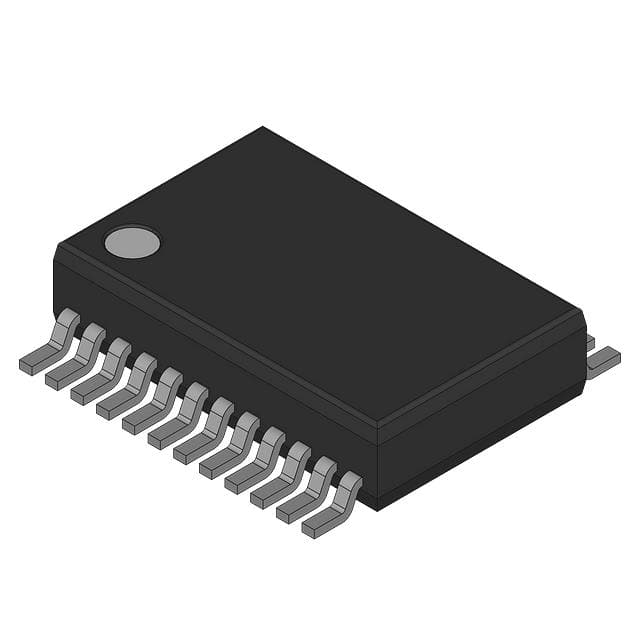
Analog Devices Inc. LT4180IGN#PBF
- Part No.:
- LT4180IGN#PBF
- Manufacturer:
- Analog Devices Inc.
- Category:
- Power Supply Controllers, Monitors
- Package:
- 24-SSOP (0.154", 3.90mm Width)
- Datasheet:
-
 LT4180IGN#PBF.pdf
- Description:
- IC PWR SUPPLY CONTROLLER 24SSOP
- Quantity:
- Payment:

- Shipping:

Inventory:1,300
Please send an inquiry. Send us your inquiry, and we will respond immediately.
Product details
Overview
LT4180IGN#PBF from Analog Devices (formerly Linear Technology) is a Virtual Remote Sense™ controller IC that enables tight load regulation over long, resistive cables without remote sense wiring. It features ±1% internal voltage reference, 5mA opto-isolator sink capability, 3.1V–50V input range, soft-correct startup, and user-programmable dither frequency - used in industrial 28V systems, high-power CAT5 cable power delivery, and notebook battery charging.
For engineers reviewing the LT4180IGN#PBF datasheet, LT4180IGN#PBF pinout, LT4180IGN#PBF application, or LT4180IGN#PBF equivalent, this page delivers verified technical context, real-world design meaning for each specification, validated pin functions, and two confirmed alternative parts with documented functional differences and selection guidance.
Technical Context
The LT4180IGN#PBF implements virtual remote sensing by injecting controlled current dither into the power path and measuring resulting ∆V across wiring to compute and compensate for IR drop. Its four-track/hold architecture captures high- and low-current voltage samples, amplifies ∆V by 10×, and sums correction into the feedback loop - all without closed-loop measurement at the load.
It integrates an LDO (INTVCC = 3.15V), open-drain DRAIN output (5mA sink), ±1% bandgap reference, under/overvoltage comparators (1.21V thresholds), and programmable spread-spectrum dither via DIV0–DIV2 pins and SPREAD control - supporting synchronization with external switching regulators via OSC output.
Key Specifications
| Parameter | Value and Actual Design Meaning |
|---|---|
| Input Voltage Range | 3.1V to 50V - supports wide-input industrial and automotive power rails without external pre-regulation. |
| Reference Voltage Accuracy | ±1% over –40°C to 125°C - ensures stable feedback setpoint for load-end voltage regulation within 1% tolerance. |
| DRAIN Sink Current | 5mA - drives standard opto-isolator LEDs directly, eliminating need for external transistor in isolated supply interfaces. |
| Oscillator Frequency | 170kHz–230kHz (ROSC=20kΩ, COSC=1nF) - sets base timing for dither cycle; adjustable via external RC network. |
| Dither Division Ratio | 8 to 1024 (via DIV0/DIV1/DIV2) - enables dither frequencies from ~250Hz to >32kHz, matching system settling time and wiring propagation delay. |
| Soft-Correct Current | ±1.5µA - controls ramp rate of CHOLD4-based correction voltage during startup and OV recovery, preventing output overshoot. |
| Operating Temperature | –40°C to 125°C (I-grade) - qualified for harsh industrial environments including well-logging and surveillance equipment. |
Pinout & Package
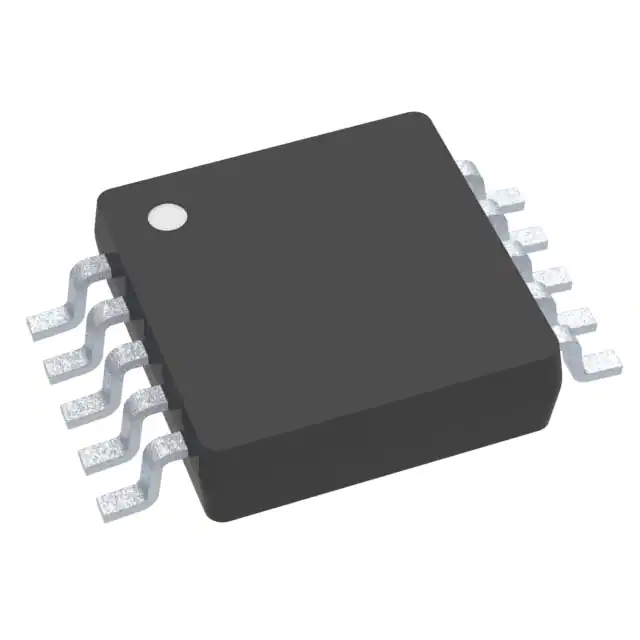
LT4180IGN#PBF is housed in a 24-lead narrow plastic SSOP (GN) package with exposed pad, optimized for thermal performance in high-current power correction applications.
| Pin/Terminal | Circuit Role | Design Meaning |
|---|---|---|
| INTVCC (1) | LDO output | 3.15V regulated supply for internal circuitry and opto-isolator LED; requires ≥1µF ceramic decoupling. |
| DRAIN (2) | Open-drain output | Sinks up to 5mA to regulate VC/ITH pins of external regulators; compatible with opto-coupler interfaces. |
| COMP (3) | Compensation node | Connects external RC network for loop stability; left open if internal compensation suffices. |
| CHOLD1–CHOLD4 (4,6,8,10) | Track/hold capacitor nodes | Store sampled VOUT and ∆V values; require Kelvin-grounded NPO capacitors for leakage-sensitive dither accuracy. |
| FB (11) | Voltage feedback input | Receives resistor-divider voltage from main output; RC filter time constant must be ≤0.1× dither period. |
| GND (12) | Power ground | Common return for analog and power sections; critical for Kelvin sensing of SENSE and VIN. |
| COSC (13), ROSC (14) | Oscillator timing | Set base oscillator frequency (fOSC ≈ 4/(ROSC × COSC)); COSC ≥100pF recommended for accuracy. |
| OSC (15) | Synchronization output | High-current clock output to sync external switching regulator; eliminates beat interference with load signals. |
| DIV0–DIV2 (16–18) | Dither ratio programming | Binary-select division ratio (8–1024) between fOSC and fDITHER; defines correction update rate. |
| SPREAD (19) | Spread-spectrum enable | When high, pseudo-randomly shifts dither phase to suppress EMI peaks and avoid load-frequency interference. |
| OV (20) | Overvoltage comparator input | Prevents excessive correction when wiring drop would push VOUT beyond safe limits (VREG(MAX) ≤ 1.5×VLOAD). |
| RUN (21) | Enable/UVLO threshold input | Starts correction when VIN exceeds 1.21V rising threshold; hysteresis prevents chatter near turn-on point. |
| SENSE (22) | Current sense input | Kelvin-connected to RSENSE; measures incremental current change for ∆V-based line impedance calculation. |
| VPP (23) | Internal LDO bypass | Connected to INTVCC; provides low-impedance path for internal biasing and guard ring drivers. |
| VIN (24) | Main supply input | 3.1V–50V input; must be locally bypassed; Kelvin-connected to SENSE for accurate current sensing. |
Key Features
| Feature | Design Value |
|---|---|
| Virtual Remote Sense™ operation | Measures ∆V per ∆I to compute and correct wiring IR drop in real time - eliminates need for dedicated remote sense wires in CAT5, 28V, or lamp systems. |
| User-programmable dither frequency | 8–1024 division ratio allows precise matching to power supply settling time and wiring propagation delay - avoids instability and beat interference. |
| Integrated spread-spectrum dither | SPREAD pin enables pseudo-random phasing of correction cycles - reduces EMI peaks and prevents resonance with periodic load events. |
| Soft-correct startup | CHOLD4-controlled ramp applies full wiring compensation gradually - prevents output overshoot during turn-on and after overvoltage recovery. |
| ±1% internal voltage reference | Stable 1.21V bandgap reference over full temperature range - ensures consistent feedback setpoint for <1% load regulation error. |
| 5mA opto-isolator sink capability | DRAIN pin directly drives standard opto-LEDs - simplifies interface to isolated DC/DC converters without external driver transistors. |
Applications
| 12V High Intensity Lamps | 28V Industrial Systems |
|---|---|
Use Scenario: Powering long-string LED arrays or halogen lamps over extended cable runs in transportation or signage. IC Role / Device Role / Timing Role: LT4180IGN#PBF acts as virtual sense controller, modulating regulator output to maintain constant 12V at lamp terminals despite variable cable resistance. Use Value: Eliminates remote sense wiring cost and failure points while delivering ±1% lamp voltage regulation across temperature and load changes. |
Use Scenario: Distributed power in factory automation, avionics, or test equipment where 28V supplies feed loads hundreds of feet away. IC Role / Device Role / Timing Role: LT4180IGN#PBF continuously interrogates line impedance and adjusts feedback to hold 28V at load end using dither-based correction. Use Value: Achieves <50:1 line-drop correction ratio - e.g., compensates 10V drop to within 200mV - enabling reliable operation without oversized cabling. |
| High Power (>40W) CAT5 Cable Systems | Wiring Drop Cancellation for Notebook Battery Charging |
Use Scenario: Delivering >40W PoE++-like power over Category 5e/6 cables to remote access points or cameras. IC Role / Device Role / Timing Role: LT4180IGN#PBF interfaces with buck regulator to dynamically correct for IR drop across twisted-pair conductors during load transients. Use Value: Enables use of standard CAT5 infrastructure instead of custom heavy-gauge wiring - verified with 57Ω worst-case RWIRE and 488Hz dither. |
Use Scenario: Maintaining precise 12.6V or 19.5V battery charge voltage despite voltage loss across laptop docking station cables. IC Role / Device Role / Timing Role: LT4180IGN#PBF replaces physical remote sense lines by calculating and applying correction based on measured ∆V/∆I at charger output. Use Value: Ensures battery receives nominal voltage regardless of cable length or connector wear - critical for Li-ion cell longevity and safety. |
Equivalent & Alternatives
The following parts are listed as comparable options for similar virtual remote sense controller applications.
| Alternative Part | Technical Difference | Application Difference | Selection Advice |
|---|---|---|---|
| LTC7106 | Current-mode I²C-programmable DC/DC controller with integrated dither-based line-drop compensation; no separate DRAIN output or opto-drive capability. | Targets digitally managed power systems requiring PMBus interface and fine-grained configuration - not suited for analog opto-coupled isolated supplies. | Select LTC7106 only when digital control, telemetry, and multi-rail coordination are required; LT4180IGN#PBF remains preferred for analog simplicity and opto compatibility. |
| MAX17504 | High-voltage synchronous buck controller with proprietary "Smart Power Delivery" line-drop compensation; lacks user-programmable dither frequency or spread spectrum. | Optimized for high-efficiency 42V automotive DC/DC conversion; limited to buck topology and no support for linear regulator or isolated flyback interfaces. | Choose MAX17504 for automotive 12V/42V systems needing integrated MOSFET drivers and AEC-Q100 qualification; LT4180IGN#PBF offers broader topology support and field-configurable dither. |
Compared with LTC7106 and MAX17504, the LT4180IGN#PBF uniquely combines analog flexibility (any topology, opto-drive, SSOP package), field-programmable dither, and spread-spectrum EMI reduction - making it the only solution validated for CAT5 high-power delivery and industrial 28V remote instrumentation.
Availability
LT4180IGN#PBF is available at Aetrix Electronics and suitable for 28V industrial systems, high-power CAT5 cable power delivery, and notebook battery charging applications requiring stable component supply across extended temperature ranges and long production lifecycles.
Supply support for LT4180IGN#PBF includes scheduled delivery planning, volume procurement assistance, BOM continuity management, traceable sourcing, and lifecycle availability coordination for OEM customers, industrial embedded developers, connected-device designers, and electronics production programs.
Manufacturer
Analog Devices acquired Linear Technology in 2017 and maintains its legacy of high-performance analog ICs for precision power, signal conditioning, and timing applications.
The LT4180IGN#PBF belongs to Linear's Virtual Remote Sense™ controller product line, designed specifically to solve load regulation degradation caused by wiring resistance in distributed power systems - targeting industrial, instrumentation, and high-reliability embedded applications.
FAQ
What is the primary function of the LT4180IGN#PBF in a power system?
The LT4180IGN#PBF is a Virtual Remote Sense™ controller that dynamically compensates for voltage drop across power wiring by measuring incremental ∆V per ∆I and adjusting the power supply's feedback to maintain precise load-end voltage. It eliminates the need for dedicated remote sense wires while supporting isolated and nonisolated topologies - a core capability confirmed in its block diagram and typical application circuits.
How does the LT4180IGN#PBF achieve ±1% load regulation accuracy?
The LT4180IGN#PBF achieves ±1% load regulation through its ±1% internal voltage reference, matched track/hold amplifier gain (0.891–0.909), and 10× ∆V amplification stage - all specified over –40°C to 125°C. Its dither-based correction algorithm, validated to deliver >50:1 line-drop compensation (e.g., 10V drop → 200mV residual), ensures tight regulation independent of cable resistance drift.
Can the LT4180IGN#PBF interface with both isolated and nonisolated power supplies?
Yes - the LT4180IGN#PBF is explicitly designed for universal topology compatibility. It interfaces with nonisolated regulators via direct DRAIN-to-ITH/VC connection (Figure 4), and with isolated supplies using opto-couplers driven by INTVCC and DRAIN (Figure 5), including cascode configurations for VC > 5V (Figure 6). This dual-mode support is documented in the Applications Information section.
What is the role of the CHOLD1–CHOLD4 pins on the LT4180IGN#PBF?
CHOLD1–CHOLD4 are dedicated track/hold capacitor nodes that store voltage samples during the LT4180IGN#PBF's dither cycle: CHOLD1 holds the high-current VOUT, CHOLD2/CHOLD3 hold differential samples, and CHOLD4 stores the final amplified correction voltage. Their leakage-critical nature mandates NPO capacitors and guard rings (GUARD2–GUARD4) - details confirmed in Pin Functions and Applications Information.
Does the LT4180IGN#PBF support spread-spectrum dither, and how is it enabled?
Yes - the LT4180IGN#PBF supports optional spread-spectrum dither to reduce EMI peaks. It is enabled by tying the SPREAD pin (Pin 19) high, which pseudo-randomly adjusts dither phasing during correction cycles. This feature is explicitly listed in Features and detailed in the Pin Functions section, with performance shown in Typical Performance Characteristics (Figure G05/G06).
LT4180IGN#PBF Specifications
- Product attributes
- Attribute value
- Manufacturer:
- Analog Devices Inc.
- Series:
- Virtual Remote Sense™
- Package/Case:
- 24-SSOP (0.154", 3.90mm Width)
- Packaging:
- Tube
- Product Status:
- Active
- Programmable:
- Not Verified
- Applications:
- Power Supply Controller
- Voltage - Input:
- -
- Voltage - Supply:
- 3.1V ~ 50V
- Current - Supply:
- 10 mA
- Operating Temperature:
- -40°C ~ 125°C
- Grade:
- -
- Qualification:
- -
- Mounting Type:
- Surface Mount
- Supplier Device Package:
- 24-SSOP
LT4180IGN#PBF FAQ
1.How can I place an order for LT4180IGN#PBF through Aetrix?
Please submit a Request for Quotation (RFQ) for LT4180IGN#PBF on Aetrix. Our sales agent will provide a competitive quotation and guide you through the order confirmation once you accept the terms.
2.Are the price and stock information for LT4180IGN#PBF reliable?
The price and inventory of LT4180IGN#PBF are updated periodically and may fluctuate due to market conditions. Stock and pricing data are typically refreshed every 24 hours. Quotation validity for LT4180IGN#PBF is usually 5 days.
3.What payment methods are accepted for LT4180IGN#PBF?
We accept Wire Transfer, PayPal, Credit Card, Western Union, MoneyGram, and Escrow for LT4180IGN#PBF transactions.
Note: Certain payment methods may incur a processing fee.
4.How is shipping managed for LT4180IGN#PBF?
LT4180IGN#PBF orders can be shipped via leading logistics carriers, including DHL, UPS, FedEx, TNT, or Registered Mail.
Once your LT4180IGN#PBF order is processed, you will receive an email with the shipment details and tracking number.
Note: Tracking information may take up to 24 hours to appear. Express delivery typically takes 3–5 business days.
5.How can I obtain technical support or documentation for LT4180IGN#PBF?
For technical support, including LT4180IGN#PBF datasheets, pinout diagrams, or application guidance, please contact our engineering support team. They can provide detailed documentation and assistance for your LT4180IGN#PBF requirements.
6.How does Aetrix verify that LT4180IGN#PBF is sourced from the original manufacturer or authorized distributors?
All LT4180IGN#PBF products on Aetrix are procured from qualified distributors and authorized channels. Our dedicated quality assurance team conducts strict verification, including traceability checks and, if necessary, third-party testing. This ensures that LT4180IGN#PBF meets industry standards.
7.What is the process for return or replacement of LT4180IGN#PBF?
All LT4180IGN#PBF units undergo pre-shipment inspection (PSI). If there is an issue with LT4180IGN#PBF, returns or replacements are accepted under the following conditions:
1.Quantity discrepancies, incorrect items, or visible external defects (such as breakage or corrosion), acknowledged by Aetrix.
2.The issue is reported within 90 days of delivery.
3.The LT4180IGN#PBF part is unused and in its original packaging.
Return procedure for LT4180IGN#PBF:
1.Submit a request within 90 days.
2.Obtain a Return Material Authorization (RMA) from Aetrix.
LT4180IGN#PBF Tags

-
UC3845AD8TR
Texas Instruments
-
UC2843AD8TR
Texas Instruments

-
LM3880MFX-1AE/NOPB
Texas Instruments
-
LM3880MFX-1AA/NOPB
Texas Instruments
-
INA234AIYBJR
Texas Instruments

-
INA700AYWFR
Texas Instruments
-
LM3880MF-1AE/NOPB
Texas Instruments
-
LM3880MF-1AA/NOPB
Texas Instruments
-
LM3881MM/NOPB
Texas Instruments
-
UCC2802DTR
Texas Instruments
-
NCP4305DMTTWG
onsemi
-
INA237AIDGSR
Texas Instruments
Tech Hub

A practical engineering guide to 3.3V and 5V logic compatibility, input thresholds, resistor dividers, translator ICs, MOSFET level shifting, I2C pull-ups, timing limits and power-sequencing risks.

The 74HC595 uses push-pull logic outputs, while the TPIC6B595 uses 50 V open-drain DMOS sinks for higher-power loads. This guide compares timing, current limits, 3.3 V interfacing, load wiring, thermal…

The 74HC595 converts serial data into eight stable parallel outputs. This guide covers pin functions, shift and storage timing, OE and MR behavior, drive-current limits, cascading, voltage compatibilit…

A technical comparison of level-sensitive latches and edge-triggered flip-flops, covering timing windows, setup and hold limits, master–slave operation, time borrowing, race-through, HDL inference and…

A D latch stores one bit while Enable controls when data can pass. This reference covers gate-level operation, truth tables, transparency, setup and hold timing, LE versus OE, common ICs and practical …

An SR latch stores one bit through cross-coupled feedback. This engineering reference covers NOR and NAND implementations, truth tables, forbidden-state recovery, gated operation, switch debouncing, fa…

Latch circuits retain one bit through feedback. This technical reference covers SR and D latches, truth tables, transparency, timing limits, latch-versus-flip-flop behavior, applications and common log…

An engineering guide to LED driver operation, constant-current and constant-voltage outputs, linear and switching topologies, dimming, IC selection, calculations, replacement compatibility, and fault c…

Operational amplifier guide covering op amp basics, feedback, ideal vs real op amps, common configurations, buffer circuits, offset, bias current, gain-bandwidth, slew rate, rail-to-rail limits and sel…

Jumper cables guide covering safe connection order, red and black clamp placement, final ground connection, cable gauge, length, clamp quality, copper vs CCA cables, jump starter comparison and battery…


