
 My Inquiry
 My Account


Analog Devices Inc. LT8356IUDCM-1#WPBF

- Part No.:
- LT8356IUDCM-1#WPBF
- Manufacturer:
- Analog Devices Inc.
- Category:
- LED Drivers
- Package:
- 20-WFQFN Exposed Pad
- Datasheet:
-
 LT8356IUDCM-1#WPBF.pdf
- Description:
- 110V LED DRIVER INTERNAL PWM DIM
- Quantity:
- Payment:

- Shipping:

Inventory:2,659
Please send an inquiry. Send us your inquiry, and we will respond immediately.
Product details
Overview
LT8356IUDCM-1#WPBF from Analog Devices is a 100V input, 120V output constant-current/constant-voltage DC/DC LED controller supporting boost, SEPIC, buck-mode, and flyback topologies. It delivers ±2% LED current regulation, 20,000:1 external PWM dimming at 100Hz, rail-to-rail LED current sensing (0V to 120V), and AEC-Q100 qualification for automotive headlamp systems.
For engineers reviewing the LT8356IUDCM-1#WPBF datasheet, LT8356IUDCM-1#WPBF pinout, LT8356IUDCM-1#WPBF application, or LT8356IUDCM-1#WPBF equivalent, key selection criteria include high-voltage LED current sensing range (0–120V), dual analog dimming (CTRL/IADJ), internal exponential PWM generator with 128-step resolution, programmable switching frequency up to 2MHz, and side-solderable 20-lead 3mm × 4mm QFN packaging.
Technical Context
The LT8356IUDCM-1#WPBF implements fixed-frequency current-mode control with dual-loop regulation: an inner loop using ISP/ISN for precise LED current feedback and an outer loop via FB for output voltage clamping and protection. Its error amplifier integrates VC compensation and supports both constant-current (CC) and constant-voltage (CV) operation modes.
It features two independent gate drivers: GATE for external NMOS power switch control and PWMTG for high-side PMOS load disconnect-enabling fast transient suppression during PWM off periods and fault isolation. The internal PWM generator accepts analog voltage inputs (0.5V–1.5V) to select 128 exponentially spaced dimming ratios, while also accepting direct digital PWM signals for ultra-high 20,000:1 dimming at 100Hz.
Key Specifications
| Parameter | Value and Actual Design Meaning |
|---|---|
| Input Voltage Range | 5V to 100V - supports wide-range automotive battery inputs including cold-crank and load-dump transients up to 80V. |
| LED Current Sensing Range | 0V to 120V common-mode - enables high-side or low-side Kelvin sensing across full LED string voltage swing without level-shifting. |
| Current Regulation Accuracy | ±2% - ensures consistent luminance across temperature and unit-to-unit variation in high-reliability lighting systems. |
| External PWM Dimming Ratio | 20,000:1 at 100Hz - meets stringent automotive adaptive driving beam (ADB) and dynamic lighting requirements. |
| Switching Frequency Range | 185kHz to 2.15MHz - allows optimization of magnetics size, EMI filtering, and efficiency across diverse power levels. |
| Operating Junction Temp | –40°C to +125°C - qualified per AEC-Q100 Grade 1 for under-hood automotive applications. |
| Package | 20-lead 3mm × 4mm side-solderable QFN - enables compact layout and robust thermal performance (θJC = 3.4°C/W). |
Pinout & Package
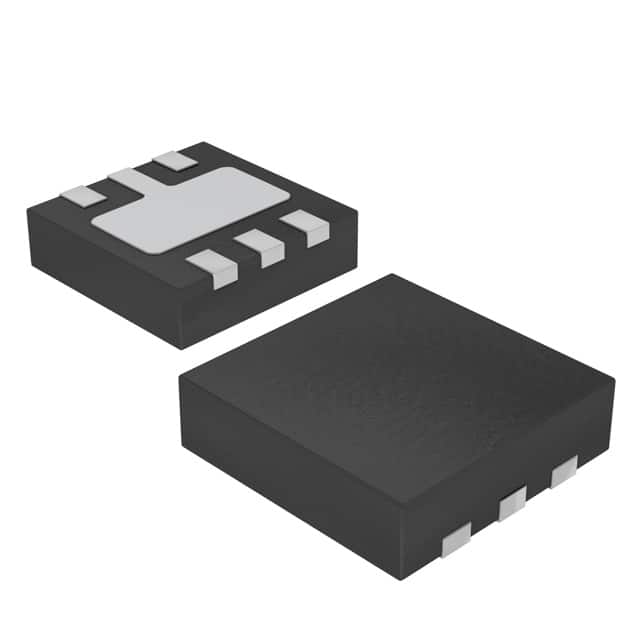
LT8356IUDCM-1#WPBF uses a 20-lead, 3mm × 4mm side-solderable plastic QFN package (UDCM) with exposed thermal pad (Pin 21) that must be soldered to PCB ground plane. Package thermal resistance is θJA = 34°C/W and θJC = 3.4°C/W.
| Pin/Terminal | Circuit Role | Design Meaning |
|---|---|---|
| EN/UVLO (1) | Enable / Input Undervoltage Lockout | Shuts down converter when VIN drops below 1.25V (typ); 60mV hysteresis prevents chatter during brownout conditions. |
| GND (2, 21) | Ground Reference | Pin 2 and exposed pad (21) are both ground; pad must be soldered for thermal and electrical integrity - not optional. |
| INTVCC (3) | Internal Bias Supply | 7.5V regulated output powering internal circuitry; requires ≥4.7µF bypass capacitor; not intended for external loads. |
| VC (4) | Error Amplifier Compensation Node | Connect RC network to ground to stabilize CC/CV control loop; critical for transient response and stability. |
| CTRL (5) | Analog Dimming Input (Multiplier) | Together with IADJ, sets LED current threshold via (CTRL − 0.48V) × (IADJ − 0.5V); enables fine-grained analog brightness control. |
| IADJ (15) | Analog Dimming Input (Multiplier) | Second multiplier input; combined with CTRL, provides two-pin multiplying analog dimming without external DACs or op-amps. |
| FB (6) | Output Voltage Feedback | Monitors output voltage via resistive divider; triggers overvoltage (1.26V) or short-LED (300mV) fault shutdown. |
| ISN (7) | Low-Side LED Sense Input | Kelvin connection to low side of RILED; used with ISP to measure VISP−VISN for accurate current regulation up to 120V. |
| ISP (8) | High-Side LED Sense Input | Kelvin connection to high side of RILED; supports rail-to-rail sensing; overcurrent trips at ~670mV differential. |
| SENSE (10) | Switch Current Sense Input | Measures NMOS source current via grounded sense resistor; referenced to exposed pad (PGND), not Pin 2. |
| GATE (11) | NMOS Power Switch Driver | Drives external NMOS gate; 5Ω pull-up / 3Ω pull-down ensures fast switching and low conduction loss. |
| FAULT (14) | Open-Drain Fault Indicator | Pulls low on open LED, short LED, overvoltage, or overcurrent; requires external pull-up to ≤40V supply. |
| PWM (16) | Dimming Control Input | Accepts analog voltage (0.5–1.5V) for internal exponential PWM or digital signal (≥1.6V ON / ≤0.4V OFF) for external PWM dimming. |
| VREF (17) | 2.0V Precision Reference | Stable 2.0V reference (±1.5%) for biasing CTRL/IADJ/PWM; supplies up to 2.5mA; bypass with 1µF if loaded. |
| RT (18) | Frequency Programming | Resistor to ground sets fSW (185kHz–2.15MHz) and internal PWM clock (fSW/1000); no other connections permitted. |
| PWMTG (13) | PMOS High-Side Gate Driver | Drives external series PMOS between ISP and LED string; disconnects load during PWM off/faults to prevent residual charge leakage. |
| VIN (20) | Main Input Supply | Primary power input (5–100V); requires local ceramic bypass (≥2.2µF) close to pin; handles 80V transients. |
Key Features
| Feature | Design Value |
|---|---|
| 128-step internal exponential PWM dimming | Enables smooth, flicker-free brightness control from 0.78% to 100% using single analog voltage input - eliminates need for microcontroller-based dimming logic. |
| Rail-to-rail LED current sensing (0V–120V) | Supports high-side or low-side Kelvin sensing across full LED string voltage without external level shifters or isolated amplifiers - reduces BOM and layout complexity. |
| Two-pin multiplying analog dimming (CTRL/IADJ) | Provides continuous, linear LED current scaling via product of two independent analog voltages - ideal for multi-channel brightness matching and temperature compensation. |
| Integrated spread-spectrum frequency modulation | Reduces peak EMI by ±12.5% frequency dithering - simplifies compliance with CISPR 25 Class 5 automotive EMI standards without added filtering components. |
| AEC-Q100 Grade 1 qualification | Validated for automotive under-hood operation from –40°C to +125°C junction temperature - meets reliability and lifetime requirements for headlamp and DRL applications. |
| PMOS high-side disconnect driver (PWMTG) | Drives external PMOS to fully isolate LED string during PWM off-time or fault events - prevents output capacitor discharge through LEDs and eliminates turn-on transients. |
Applications
| Automotive Head Lamps | Adaptive Driving Beam (ADB) |
|---|---|
Use Scenario: High-brightness LED arrays in front-facing vehicle headlamps requiring precise current regulation and dynamic dimming. IC Role / Device Role / Timing Role: Constant-current LED controller implementing boost topology with integrated PWM dimming and fault protection. Use Value: ±2% current accuracy ensures consistent lumen output across temperature; 20,000:1 external PWM dimming enables pixel-level beam shaping for glare-free ADB functionality. | Use Scenario: Multi-segment LED modules where individual zones must be independently dimmed in real time based on camera input. IC Role / Device Role / Timing Role: Primary LED driver IC providing scalable analog dimming (CTRL/IADJ) and fast digital PWM control (PWM pin) for zone-specific brightness. Use Value: Dual dimming paths allow coarse analog adjustment plus fine digital control; internal exponential PWM eliminates MCU timing overhead for smooth transitions. |
| Commercial High-Bay Lighting | Industrial UV-C Sterilization Systems |
Use Scenario: High-power LED fixtures in warehouses and factories requiring long-life, thermally stable current regulation. IC Role / Device Role / Timing Role: CC/CV controller operating in SEPIC or boost configuration to drive 40W+ LED strings from 24V or 48V industrial rails. Use Value: Wide 5–100V input range accommodates aging batteries or variable DC bus; AEC-Q100 qualification ensures >10-year field reliability in harsh environments. | Use Scenario: High-intensity UV-C LED arrays used for surface disinfection, requiring strict current stability to maintain germicidal efficacy. IC Role / Device Role / Timing Role: Precision constant-current source with overtemperature derating and open/short LED detection for safety-critical operation. Use Value: ±2% current regulation preserves UV output intensity; FB-based overvoltage and ISP/ISN overcurrent protection prevent catastrophic LED failure during thermal stress. |
Equivalent & Alternatives
The following parts are listed as comparable options for similar LED controller applications.
| Alternative Part | Technical Difference | Application Difference | Selection Advice |
|---|---|---|---|
| LTC3783EFE#PBF | Fixed 500kHz switching frequency; no internal exponential PWM; supports only external PWM dimming up to 1000:1. | Lacks 128-step analog dimming and rail-to-rail sensing - requires external level shifter for >60V LED strings. | Choose LTC3783EFE#PBF only for cost-sensitive, lower-performance boost LED drivers where 20,000:1 dimming and 120V sensing are unnecessary. |
| LT3762EFE#PBF | Higher 150V input rating; includes integrated boost diode; no PWMTG driver or internal exponential PWM generator. | Designed for simpler boost-only topologies; lacks high-side PMOS disconnect and analog multiplication dimming capability. | Choose LT3762EFE#PBF when driving single-string high-voltage LEDs without need for multi-zone dimming or load isolation during fault events. |
Compared with LTC3783EFE#PBF and LT3762EFE#PBF, the LT8356IUDCM-1#WPBF uniquely integrates rail-to-rail 120V LED sensing, two-pin multiplying analog dimming, internal exponential PWM, and dedicated PWMTG load disconnect - making it the only option among the three qualified for AEC-Q100 automotive headlamp systems requiring simultaneous precision current control and dynamic beam shaping.
Availability
LT8356IUDCM-1#WPBF is available at Aetrix Electronics and suitable for automotive headlamp systems, adaptive driving beam modules, commercial high-bay LED fixtures, and industrial UV-C sterilization equipment requiring stable component supply and AEC-Q100 compliance.
Supply support for LT8356IUDCM-1#WPBF includes scheduled delivery planning, volume procurement assistance, BOM continuity management, traceable sourcing, and lifecycle availability coordination for OEM customers, industrial embedded developers, connected-device designers, and electronics production programs.
Manufacturer
Analog Devices, Inc. is a global leader in high-performance analog, mixed-signal, and digital signal processing semiconductors, serving industrial, automotive, communications, and healthcare markets.
The LT8356-1 product line was designed specifically for high-reliability, high-voltage LED lighting applications demanding precision current regulation, wide-input operation, and advanced dimming capabilities - especially in automotive AEC-Q100 environments.
FAQ
What is the maximum LED string voltage supported by the LT8356IUDCM-1#WPBF?
The LT8356IUDCM-1#WPBF supports rail-to-rail LED current sensing from 0V to 120V common-mode voltage, enabling direct high-side or low-side Kelvin sensing across LED strings up to 120V. Absolute maximum ratings specify ISP and ISN pins tolerate up to 120V, and the device is rated for 100V input with 80V transient capability - making it suitable for high-voltage automotive and industrial LED arrays.
Does the LT8356IUDCM-1#WPBF support both constant-current and constant-voltage regulation?
Yes, the LT8356IUDCM-1#WPBF supports dual-mode regulation. It operates primarily as a constant-current (CC) controller for LED current regulation via ISP/ISN feedback, while the FB pin provides constant-voltage (CV) clamping and protection. When FB voltage reaches ~1.2V, the controller reduces switch current to limit output voltage - enabling safe operation in open-LED or overvoltage fault conditions.
How does the two-pin analog dimming (CTRL and IADJ) work on the LT8356IUDCM-1#WPBF?
The LT8356IUDCM-1#WPBF implements multiplying analog dimming where LED current is set by the product of voltages applied to CTRL and IADJ pins: [(CTRL − 0.48V) × (IADJ − 0.5V) − 0.02V] / (4 × RILED). This allows independent control of dimming slope and offset - for example, fixing IADJ at 2.0V and varying CTRL from 0.6V to 2.0V scales LED current from 10% to 100% full scale.
What is the purpose of the PWMTG pin on the LT8356IUDCM-1#WPBF?
The PWMTG pin on the LT8356IUDCM-1#WPBF drives an external high-side PMOS switch to physically disconnect the LED string during PWM off periods or fault events. Unlike simple gate toggling, PWMTG actively pulls the PMOS gate to ISP − 8.5V (typ) to ensure full cutoff - preventing residual current flow from output capacitors and eliminating turn-on transients after long off-times.
Is the LT8356IUDCM-1#WPBF qualified for automotive applications?
Yes, the LT8356IUDCM-1#WPBF is AEC-Q100 qualified (Grade 1, –40°C to +125°C junction temperature) and designated with the "#W" automotive suffix in its part numbering. It is specifically intended for automotive lighting applications including headlamps, daytime running lights (DRL), and adaptive driving beam (ADB) systems - with built-in protections including LED open/short detection, overvoltage, overcurrent, and thermal derating.
LT8356IUDCM-1#WPBF Specifications
- Product attributes
- Attribute value
- Manufacturer:
- Analog Devices Inc.
- Series:
- -
- Package/Case:
- 20-WFQFN Exposed Pad
- Packaging:
- Tube
- Product Status:
- Active
- Type:
- DC DC Controller
- Topology:
- Flyback, SEPIC, Step-Down (Buck), Step-Up (Boost)
- Internal Switch(s):
- No
- Number of Outputs:
- 1
- Voltage - Supply (Min):
- 5V
- Voltage - Supply (Max):
- 100V
- Voltage - Output:
- 0V ~ 120V
- Current - Output / Channel:
- -
- Frequency:
- 185kHz ~ 2.1MHz
- Dimming:
- Analog, PWM
- Applications:
- -
- Operating Temperature:
- -40°C ~ 125°C (TJ)
- Grade:
- Automotive
- Qualification:
- AEC-Q100
- Mounting Type:
- Surface Mount
- Supplier Device Package:
- 20-QFN (3x4)
LT8356IUDCM-1#WPBF FAQ
1.How can I place an order for LT8356IUDCM-1#WPBF through Aetrix?
Please submit a Request for Quotation (RFQ) for LT8356IUDCM-1#WPBF on Aetrix. Our sales agent will provide a competitive quotation and guide you through the order confirmation once you accept the terms.
2.Are the price and stock information for LT8356IUDCM-1#WPBF reliable?
The price and inventory of LT8356IUDCM-1#WPBF are updated periodically and may fluctuate due to market conditions. Stock and pricing data are typically refreshed every 24 hours. Quotation validity for LT8356IUDCM-1#WPBF is usually 5 days.
3.What payment methods are accepted for LT8356IUDCM-1#WPBF?
We accept Wire Transfer, PayPal, Credit Card, Western Union, MoneyGram, and Escrow for LT8356IUDCM-1#WPBF transactions.
Note: Certain payment methods may incur a processing fee.
4.How is shipping managed for LT8356IUDCM-1#WPBF?
LT8356IUDCM-1#WPBF orders can be shipped via leading logistics carriers, including DHL, UPS, FedEx, TNT, or Registered Mail.
Once your LT8356IUDCM-1#WPBF order is processed, you will receive an email with the shipment details and tracking number.
Note: Tracking information may take up to 24 hours to appear. Express delivery typically takes 3–5 business days.
5.How can I obtain technical support or documentation for LT8356IUDCM-1#WPBF?
For technical support, including LT8356IUDCM-1#WPBF datasheets, pinout diagrams, or application guidance, please contact our engineering support team. They can provide detailed documentation and assistance for your LT8356IUDCM-1#WPBF requirements.
6.How does Aetrix verify that LT8356IUDCM-1#WPBF is sourced from the original manufacturer or authorized distributors?
All LT8356IUDCM-1#WPBF products on Aetrix are procured from qualified distributors and authorized channels. Our dedicated quality assurance team conducts strict verification, including traceability checks and, if necessary, third-party testing. This ensures that LT8356IUDCM-1#WPBF meets industry standards.
7.What is the process for return or replacement of LT8356IUDCM-1#WPBF?
All LT8356IUDCM-1#WPBF units undergo pre-shipment inspection (PSI). If there is an issue with LT8356IUDCM-1#WPBF, returns or replacements are accepted under the following conditions:
1.Quantity discrepancies, incorrect items, or visible external defects (such as breakage or corrosion), acknowledged by Aetrix.
2.The issue is reported within 90 days of delivery.
3.The LT8356IUDCM-1#WPBF part is unused and in its original packaging.
Return procedure for LT8356IUDCM-1#WPBF:
1.Submit a request within 90 days.
2.Obtain a Return Material Authorization (RMA) from Aetrix.
LT8356IUDCM-1#WPBF Tags
-
BCR402RE6327HTSA1
Infineon Technologies

-
BCR430UXTSA2
Infineon Technologies
-
BCR420UE6433HTMA1
Infineon Technologies
-
BCR420UE6327HTSA1
Infineon Technologies
-
BCR421UE6327HTSA1
Infineon Technologies
-
LYT1604D-TL
Power Integrations

-
HV9910CLG-G
Microchip Technology

-
CL2N8-G
Microchip Technology
-
BCR420UW6-7
Diodes Incorporated
-
BCR421UW6-7
Diodes Incorporated
-
BCR420UFD-7
Diodes Incorporated
-
BCR421UFD-7
Diodes Incorporated
Tech Hub

A practical engineering guide to 3.3V and 5V logic compatibility, input thresholds, resistor dividers, translator ICs, MOSFET level shifting, I2C pull-ups, timing limits and power-sequencing risks.

The 74HC595 uses push-pull logic outputs, while the TPIC6B595 uses 50 V open-drain DMOS sinks for higher-power loads. This guide compares timing, current limits, 3.3 V interfacing, load wiring, thermal…

The 74HC595 converts serial data into eight stable parallel outputs. This guide covers pin functions, shift and storage timing, OE and MR behavior, drive-current limits, cascading, voltage compatibilit…

A technical comparison of level-sensitive latches and edge-triggered flip-flops, covering timing windows, setup and hold limits, master–slave operation, time borrowing, race-through, HDL inference and…

A D latch stores one bit while Enable controls when data can pass. This reference covers gate-level operation, truth tables, transparency, setup and hold timing, LE versus OE, common ICs and practical …

An SR latch stores one bit through cross-coupled feedback. This engineering reference covers NOR and NAND implementations, truth tables, forbidden-state recovery, gated operation, switch debouncing, fa…

Latch circuits retain one bit through feedback. This technical reference covers SR and D latches, truth tables, transparency, timing limits, latch-versus-flip-flop behavior, applications and common log…

An engineering guide to LED driver operation, constant-current and constant-voltage outputs, linear and switching topologies, dimming, IC selection, calculations, replacement compatibility, and fault c…

Operational amplifier guide covering op amp basics, feedback, ideal vs real op amps, common configurations, buffer circuits, offset, bias current, gain-bandwidth, slew rate, rail-to-rail limits and sel…

Jumper cables guide covering safe connection order, red and black clamp placement, final ground connection, cable gauge, length, clamp quality, copper vs CCA cables, jump starter comparison and battery…


