
 My Inquiry
 My Account


Analog Devices Inc. LT8391AHUFD#PBF
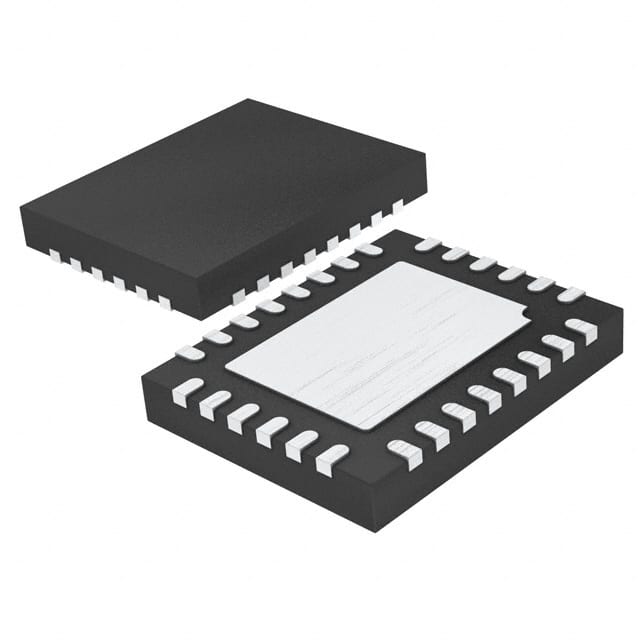
- Part No.:
- LT8391AHUFD#PBF
- Manufacturer:
- Analog Devices Inc.
- Category:
- LED Drivers
- Package:
- 28-WFQFN Exposed Pad
- Datasheet:
-
 LT8391AHUFD#PBF.pdf
- Description:
- IC LED DRIVER CTRLR PWM 28QFN
- Quantity:
- Payment:

- Shipping:

Inventory:4,875
Please send an inquiry. Send us your inquiry, and we will respond immediately.
Product details
Overview
LT8391AHUFD#PBF from Analog Devices is a synchronous 4-switch buck-boost LED driver controller designed for automotive and industrial LED lighting systems requiring seamless VIN-to-VOUT regulation across wide input (4V–60V) and output (0V–60V) ranges. It delivers ±3% LED current accuracy, supports 600kHz–2MHz adjustable switching frequency, and integrates high-side PMOS PWM dimming drive with 2000:1 external PWM dimming ratio.
For engineers reviewing the LT8391AHUFD#PBF datasheet, LT8391AHUFD#PBF pinout, LT8391AHUFD#PBF application, or LT8391AHUFD#PBF equivalent, key selection considerations include its AEC-Q100 qualified –40°C to 150°C junction temperature rating, 28-lead 4mm × 5mm QFN package with exposed pad, proprietary peak-buck/peak-boost current mode control, and integrated open/short LED fault detection with programmable response modes.
Technical Context
The LT8391AHUFD#PBF implements a proprietary peak-buck/peak-boost current mode architecture that enables continuous conduction mode operation across buck (VIN > VOUT), buck-boost (VIN ≈ VOUT), and boost (VIN < VOUT) regions without audible noise or output discontinuity. Its dual-current-sense topology uses LSP/LSN for inductor current regulation and ISP/ISN for LED current regulation, decoupling power stage control from load current feedback.
Control logic integrates two independent error amplifiers (EA1 for LED current, EA2 for output voltage), synchronized oscillator with RT-pin programmability, and dedicated PWM dimming circuitry supporting both internal ramp-based and external digital PWM inputs. Fault management includes real-time FB overvoltage (1.05V), open-LED (0.95V), and short-LED (0.25V) thresholds with FAULT pin reporting updated only during PWM high states.
Key Specifications
| Parameter | Value and Actual Design Meaning |
|---|---|
| VIN Range | 4V to 60V - supports 12V/24V/48V automotive and industrial battery rails with transient tolerance up to 56V. |
| VOUT Range | 0V to 60V - enables direct drive of multi-string LED arrays up to 51V forward voltage without external boost stages. |
| Switching Frequency | 600kHz to 2MHz - adjustable via RT resistor; allows EMI optimization and compact magnetics design. |
| LED Current Accuracy | ±3% at 100mV full scale - ensures consistent luminance across temperature and unit-to-unit variation. |
| PWM Dimming Ratio | 2000:1 external, 128:1 internal - enables flicker-free dimming down to 0.05% duty cycle for adaptive lighting control. |
| Junction Temp Range | –40°C to +150°C - AEC-Q100 Grade H qualification enables under-hood automotive headlamp deployment. |
| Package | 28-lead 4mm × 5mm QFN with exposed thermal pad - provides θJC = 3.4°C/W for high-power thermal management. |
Pinout & Package
LT8391AHUFD#PBF is housed in a 28-lead plastic QFN package (4mm × 5mm) with exposed GND pad soldered to PCB for thermal and electrical integrity. The package supports θJA = 43°C/W and θJC = 3.4°C/W.
| Pin/Terminal | Circuit Role | Design Meaning |
|---|---|---|
| BG1, BG2 | Buck/Boost bottom gate drivers | Drive N-channel MOSFETs with 1.2Ω pull-down resistance; enable synchronous rectification in both topologies. |
| TG1, TG2 | Buck/Boost top gate drivers | Bootstrap-driven N-channel gate drives with 2.6Ω pull-up; support high-side switching without external level shifters. |
| LSP / LSN | Inductor current sense inputs | Kelvin-connected differential pair for accurate peak-buck/peak-boost current mode control and reverse current detection. |
| ISP / ISN | LED current sense inputs | Dedicated Kelvin sense path for ±3% LED current regulation independent of power stage transitions. |
| PWMTG | High-side PMOS PWM switch driver | Buffered, inverted PWM output swinging from (VOUT – 5V) to VOUT; directly drives external high-side PMOS dimming FET. |
| FAULT | Open-drain fault reporting | Asserts low on open LED (VFB > 0.95V & V(ISP-ISN) < 10mV) or short LED (VFB < 0.25V); latched per SS-resistor configuration. |
| RT | Oscillator frequency setting | Resistor-to-ground sets switching frequency from 600kHz to 2MHz; enables EMI spread spectrum when SYNC/SPRD = INTVCC. |
| CTRL1 / CTRL2 | Analog dimming and thermal derating inputs | Two independent 0.25V–2.0V inputs enabling 20:1 analog dimming and temperature-compensated LED current derating. |
Key Features
| Feature | Design Value |
|---|---|
| Proprietary peak-buck/peak-boost control | Enables zero-crossing transition between buck/boost modes without output ripple or audible noise-critical for automotive headlamps. |
| Integrated 5V INTVCC LDO | Supplies internal logic and gate drivers from VIN; 145mA current limit and 160mV dropout at 20mA ensure stable bias under wide input conditions. |
| Flicker-free spread spectrum | 25% triangle modulation above base frequency reduces peak EMI by >10dB without compromising regulation performance. |
| Programmable fault response | SS pin resistor selects hiccup (no resistor), latch-off (499kΩ), or keep-running (100kΩ) behavior during LED fault conditions. |
| AEC-Q100 Grade H qualification | Validated for –40°C to +150°C operation with lifetime reliability testing-meets automotive headlamp thermal and vibration requirements. |
Applications
| Automotive Head Lamps | Industrial High-Bay Lighting |
|---|---|
|
Use Scenario: Adaptive front-lighting system (AFS) with dynamic beam shaping and matrix LED control. IC Role / Device Role / Timing Role: Primary LED current controller managing multiple independent strings with synchronized PWM dimming and fault isolation. Use Value: Seamless buck-boost transitions prevent beam flicker during vehicle start-stop events; ±3% current accuracy maintains consistent photometric output across temperature. |
Use Scenario: 100W+ LED fixtures for warehouse and factory floor illumination with 0–10V or DALI dimming interfaces. IC Role / Device Role / Timing Role: Constant-current regulator interfacing with external analog/digital dimming signals and providing open/short LED diagnostics. Use Value: 2000:1 external PWM dimming enables smooth 0.1%–100% light output control; 60V output capability supports long-series LED strings without intermediate converters. |
| Emergency Vehicle Lighting | Battery-Powered Portable Lighting |
|
Use Scenario: Flashing beacon systems requiring rapid on/off cycling and high peak brightness from 12V/24V vehicle batteries. IC Role / Device Role / Timing Role: High-frequency (2MHz) buck-boost controller driving high-current LED bursts with precise timing and thermal foldback. Use Value: 2MHz operation minimizes inductor size for compact form factor; CTRL2 input enables automatic current derating as heatsink temperature rises. |
Use Scenario: Rechargeable portable work lights operating from Li-ion packs (8V–32V) with USB-C PD input compatibility. IC Role / Device Role / Timing Role: Universal input LED driver supporting variable battery voltage while maintaining constant luminous flux across discharge curve. Use Value: 4V–60V input range accommodates depleted and fully charged battery states; 94% efficiency at 2MHz reduces thermal load in sealed enclosures. |
Equivalent & Alternatives
The following parts are listed as comparable options for similar LED driver controller applications.
| Alternative Part | Technical Difference | Application Difference | Selection Advice |
|---|---|---|---|
| LT8391AEUFD#PBF | Same silicon, rated for –40°C to +125°C junction temperature; lower thermal specification than LT8391AHUFD#PBF. | Suitable for non-automotive industrial lighting where ambient temperature remains below 125°C. | Select when AEC-Q100 qualification and 150°C operation are not required-reduces cost and simplifies thermal design. |
| LT8390AHUFD#PBF | Predecessor device with identical 4-switch architecture but fixed 2MHz frequency and no spread spectrum; lacks SS pin programmability. | Applicable where EMI compliance is met without spread spectrum and thermal derating is not needed. | Choose for legacy designs or cost-sensitive applications where 2MHz-only operation and simplified fault response suffice. |
Compared with LT8391AEUFD#PBF and LT8390AHUFD#PBF, the LT8391AHUFD#PBF uniquely combines AEC-Q100 Grade H qualification, programmable spread spectrum, and dual-analog-dimming inputs-making it optimal for next-generation automotive and thermally demanding industrial LED systems.
Availability
LT8391AHUFD#PBF is available at Aetrix Electronics and suitable for automotive headlamps, industrial high-bay lighting, emergency vehicle beacons, and battery-powered portable lighting requiring stable component supply, extended temperature operation, and high-reliability LED current regulation.
Supply support for LT8391AHUFD#PBF includes scheduled delivery planning, volume procurement assistance, BOM continuity management, traceable sourcing, and lifecycle availability coordination for OEM customers, industrial embedded developers, connected-device designers, and electronics production programs.
Manufacturer
Analog Devices, Inc. is a global leader in high-performance analog, mixed-signal, and digital signal processing semiconductors, serving industrial, automotive, communications, and healthcare markets.
The LT8391A product line was developed to address the need for robust, wide-input-range LED drivers in automotive lighting and harsh-environment industrial applications-emphasizing seamless mode transitions, high accuracy, and integrated fault protection.
FAQ
What is the maximum operating junction temperature for LT8391AHUFD#PBF?
The LT8391AHUFD#PBF is specified for continuous operation up to +150°C junction temperature and is AEC-Q100 Grade H qualified. This rating enables use in under-hood automotive environments where ambient temperatures exceed 105°C. Thermal derating curves in the datasheet define safe operating area limits based on PCB copper area and airflow. The LT8391AHUFD#PBF includes internal overtemperature protection that temporarily suspends switching if junction temperature exceeds 165°C.
How does LT8391AHUFD#PBF achieve seamless buck-to-boost transitions?
The LT8391AHUFD#PBF uses a proprietary peak-buck/peak-boost current mode control scheme that continuously monitors VIN/VOUT ratio and dynamically adjusts gate drive timing to maintain continuous inductor current flow. Transition thresholds are precisely defined (e.g., buck-boost to boost at VIN/VOUT = 0.75) and implemented in analog hardware-eliminating software delays or digital state-machine artifacts. This ensures zero-output-discontinuity transitions critical for automotive lighting safety compliance.
Can LT8391AHUFD#PBF drive high-side PMOS dimming switches directly?
Yes, the LT8391AHUFD#PBF integrates a dedicated PWMTG pin that provides a buffered, inverted PWM signal with rail-to-rail swing from (VOUT – 5V) to VOUT. This output directly drives the gate of external high-side PMOS transistors without level-shifting circuitry. The PWMTG driver supports fast turn-on (<90ns propagation delay) and turn-off (<40ns), ensuring precise dimming edge alignment and minimal dead-time distortion in high-frequency PWM schemes.
What fault protection features are built into LT8391AHUFD#PBF?
The LT8391AHUFD#PBF provides comprehensive LED fault protection including open-LED detection (VFB > 0.95V & V(ISP-ISN) < 10mV), short-LED detection (VFB < 0.25V), and FB overvoltage protection (VFB > 1.05V). Fault status is reported on the open-drain FAULT pin and can be configured via SS pin resistor to latch off, enter hiccup mode, or continue operation. All fault responses are hardware-based with no firmware dependency, ensuring deterministic behavior in safety-critical lighting systems.
Is LT8391AHUFD#PBF compatible with external clock synchronization?
Yes, the LT8391AHUFD#PBF supports external clock synchronization via the SYNC/SPRD pin. When driven with a clean CMOS clock signal between 600kHz and 2100kHz, the internal oscillator locks to the external source-enabling multi-phase interleaving or EMI reduction through frequency coordination. The pin also supports spread spectrum mode (when tied to INTVCC) and free-running operation (when grounded), giving designers flexibility for noise-sensitive applications.
LT8391AHUFD#PBF Specifications
- Product attributes
- Attribute value
- Manufacturer:
- Analog Devices Inc.
- Series:
- -
- Package/Case:
- 28-WFQFN Exposed Pad
- Packaging:
- Tube
- Product Status:
- Active
- Type:
- DC DC Controller
- Topology:
- Step-Down (Buck), Step-Up (Boost)
- Internal Switch(s):
- No
- Number of Outputs:
- 1
- Voltage - Supply (Min):
- 4V
- Voltage - Supply (Max):
- 60V
- Voltage - Output:
- 60V
- Current - Output / Channel:
- -
- Frequency:
- 600kHz ~ 2MHz
- Dimming:
- Analog, PWM
- Applications:
- Lighting
- Operating Temperature:
- -40°C ~ 150°C (TJ)
- Grade:
- Automotive
- Qualification:
- -
- Mounting Type:
- Surface Mount
- Supplier Device Package:
- 28-QFN (4x5)
LT8391AHUFD#PBF FAQ
1.How can I place an order for LT8391AHUFD#PBF through Aetrix?
Please submit a Request for Quotation (RFQ) for LT8391AHUFD#PBF on Aetrix. Our sales agent will provide a competitive quotation and guide you through the order confirmation once you accept the terms.
2.Are the price and stock information for LT8391AHUFD#PBF reliable?
The price and inventory of LT8391AHUFD#PBF are updated periodically and may fluctuate due to market conditions. Stock and pricing data are typically refreshed every 24 hours. Quotation validity for LT8391AHUFD#PBF is usually 5 days.
3.What payment methods are accepted for LT8391AHUFD#PBF?
We accept Wire Transfer, PayPal, Credit Card, Western Union, MoneyGram, and Escrow for LT8391AHUFD#PBF transactions.
Note: Certain payment methods may incur a processing fee.
4.How is shipping managed for LT8391AHUFD#PBF?
LT8391AHUFD#PBF orders can be shipped via leading logistics carriers, including DHL, UPS, FedEx, TNT, or Registered Mail.
Once your LT8391AHUFD#PBF order is processed, you will receive an email with the shipment details and tracking number.
Note: Tracking information may take up to 24 hours to appear. Express delivery typically takes 3–5 business days.
5.How can I obtain technical support or documentation for LT8391AHUFD#PBF?
For technical support, including LT8391AHUFD#PBF datasheets, pinout diagrams, or application guidance, please contact our engineering support team. They can provide detailed documentation and assistance for your LT8391AHUFD#PBF requirements.
6.How does Aetrix verify that LT8391AHUFD#PBF is sourced from the original manufacturer or authorized distributors?
All LT8391AHUFD#PBF products on Aetrix are procured from qualified distributors and authorized channels. Our dedicated quality assurance team conducts strict verification, including traceability checks and, if necessary, third-party testing. This ensures that LT8391AHUFD#PBF meets industry standards.
7.What is the process for return or replacement of LT8391AHUFD#PBF?
All LT8391AHUFD#PBF units undergo pre-shipment inspection (PSI). If there is an issue with LT8391AHUFD#PBF, returns or replacements are accepted under the following conditions:
1.Quantity discrepancies, incorrect items, or visible external defects (such as breakage or corrosion), acknowledged by Aetrix.
2.The issue is reported within 90 days of delivery.
3.The LT8391AHUFD#PBF part is unused and in its original packaging.
Return procedure for LT8391AHUFD#PBF:
1.Submit a request within 90 days.
2.Obtain a Return Material Authorization (RMA) from Aetrix.
LT8391AHUFD#PBF Tags
-
BCR402RE6327HTSA1
Infineon Technologies

-
BCR430UXTSA2
Infineon Technologies
-
BCR420UE6433HTMA1
Infineon Technologies
-
BCR420UE6327HTSA1
Infineon Technologies
-
BCR421UE6327HTSA1
Infineon Technologies
-
LYT1604D-TL
Power Integrations

-
HV9910CLG-G
Microchip Technology

-
CL2N8-G
Microchip Technology
-
BCR420UW6-7
Diodes Incorporated
-
BCR421UW6-7
Diodes Incorporated
-
BCR420UFD-7
Diodes Incorporated
-
BCR421UFD-7
Diodes Incorporated
Tech Hub

A practical engineering guide to 3.3V and 5V logic compatibility, input thresholds, resistor dividers, translator ICs, MOSFET level shifting, I2C pull-ups, timing limits and power-sequencing risks.

The 74HC595 uses push-pull logic outputs, while the TPIC6B595 uses 50 V open-drain DMOS sinks for higher-power loads. This guide compares timing, current limits, 3.3 V interfacing, load wiring, thermal…

The 74HC595 converts serial data into eight stable parallel outputs. This guide covers pin functions, shift and storage timing, OE and MR behavior, drive-current limits, cascading, voltage compatibilit…

A technical comparison of level-sensitive latches and edge-triggered flip-flops, covering timing windows, setup and hold limits, master–slave operation, time borrowing, race-through, HDL inference and…

A D latch stores one bit while Enable controls when data can pass. This reference covers gate-level operation, truth tables, transparency, setup and hold timing, LE versus OE, common ICs and practical …

An SR latch stores one bit through cross-coupled feedback. This engineering reference covers NOR and NAND implementations, truth tables, forbidden-state recovery, gated operation, switch debouncing, fa…

Latch circuits retain one bit through feedback. This technical reference covers SR and D latches, truth tables, transparency, timing limits, latch-versus-flip-flop behavior, applications and common log…

An engineering guide to LED driver operation, constant-current and constant-voltage outputs, linear and switching topologies, dimming, IC selection, calculations, replacement compatibility, and fault c…

Operational amplifier guide covering op amp basics, feedback, ideal vs real op amps, common configurations, buffer circuits, offset, bias current, gain-bandwidth, slew rate, rail-to-rail limits and sel…

Jumper cables guide covering safe connection order, red and black clamp placement, final ground connection, cable gauge, length, clamp quality, copper vs CCA cables, jump starter comparison and battery…


