
 My Inquiry
 My Account


Analog Devices Inc. LT8609AEDDM-3.3#PBF
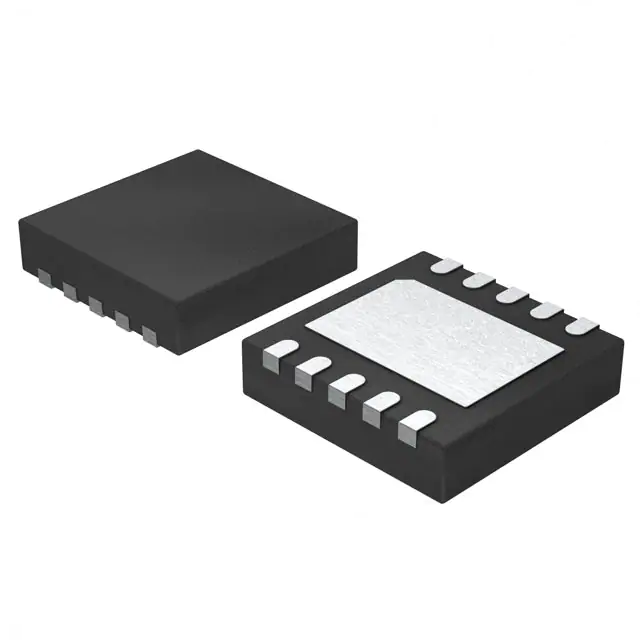
- Part No.:
- LT8609AEDDM-3.3#PBF
- Manufacturer:
- Analog Devices Inc.
- Package:
- 10-WFDFN Exposed Pad
- Datasheet:
-
 LT8609AEDDM-3.3#PBF.pdf
- Description:
- IC REG BUCK 3.3V 3A 10DFN
- Quantity:
- Payment:

- Shipping:

Inventory:176
Please send an inquiry. Send us your inquiry, and we will respond immediately.
Product details
Overview
LT8609AEDDM-3.3#PBF from Analog Devices is a 42V, 3A synchronous step-down regulator with fixed 3.3V output, 2.5µA quiescent current in Burst Mode, 45ns minimum on-time, and side-wettable DFN-10 (3mm × 3mm) package. It delivers high efficiency (>93% at 1A, 12VIN → 3.3VOUT) and supports spread-spectrum EMI reduction for automotive infotainment power rails.
For engineers reviewing the LT8609AEDDM-3.3#PBF datasheet, LT8609AEDDM-3.3#PBF pinout, LT8609AEDDM-3.3#PBF application, or LT8609AEDDM-3.3#PBF equivalent, key selection criteria include ultralow IQ under light load, ±7.5% power-good accuracy, fixed 3.3V output with internal feedback divider, and AEC-Q100 qualification for automotive temperature range (–40°C to +125°C).
Technical Context
The LT8609AEDDM-3.3#PBF uses peak current mode control with internal compensation, enabling fast transient response and stable operation with small inductors (e.g., 2.2µH). Its dedicated VOUT pin replaces FB for fixed-output variants, eliminating external resistors and reducing layout sensitivity.
Burst Mode operation maintains <10mVP-P output ripple while regulating at no-load, and the SYNC pin enables external clock synchronization or spread-spectrum modulation-critical for meeting CISPR 25 Class 5 EMI limits in automotive systems.
Key Specifications
| Parameter | Value and Actual Design Meaning |
|---|---|
| Output Voltage | Fixed 3.3V ±1.5% over full temperature and line range-enables direct replacement of LDOs without feedback network redesign. |
| Quiescent Current | 2.5µA at 12VIN → 3.3VOUT in Burst Mode-supports always-on automotive modules with battery drain <1µA per rail. |
| Max Continuous Output | 3A output current-powers multi-rail SoC subsystems (e.g., MCU core + I/O + CAN transceiver) from single converter. |
| Input Voltage Range | 3.0V to 42V-covers cold-crank (4.5V), start-stop (6V), and load-dump (40V) conditions in 12V automotive systems. |
| Switching Frequency | 200kHz to 2.2MHz, set by RT resistor-allows optimization for size (2MHz + 2.2µH) or efficiency (700kHz + 8.2µH). |
| Power-Good Accuracy | ±7.5% on VOUT pin-ensures reliable sequencing with downstream logic and memory requiring tight voltage monitoring. |
| Min On-Time | 45ns-enables high step-down ratios (e.g., 42V → 3.3V at 2MHz) without pulse-skipping instability. |
Pinout & Package
LT8609AEDDM-3.3#PBF is housed in a 10-lead, 3mm × 3mm plastic DFN package with side-wettable flanks (DDM), exposing thermal pad (Pin 11) for enhanced PCB heat dissipation (θJA = 45°C/W).
| Pin/Terminal | Circuit Role | Design Meaning |
|---|---|---|
| VIN | Primary input supply | Accepts 3.0V–42V; requires local 10µF ceramic bypass to GND for stability during load transients. |
| BST | Bootstrap supply for high-side MOSFET gate drive | Connect 0.1µF capacitor between BST and SW; no series resistor allowed-critical for 100% duty-cycle capability. |
| SW | Switch node | Drives external inductor; must be minimized in PCB area to reduce EMI and switching losses. |
| INTVCC | Internal 3.5V regulator output | Bypass with ≥1µF low-ESR ceramic to GND; not for external loading-powers internal gate drivers and logic. |
| RT | Frequency setting | Resistor to GND sets fSW; 18.2kΩ yields 2MHz-enables precise EMI frequency placement. |
| SYNC | External clock interface | Ground for Burst Mode; float for pulse-skipping; 3.2V–5V for spread-spectrum-directly controls EMI profile. |
| EN/UV | Enable and input undervoltage lockout | 1.05V rising threshold with 50mV hysteresis-supports programmable VIN UVLO via resistor divider. |
| PG | Power-good open-drain flag | Asserts high when VOUT is within ±7.5%; pulls low during fault or startup-used for system reset and sequencing. |
| TR/SS | Soft-start and tracking control | Capacitor here programs output ramp rate; 3.3V output tracks TR/SS × 4.2-enables controlled power-up of multi-rail systems. |
| VOUT | Fixed 3.3V regulated output | Internal 5.9MΩ feedback divider-eliminates external resistors and improves accuracy vs. adjustable variants. |
| GND | Power and signal ground | Exposed thermal pad (Pin 11) must be soldered to large copper pour-reduces θJA and improves thermal reliability. |
Key Features
| Feature | Design Value |
|---|---|
| Ultralow quiescent current | 2.5µA IQ enables >10-year battery life in always-on telematics modules without compromising regulation. |
| Spread-spectrum modulation | Reduces peak EMI by >10dB across 1–10MHz band-meets stringent CISPR 25 Class 5 requirements without added shielding. |
| Side-wettable DFN package | Enables automated optical inspection (AOI) of solder joints-critical for zero-defect automotive manufacturing. |
| AEC-Q100 Grade 1 qualification | Validated for –40°C to +125°C junction operation-supports engine bay and infotainment applications without derating. |
| Integrated soft-start and tracking | TR/SS pin allows coordinated ramp-up with other rails (e.g., 1.2V core, 3.3V I/O)-prevents back-powering and latch-up in complex SoCs. |
Applications
| Automotive Infotainment | ADAS Camera Power |
|---|---|
Use Scenario: Powering display controller, touch processor, and audio codec in head-unit systems with strict EMI limits. IC Role / Device Role / Timing Role: Primary 3.3V buck converter delivering clean, low-noise power with spread-spectrum EMI suppression. Use Value: Eliminates need for external EMI filters, reducing BOM cost and board area by >30% versus non-spread-spectrum alternatives. | Use Scenario: Supplying image sensor and ISP in rear-view or surround-view cameras exposed to wide temperature swings. IC Role / Device Role / Timing Role: High-reliability 3.3V regulator operating continuously across –40°C to +105°C ambient. Use Value: AEC-Q100 qualification and 42V input withstand ensure uninterrupted operation during load-dump events (ISO 7637-2 Pulse 5a). |
| Industrial IoT Gateway | Medical Portable Monitor |
Use Scenario: Powering ARM Cortex-M7 MCU, Wi-Fi/BLE module, and isolated RS-485 transceiver in battery-backed gateway. IC Role / Device Role / Timing Role: Always-on 3.3V supply with ultralow IQ to extend backup battery runtime. Use Value: 2.5µA quiescent current extends 2000mAh Li-ion backup from 23 to >35 days in sleep mode. | Use Scenario: Providing regulated 3.3V for LCD driver, biometric sensor, and Bluetooth LE radio in handheld patient monitor. IC Role / Device Role / Timing Role: Safety-critical power rail with PG flag ensuring firmware only boots when voltage is valid. Use Value: ±7.5% PG accuracy prevents false resets during battery voltage sag, improving clinical uptime. |
Equivalent & Alternatives
The following parts are listed as comparable options for similar synchronous step-down regulator applications.
| Alternative Part | Technical Difference | Application Difference | Selection Advice |
|---|---|---|---|
| LT8609EMSE#PBF | Same architecture but 10-lead MSOP package; no side-wettable flanks; higher θJA (40°C/W) and no AEC-Q100 rating. | Non-automotive industrial use where AOI and extended temperature are not required. | Select when cost-sensitive prototyping favors MSOP hand-soldering over DFN reflow. |
| MP2451DT-LF-Z | 36V, 2A buck; 28µA IQ; no spread-spectrum; SOIC-8 package; no PG or TR/SS pins. | Cost-driven consumer electronics with relaxed EMI and thermal requirements. | Choose only if 2A output and higher IQ are acceptable-and EMI compliance is verified with external filtering. |
Compared with LT8609EMSE#PBF, LT8609AEDDM-3.3#PBF offers superior manufacturability (AOI-compatible DFN) and automotive qualification, while MP2451DT-LF-Z trades critical features (PG, TR/SS, spread-spectrum) for lower unit cost in non-safety-critical designs.
Availability
LT8609AEDDM-3.3#PBF is available at Aetrix Electronics and suitable for automotive infotainment, ADAS camera modules, and industrial IoT gateways requiring stable component supply, AEC-Q100 compliance, and ultralow quiescent current performance.
Supply support for LT8609AEDDM-3.3#PBF includes scheduled delivery planning, volume procurement assistance, BOM continuity management, traceable sourcing, and lifecycle availability coordination for OEM customers, industrial embedded developers, connected-device designers, and electronics production programs.
Manufacturer
Analog Devices is a global leader in high-performance analog, mixed-signal, and digital signal processing semiconductors, serving precision instrumentation, industrial automation, and automotive markets.
The LT8609 family is designed for high-efficiency, low-EMI DC/DC conversion in space-constrained automotive and industrial applications-emphasizing ultralow IQ, wide input range, and robust thermal performance.
FAQ
What is the guaranteed output voltage tolerance for LT8609AEDDM-3.3#PBF over temperature and line?
The LT8609AEDDM-3.3#PBF guarantees 3.3V output within ±1.5% over the full –40°C to +125°C junction temperature range and 3.0V to 42V input voltage range. This is confirmed by electrical characterization data in the datasheet (Rev. J, page 4, "Output Reference Voltage" table for LT8609A-3.3), where min/max values are 3.25V and 3.35V at 100mA load.
Does LT8609AEDDM-3.3#PBF require external feedback resistors?
No. The LT8609AEDDM-3.3#PBF integrates a 5.9MΩ internal feedback divider connected to the VOUT pin, eliminating external resistors. This is explicitly stated in the "PIN FUNCTIONS" section (page 11): "The LT8609A-3.3 regulates to VOUT pin to 3.3V. This pin connects a 5.9MΩ internal feedback divider that programs the fixed output."
How does the SYNC pin function on LT8609AEDDM-3.3#PBF?
On the LT8609AEDDM-3.3#PBF, the SYNC pin supports three modes: grounded for low-ripple Burst Mode; floated for pulse-skipping mode; or biased to 3.2V–5.0V for spread-spectrum modulation. This is documented in the "PIN FUNCTIONS" section (page 11) and "OPERATION" section (page 13), which confirm spread-spectrum reduces EMI peaks by modulating switching frequency.
What thermal performance can be expected from the DFN package of LT8609AEDDM-3.3#PBF?
The LT8609AEDDM-3.3#PBF in its 3mm × 3mm DFN package achieves θJA = 45°C/W and θJC = 10°C/W when the exposed pad (Pin 11) is properly soldered to a thermal plane. This is specified in the "PIN CONFIGURATION" diagram (page 2) and enables 3A continuous operation at +85°C ambient with minimal heatsinking.
Is LT8609AEDDM-3.3#PBF qualified for automotive applications?
Yes. The LT8609AEDDM-3.3#PBF is AEC-Q100 Grade 1 qualified for –40°C to +125°C operation, as confirmed in the "ORDER INFORMATION" table (page 3) under "AUTOMOTIVE PRODUCTS**" and the "FEATURES" list (page 1): "AEC-Q100 Qualified for Automotive Applications."
LT8609AEDDM-3.3#PBF Specifications
- Product attributes
- Attribute value
- Manufacturer:
- Analog Devices Inc.
- Series:
- -
- Package/Case:
- 10-WFDFN Exposed Pad
- Packaging:
- Tube
- Product Status:
- Active
- Function:
- Step-Down
- Output Configuration:
- Positive
- Topology:
- Buck
- Output Type:
- Fixed
- Number of Outputs:
- 1
- Voltage - Input (Min):
- 3V
- Voltage - Input (Max):
- 42V
- Voltage - Output (Min/Fixed):
- 3.3V
- Voltage - Output (Max):
- -
- Current - Output:
- 3A
- Frequency - Switching:
- 200kHz ~ 2.2MHz
- Synchronous Rectifier:
- Yes
- Operating Temperature:
- -40°C ~ 125°C (TJ)
- Grade:
- -
- Qualification:
- -
- Mounting Type:
- Surface Mount, Wettable Flank
- Supplier Device Package:
- 10-DFN (3x3)
LT8609AEDDM-3.3#PBF FAQ
1.How can I place an order for LT8609AEDDM-3.3#PBF through Aetrix?
Please submit a Request for Quotation (RFQ) for LT8609AEDDM-3.3#PBF on Aetrix. Our sales agent will provide a competitive quotation and guide you through the order confirmation once you accept the terms.
2.Are the price and stock information for LT8609AEDDM-3.3#PBF reliable?
The price and inventory of LT8609AEDDM-3.3#PBF are updated periodically and may fluctuate due to market conditions. Stock and pricing data are typically refreshed every 24 hours. Quotation validity for LT8609AEDDM-3.3#PBF is usually 5 days.
3.What payment methods are accepted for LT8609AEDDM-3.3#PBF?
We accept Wire Transfer, PayPal, Credit Card, Western Union, MoneyGram, and Escrow for LT8609AEDDM-3.3#PBF transactions.
Note: Certain payment methods may incur a processing fee.
4.How is shipping managed for LT8609AEDDM-3.3#PBF?
LT8609AEDDM-3.3#PBF orders can be shipped via leading logistics carriers, including DHL, UPS, FedEx, TNT, or Registered Mail.
Once your LT8609AEDDM-3.3#PBF order is processed, you will receive an email with the shipment details and tracking number.
Note: Tracking information may take up to 24 hours to appear. Express delivery typically takes 3–5 business days.
5.How can I obtain technical support or documentation for LT8609AEDDM-3.3#PBF?
For technical support, including LT8609AEDDM-3.3#PBF datasheets, pinout diagrams, or application guidance, please contact our engineering support team. They can provide detailed documentation and assistance for your LT8609AEDDM-3.3#PBF requirements.
6.How does Aetrix verify that LT8609AEDDM-3.3#PBF is sourced from the original manufacturer or authorized distributors?
All LT8609AEDDM-3.3#PBF products on Aetrix are procured from qualified distributors and authorized channels. Our dedicated quality assurance team conducts strict verification, including traceability checks and, if necessary, third-party testing. This ensures that LT8609AEDDM-3.3#PBF meets industry standards.
7.What is the process for return or replacement of LT8609AEDDM-3.3#PBF?
All LT8609AEDDM-3.3#PBF units undergo pre-shipment inspection (PSI). If there is an issue with LT8609AEDDM-3.3#PBF, returns or replacements are accepted under the following conditions:
1.Quantity discrepancies, incorrect items, or visible external defects (such as breakage or corrosion), acknowledged by Aetrix.
2.The issue is reported within 90 days of delivery.
3.The LT8609AEDDM-3.3#PBF part is unused and in its original packaging.
Return procedure for LT8609AEDDM-3.3#PBF:
1.Submit a request within 90 days.
2.Obtain a Return Material Authorization (RMA) from Aetrix.
LT8609AEDDM-3.3#PBF Tags
-
TPS562201DDCR
Texas Instruments

-
MC34063ABD-TR
STMicroelectronics
-
TPS561201DDCR
Texas Instruments

-
MC33063ADR
Texas Instruments
-
MC34063ADR
Texas Instruments
-
TPS560200DBVR
Texas Instruments
-
AP3012KTR-G1
Diodes Incorporated
-
TLV61048DBVR
Texas Instruments
-
AZ34063UMTR-G1
Diodes Incorporated
-
TPS562200DDCR
Texas Instruments
-
AP62300TWU-7
Diodes Incorporated
-
MC34063EBD-TR
STMicroelectronics
Tech Hub

A practical engineering guide to 3.3V and 5V logic compatibility, input thresholds, resistor dividers, translator ICs, MOSFET level shifting, I2C pull-ups, timing limits and power-sequencing risks.

The 74HC595 uses push-pull logic outputs, while the TPIC6B595 uses 50 V open-drain DMOS sinks for higher-power loads. This guide compares timing, current limits, 3.3 V interfacing, load wiring, thermal…

The 74HC595 converts serial data into eight stable parallel outputs. This guide covers pin functions, shift and storage timing, OE and MR behavior, drive-current limits, cascading, voltage compatibilit…

A technical comparison of level-sensitive latches and edge-triggered flip-flops, covering timing windows, setup and hold limits, master–slave operation, time borrowing, race-through, HDL inference and…

A D latch stores one bit while Enable controls when data can pass. This reference covers gate-level operation, truth tables, transparency, setup and hold timing, LE versus OE, common ICs and practical …

An SR latch stores one bit through cross-coupled feedback. This engineering reference covers NOR and NAND implementations, truth tables, forbidden-state recovery, gated operation, switch debouncing, fa…

Latch circuits retain one bit through feedback. This technical reference covers SR and D latches, truth tables, transparency, timing limits, latch-versus-flip-flop behavior, applications and common log…

An engineering guide to LED driver operation, constant-current and constant-voltage outputs, linear and switching topologies, dimming, IC selection, calculations, replacement compatibility, and fault c…

Operational amplifier guide covering op amp basics, feedback, ideal vs real op amps, common configurations, buffer circuits, offset, bias current, gain-bandwidth, slew rate, rail-to-rail limits and sel…

Jumper cables guide covering safe connection order, red and black clamp placement, final ground connection, cable gauge, length, clamp quality, copper vs CCA cables, jump starter comparison and battery…


