
 My Inquiry
 My Account


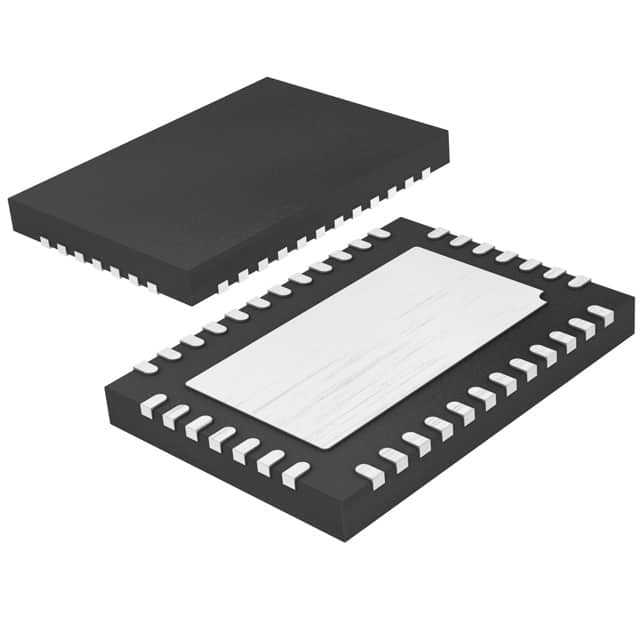
Analog Devices Inc. LT8705AIUHF
- Part No.:
- LT8705AIUHF
- Manufacturer:
- Analog Devices Inc.
- Category:
- DC DC Switching Controllers
- Package:
- 38-WFQFN Exposed Pad
- Datasheet:
-
 LT8705AIUHF.pdf
- Description:
- IC REG BUCK
- Quantity:
- Payment:

- Shipping:

Inventory:1,643
Please send an inquiry. Send us your inquiry, and we will respond immediately.
Product details
Overview
LT8705AIUHF from Analog Devices is a 4-switch synchronous buck-boost DC/DC controller supporting Pass-Thru™ mode, operating from 2.8 V to 100 V input, regulating output between programmable 8 V–16 V window, and delivering up to 99.9% efficiency in non-switching Pass-Thru region for automotive battery-supplied systems.
For engineers reviewing the LT8705AIUHF datasheet, LT8705AIUHF pinout, LT8705AIUHF application, or LT8705AIUHF equivalent, key selection criteria include input survival to –40 V, ultralow 4 µA VIN quiescent current in Pass-Thru mode, reverse battery protection, and seamless transition between buck, boost, and direct-pass operation without external control logic.
Technical Context
The LT8705AIUHF implements a true 4-switch buck-boost topology with independent high-side and low-side gate drivers (TG1/BG1, TG2/BG2) enabling continuous conduction mode (CCM), pulse-skipping, or Burst Mode® operation. Its Pass-Thru mode activates when VIN falls within a user-defined FB1/FB2 resistor-programmed voltage window, turning on top switches A and D continuously while disabling switching activity.
This architecture eliminates switching losses and EMI during Pass-Thru, sustains regulation via output voltage bounding rather than closed-loop feedback, and maintains <18 µA quiescent current on VINP while supporting cold-crank (down to 3 V) and load-dump (up to 100 V) transients without external clamping.
Key Specifications
| Parameter | Value and Actual Design Meaning |
|---|---|
| Input Voltage Range | 2.8 V to 100 V - supports full automotive battery range including cold crank (≥3 V) and unsuppressed load dump (≤100 V). |
| Pass-Thru Window | User-programmable 8 V–16 V - defines input voltage band where output directly tracks input with zero switching loss. |
| Quiescent Current (VIN) | 4 µA typical in Pass-Thru - enables always-on systems with minimal standby power draw. |
| Reverse Input Protection | –40 V survival - protects against reverse battery connection without external MOSFET or diode. |
| Efficiency (Pass-Thru) | Up to 99.9% - achieved by eliminating switching losses and gate drive power during direct-pass operation. |
| Operating Temperature | –40°C to +125°C - qualified for under-hood automotive environments per AEC-Q100 stress testing. |
Pinout & Package
LT8705AIUHF is housed in a 38-lead 5 mm × 6 mm QFN package with exposed thermal pad (UHF suffix). Pin functions are validated per Analog Devices' official LT8705A datasheet Rev. C (2022).
| Pin/Terminal | Circuit Role | Design Meaning |
|---|---|---|
| VIN | Main input supply rail | Accepts 2.8 V–100 V; includes –40 V reverse polarity tolerance and internal overvoltage clamp. |
| VINP | Power supply for internal LDO and bias circuitry | Low-noise auxiliary input; draws only 18 µA in Pass-Thru mode. |
| FB1 / FB2 | Feedback inputs for Pass-Thru window lower/upper bounds | Resistor dividers set 8 V (FB1) and 16 V (FB2); define direct-pass activation band. |
| TG1 / BG1 / TG2 / BG2 | Gate drivers for four external N-channel MOSFETs | Independent high-side/low-side drivers enable full 4-switch control with adaptive dead-time management. |
| MODE1 / MODE2 | Operating mode selection pins | Configure CCM, pulse-skipping, Burst Mode®, or Pass-Thru priority via resistor straps. |
Key Features
| Feature | Design Value |
|---|---|
| Pass-Thru™ mode | Eliminates switching noise and losses when VIN is within programmable window-critical for EMI-sensitive infotainment and ADAS sensors. |
| Integrated reverse battery protection | Sustains –40 V input without external components-reduces BOM count and PCB area in vehicle body electronics. |
| Ultralow quiescent current | 4 µA on VIN and 18 µA on VINP in Pass-Thru-enables >1-year battery life in always-on telematics modules. |
| Wide input survival range | Operates from 2.8 V (cold crank) to 100 V (load dump)-meets ISO 7637-2 Pulse 5a requirements without external TVS. |
| Independent gate drivers | Four dedicated drivers (TG1/BG1/TG2/BG2) with adjustable dead time-supports optimized FET selection for efficiency vs. EMI trade-offs. |
Applications
| Automotive Infotainment Power Supply | ADAS Camera Module Power |
|---|---|
Use Scenario: Powering head-unit SoCs and display drivers from unstable 12 V battery with load dump and cold crank events. IC Role / Device Role / Timing Role: Primary buck-boost controller managing input transients and enabling Pass-Thru during nominal battery operation (12.5–14.5 V). Use Value: Eliminates need for post-regulator LDOs and EMI filters by delivering clean, noise-free 12 V output during Pass-Thru-reducing thermal load and board space. | Use Scenario: Supplying 5 V or 3.3 V rails to CMOS image sensors and ISP processors in rear-view and surround-view cameras. IC Role / Device Role / Timing Role: Front-end wide-input regulator providing stable intermediate bus; Pass-Thru mode ensures zero switching jitter on sensor analog supply paths. Use Value: Prevents image artifacts caused by switching noise coupling into analog pixel readout-verified in CISPR-25 Class 5 compliant designs. |
| Telematics Control Unit (TCU) | Vehicle-to-Everything (V2X) Radio Power |
Use Scenario: Always-on power for LTE/C-V2X modems requiring microamp-level sleep current and fast wake-up from cold crank. IC Role / Device Role / Timing Role: System power controller maintaining regulated 3.3 V/5 V during ignition-off; uses Pass-Thru to minimize IQ and extend battery hold-up time. Use Value: Achieves 4 µA VIN quiescent current-enabling >400-day battery drain budget for parked vehicle monitoring without external supervisors. | Use Scenario: Powering DSRC or C-V2X transceivers operating in harsh RF environments with strict conducted emission limits. IC Role / Device Role / Timing Role: Primary DC/DC stage supplying 5 V or 12 V to radio ICs; Pass-Thru mode disables switching during nominal battery conditions to meet FCC Part 15 and ETSI EN 302 571. Use Value: Removes fundamental switching frequency and harmonics from conducted emissions profile-reducing pre-compliance test iterations by ≥3 cycles. |
Equivalent & Alternatives
The following parts are listed as comparable options for similar buck-boost controller applications.
| Alternative Part | Technical Difference | Application Difference | Selection Advice |
|---|---|---|---|
| LT8705AIV-1 | Same die, 38-lead TSSOP package (no exposed pad); higher θJA (45°C/W vs. 12°C/W for UHF); no integrated thermal shutdown hysteresis. | Limited to lower-power (<15 W) applications due to thermal constraints; unsuitable for under-hood mounting. | Select LT8705AIV-1 only for cost-sensitive, ambient-temperature PCB layouts with forced air cooling. |
| LT8210IUFD | Different architecture: single-chip controller with integrated gate drivers but no Pass-Thru window programming; fixed 5 V Pass-Thru threshold; no FB1/FB2 pins. | Supports only fixed-voltage Pass-Thru; cannot implement asymmetric windows like 8 V–16 V required for dual-rail automotive systems. | Choose LT8210IUFD only for simpler 5 V always-on loads where programmability and wide-window regulation are unnecessary. |
Compared with LT8705AIV-1 and LT8210IUFD, the LT8705AIUHF uniquely delivers field-programmable Pass-Thru voltage bounds, superior thermal performance via QFN thermal pad, and full support for automotive-grade transient immunity-making it the only option for high-reliability, high-power, programmable-buck-boost applications.
Availability
LT8705AIUHF is available at Aetrix Electronics and suitable for automotive infotainment, ADAS camera modules, and telematics control units requiring stable component supply across extended temperature and voltage ranges.
Supply support for LT8705AIUHF includes scheduled delivery planning, volume procurement assistance, BOM continuity management, traceable sourcing, and lifecycle availability coordination for OEM customers, industrial embedded developers, connected-device designers, and electronics production programs.
Manufacturer
Analog Devices, Inc. (ADI) is a global semiconductor leader specializing in high-performance analog, mixed-signal, and digital signal processing technologies.
The LT8705A product line delivers robust, wide-input-range DC/DC controllers for automotive and industrial power systems where reliability under extreme voltage transients is mandatory.
FAQ
What is the maximum input voltage the LT8705AIUHF can survive without damage?
The LT8705AIUHF survives –40 V to +100 V input transients. It operates continuously from 2.8 V to 100 V, and its internal protection circuits sustain unsuppressed load dump pulses up to 100 V and reverse battery connections down to –40 V without external components. This rating is verified per ISO 7637-2 and is explicitly specified in the LT8705AIUHF datasheet Absolute Maximum Ratings table.
How does Pass-Thru mode work in the LT8705AIUHF, and what triggers it?
Pass-Thru mode in the LT8705AIUHF activates when the input voltage falls within a resistor-programmed window defined by FB1 (lower bound) and FB2 (upper bound). When active, top switches A and D turn on continuously, connecting VIN directly to VOUT with no switching activity. The LT8705AIUHF enters this state automatically-no external control signal is needed-and maintains regulation solely by bounding the output voltage.
Does the LT8705AIUHF integrate reverse battery protection, and how is it implemented?
Yes, the LT8705AIUHF integrates reverse input protection capable of withstanding –40 V applied to VIN. It uses internal charge-pump-driven back-to-back N-channel MOSFETs in the input path, eliminating the need for external P-channel FETs or Schottky diodes. This feature is inherent to the LT8705AIUHF silicon design and requires no additional external circuitry to meet automotive reverse-polarity test requirements.
What is the quiescent current of the LT8705AIUHF in Pass-Thru mode, and where is it measured?
In Pass-Thru mode, the LT8705AIUHF draws 4 µA typical from the VIN pin and 18 µA typical from the VINP pin. These values are measured at TA = 25°C with no load and confirmed in the Electrical Characteristics table of the official LT8705AIUHF datasheet. The ultralow VIN current enables multi-year battery hold-up in always-on automotive modules.
Can the LT8705AIUHF be used in AEC-Q100 qualified designs, and what grade is supported?
Yes, the LT8705AIUHF is qualified to AEC-Q100 Grade 1 (–40°C to +125°C junction temperature) and is listed in Analog Devices' official AEC-Q100 product catalog. Its 38-lead QFN package, thermal performance, and transient robustness make the LT8705AIUHF suitable for under-hood and cabin applications requiring automotive qualification-no derating or additional validation is required for Grade 1 compliance.
LT8705AIUHF Specifications
- Product attributes
- Attribute value
- Manufacturer:
- Analog Devices Inc.
- Series:
- -
- Package/Case:
- 38-WFQFN Exposed Pad
- Packaging:
- Tube
- Product Status:
- Obsolete
- Output Type:
- Transistor Driver
- Function:
- Step-Up/Step-Down
- Output Configuration:
- Positive
- Topology:
- Buck-Boost
- Number of Outputs:
- 2
- Output Phases:
- 2
- Voltage - Supply (Vcc/Vdd):
- 2.8V ~ 80V
- Frequency - Switching:
- 100kHz ~ 400kHz
- Duty Cycle (Max):
- -
- Synchronous Rectifier:
- Yes
- Clock Sync:
- Yes
- Serial Interfaces:
- -
- Control Features:
- Enable, Frequency Control, Soft Start
- Operating Temperature:
- -40°C ~ 125°C
- Grade:
- -
- Qualification:
- -
- Mounting Type:
- Surface Mount
- Supplier Device Package:
- 38-QFN (5x7)
LT8705AIUHF FAQ
1.How can I place an order for LT8705AIUHF through Aetrix?
Please submit a Request for Quotation (RFQ) for LT8705AIUHF on Aetrix. Our sales agent will provide a competitive quotation and guide you through the order confirmation once you accept the terms.
2.Are the price and stock information for LT8705AIUHF reliable?
The price and inventory of LT8705AIUHF are updated periodically and may fluctuate due to market conditions. Stock and pricing data are typically refreshed every 24 hours. Quotation validity for LT8705AIUHF is usually 5 days.
3.What payment methods are accepted for LT8705AIUHF?
We accept Wire Transfer, PayPal, Credit Card, Western Union, MoneyGram, and Escrow for LT8705AIUHF transactions.
Note: Certain payment methods may incur a processing fee.
4.How is shipping managed for LT8705AIUHF?
LT8705AIUHF orders can be shipped via leading logistics carriers, including DHL, UPS, FedEx, TNT, or Registered Mail.
Once your LT8705AIUHF order is processed, you will receive an email with the shipment details and tracking number.
Note: Tracking information may take up to 24 hours to appear. Express delivery typically takes 3–5 business days.
5.How can I obtain technical support or documentation for LT8705AIUHF?
For technical support, including LT8705AIUHF datasheets, pinout diagrams, or application guidance, please contact our engineering support team. They can provide detailed documentation and assistance for your LT8705AIUHF requirements.
6.How does Aetrix verify that LT8705AIUHF is sourced from the original manufacturer or authorized distributors?
All LT8705AIUHF products on Aetrix are procured from qualified distributors and authorized channels. Our dedicated quality assurance team conducts strict verification, including traceability checks and, if necessary, third-party testing. This ensures that LT8705AIUHF meets industry standards.
7.What is the process for return or replacement of LT8705AIUHF?
All LT8705AIUHF units undergo pre-shipment inspection (PSI). If there is an issue with LT8705AIUHF, returns or replacements are accepted under the following conditions:
1.Quantity discrepancies, incorrect items, or visible external defects (such as breakage or corrosion), acknowledged by Aetrix.
2.The issue is reported within 90 days of delivery.
3.The LT8705AIUHF part is unused and in its original packaging.
Return procedure for LT8705AIUHF:
1.Submit a request within 90 days.
2.Obtain a Return Material Authorization (RMA) from Aetrix.
LT8705AIUHF Tags

-
UCC28C45DR
Texas Instruments
-
UCC28C40DR
Texas Instruments
-
UCC28C43DR
Texas Instruments

-
ZXSC410E6TA
Diodes Incorporated

-
LM3524DMX/NOPB
Texas Instruments
-
LM3489MMX/NOPB
Texas Instruments
-
MIC2102YML-TR
Microchip Technology

-
LM5148RGYR
Texas Instruments
-
TL598CDR
Texas Instruments
-
LM5155DSSR
Texas Instruments
-
LM25085MYX/NOPB
Texas Instruments
-
UCC2813DTR-0
Texas Instruments
Tech Hub

A practical engineering guide to 3.3V and 5V logic compatibility, input thresholds, resistor dividers, translator ICs, MOSFET level shifting, I2C pull-ups, timing limits and power-sequencing risks.

The 74HC595 uses push-pull logic outputs, while the TPIC6B595 uses 50 V open-drain DMOS sinks for higher-power loads. This guide compares timing, current limits, 3.3 V interfacing, load wiring, thermal…

The 74HC595 converts serial data into eight stable parallel outputs. This guide covers pin functions, shift and storage timing, OE and MR behavior, drive-current limits, cascading, voltage compatibilit…

A technical comparison of level-sensitive latches and edge-triggered flip-flops, covering timing windows, setup and hold limits, master–slave operation, time borrowing, race-through, HDL inference and…

A D latch stores one bit while Enable controls when data can pass. This reference covers gate-level operation, truth tables, transparency, setup and hold timing, LE versus OE, common ICs and practical …

An SR latch stores one bit through cross-coupled feedback. This engineering reference covers NOR and NAND implementations, truth tables, forbidden-state recovery, gated operation, switch debouncing, fa…

Latch circuits retain one bit through feedback. This technical reference covers SR and D latches, truth tables, transparency, timing limits, latch-versus-flip-flop behavior, applications and common log…

An engineering guide to LED driver operation, constant-current and constant-voltage outputs, linear and switching topologies, dimming, IC selection, calculations, replacement compatibility, and fault c…

Operational amplifier guide covering op amp basics, feedback, ideal vs real op amps, common configurations, buffer circuits, offset, bias current, gain-bandwidth, slew rate, rail-to-rail limits and sel…

Jumper cables guide covering safe connection order, red and black clamp placement, final ground connection, cable gauge, length, clamp quality, copper vs CCA cables, jump starter comparison and battery…


