
 My Inquiry
 My Account


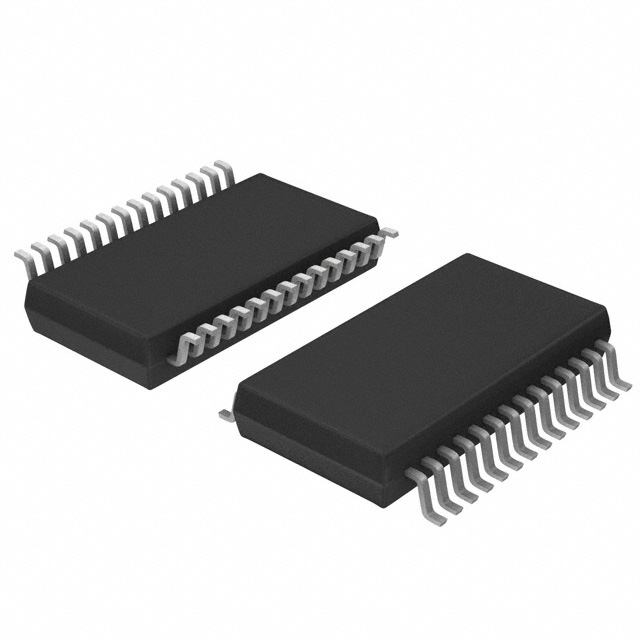
Analog Devices Inc. LTC1629CG#TRPBF
- Part No.:
- LTC1629CG#TRPBF
- Manufacturer:
- Analog Devices Inc.
- Category:
- DC DC Switching Controllers
- Package:
- 28-SSOP (0.209", 5.30mm Width)
- Datasheet:
-
 LTC1629CG#TRPBF.pdf
- Description:
- IC REG CTRLR BUCK 28SSOP
- Quantity:
- Payment:

- Shipping:

Inventory:2,301
Please send an inquiry. Send us your inquiry, and we will respond immediately.
Product details
Overview
LTC1629CG#TRPBF from Analog Devices (formerly Linear Technology) is a dual-phase, synchronous step-down switching regulator controller driving external N-channel MOSFETs in current-mode PolyPhase architecture. It delivers up to 40A output with ±1% voltage accuracy, 150–300kHz phase-lockable switching frequency, and true remote differential sensing for high-current server and desktop power rails.
For engineers reviewing the LTC1629CG#TRPBF datasheet, LTC1629CG#TRPBF pinout, LTC1629CG#TRPBF application, or LTC1629CG#TRPBF equivalent, this controller enables high-efficiency, low-ripple multiphase DC/DC conversion in systems requiring stable 1.6V–5V outputs at >20A, input voltage range 4V–36V, and thermal-aware layout with integrated OPTI-LOOP compensation.
Technical Context
The LTC1629CG#TRPBF implements fixed-frequency current-mode control with two independent PWM channels operating out-of-phase to reduce RMS input/output capacitor ripple. Its internal 5V LDO (INTVCC) powers gate drivers, while EXTVCC switchover allows efficient bootstrapping from regulated output voltage.
It integrates a differential amplifier (VDIFFOUT, VOS±) for true remote sensing, a phase-locked loop (PLLIN, PLLFLTR, PHASMD) supporting up to 12-phase expansion via CLKOUT, and RUN/SS pin combining soft-start ramping, short-circuit timeout, and shutdown control - all within a single 28-lead SSOP package.
Key Specifications
| Parameter | Value and Actual Design Meaning |
|---|---|
| Output Voltage Accuracy | ±1% over temperature and line/load - ensures tight regulation for CPU/GPU core rails without external calibration. |
| Switching Frequency Range | 150–300kHz (phase-lockable) - balances efficiency vs. component size; 1.8MHz effective ripple frequency with dual-phase operation. |
| Input Voltage Range | 4V to 36V - supports wide-input industrial and telecom power distribution systems. |
| Duty Cycle Max | 99% - enables very low dropout operation down to VIN ≈ VOUT + 0.2V, critical for high-current 1.6V/1.8V rails. |
| Current Sense Threshold | 75mV typical (G-grade) - sets peak inductor current with minimal loss across RSENSE; supports foldback during short-circuit. |
| Remote Sensing Accuracy | True differential amplifier (ADA = 1.005 V/V, CMRR = 55dB) - rejects PCB trace IR drop for <±5mV load regulation error at 40A. |
| Soft-Start Control | Adjustable via RUN/SS capacitor - provides controlled inrush limiting and optional timed short-circuit shutdown. |
Pinout & Package
Package: 28-lead plastic SSOP (G-grade, 0°C to 85°C ambient), 5.6mm × 10.2mm body, 0.635mm pitch.
| Pin/Terminal | Circuit Role | Design Meaning |
|---|---|---|
| RUN/SS (Pin 1) | Soft-start & shutdown control | Capacitor-ramped enable signal; also triggers timed latchoff if output fails to reach 70% nominal within soft-start window. |
| SENSE1+/SENSE1− (Pins 2,3) | Differential current sense inputs | Measure voltage across external RSENSE to set channel 1 peak current limit; common-mode range extends to 1.5×INTVCC. |
| EAIN (Pin 4) | Error amplifier input | Compares feedback voltage (from VDIFFOUT divider) to internal 0.800V reference; determines ITH voltage and thus output regulation. |
| PLLFLTR (Pin 5) | PLL low-pass filter node | Analog voltage input (0–2.4V) that directly sets oscillator frequency; also serves as phase detector output when synchronized. |
| CLKOUT (Pin 28) | Phase-synchronized clock output | Drives additional LTC1629 controllers in daisy-chain configuration for >2-phase systems up to 12 phases and 200A total. |
| TG1/TG2 (Pins 27,16) | Top-gate N-MOS drivers | Floating high-side drivers with 30–90ns transition times; swing = INTVCC superimposed on SW node voltage. |
| PGND (Pin 20) | Power ground return | Low-impedance return path for bottom MOSFET sources and CIN (–) terminals - must be separated from SGND to avoid noise coupling. |
Key Features
| Feature | Design Value |
|---|---|
| PolyPhase™ dual-channel interleaving | Reduces input/output RMS ripple current by √2, cutting required input capacitance by ~75% and easing thermal design. |
| OPTI-LOOP™ compensation | Enables stable transient response across wide range of output capacitor ESR (1–100mΩ) and capacitance (100µF–10,000µF). |
| True remote differential sensing | Integrated differential amplifier (VDIFFOUT, VOS±) eliminates IR drop errors in high-current paths - essential for ±5mV regulation at 40A. |
| Phase-lockable architecture | Supports synchronization to external clock (PLLIN) or master/slave daisy-chaining (CLKOUT + PHASMD) for deterministic multi-controller timing. |
| Dropout recovery circuit | Forces periodic top-FET off-time (~400ns every 10th cycle) when duty >98%, ensuring bootstrap capacitor recharge even at VIN ≈ VOUT. |
Applications
| Desktop CPU Core Power | Internet Server VRM |
|---|---|
Use Scenario: Delivering 1.6V/40A to dual-core x86 processor under dynamic 0–100% load steps. IC Role / Device Role / Timing Role: Dual-phase PolyPhase controller managing interleaved TG/BG drive signals with 180° phase offset and shared ITH loop. Use Value: Achieves <15mV output ripple and <50µs transient recovery using only two 1µH inductors and 2×1000µF output caps - no external DAC or sequencing IC needed. |
Use Scenario: High-density 1U rack server requiring 3.3V/30A with strict ripple and thermal constraints. IC Role / Device Role / Timing Role: Primary controller in 4-phase stack (two LTC1629CG#TRPBF units) synchronized via CLKOUT/PLLIN for uniform current sharing. Use Value: Reduces input capacitor RMS current by 75% versus single-phase, enabling smaller 1210 ceramic input banks and lowering board temperature rise by 8°C. |
| Large Memory Array Supply | DC Power Distribution System |
Use Scenario: Providing tightly regulated 1.8V/25A to DDR4 memory subsystem with <±10mV tolerance across 0–85°C. IC Role / Device Role / Timing Role: Dual-phase buck controller with remote sensing (SENSE1±/SENSE2±) compensating for 50mΩ PCB trace resistance between VRM and DIMM slots. Use Value: Maintains ±0.5% load regulation error despite 150mV IR drop - eliminates need for point-of-load regulators near memory modules. |
Use Scenario: Centralized 5V/50A intermediate bus converter feeding multiple downstream POLs in industrial PLC backplane. IC Role / Device Role / Timing Role: Master PolyPhase controller (LTC1629CG#TRPBF) generating CLKOUT to synchronize four secondary controllers for distributed current delivery. Use Value: Enables deterministic phase alignment across 12 total phases, minimizing bus-level EMI and allowing single-point input filtering instead of per-POL capacitors. |
Equivalent & Alternatives
The following parts are listed as comparable options for similar dual-phase synchronous buck controller applications.
| Alternative Part | Technical Difference | Application Difference | Selection Advice |
|---|---|---|---|
| MP2940AGQ-PR | Integrated MOSFETs (30V/40A), no external RSENSE required; fixed 500kHz frequency; no PLL sync or CLKOUT. | Better for space-constrained designs where efficiency >92% at 12VIN/1.2VOUT is prioritized over phase scalability. | Select MP2940AGQ-PR when board area is limited and full 12-phase expansion is unnecessary; LTC1629CG#TRPBF preferred for thermal management flexibility and multi-rail synchronization. |
| ISL6322IRZ | Triple-phase capable; supports Intel VR12.5/VR12.6 protocols; includes SMBus interface and telemetry; no differential sensing. | Required for Intel-compliant CPU VRMs with digital monitoring; lacks true remote sensing for non-CPU high-current loads. | Choose ISL6322IRZ for Intel platform compliance and telemetry; LTC1629CG#TRPBF remains optimal for custom high-current analog rails where sensing accuracy and thermal headroom are critical. |
Compared with MP2940AGQ-PR and ISL6322IRZ, the LTC1629CG#TRPBF uniquely combines external MOSFET flexibility, true differential remote sensing, and scalable PolyPhase synchronization - making it the only option among the three supporting both ultra-low dropout (99% duty) and deterministic multi-controller timing for >2-phase systems.
Availability
LTC1629CG#TRPBF is available at Aetrix Electronics and suitable for desktop computing, internet server power supplies, and large memory array regulation requiring stable component supply with long-term industrial lifecycle support.
Supply support for LTC1629CG#TRPBF includes scheduled delivery planning, volume procurement assistance, BOM continuity management, traceable sourcing, and lifecycle availability coordination for OEM customers, industrial embedded developers, connected-device designers, and electronics production programs.
Manufacturer
Analog Devices acquired Linear Technology in 2017 and maintains full product support, datasheets, and application engineering for legacy Linear power ICs.
The LTC1629 product line was designed specifically for high-current, multi-phase DC/DC conversion in computing and communications infrastructure - emphasizing thermal efficiency, ripple reduction, and system-level synchronization.
FAQ
What is the maximum output current supported by the LTC1629CG#TRPBF?
The LTC1629CG#TRPBF itself does not deliver current - it controls external N-channel MOSFETs. In dual-phase configuration with appropriate FETs (e.g., IRF7811/IRF7809), the LTC1629CG#TRPBF enables up to 40A continuous output, as validated in the典型 application circuit (Figure 1) with 1.6V/40A output. Peak current capability depends on RSENSE value, inductor saturation, and thermal design.
Does the LTC1629CG#TRPBF include a power good (PGOOD) signal?
No - the LTC1629CG#TRPBF is the base variant without PGOOD. The LTC1629CG#TRPBF-PG version includes the open-drain PGOOD pin (replacing AMPMD). For designs requiring power-good monitoring, the LTC1629CG#TRPBF-PG must be selected; the LTC1629CG#TRPBF relies on external supervision or RUN/SS-based startup verification.
How does the LTC1629CG#TRPBF achieve phase interleaving between its two channels?
The LTC1629CG#TRPBF uses internal logic to drive TG1 and TG2 180° out of phase at the same fundamental frequency (150–300kHz). This is fixed in the base part - unlike the LTC1629-PG variants, it does not support programmable phase offset via PHASMD. Interleaving is inherent to its dual-channel PolyPhase architecture and requires no external timing components.
Can the LTC1629CG#TRPBF operate with input voltage below 4V?
No - the absolute maximum rating specifies minimum VIN = –0.3V, but functional operation requires VIN ≥ 4V per the Electrical Characteristics table. Below 4V, undervoltage lockout (UVLO) activates at 3.5V typical, disabling all regulation. For sub-4V inputs, a pre-regulator stage is required before the LTC1629CG#TRPBF.
What is the purpose of the AMPMD pin on the LTC1629CG#TRPBF?
The LTC1629CG#TRPBF does not have an AMPMD pin - that pin exists only on the non-PG variants (e.g., LTC1629CG). The LTC1629CG#TRPBF is functionally identical to the LTC1629CG but supplied in tape-and-reel packaging. AMPMD configures the internal op-amp as unity-gain differential amplifier (grounded) or uncommitted op-amp (tied to INTVCC); it is absent on LTC1629-PG derivatives.
LTC1629CG#TRPBF Specifications
- Product attributes
- Attribute value
- Manufacturer:
- Analog Devices Inc.
- Series:
- PolyPhase®
- Package/Case:
- 28-SSOP (0.209", 5.30mm Width)
- Packaging:
- Tape & Reel (TR)
- Product Status:
- Active
- Output Type:
- Transistor Driver
- Function:
- Step-Down
- Output Configuration:
- Positive
- Topology:
- Buck
- Number of Outputs:
- 2
- Output Phases:
- 2
- Voltage - Supply (Vcc/Vdd):
- 4V ~ 36V
- Frequency - Switching:
- 220kHz
- Duty Cycle (Max):
- 99.5%
- Synchronous Rectifier:
- Yes
- Clock Sync:
- No
- Serial Interfaces:
- -
- Control Features:
- Enable, Phase Control, Power Good, Soft Start
- Operating Temperature:
- 0°C ~ 85°C (TA)
- Grade:
- -
- Qualification:
- -
- Mounting Type:
- Surface Mount
- Supplier Device Package:
- 28-SSOP
LTC1629CG#TRPBF FAQ
1.How can I place an order for LTC1629CG#TRPBF through Aetrix?
Please submit a Request for Quotation (RFQ) for LTC1629CG#TRPBF on Aetrix. Our sales agent will provide a competitive quotation and guide you through the order confirmation once you accept the terms.
2.Are the price and stock information for LTC1629CG#TRPBF reliable?
The price and inventory of LTC1629CG#TRPBF are updated periodically and may fluctuate due to market conditions. Stock and pricing data are typically refreshed every 24 hours. Quotation validity for LTC1629CG#TRPBF is usually 5 days.
3.What payment methods are accepted for LTC1629CG#TRPBF?
We accept Wire Transfer, PayPal, Credit Card, Western Union, MoneyGram, and Escrow for LTC1629CG#TRPBF transactions.
Note: Certain payment methods may incur a processing fee.
4.How is shipping managed for LTC1629CG#TRPBF?
LTC1629CG#TRPBF orders can be shipped via leading logistics carriers, including DHL, UPS, FedEx, TNT, or Registered Mail.
Once your LTC1629CG#TRPBF order is processed, you will receive an email with the shipment details and tracking number.
Note: Tracking information may take up to 24 hours to appear. Express delivery typically takes 3–5 business days.
5.How can I obtain technical support or documentation for LTC1629CG#TRPBF?
For technical support, including LTC1629CG#TRPBF datasheets, pinout diagrams, or application guidance, please contact our engineering support team. They can provide detailed documentation and assistance for your LTC1629CG#TRPBF requirements.
6.How does Aetrix verify that LTC1629CG#TRPBF is sourced from the original manufacturer or authorized distributors?
All LTC1629CG#TRPBF products on Aetrix are procured from qualified distributors and authorized channels. Our dedicated quality assurance team conducts strict verification, including traceability checks and, if necessary, third-party testing. This ensures that LTC1629CG#TRPBF meets industry standards.
7.What is the process for return or replacement of LTC1629CG#TRPBF?
All LTC1629CG#TRPBF units undergo pre-shipment inspection (PSI). If there is an issue with LTC1629CG#TRPBF, returns or replacements are accepted under the following conditions:
1.Quantity discrepancies, incorrect items, or visible external defects (such as breakage or corrosion), acknowledged by Aetrix.
2.The issue is reported within 90 days of delivery.
3.The LTC1629CG#TRPBF part is unused and in its original packaging.
Return procedure for LTC1629CG#TRPBF:
1.Submit a request within 90 days.
2.Obtain a Return Material Authorization (RMA) from Aetrix.
LTC1629CG#TRPBF Tags

-
UCC28C45DR
Texas Instruments
-
UCC28C40DR
Texas Instruments
-
UCC28C43DR
Texas Instruments

-
ZXSC410E6TA
Diodes Incorporated
-
LM3524DMX/NOPB
Texas Instruments
-
LM3489MMX/NOPB
Texas Instruments
-
MIC2102YML-TR
Microchip Technology

-
LM5148RGYR
Texas Instruments
-
TL598CDR
Texas Instruments
-
LM5155DSSR
Texas Instruments
-
LM25085MYX/NOPB
Texas Instruments
-
UCC2813DTR-0
Texas Instruments
Tech Hub

A practical engineering guide to 3.3V and 5V logic compatibility, input thresholds, resistor dividers, translator ICs, MOSFET level shifting, I2C pull-ups, timing limits and power-sequencing risks.

The 74HC595 uses push-pull logic outputs, while the TPIC6B595 uses 50 V open-drain DMOS sinks for higher-power loads. This guide compares timing, current limits, 3.3 V interfacing, load wiring, thermal…

The 74HC595 converts serial data into eight stable parallel outputs. This guide covers pin functions, shift and storage timing, OE and MR behavior, drive-current limits, cascading, voltage compatibilit…

A technical comparison of level-sensitive latches and edge-triggered flip-flops, covering timing windows, setup and hold limits, master–slave operation, time borrowing, race-through, HDL inference and…

A D latch stores one bit while Enable controls when data can pass. This reference covers gate-level operation, truth tables, transparency, setup and hold timing, LE versus OE, common ICs and practical …

An SR latch stores one bit through cross-coupled feedback. This engineering reference covers NOR and NAND implementations, truth tables, forbidden-state recovery, gated operation, switch debouncing, fa…

Latch circuits retain one bit through feedback. This technical reference covers SR and D latches, truth tables, transparency, timing limits, latch-versus-flip-flop behavior, applications and common log…

An engineering guide to LED driver operation, constant-current and constant-voltage outputs, linear and switching topologies, dimming, IC selection, calculations, replacement compatibility, and fault c…

Operational amplifier guide covering op amp basics, feedback, ideal vs real op amps, common configurations, buffer circuits, offset, bias current, gain-bandwidth, slew rate, rail-to-rail limits and sel…

Jumper cables guide covering safe connection order, red and black clamp placement, final ground connection, cable gauge, length, clamp quality, copper vs CCA cables, jump starter comparison and battery…


