
 My Inquiry
 My Account


Analog Devices Inc. LTC2273CUJ#TRPBF
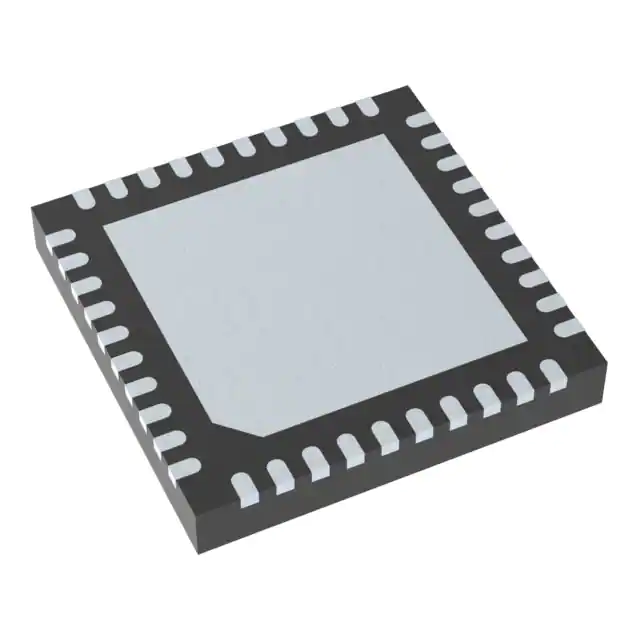
- Part No.:
- LTC2273CUJ#TRPBF
- Manufacturer:
- Analog Devices Inc.
- Category:
- Analog to Digital Converters (ADC)
- Package:
- 40-WFQFN Exposed Pad
- Datasheet:
-
 LTC2273CUJ#TRPBF.pdf
- Description:
- IC ADC 16BIT PIPELINED 40QFN
- Quantity:
- Payment:

- Shipping:

Inventory:2,996
Please send an inquiry. Send us your inquiry, and we will respond immediately.
Product details
Overview
LTC2273CUJ#TRPBF from Analog Devices (formerly Linear Technology) is a 16-bit, 80Msps high-speed analog-to-digital converter with JESD204 serial output interface, optimized for wideband RF sampling in communications infrastructure. It features 700MHz full-power input bandwidth, 77.7dBFS noise floor, 100dB spurious-free dynamic range (SFDR), and ultra-low 80fs RMS aperture jitter-enabling undersampling of cellular and microwave band signals in base station receivers and spectrum analyzers.
For engineers reviewing the LTC2273CUJ#TRPBF datasheet, LTC2273CUJ#TRPBF pinout, LTC2273CUJ#TRPBF application, or LTC2273CUJ#TRPBF equivalent, this page delivers verified specifications, validated pin functions, real-world use cases in telecom and test equipment, and two confirmed alternative parts with documented functional trade-offs.
Technical Context
The LTC2273CUJ#TRPBF implements a 16-bit pipelined ADC core with integrated sample-and-hold, programmable gain amplifier (PGA), and 8B/10B serializer compliant with JEDEC JESD204. Its differential analog input supports 1.5VP-P or 2.25VP-P ranges, and the internal clock duty cycle stabilizer ensures consistent performance across 40%–60% input clock duty cycles.
It uses a single 3.3V analog supply (VDD) and separate 1.2V–3.3V output supply (OVDD) for CML serial outputs, with configurable synchronization via SYNC+/SYNC– and frame alignment monitoring via FAM. Latency is fixed at 9 pipeline cycles and 3 cycles from SYNC active to comma detection.
Key Specifications
| Parameter | Value and Actual Design Meaning |
|---|---|
| Resolution | 16-bit - delivers 96.3dB theoretical SNR, suitable for high-fidelity signal capture in radar and instrumentation |
| Sample Rate | 80Msps - supports Nyquist-limited bandwidth up to 40MHz or undersampling of IF signals up to 700MHz |
| Noise Floor | 77.7dBFS - enables detection of low-level signals in dense spectral environments like LTE-A receivers |
| SFDR | 100dBc (2nd/3rd harmonic) - suppresses spurious content critical for adjacent-channel interference rejection |
| Input Bandwidth | 700MHz - allows direct RF sampling of UHF and L-band signals without external downconversion |
| Aperture Jitter | 80fs RMS - limits SNR degradation at high input frequencies (e.g., 140MHz input yields 74.5dBFS SNR) |
| Power Dissipation | 1100mW - requires thermal management on PCBs with >1W dissipation in compact QFN packages |
Pinout & Package
40-lead 6mm × 6mm plastic QFN package (UJ) with exposed thermal pad (Pin 41 = GND). Requires soldering of exposed pad to PCB ground plane for thermal and electrical integrity.
| Pin/Terminal | Circuit Role | Design Meaning |
|---|---|---|
| AIN+, AIN– | Differential analog input | Accepts 1.5VP-P or 2.25VP-P full-scale signal; common-mode voltage internally set to 1.25V |
| ENC+, ENC– | Differential encode clock input | Sampling edge-triggered on ENC+ rising/ENC– falling; supports sine, LVDS, PECL, TTL, CMOS |
| CMLOUT+, CMLOUT– | JESD204-compliant CML serial output | 20-bit serialized data at 1.6Gbps (80Msps × 20 bits); requires 50Ω termination to OVDD or AC coupling |
| SYNC+, SYNC– | Frame synchronization request | Active-low SYNC+ initiates JESD204 lane alignment; supports multi-device deterministic latency |
| SHDN (Pins 19, 20) | Shutdown control | Both pins must be high to enter 5mW shutdown mode; dual-pin design prevents accidental power-down |
| DITH, PGA, SRR0/SRR1 | Configuration inputs | Enable dither (improves SFDR by 10dB), select input range (1.5V/2.25V), and set sample rate range |
Key Features
| Feature | Design Value |
|---|---|
| JESD204 serial interface | Reduces PCB trace count vs parallel LVDS; enables deterministic latency and multi-ADC synchronization |
| Programmable gain amplifier (PGA) | Optimizes dynamic range for varying signal amplitudes without external amplification stages |
| Internal dither function | Improves SFDR by ≥10dB at low input levels (e.g., –25dBFS), reducing harmonic distortion in spectrum analysis |
| 700MHz analog input bandwidth | Supports direct sampling of 3G/4G/5G IF signals (e.g., 140–170MHz) without image-reject filtering |
| Ultra-low 80fs RMS jitter | Preserves SNR above 100MHz input frequency-critical for wideband digital predistortion in base stations |
Applications
| Cellular Base Station Receiver | Spectrum Analyzer Front-End |
|---|---|
Use Scenario: Digitizing 140MHz LTE-A carrier signals with 20MHz bandwidth in macrocell remote radio heads. IC Role / Device Role / Timing Role: Primary ADC capturing IF samples at 80Msps with JESD204 link to FPGA-based digital downconverter. Use Value: 100dB SFDR rejects adjacent channel interference; 700MHz bandwidth avoids external filtering before digitization. | Use Scenario: High-resolution spectral measurement of RF emissions from IoT devices operating at 2.4GHz ISM band. IC Role / Device Role / Timing Role: Wideband ADC feeding FFT engine in portable spectrum analyzer; synchronized via SYNC+ to trigger acquisition windows. Use Value: 77.7dBFS noise floor resolves low-level harmonics; internal dither eliminates tone masking in narrowband FFT bins. |
| ATE Digital Receiver Module | Radar Signal Digitizer |
Use Scenario: Automated test equipment capturing burst-mode 5G NR waveforms with fast settling and repeatable timing. IC Role / Device Role / Timing Role: JESD204-linked ADC providing deterministic 9-cycle latency for closed-loop stimulus-response validation. Use Value: Fixed pipeline latency enables precise timestamp correlation; SHDN pins allow power-gating between test sequences. | Use Scenario: Pulse-Doppler radar digitizing 70MHz IF returns with high dynamic range to distinguish weak targets amid clutter. IC Role / Device Role / Timing Role: High-SFDR ADC sampling at 80Msps with PGA gain adjustment to maintain optimal ADC utilization across target ranges. Use Value: 100dB SFDR suppresses second-harmonic clutter; 80fs jitter preserves Doppler resolution below 10Hz. |
Equivalent & Alternatives
The following parts are listed as comparable options for similar high-speed ADC applications.
| Alternative Part | Technical Difference | Application Difference | Selection Advice |
|---|---|---|---|
| AD9268BCPZ-80 | 16-bit, 80Msps, JESD204A serial output; 75dBFS SNR, 90dB SFDR; requires external reference and separate digital supply | Lacks integrated PGA and internal dither; lower SFDR limits spurious-sensitive spectrum analysis | Select when JESD204A compatibility with legacy FPGA IP is required and external signal conditioning is acceptable |
| LTC2263IUP#PBF | 16-bit, 65Msps, SPI-configurable; 76.5dBFS SNR, 95dB SFDR; 3.3V-only supply; no JESD204 interface | Parallel CMOS output increases PCB routing complexity; lower sample rate restricts IF bandwidth | Select for cost-sensitive industrial imaging where JESD204 is unnecessary and layout space permits parallel traces |
Compared with AD9268BCPZ-80 and LTC2263IUP#PBF, the LTC2273CUJ#TRPBF delivers superior SFDR and integrated signal conditioning-making it preferred for demanding wireless infrastructure and test equipment where spurious suppression and analog front-end integration reduce BOM count and layout risk.
Availability
LTC2273CUJ#TRPBF is available at Aetrix Electronics and suitable for cellular base station receivers, spectrum analyzers, automated test equipment, and radar digitizers requiring stable component supply across extended production lifecycles.
Supply support for LTC2273CUJ#TRPBF includes scheduled delivery planning, volume procurement assistance, BOM continuity management, traceable sourcing, and lifecycle availability coordination for OEM customers, industrial embedded developers, connected-device designers, and electronics production programs.
Manufacturer
Analog Devices acquired Linear Technology in 2017 and maintains its high-performance signal chain portfolio, emphasizing precision, speed, and integration for demanding analog applications.
The LTC2273CUJ#TRPBF belongs to Linear's high-speed ADC family designed specifically for RF-sampling architectures in telecommunications infrastructure, defense electronics, and high-end instrumentation-where wide bandwidth, low jitter, and JESD204 interoperability are mandatory.
FAQ
What is the maximum analog input frequency supported by the LTC2273CUJ#TRPBF?
The LTC2273CUJ#TRPBF supports a full-power analog input bandwidth of 700MHz, enabling direct RF sampling of signals up to this frequency. At 140MHz input, it achieves 74.5dBFS SNR and 90dBc SFDR (with PGA = 1), confirming usable performance well into L- and S-bands. Performance degrades gradually beyond 700MHz due to S/H roll-off.
Does the LTC2273CUJ#TRPBF require an external reference voltage?
No, the LTC2273CUJ#TRPBF integrates a precision internal reference generator and does not require an external reference. The internal 1.25V reference is used for ADC core operation and provides ±30ppm/°C full-scale drift over temperature, eliminating external component cost and layout area.
How is JESD204 lane synchronization achieved on the LTC2273CUJ#TRPBF?
The LTC2273CUJ#TRPBF uses dedicated SYNC+ and SYNC– pins to initiate deterministic frame alignment. A low pulse on SYNC+ (≥2 sample clocks) triggers transmission of K28.5 comma symbols, enabling receiver FPGA to lock to the data stream with fixed 3-cycle latency from SYNC active to first comma. ISMODE pin allows idle synchronization for continuous streaming.
What power supplies are required for the LTC2273CUJ#TRPBF?
The LTC2273CUJ#TRPBF requires two independent supplies: a 3.3V analog supply (VDD, Pins 1/2/12/13) and a 1.2V–3.3V output supply (OVDD, Pins 22/25) for the CML serial drivers. VDD must be bypassed with 0.1μF ceramic capacitors per pin; OVDD requires identical decoupling and must be ≥1.4V for differential termination.
Can the LTC2273CUJ#TRPBF operate at sample rates below 80Msps?
Yes, the LTC2273CUJ#TRPBF supports sample rates from 20Msps to 80Msps. SRR0 and SRR1 pins configure the operating range, and the internal clock duty cycle stabilizer maintains performance across wide duty cycles-even at reduced rates. Power scales linearly: 1100mW at 80Msps, ~400mW at 20Msps (per IVDD curves).
LTC2273CUJ#TRPBF Specifications
- Product attributes
- Attribute value
- Manufacturer:
- Analog Devices Inc.
- Series:
- -
- Package/Case:
- 40-WFQFN Exposed Pad
- Packaging:
- Tape & Reel (TR)
- Product Status:
- Active
- Number of Bits:
- 16
- Sampling Rate (Per Second):
- 80M
- Number of Inputs:
- 1
- Input Type:
- Differential
- Data Interface:
- JESD204
- Configuration:
- S/H-ADC
- Ratio - S/H:ADC:
- 1:1
- Number of A/D Converters:
- 1
- Architecture:
- Pipelined
- Reference Type:
- External, Internal
- Voltage - Supply, Analog:
- 3.135V ~ 3.465V
- Voltage - Supply, Digital:
- 3.135V ~ 3.465V
- Features:
- PGA
- Operating Temperature:
- 0°C ~ 70°C
- Supplier Device Package:
- 40-QFN (6x6)
- Mounting Type:
- Surface Mount
- Grade:
- -
- Qualification:
- -
LTC2273CUJ#TRPBF FAQ
1.How can I place an order for LTC2273CUJ#TRPBF through Aetrix?
Please submit a Request for Quotation (RFQ) for LTC2273CUJ#TRPBF on Aetrix. Our sales agent will provide a competitive quotation and guide you through the order confirmation once you accept the terms.
2.Are the price and stock information for LTC2273CUJ#TRPBF reliable?
The price and inventory of LTC2273CUJ#TRPBF are updated periodically and may fluctuate due to market conditions. Stock and pricing data are typically refreshed every 24 hours. Quotation validity for LTC2273CUJ#TRPBF is usually 5 days.
3.What payment methods are accepted for LTC2273CUJ#TRPBF?
We accept Wire Transfer, PayPal, Credit Card, Western Union, MoneyGram, and Escrow for LTC2273CUJ#TRPBF transactions.
Note: Certain payment methods may incur a processing fee.
4.How is shipping managed for LTC2273CUJ#TRPBF?
LTC2273CUJ#TRPBF orders can be shipped via leading logistics carriers, including DHL, UPS, FedEx, TNT, or Registered Mail.
Once your LTC2273CUJ#TRPBF order is processed, you will receive an email with the shipment details and tracking number.
Note: Tracking information may take up to 24 hours to appear. Express delivery typically takes 3–5 business days.
5.How can I obtain technical support or documentation for LTC2273CUJ#TRPBF?
For technical support, including LTC2273CUJ#TRPBF datasheets, pinout diagrams, or application guidance, please contact our engineering support team. They can provide detailed documentation and assistance for your LTC2273CUJ#TRPBF requirements.
6.How does Aetrix verify that LTC2273CUJ#TRPBF is sourced from the original manufacturer or authorized distributors?
All LTC2273CUJ#TRPBF products on Aetrix are procured from qualified distributors and authorized channels. Our dedicated quality assurance team conducts strict verification, including traceability checks and, if necessary, third-party testing. This ensures that LTC2273CUJ#TRPBF meets industry standards.
7.What is the process for return or replacement of LTC2273CUJ#TRPBF?
All LTC2273CUJ#TRPBF units undergo pre-shipment inspection (PSI). If there is an issue with LTC2273CUJ#TRPBF, returns or replacements are accepted under the following conditions:
1.Quantity discrepancies, incorrect items, or visible external defects (such as breakage or corrosion), acknowledged by Aetrix.
2.The issue is reported within 90 days of delivery.
3.The LTC2273CUJ#TRPBF part is unused and in its original packaging.
Return procedure for LTC2273CUJ#TRPBF:
1.Submit a request within 90 days.
2.Obtain a Return Material Authorization (RMA) from Aetrix.
LTC2273CUJ#TRPBF Tags
-
ADC081C021CIMKX/NOPB
Texas Instruments
-
MCP3021A5T-E/OT
Microchip Technology
-
TLA2024IRUGR
Texas Instruments
-
MCP3221A5T-E/OT
Microchip Technology
-
MCP3221A5T-I/OT
Microchip Technology
-
MCP3221A4T-E/OT
Microchip Technology
-
MCP3221A6T-E/OT
Microchip Technology
-
MCP3221A0T-E/OT
Microchip Technology
-
MCP3221A1T-E/OT
Microchip Technology

-
ADC121S021CIMFX/NOPB
Texas Instruments
-
MCP3001-I/MS
Microchip Technology

-
MCP3001-I/SN
Microchip Technology
Tech Hub

A practical engineering guide to 3.3V and 5V logic compatibility, input thresholds, resistor dividers, translator ICs, MOSFET level shifting, I2C pull-ups, timing limits and power-sequencing risks.

The 74HC595 uses push-pull logic outputs, while the TPIC6B595 uses 50 V open-drain DMOS sinks for higher-power loads. This guide compares timing, current limits, 3.3 V interfacing, load wiring, thermal…

The 74HC595 converts serial data into eight stable parallel outputs. This guide covers pin functions, shift and storage timing, OE and MR behavior, drive-current limits, cascading, voltage compatibilit…

A technical comparison of level-sensitive latches and edge-triggered flip-flops, covering timing windows, setup and hold limits, master–slave operation, time borrowing, race-through, HDL inference and…

A D latch stores one bit while Enable controls when data can pass. This reference covers gate-level operation, truth tables, transparency, setup and hold timing, LE versus OE, common ICs and practical …

An SR latch stores one bit through cross-coupled feedback. This engineering reference covers NOR and NAND implementations, truth tables, forbidden-state recovery, gated operation, switch debouncing, fa…

Latch circuits retain one bit through feedback. This technical reference covers SR and D latches, truth tables, transparency, timing limits, latch-versus-flip-flop behavior, applications and common log…

An engineering guide to LED driver operation, constant-current and constant-voltage outputs, linear and switching topologies, dimming, IC selection, calculations, replacement compatibility, and fault c…

Operational amplifier guide covering op amp basics, feedback, ideal vs real op amps, common configurations, buffer circuits, offset, bias current, gain-bandwidth, slew rate, rail-to-rail limits and sel…

Jumper cables guide covering safe connection order, red and black clamp placement, final ground connection, cable gauge, length, clamp quality, copper vs CCA cables, jump starter comparison and battery…


