
 My Inquiry
 My Account


Analog Devices Inc. LTC2995CUD#TRPBF
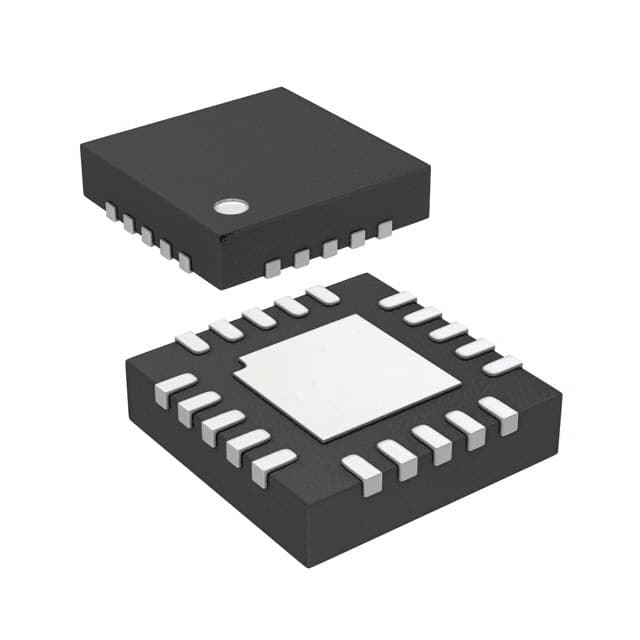
- Part No.:
- LTC2995CUD#TRPBF
- Manufacturer:
- Analog Devices Inc.
- Category:
- Thermal Management
- Package:
- 20-WFQFN Exposed Pad
- Datasheet:
-
 LTC2995CUD#TRPBF.pdf
- Description:
- IC TEMP SENSOR VOLT MNTR 20QFN
- Quantity:
- Payment:

- Shipping:

Inventory:4,489
Please send an inquiry. Send us your inquiry, and we will respond immediately.
Product details
Overview
LTC2995CUD#TRPBF from Analog Devices (formerly Linear Technology) is a high-accuracy dual voltage monitor and remote/internal temperature sensor IC with open-drain alert outputs. It delivers ±1°C remote diode temperature accuracy, 1.5% voltage threshold accuracy, and 3.5ms update time across a 2.25V–5.5V supply range. It operates in 0°C to 70°C ambient and is used for core voltage supervision and thermal safety in network servers and computing platforms.
For engineers reviewing the LTC2995CUD#TRPBF datasheet, LTC2995CUD#TRPBF pinout, LTC2995CUD#TRPBF application, or LTC2995CUD#TRPBF equivalent, key selection criteria include its dual OV/UV monitoring capability, ±1°C remote diode accuracy with series resistance cancellation, 1.8V buffered reference output, adjustable reset timeout via TMR capacitor, and compatibility with standard NPN transistors (e.g., MMBT3904) as remote sensors.
Technical Context
The LTC2995CUD#TRPBF integrates a precision diode-based temperature measurement front-end with two independent voltage comparators referenced to an internal 0.5V threshold. Its VPTAT output provides a calibrated 4mV/K analog voltage proportional to absolute temperature, supporting both internal die and external diode sensing selected via the DS pin.
It implements series resistance cancellation using triple-current measurement to reject errors up to several hundred ohms in the remote sensor path. Alert outputs (TO1, TO2, UV, OV) are open-drain with weak 400kΩ pull-ups to VCC and programmable hold time controlled by the TMR pin capacitor.
Key Specifications
| Parameter | Value and Actual Design Meaning |
|---|---|
| Remote Temp Accuracy | ±1°C over 0°C–85°C - enables precise thermal throttling without calibration. |
| Voltage Threshold Accuracy | ±1.5% - ensures reliable detection of 5V ±10% or 3.3V ±5% supply deviations. |
| VPTAT Slope | 4 mV/K - allows direct Kelvin-to-voltage conversion; supports temperature thresholds at VT1/VT2. |
| Update Interval | 3.5 ms - supports fast thermal response in dynamic CPU/GPU load scenarios. |
| Supply Current | 220 μA typical - enables low-power always-on monitoring in battery-backed systems. |
| Reference Output | 1.8 V ±3 mV - simplifies resistor-divider threshold programming and serves as ADC reference. |
| Operating Voltage | 2.25 V to 5.5 V - compatible with 2.5V, 3.3V, and 5V system rails. |
Pinout & Package
Package: 20-lead (3 mm × 3 mm) plastic QFN with exposed pad (UD package). Thermal performance optimized for PCB ground connection to exposed pad.
| Pin/Terminal | Circuit Role | Design Meaning |
|---|---|---|
| VCC | Supply input | Accepts 2.25V–5.5V; requires ≥0.1μF bypass to GND. |
| GND | Ground reference | Common return for all analog/digital functions and exposed pad. |
| D+, D− | Remote diode sense terminals | D+ sources current; D− sinks current; 470pF bypass required for noise immunity. |
| DS | Diode select input | Three-state: VCC = internal sensor, GND = external sensor, open = alternating. |
| VPTAT | Temperature voltage output | 4mV/K analog output; drives ±200μA; stable with ≤1000pF load. |
| VREF | Reference voltage output | 1.8V buffered reference; used for VT1/VT2 and VHn/VLn divider design. |
| VT1, VT2 | Temperature threshold inputs | Compare against VPTAT; polarity set by PS pin (OT/UT configurable). |
| VH1, VL1, VH2, VL2 | Voltage monitor inputs | VHn triggers UV when <0.5V; VLn triggers OV when >0.5V. |
| TO1, TO2, UV, OV | Open-drain alert outputs | Pull low on threshold violation; weak 400kΩ pull-up to VCC; externally pullable above VCC. |
| TMR | Reset timeout timer | Capacitor sets delay (5ms/nF); open = 500μs min; tied to VCC = bypassed. |
Key Features
| Feature | Design Value |
|---|---|
| Series resistance cancellation | Compensates up to ~800Ω series resistance in remote diode path, enabling accurate measurements over multi-meter cables. |
| Adjustable hysteresis | ΔTHYST = 2–10°C programmable via VT1/VT2 resistor networks - prevents chatter near trip points. |
| Glitch rejection | Input filtering rejects short-duration noise spikes on VHn/VLn/VTn pins - improves reliability in electrically noisy server environments. |
| Single-wire remote sensing | D− tied to local GND while remote cathode connects to remote GND - simplifies cabling in distributed thermal monitoring. |
| ESD robustness | ±4kV HBM rating on D+/D− - reduces need for external protection in moderate-noise industrial enclosures. |
Applications
| Core Voltage Monitoring | I/O Rail Supervision |
|---|---|
Use Scenario: Real-time monitoring of CPU core voltage (e.g., 1.2V ±5%) during dynamic frequency scaling. IC Role / Device Role / Timing Role: LTC2995CUD#TRPBF compares VH1/VL1 against internal 0.5V reference to detect undervoltage (UV) or overvoltage (OV) events. Use Value: Prevents system crash or data corruption by asserting UV/OV alerts before rail excursion exceeds safe operating limits. | Use Scenario: Supervising 3.3V I/O supply in network switch ASICs where brown-out must trigger graceful shutdown. IC Role / Device Role / Timing Role: LTC2995CUD#TRPBF uses VH2/VL2 inputs and 1.8V VREF to set precise 3.3V ±3% thresholds via resistor dividers. Use Value: Enables deterministic power sequencing and eliminates false resets caused by transient supply droop. |
| Processor Die Temperature Safety | Remote GPU Thermal Throttling |
Use Scenario: Detecting internal die temperature exceeding 95°C in embedded ARM processors to initiate clock throttling. IC Role / Device Role / Timing Role: LTC2995CUD#TRPBF measures internal sensor (DS = VCC), compares VPTAT to VT2, and asserts TO2 on overtemperature. Use Value: Provides sub-1°C resolution thermal feedback with <3.5ms latency - faster than SMBus-based alternatives. | Use Scenario: Monitoring discrete GPU temperature via MMBT3904 transistor mounted on heatsink, triggering fan ramp-up at 70°C. IC Role / Device Role / Timing Role: LTC2995CUD#TRPBF senses remote diode (DS = GND), applies series resistance cancellation, and drives TO1 on OT event. Use Value: Maintains accuracy despite PCB trace resistance and EMI; eliminates need for calibration across production units. |
Equivalent & Alternatives
The following parts are listed as comparable options for similar temperature and dual-supply monitoring applications.
| Alternative Part | Technical Difference | Application Difference | Selection Advice |
|---|---|---|---|
| MAX6603ESA+ | Single temperature sensor only; no voltage monitoring; 3-pin SOT23 package; ±2°C accuracy. | Cannot replace dual OV/UV function; suitable only for pure thermal monitoring in space-constrained designs. | Select only if voltage supervision is handled elsewhere and board area is critical. |
| LM95235CIMM/NOPB | Two remote diode channels; SPI interface; no integrated voltage monitors; requires external ADC for VPTAT readout. | Requires microcontroller firmware integration; lacks autonomous alert outputs; higher BOM count. | Choose when digital configurability and multi-sensor support outweigh need for analog simplicity and self-contained operation. |
Compared with MAX6603ESA+ and LM95235CIMM/NOPB, the LTC2995CUD#TRPBF uniquely combines autonomous dual-supply monitoring, ±1°C remote diode accuracy with hardware cancellation, and four open-drain alerts - eliminating software dependency and reducing system-level validation effort.
Availability
LTC2995CUD#TRPBF is available at Aetrix Electronics and suitable for network servers, desktop computers, and environmental monitoring systems requiring stable component supply, long-term lifecycle assurance, and guaranteed 0°C to 70°C industrial-grade performance.
Supply support for LTC2995CUD#TRPBF includes scheduled delivery planning, volume procurement assistance, BOM continuity management, traceable sourcing, and lifecycle availability coordination for OEM customers, industrial embedded developers, connected-device designers, and electronics production programs.
Manufacturer
Analog Devices, Inc. (ADI) is a global leader in high-performance analog, mixed-signal, and digital signal processing technologies, serving industrial, automotive, communications, and computing markets.
The LTC2995CUD#TRPBF belongs to ADI's precision monitoring IC product line, designed specifically for autonomous, low-power, high-accuracy thermal and supply-rail supervision in space- and power-constrained computing infrastructure.
FAQ
What is the operating temperature range of the LTC2995CUD#TRPBF?
The LTC2995CUD#TRPBF is specified for 0°C to 70°C ambient operation (C-grade). This distinguishes it from the I-grade (–40°C to 85°C) and H-grade (–40°C to 125°C) variants. Its internal temperature sensor maintains ±2°C accuracy across this full range, while remote diode accuracy is ±1°C from 0°C to 85°C - making it ideal for commercial computing equipment where extended temperature coverage is not required.
How does the LTC2995CUD#TRPBF achieve ±1°C remote temperature accuracy?
The LTC2995CUD#TRPBF achieves ±1°C remote diode accuracy through triple-current diode voltage sampling and real-time series resistance cancellation circuitry. It measures the remote diode at three distinct currents to extract and subtract the IR drop error caused by PCB trace or connector resistance - validated to correct errors up to ~800Ω. Combined with factory calibration for η = 1.004 (matching MMBT3904), this enables high-precision thermal monitoring without system-level calibration.
Can the LTC2995CUD#TRPBF monitor both internal and external temperature simultaneously?
No - the LTC2995CUD#TRPBF alternates between internal and external temperature measurement when the DS pin is left floating (open). In that mode, VPTAT toggles every 30ms between the internal die voltage and the remote diode voltage. For simultaneous dual-sensor monitoring, a second LTC2995CUD#TRPBF or a dedicated multi-channel device like the LM95235 would be required. The LTC2995CUD#TRPBF is optimized for single-point, high-accuracy supervision with flexible sensor selection - not concurrent dual-sensing.
What is the purpose of the TMR pin on the LTC2995CUD#TRPBF?
The TMR pin on the LTC2995CUD#TRPBF sets the reset timeout period for all alert outputs (TO1, TO2, UV, OV). Connecting a capacitor from TMR to GND adds ~8ms/nF delay beyond the 500μs minimum; leaving TMR open yields the shortest hold time. This ensures alerts remain asserted long enough for downstream logic (e.g., FPGA reset controllers) to respond reliably - critical in systems where brief transients must not trigger false shutdowns.
Does the LTC2995CUD#TRPBF require external components for basic operation?
Yes - minimal external components are required: a 0.1μF ceramic capacitor from VCC to GND, a 470pF capacitor between D+ and D− for noise suppression, and resistor dividers to set VT1/VT2 and VHn/VLn thresholds using the 1.8V VREF. No external oscillator, ADC, or microcontroller is needed - the LTC2995CUD#TRPBF operates autonomously with fully analog threshold comparison and open-drain alert generation.
LTC2995CUD#TRPBF Specifications
- Product attributes
- Attribute value
- Manufacturer:
- Analog Devices Inc.
- Series:
- -
- Package/Case:
- 20-WFQFN Exposed Pad
- Packaging:
- Tape & Reel (TR)
- Product Status:
- Active
- Function:
- Temp Monitoring System (Sensor)
- Sensor Type:
- Internal and External
- Sensing Temperature:
- 0°C ~ 70°C, -40°C ~ 125°C
- Accuracy:
- ±2°C Local(Max), ±1.5°C Remote(Max)
- Topology:
- Comparator, Voltage Reference
- Output Type:
- Analog Voltage
- Output Alarm:
- Yes
- Output Fan:
- No
- Voltage - Supply:
- 2.25V ~ 5.5V
- Operating Temperature:
- 0°C ~ 70°C
- Grade:
- -
- Qualification:
- -
- Mounting Type:
- Surface Mount
- Supplier Device Package:
- 20-QFN (3x3)
LTC2995CUD#TRPBF FAQ
1.How can I place an order for LTC2995CUD#TRPBF through Aetrix?
Please submit a Request for Quotation (RFQ) for LTC2995CUD#TRPBF on Aetrix. Our sales agent will provide a competitive quotation and guide you through the order confirmation once you accept the terms.
2.Are the price and stock information for LTC2995CUD#TRPBF reliable?
The price and inventory of LTC2995CUD#TRPBF are updated periodically and may fluctuate due to market conditions. Stock and pricing data are typically refreshed every 24 hours. Quotation validity for LTC2995CUD#TRPBF is usually 5 days.
3.What payment methods are accepted for LTC2995CUD#TRPBF?
We accept Wire Transfer, PayPal, Credit Card, Western Union, MoneyGram, and Escrow for LTC2995CUD#TRPBF transactions.
Note: Certain payment methods may incur a processing fee.
4.How is shipping managed for LTC2995CUD#TRPBF?
LTC2995CUD#TRPBF orders can be shipped via leading logistics carriers, including DHL, UPS, FedEx, TNT, or Registered Mail.
Once your LTC2995CUD#TRPBF order is processed, you will receive an email with the shipment details and tracking number.
Note: Tracking information may take up to 24 hours to appear. Express delivery typically takes 3–5 business days.
5.How can I obtain technical support or documentation for LTC2995CUD#TRPBF?
For technical support, including LTC2995CUD#TRPBF datasheets, pinout diagrams, or application guidance, please contact our engineering support team. They can provide detailed documentation and assistance for your LTC2995CUD#TRPBF requirements.
6.How does Aetrix verify that LTC2995CUD#TRPBF is sourced from the original manufacturer or authorized distributors?
All LTC2995CUD#TRPBF products on Aetrix are procured from qualified distributors and authorized channels. Our dedicated quality assurance team conducts strict verification, including traceability checks and, if necessary, third-party testing. This ensures that LTC2995CUD#TRPBF meets industry standards.
7.What is the process for return or replacement of LTC2995CUD#TRPBF?
All LTC2995CUD#TRPBF units undergo pre-shipment inspection (PSI). If there is an issue with LTC2995CUD#TRPBF, returns or replacements are accepted under the following conditions:
1.Quantity discrepancies, incorrect items, or visible external defects (such as breakage or corrosion), acknowledged by Aetrix.
2.The issue is reported within 90 days of delivery.
3.The LTC2995CUD#TRPBF part is unused and in its original packaging.
Return procedure for LTC2995CUD#TRPBF:
1.Submit a request within 90 days.
2.Obtain a Return Material Authorization (RMA) from Aetrix.
LTC2995CUD#TRPBF Tags
-
EMC2101-ACZL-TR
Microchip Technology
-
MCP9844T-BE/MNY
Microchip Technology
-
EMC2101-R-ACZL-TR
Microchip Technology
-
MCP98244T-BE/MNY
Microchip Technology

-
TC670ECHTR
Microchip Technology
-
SE98ATP,547
NXP Semiconductors
-
AMC6821SDBQR
Texas Instruments

-
MAX6604AATA+T
Analog Devices Inc./Maxim Integrated
-
ADT7475ARQZ-REEL
onsemi
-
MAX6643LBBAEE+
Analog Devices Inc./Maxim Integrated
-
MAX6684ESA+T
Analog Devices Inc./Maxim Integrated
-
MAX6639AEE+
Analog Devices Inc./Maxim Integrated
Tech Hub

A practical engineering guide to 3.3V and 5V logic compatibility, input thresholds, resistor dividers, translator ICs, MOSFET level shifting, I2C pull-ups, timing limits and power-sequencing risks.

The 74HC595 uses push-pull logic outputs, while the TPIC6B595 uses 50 V open-drain DMOS sinks for higher-power loads. This guide compares timing, current limits, 3.3 V interfacing, load wiring, thermal…

The 74HC595 converts serial data into eight stable parallel outputs. This guide covers pin functions, shift and storage timing, OE and MR behavior, drive-current limits, cascading, voltage compatibilit…

A technical comparison of level-sensitive latches and edge-triggered flip-flops, covering timing windows, setup and hold limits, master–slave operation, time borrowing, race-through, HDL inference and…

A D latch stores one bit while Enable controls when data can pass. This reference covers gate-level operation, truth tables, transparency, setup and hold timing, LE versus OE, common ICs and practical …

An SR latch stores one bit through cross-coupled feedback. This engineering reference covers NOR and NAND implementations, truth tables, forbidden-state recovery, gated operation, switch debouncing, fa…

Latch circuits retain one bit through feedback. This technical reference covers SR and D latches, truth tables, transparency, timing limits, latch-versus-flip-flop behavior, applications and common log…

An engineering guide to LED driver operation, constant-current and constant-voltage outputs, linear and switching topologies, dimming, IC selection, calculations, replacement compatibility, and fault c…

Operational amplifier guide covering op amp basics, feedback, ideal vs real op amps, common configurations, buffer circuits, offset, bias current, gain-bandwidth, slew rate, rail-to-rail limits and sel…

Jumper cables guide covering safe connection order, red and black clamp placement, final ground connection, cable gauge, length, clamp quality, copper vs CCA cables, jump starter comparison and battery…


