
 My Inquiry
 My Account


Analog Devices Inc. LTC3880EUJ#PBF
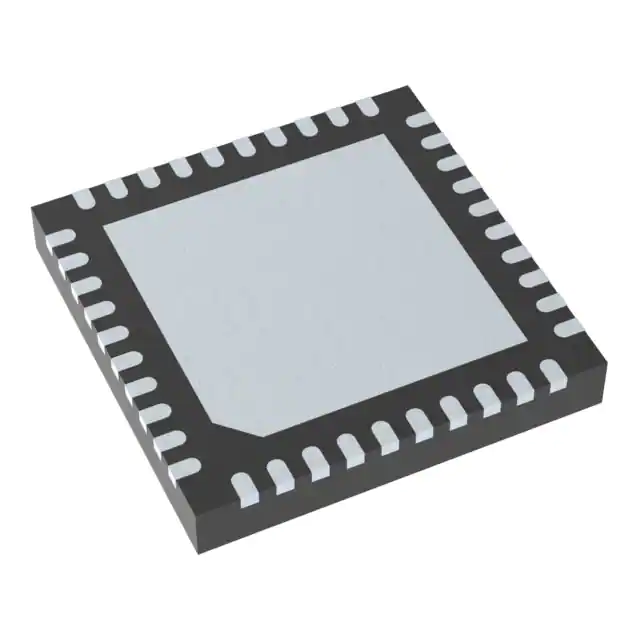
- Part No.:
- LTC3880EUJ#PBF
- Manufacturer:
- Analog Devices Inc.
- Category:
- DC DC Switching Controllers
- Package:
- 40-WFQFN Exposed Pad
- Datasheet:
-
 LTC3880EUJ#PBF.pdf
- Description:
- IC REG CTRLR BUCK PMBUS 40QFN
- Quantity:
- Payment:

- Shipping:

Inventory:8,857
Please send an inquiry. Send us your inquiry, and we will respond immediately.
Product details
Overview
LTC3880EUJ#PBF from Analog Devices is a dual-output, PolyPhase® synchronous step-down DC/DC controller with digital power system management via PMBus/I²C interface. It delivers ±0.5% output voltage accuracy over temperature, supports 4.5V–24V input and 0.5V–5.4V output ranges, and integrates 16-bit ADC telemetry for VIN, IIN, VOUT, IOUT, and temperature - enabling real-time monitoring in high-current telecom and datacom power systems.
For engineers reviewing the LTC3880EUJ#PBF datasheet, LTC3880EUJ#PBF pinout, LTC3880EUJ#PBF application, or LTC3880EUJ#PBF equivalent, this controller provides programmable voltage/current limits, digital soft-start/stop, sequencing, margining, OV/UV protection, and frequency synchronization (250kHz–1MHz), all stored in internal EEPROM with ECC for robust field reconfiguration and fault logging.
Technical Context
The LTC3880EUJ#PBF implements an analog current-mode control loop with constant-frequency operation, supporting up to six-phase PolyPhase® current sharing across dual outputs. Its integrated N-channel MOSFET gate drivers deliver 30ns rise/fall times and precise dead-time control (30ns TG/BG and BG/TG delays) for high-efficiency synchronous rectification.
Digital management is implemented via a PMBus-compliant I²C interface with full command support (READ_VIN, READ_VOUT, READ_IOUT, READ_TEMPERATURE, STORE_USER_ALL), 10kHz–400kHz bus timing, and hardware write-protect (WP) pin. Internal 5V INTVCC regulator eliminates need for external bias supply - distinguishing it from the LTC3880-1 variant.
Key Specifications
| Parameter | Value and Actual Design Meaning |
|---|---|
| VIN Range | 4.5V to 24V - supports wide-input industrial and telecom rails without external pre-regulation |
| VOUT Range | 0.5V to 5.4V (4V on VOUT0) - covers core logic, memory, and I/O supply requirements | Output Voltage Accuracy | ±0.5% over temperature - enables tight regulation for sensitive ASIC/FPGA loads without external calibration |
| ADC Resolution | 16-bit for VOUT/IOUT/temperature telemetry - provides sub-mV and sub-mA readback resolution for closed-loop validation |
| Switching Frequency | 250kHz to 1MHz (synchronizable) - allows optimization of size vs. efficiency and EMI compliance |
| Package | 40-pin (6mm × 6mm) QFN with exposed thermal pad - supports >100W per phase with low θJC = 2.5°C/W |
| EEPROM | Internal EEPROM with ECC and 10-year retention - stores configuration, fault logs, and user settings for unattended reboots |
Pinout & Package
40-pin (6mm × 6mm) plastic QFN package with exposed SGND pad (Pin 41) requiring PCB soldering for thermal and electrical integrity.
| Pin/Terminal | Circuit Role | Design Meaning |
|---|---|---|
| VIN | Main input power rail | Accepts 4.5V–24V; powers INTVCC regulator and gate drivers |
| TG0/TG1 | Top-gate drive outputs | Drive external high-side N-MOSFETs with 30ns transition times and 90ns minimum on-time |
| BG0/BG1 | Bottom-gate drive outputs | Drive external low-side N-MOSFETs with matched timing and dead-time control |
| VSENSE0+/VSENSE0− VSENSE1+/VSENSE1− | Differential output voltage sense inputs | Enable Kelvin sensing for ±0.5% accuracy; reject PCB trace IR drop |
| ISENSE0+/ISENSE0− ISENSE1+/ISENSE1− | Differential current sense inputs | Support DCR or resistor-based sensing; 10-bit resolution with auto-ranging gain |
| SDA/SCL | PMBus/I²C bidirectional interface | Supports 400kHz operation; open-drain with 3mA sink capability and 0.4V VOL |
| ALERT | Open-drain fault indicator | Asserts low on OV, UV, OC, OT, or communication timeout; configurable via PMBus |
| SHARE_CLK | Phase synchronization clock output | Enables accurate current sharing across up to six phases when cascading multiple controllers |
Key Features
| Feature | Design Value |
|---|---|
| Dual independent output control | Each channel fully programmable for voltage, current limit, soft-start, sequencing, and margining - no shared registers or cross-talk |
| Digital telemetry with 16-bit ADC | Simultaneous readback of VIN, IIN, VOUT, IOUT, internal/external temperature - enables real-time health monitoring and predictive maintenance |
| EEPROM with ECC and fault logging | Stores configuration, calibration data, and timestamped fault records - survives power loss and supports field firmware updates |
| Analog current-mode control loop | Provides inherent cycle-by-cycle current limiting and stable transient response without digital compensation tuning |
| AEC-Q100 qualified (E-grade) | Rated for –40°C to 105°C junction temperature - validated for automotive infotainment and ADAS power subsystems |
Applications
| Telecom Base Station Power | Data Center Server VRM |
|---|---|
Use Scenario: Dual-rail power delivery to FPGA, DSP, and memory subsystems in 5G remote radio units with dynamic load changes. IC Role / Device Role / Timing Role: Primary dual-phase controller managing 1.8V/15A and 3.3V/20A outputs with synchronized switching and current sharing. Use Value: ±0.5% voltage accuracy and real-time telemetry enable compliance with strict 5G baseband IC power specs and reduce validation time. | Use Scenario: High-density, digitally managed VRMs supplying CPU/GPU cores and I/O rails in rack-mounted servers. IC Role / Device Role / Timing Role: Digital power controller implementing PMBus-based sequencing, margining, and fault reporting per Intel VR13/VR14 standards. Use Value: EEPROM-stored configurations allow identical board designs across SKUs; telemetry supports dynamic power capping and thermal throttling. |
| Industrial PLC Power Module | Automotive ADAS Domain Controller |
Use Scenario: Robust, field-upgradable power for programmable logic controllers operating in harsh factory environments with wide ambient temperature swings. IC Role / Device Role / Timing Role: Dual-output controller with watchdog-enabled fault response, undervoltage lockout, and programmable startup delay for safe cold-boot sequencing. Use Value: AEC-Q100 qualification and 10-year EEPROM retention ensure long-term reliability; ALERT pin integration simplifies safety-critical fault signaling. | Use Scenario: Power management for multi-sensor fusion domain controllers requiring isolated, sequenced, and monitored 1.2V, 1.8V, and 3.3V rails. IC Role / Device Role / Timing Role: Digital controller implementing ISO 26262-compliant power-on self-test, voltage margining, and fault logging for ASIL-B subsystems. Use Value: Internal temperature sensors and PMBus telemetry provide traceable thermal history for functional safety audits; EEPROM stores calibrated thresholds. |
Equivalent & Alternatives
The following parts are listed as comparable options for similar dual-output digital DC/DC controller applications.
| Alternative Part | Technical Difference | Application Difference | Selection Advice |
|---|---|---|---|
| LTC3887IUJ#PBF | Faster ADC (5.5V/5.5V max VOUT, 35ms startup), no internal 5V regulator - requires external EXTVCC | Better suited for ultra-fast power-up sequences; lacks integrated INTVCC, increasing BOM count | Select LTC3887 when startup time <50ms is critical and external 5V bias is available |
| TPS53689RTAT | Texas Instruments part with PMBus 1.3, 32-bit telemetry, but only 12-bit ADC and no EEPROM fault logging | Lower-cost alternative for non-critical telemetry; lacks ECC-protected NVM and AEC-Q100 grade | Choose TPS53689 for cost-sensitive server applications where EEPROM persistence is not required |
Compared with LTC3887IUJ#PBF and TPS53689RTAT, the LTC3880EUJ#PBF uniquely combines integrated INTVCC, ±0.5% accuracy, EEPROM fault logging, and AEC-Q100 qualification - making it optimal for automotive and industrial systems requiring field-reprogrammability and long-term data integrity.
Availability
LTC3880EUJ#PBF is available at Aetrix Electronics and suitable for telecom infrastructure, datacenter server VRMs, and automotive ADAS power modules requiring stable component supply, long-lifecycle support, and digital power system management capabilities.
Supply support for LTC3880EUJ#PBF includes scheduled delivery planning, volume procurement assistance, BOM continuity management, traceable sourcing, and lifecycle availability coordination for OEM customers, industrial embedded developers, connected-device designers, and electronics production programs.
Manufacturer
Analog Devices is a global leader in high-performance analog, mixed-signal, and digital signal processing semiconductors, serving precision instrumentation, industrial automation, communications, and automotive markets.
The LTC3880EUJ#PBF belongs to the Power by Linear™ digital power controller family, designed specifically for intelligent, telemetry-enabled, high-current DC/DC conversion in mission-critical infrastructure and automotive applications.
FAQ
What is the maximum supported switching frequency for LTC3880EUJ#PBF?
The LTC3880EUJ#PBF supports programmable switching frequencies from 250kHz to 1MHz, synchronized via the SYNC pin. Frequency selection is set using external resistors on FREQ_CFG or configured digitally via PMBus command MFR_PWM_CONFIG_LTC3880. The controller maintains stable current-mode operation across this range with consistent phase relationships between channels.
Does LTC3880EUJ#PBF include an internal voltage regulator?
Yes, the LTC3880EUJ#PBF integrates a 5V linear regulator (INTVCC) that powers internal circuitry and gate drivers. This distinguishes it from the LTC3880-1 variant, which requires an external 5V supply. INTVCC operates from VIN (4.5V–24V) and delivers up to 100mA with ±2% load regulation, eliminating the need for an auxiliary bias rail.
How does LTC3880EUJ#PBF handle fault conditions like overvoltage or overtemperature?
The LTC3880EUJ#PBF detects OV, UV, OC, and OT faults via dedicated comparators and reports them through the ALERT pin and PMBus STATUS_WORD register. Responses include immediate shutdown, latched or retry behavior (configurable), and timestamped entries in internal EEPROM fault log. For example, VOUT overvoltage triggers a 35µs GPIO response and stores fault type, time, and measured voltage.
Can LTC3880EUJ#PBF be used in six-phase PolyPhase® configurations?
Yes, the LTC3880EUJ#PBF supports up to six-phase operation via its SHARE_CLK pin and phase-locked loop. When cascaded with additional LTC3880 or LTC3887 controllers, it enables accurate current sharing across all phases using external current-sense resistors or DCR sensing - verified in typical applications with ≤3% phase current imbalance at full load.
What telemetry parameters can be read back from LTC3880EUJ#PBF via PMBus?
The LTC3880EUJ#PBF supports real-time PMBus readback of VIN, IIN, VOUT0/VOUT1, IOUT0/IOUT1, internal die temperature (T2), and two external temperatures (T0/T1 via TSNS0/TSNS1 pins). All values are acquired by the integrated 16-bit ADC and reported with calibrated accuracy - e.g., VOUT readback has 244µV LSB resolution and ±0.5% TUE.
LTC3880EUJ#PBF Specifications
- Product attributes
- Attribute value
- Manufacturer:
- Analog Devices Inc.
- Series:
- PolyPhase®
- Package/Case:
- 40-WFQFN Exposed Pad
- Packaging:
- Tube
- Product Status:
- Active
- Output Type:
- Transistor Driver
- Function:
- Step-Down
- Output Configuration:
- Positive
- Topology:
- Buck
- Number of Outputs:
- 2
- Output Phases:
- 2
- Voltage - Supply (Vcc/Vdd):
- 4.5V ~ 24V
- Frequency - Switching:
- -
- Duty Cycle (Max):
- -
- Synchronous Rectifier:
- Yes
- Clock Sync:
- Yes
- Serial Interfaces:
- I2C, PMBus
- Control Features:
- Enable, Frequency Control
- Operating Temperature:
- -40°C ~ 105°C (TA)
- Grade:
- -
- Qualification:
- -
- Mounting Type:
- Surface Mount
- Supplier Device Package:
- 40-QFN (6x6)
LTC3880EUJ#PBF FAQ
1.How can I place an order for LTC3880EUJ#PBF through Aetrix?
Please submit a Request for Quotation (RFQ) for LTC3880EUJ#PBF on Aetrix. Our sales agent will provide a competitive quotation and guide you through the order confirmation once you accept the terms.
2.Are the price and stock information for LTC3880EUJ#PBF reliable?
The price and inventory of LTC3880EUJ#PBF are updated periodically and may fluctuate due to market conditions. Stock and pricing data are typically refreshed every 24 hours. Quotation validity for LTC3880EUJ#PBF is usually 5 days.
3.What payment methods are accepted for LTC3880EUJ#PBF?
We accept Wire Transfer, PayPal, Credit Card, Western Union, MoneyGram, and Escrow for LTC3880EUJ#PBF transactions.
Note: Certain payment methods may incur a processing fee.
4.How is shipping managed for LTC3880EUJ#PBF?
LTC3880EUJ#PBF orders can be shipped via leading logistics carriers, including DHL, UPS, FedEx, TNT, or Registered Mail.
Once your LTC3880EUJ#PBF order is processed, you will receive an email with the shipment details and tracking number.
Note: Tracking information may take up to 24 hours to appear. Express delivery typically takes 3–5 business days.
5.How can I obtain technical support or documentation for LTC3880EUJ#PBF?
For technical support, including LTC3880EUJ#PBF datasheets, pinout diagrams, or application guidance, please contact our engineering support team. They can provide detailed documentation and assistance for your LTC3880EUJ#PBF requirements.
6.How does Aetrix verify that LTC3880EUJ#PBF is sourced from the original manufacturer or authorized distributors?
All LTC3880EUJ#PBF products on Aetrix are procured from qualified distributors and authorized channels. Our dedicated quality assurance team conducts strict verification, including traceability checks and, if necessary, third-party testing. This ensures that LTC3880EUJ#PBF meets industry standards.
7.What is the process for return or replacement of LTC3880EUJ#PBF?
All LTC3880EUJ#PBF units undergo pre-shipment inspection (PSI). If there is an issue with LTC3880EUJ#PBF, returns or replacements are accepted under the following conditions:
1.Quantity discrepancies, incorrect items, or visible external defects (such as breakage or corrosion), acknowledged by Aetrix.
2.The issue is reported within 90 days of delivery.
3.The LTC3880EUJ#PBF part is unused and in its original packaging.
Return procedure for LTC3880EUJ#PBF:
1.Submit a request within 90 days.
2.Obtain a Return Material Authorization (RMA) from Aetrix.
LTC3880EUJ#PBF Tags

-
UCC28C45DR
Texas Instruments
-
UCC28C40DR
Texas Instruments
-
UCC28C43DR
Texas Instruments

-
ZXSC410E6TA
Diodes Incorporated
-
LM3524DMX/NOPB
Texas Instruments
-
LM3489MMX/NOPB
Texas Instruments
-
MIC2102YML-TR
Microchip Technology

-
LM5148RGYR
Texas Instruments
-
TL598CDR
Texas Instruments
-
LM5155DSSR
Texas Instruments
-
LM25085MYX/NOPB
Texas Instruments
-
UCC2813DTR-0
Texas Instruments
Tech Hub

A practical engineering guide to 3.3V and 5V logic compatibility, input thresholds, resistor dividers, translator ICs, MOSFET level shifting, I2C pull-ups, timing limits and power-sequencing risks.

The 74HC595 uses push-pull logic outputs, while the TPIC6B595 uses 50 V open-drain DMOS sinks for higher-power loads. This guide compares timing, current limits, 3.3 V interfacing, load wiring, thermal…

The 74HC595 converts serial data into eight stable parallel outputs. This guide covers pin functions, shift and storage timing, OE and MR behavior, drive-current limits, cascading, voltage compatibilit…

A technical comparison of level-sensitive latches and edge-triggered flip-flops, covering timing windows, setup and hold limits, master–slave operation, time borrowing, race-through, HDL inference and…

A D latch stores one bit while Enable controls when data can pass. This reference covers gate-level operation, truth tables, transparency, setup and hold timing, LE versus OE, common ICs and practical …

An SR latch stores one bit through cross-coupled feedback. This engineering reference covers NOR and NAND implementations, truth tables, forbidden-state recovery, gated operation, switch debouncing, fa…

Latch circuits retain one bit through feedback. This technical reference covers SR and D latches, truth tables, transparency, timing limits, latch-versus-flip-flop behavior, applications and common log…

An engineering guide to LED driver operation, constant-current and constant-voltage outputs, linear and switching topologies, dimming, IC selection, calculations, replacement compatibility, and fault c…

Operational amplifier guide covering op amp basics, feedback, ideal vs real op amps, common configurations, buffer circuits, offset, bias current, gain-bandwidth, slew rate, rail-to-rail limits and sel…

Jumper cables guide covering safe connection order, red and black clamp placement, final ground connection, cable gauge, length, clamp quality, copper vs CCA cables, jump starter comparison and battery…


