
 My Inquiry
 My Account


Analog Devices Inc. LTC4156EUFD#TRPBF
- Part No.:
- LTC4156EUFD#TRPBF
- Manufacturer:
- Analog Devices Inc.
- Category:
- Battery Chargers
- Package:
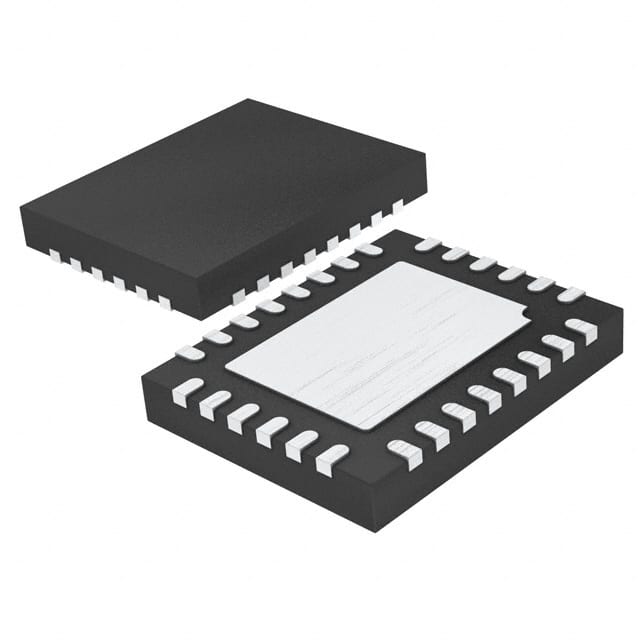
- 28-WFQFN Exposed Pad
- Datasheet:
-
 LTC4156EUFD#TRPBF.pdf
- Description:
- IC BAT CHG IRON PHOSPHT 1C 28QFN
- Quantity:
- Payment:

- Shipping:

Inventory:4,150
Please send an inquiry. Send us your inquiry, and we will respond immediately.
Product details
Overview
LTC4156EUFD#TRPBF from Analog Devices (formerly Linear Technology) is a dual-input I²C-controlled power manager and 3.5A LiFePO₄ battery charger with PowerPath™ instant-on operation. It manages power distribution from USB and wall adapter inputs to a single-cell LiFePO₄ battery and system load, delivering up to 15W with switching efficiency >95% at 3.3V battery and 2A load, VFLOAT programmable to 3.45–3.80V, and integrated USB On-The-Go 5V back-powering. It is used in portable medical devices requiring seamless input priority switchover and low-battery instant-on capability.
For engineers reviewing the LTC4156EUFD#TRPBF datasheet, LTC4156EUFD#TRPBF pinout, LTC4156EUFD#TRPBF application, or LTC4156EUFD#TRPBF equivalent, key selection criteria include dual-input overvoltage protection thresholds (6.0V), I²C-adjustable charge current (up to 2.55A), JEITA-compliant NTC thermistor ADC, and 28-pin 4mm × 5mm QFN package with exposed thermal pad.
Technical Context
The LTC4156EUFD#TRPBF integrates a synchronous step-down switching charger with 2.25MHz fixed-frequency PWM control, monolithic high-side/low-side MOSFET drivers (RPMOS = 90mΩ, RNMOS = 80mΩ), and dual-input priority multiplexer with independent OVP (6.0V rising threshold) and UVLO (4.25V falling threshold). Its PowerPath architecture enables simultaneous battery charging and system powering without brownout during input transitions.
I²C interface supports full configuration of charge parameters-including float voltage (four settings), safety timer (0.25–4h), recharge threshold (96.6–98.4% of VFLOAT), and USB OTG output current limit (1.4A)-with real-time status reporting (VBUS/VOUT/BAT currents, fault flags, NTC ADC codes). The device implements JEITA temperature-dependent charge control via integrated 7-bit NTC ADC with kOFFSET = 0.113 V/V and kHIGH = 0.895 V/V.
Key Specifications
| Parameter | Value and Actual Design Meaning |
|---|---|
| Max Charge Current | 2.55A (100% mode, RPROG = 340Ω); enables fast LiFePO₄ charging with minimal thermal rise in compact layouts |
| Float Voltage Range | 3.45V / 3.55V / 3.60V / 3.80V (I²C-selectable); matches LiFePO₄ chemistry for cycle life and safety |
| Input Voltage Range | 4.35V–5.5V (VBUS); supports USB 2.0/3.0 and 5V wall adapters with undervoltage current reduction at 4.30V |
| USB OTG Output | 4.75–5.25V @ 1.4A; powers USB peripherals directly from battery without external boost circuitry |
| Switching Frequency | 2.25MHz (typ); allows use of small 1µH inductors and reduces EMI in space-constrained designs |
| Thermal Performance | θJA = 43°C/W; exposed pad (Pin 29) must be soldered to PCB ground plane for safe 3.5A continuous operation |
| Operating Temp | –40°C to +125°C junction; qualified for industrial and portable medical environments |
Pinout & Package
The LTC4156EUFD#TRPBF is housed in a 28-lead, 4mm × 5mm × 0.75mm plastic QFN package with exposed thermal pad (Pin 29 = GND). The package supports high-power dissipation and requires PCB thermal relief design per Linear/LT AN132.
| Pin/Terminal | Circuit Role | Design Meaning |
|---|---|---|
| SDA (1) | I²C data line | Open-drain bidirectional bus; level-shifted to DVCC reference for robust communication with 3.3V or 5V controllers |
| DVCC (2) | I²C logic supply | Sets SDA/SCL input thresholds; must tie to same rail as I²C pull-ups to ensure SMBus compliance |
| IRQ (3) | Interrupt output | Open-drain active-low signal indicating charge termination, fault, or NTC thermal event; requires external pull-up |
| ID (4) | USB OTG detection | Detects A-device connection; when pulled low, enables reverse PowerPath for VBUS power-back from battery |
| CLPROG1 (5) | Primary input current limit | Analog programming pin; 1.2V servo sets max VBUS current (e.g., 3A with R = 400Ω); bypasses USB limits |
| WALLSNS (7) | High-priority input sense | Triggers WALLGT gate drive and disables USBGT when active; enables priority-based input selection |
| USBSNS (8) | Low-priority input sense | Drives USBGT only if WALLSNS inactive; supports dual-input redundancy with automatic failover |
| VOUT (10,11) | PowerPath regulated output | Delivers system power at 4.35–4.5V; maintains >3.10V during deep discharge for instant-on operation |
| SW (17,18) | Switch node | Connects to external 1µH inductor; handles peak currents up to 6.7A; requires tight layout for EMI control |
| BATSNS (15) | Battery voltage sense | High-impedance feedback input; monitors LiFePO₄ cell voltage for charge regulation and UVLO (2.65–2.95V) |
| NTC (16) | Thermistor input | Accepts NTC divider; digitized by on-chip 7-bit ADC for JEITA-compliant charge rate adjustment |
Key Features
| Feature | Design Value |
|---|---|
| PowerPath™ Instant-On | Maintains ≥3.10V system output even when battery drops to 2.65V, eliminating boot failures in low-battery field use |
| LiFePO₄-Optimized Charging | Four factory-trimmed VFLOAT settings (3.45–3.80V) and C/10–C/50 termination enable precise chemistry-matched charge profiles |
| Dual-Input Priority Multiplexer | Hardware-based input arbitration: WALLSNS overrides USBSNS; no firmware dependency for failover reliability |
| Integrated USB OTG Back-Power | Delivers 5V/1.4A from battery to USB port using internal switch-no external boost IC or diode required |
| JEITA Thermistor ADC | On-die 7-bit NTC converter with programmable offset/span (kOFFSET = 0.113 V/V) enables compliant cold/hot charge suspension |
Applications
| Portable Medical Monitor | Industrial Handheld Scanner |
|---|---|
Use Scenario: Battery-powered ECG monitor operating 8+ hours per charge in ambulatory care, with USB-C host connection for data export. IC Role / Device Role / Timing Role: Dual-input power manager and LiFePO₄ charger; regulates 5V input from USB or wall adapter while maintaining uninterrupted 3.3V system rail and charging battery at 2.55A. Use Value: Instant-on operation ensures clinical readiness after deep discharge; I²C-configurable VFLOAT extends LiFePO₄ cycle life beyond 2000 cycles. | Use Scenario: Rugged barcode scanner used in warehouse logistics, requiring hot-swap battery replacement and USB OTG firmware updates. IC Role / Device Role / Timing Role: PowerPath controller enabling simultaneous charging and system operation; USB GT/WALL GT pins drive external N-MOSFETs for input prioritization and OVP. Use Value: Hardware priority multiplexing eliminates software delays during input switchover; integrated OTG delivers 5V/1.4A to host PC without external boost. |
| Emergency Backup Power Unit | Field-Deployable Diagnostic Tool |
Use Scenario: Compact UPS for IoT gateway, providing 72-hour backup during grid outage with remote charge status monitoring. IC Role / Device Role / Timing Role: High-efficiency (≥93%) switching charger managing 15W input; I²C reports real-time VBUS/VOUT/BAT currents and NTC temperature codes. Use Value: 2.25MHz switching frequency allows miniature 1µH inductor; low quiescent current (0.06mA USB suspend) maximizes standby time. | Use Scenario: Portable oscilloscope used in substation maintenance, exposed to wide ambient temperatures (–20°C to +60°C). IC Role / Device Role / Timing Role: JEITA-compliant charge controller using NTC ADC to throttle charge current below 0°C and above 45°C. Use Value: On-die kOFFSET/kHIGH calibration eliminates external resistor matching; –40°C to +125°C qualification ensures reliability in uncontrolled environments. |
Equivalent & Alternatives
The following parts are listed as comparable options for similar dual-input LiFePO₄ battery management applications.
| Alternative Part | Technical Difference | Application Difference | Selection Advice |
|---|---|---|---|
| BQ24650RGER | Standalone 3A LiFePO₄ charger; no dual-input multiplexer, no USB OTG, no I²C interface-only analog programming | Requires external priority mux and OTG boost; suitable for cost-sensitive, non-reconfigurable designs | Select when I²C control and hardware input arbitration are unnecessary and BOM count must be minimized |
| MAX77751EWJ+T | 3.5A buck charger with dual-input support and I²C, but lacks dedicated LiFePO₄ VFLOAT settings and JEITA ADC; uses generic lithium profile | Needs firmware compensation for LiFePO₄ voltage thresholds; no built-in NTC span calibration | Select when multi-chemistry support (Li-ion/LiFePO₄) is required and thermal charge profiling is handled externally |
Compared with BQ24650RGER and MAX77751EWJ+T, the LTC4156EUFD#TRPBF uniquely integrates LiFePO₄-specific float voltage settings, hardware-based dual-input priority, and calibrated JEITA ADC-reducing firmware overhead and external component count in medical and industrial battery systems.
Availability
LTC4156EUFD#TRPBF is available at Aetrix Electronics and suitable for portable medical devices, industrial handheld scanners, and emergency backup power units requiring stable component supply, long-term lifecycle assurance, and guaranteed traceable sourcing.
Supply support for LTC4156EUFD#TRPBF includes scheduled delivery planning, volume procurement assistance, BOM continuity management, traceable sourcing, and lifecycle availability coordination for OEM customers, industrial embedded developers, connected-device designers, and electronics production programs.
Manufacturer
Analog Devices, Inc. (acquired Linear Technology in 2017) is a global leader in high-performance analog, mixed-signal, and power management semiconductors.
The LTC4156EUFD#TRPBF belongs to Linear's PowerPath™ family of battery management ICs, designed specifically for high-reliability portable equipment requiring seamless dual-input power arbitration, LiFePO₄-optimized charging, and USB OTG functionality.
FAQ
What is the maximum supported battery charge current for the LTC4156EUFD#TRPBF?
The LTC4156EUFD#TRPBF supports a maximum regulated battery charge current of 2.55A in 100% mode with RPROG = 340Ω. This is achieved using its internal current-sense amplifier (RCHG = 40mΩ) and programmable gain; actual delivered current depends on thermal design and input voltage. The LTC4156EUFD#TRPBF also supports 15 discrete I²C-adjustable charge current levels from 290mA to 2.55A.
Does the LTC4156EUFD#TRPBF support LiFePO₄ battery chemistry natively?
Yes, the LTC4156EUFD#TRPBF is explicitly designed for LiFePO₄ batteries. It provides four factory-trimmed float voltage settings (3.45V, 3.55V, 3.60V, 3.80V) optimized for LiFePO₄ cell characteristics, along with recharge thresholds referenced to VFLOAT and safety timers aligned with LiFePO₄ charge profiles. The LTC4156EUFD#TRPBF datasheet confirms this in both the title and Applications section.
How does the dual-input priority multiplexer work on the LTC4156EUFD#TRPBF?
The LTC4156EUFD#TRPBF implements hardware-based priority: WALLSNS input takes precedence over USBSNS. When voltage is detected on WALLSNS, it activates WALLGT to drive external N-MOSFETs and disables USBGT. Only if WALLSNS is inactive does USBSNS activate USBGT. This priority is fixed in silicon-no I²C command required-and ensures deterministic failover without firmware involvement. The LTC4156EUFD#TRPBF also supports programmable priority override via I²C.
Can the LTC4156EUFD#TRPBF deliver power back to a USB port (OTG mode)?
Yes, the LTC4156EUFD#TRPBF supports USB On-The-Go power delivery. When the ID pin is pulled low and LOCKOUT_ID_PIN is cleared via I²C, the device enters reverse PowerPath mode, using its internal switch to deliver regulated 4.75–5.25V at up to 1.4A from the battery to the VBUS pin. No external boost converter or diodes are needed-the LTC4156EUFD#TRPBF integrates all necessary circuitry.
What thermal management is required for the LTC4156EUFD#TRPBF in 3.5A charging applications?
The LTC4156EUFD#TRPBF has θJA = 43°C/W and requires its exposed pad (Pin 29) to be soldered to a minimum 200mm² PCB copper area tied to GND for reliable 3.5A operation. At 3.5A charge current and 5V input, power dissipation exceeds 1.2W; insufficient thermal relief causes junction temperature to exceed 125°C. The LTC4156EUFD#TRPBF datasheet mandates thermal pad soldering and recommends thermal vias under the pad per AN132 guidelines.
LTC4156EUFD#TRPBF Specifications
- Product attributes
- Attribute value
- Manufacturer:
- Analog Devices Inc.
- Series:
- PowerPath™
- Package/Case:
- 28-WFQFN Exposed Pad
- Packaging:
- Tape & Reel (TR)
- Product Status:
- Active
- Battery Chemistry:
- Lithium Iron Phosphate
- Number of Cells:
- 1
- Current - Charging:
- Constant - Programmable
- Programmable Features:
- -
- Fault Protection:
- Over Voltage
- Charge Current - Max:
- 3.7A
- Battery Pack Voltage:
- 3.8V
- Voltage - Supply (Max):
- 5.5V
- Interface:
- I2C, USB
- Operating Temperature:
- -40°C ~ 125°C (TJ)
- Grade:
- -
- Qualification:
- -
- Mounting Type:
- Surface Mount
- Supplier Device Package:
- 28-QFN (4x5)
LTC4156EUFD#TRPBF FAQ
1.How can I place an order for LTC4156EUFD#TRPBF through Aetrix?
Please submit a Request for Quotation (RFQ) for LTC4156EUFD#TRPBF on Aetrix. Our sales agent will provide a competitive quotation and guide you through the order confirmation once you accept the terms.
2.Are the price and stock information for LTC4156EUFD#TRPBF reliable?
The price and inventory of LTC4156EUFD#TRPBF are updated periodically and may fluctuate due to market conditions. Stock and pricing data are typically refreshed every 24 hours. Quotation validity for LTC4156EUFD#TRPBF is usually 5 days.
3.What payment methods are accepted for LTC4156EUFD#TRPBF?
We accept Wire Transfer, PayPal, Credit Card, Western Union, MoneyGram, and Escrow for LTC4156EUFD#TRPBF transactions.
Note: Certain payment methods may incur a processing fee.
4.How is shipping managed for LTC4156EUFD#TRPBF?
LTC4156EUFD#TRPBF orders can be shipped via leading logistics carriers, including DHL, UPS, FedEx, TNT, or Registered Mail.
Once your LTC4156EUFD#TRPBF order is processed, you will receive an email with the shipment details and tracking number.
Note: Tracking information may take up to 24 hours to appear. Express delivery typically takes 3–5 business days.
5.How can I obtain technical support or documentation for LTC4156EUFD#TRPBF?
For technical support, including LTC4156EUFD#TRPBF datasheets, pinout diagrams, or application guidance, please contact our engineering support team. They can provide detailed documentation and assistance for your LTC4156EUFD#TRPBF requirements.
6.How does Aetrix verify that LTC4156EUFD#TRPBF is sourced from the original manufacturer or authorized distributors?
All LTC4156EUFD#TRPBF products on Aetrix are procured from qualified distributors and authorized channels. Our dedicated quality assurance team conducts strict verification, including traceability checks and, if necessary, third-party testing. This ensures that LTC4156EUFD#TRPBF meets industry standards.
7.What is the process for return or replacement of LTC4156EUFD#TRPBF?
All LTC4156EUFD#TRPBF units undergo pre-shipment inspection (PSI). If there is an issue with LTC4156EUFD#TRPBF, returns or replacements are accepted under the following conditions:
1.Quantity discrepancies, incorrect items, or visible external defects (such as breakage or corrosion), acknowledged by Aetrix.
2.The issue is reported within 90 days of delivery.
3.The LTC4156EUFD#TRPBF part is unused and in its original packaging.
Return procedure for LTC4156EUFD#TRPBF:
1.Submit a request within 90 days.
2.Obtain a Return Material Authorization (RMA) from Aetrix.
LTC4156EUFD#TRPBF Tags

-
BQ21040DBVR
Texas Instruments
-
MCP73812T-420I/OT
Microchip Technology
-
MCP73831T-2ACI/OT
Microchip Technology
-
MCP73832T-2ACI/OT
Microchip Technology
-
MCP73831T-2DCI/OT
Microchip Technology
-
MCP73832T-2DCI/OT
Microchip Technology
-
MCP73831T-2ATI/OT
Microchip Technology
-
MCP73832T-2ATI/OT
Microchip Technology
-
MCP73831T-5ACI/OT
Microchip Technology
-
MCP73832T-2ACI/MC
Microchip Technology
-
MCP73831T-2ACI/MC
Microchip Technology
-
MCP73831T-2ATI/MC
Microchip Technology
Tech Hub

A practical engineering guide to 3.3V and 5V logic compatibility, input thresholds, resistor dividers, translator ICs, MOSFET level shifting, I2C pull-ups, timing limits and power-sequencing risks.

The 74HC595 uses push-pull logic outputs, while the TPIC6B595 uses 50 V open-drain DMOS sinks for higher-power loads. This guide compares timing, current limits, 3.3 V interfacing, load wiring, thermal…

The 74HC595 converts serial data into eight stable parallel outputs. This guide covers pin functions, shift and storage timing, OE and MR behavior, drive-current limits, cascading, voltage compatibilit…

A technical comparison of level-sensitive latches and edge-triggered flip-flops, covering timing windows, setup and hold limits, master–slave operation, time borrowing, race-through, HDL inference and…

A D latch stores one bit while Enable controls when data can pass. This reference covers gate-level operation, truth tables, transparency, setup and hold timing, LE versus OE, common ICs and practical …

An SR latch stores one bit through cross-coupled feedback. This engineering reference covers NOR and NAND implementations, truth tables, forbidden-state recovery, gated operation, switch debouncing, fa…

Latch circuits retain one bit through feedback. This technical reference covers SR and D latches, truth tables, transparency, timing limits, latch-versus-flip-flop behavior, applications and common log…

An engineering guide to LED driver operation, constant-current and constant-voltage outputs, linear and switching topologies, dimming, IC selection, calculations, replacement compatibility, and fault c…

Operational amplifier guide covering op amp basics, feedback, ideal vs real op amps, common configurations, buffer circuits, offset, bias current, gain-bandwidth, slew rate, rail-to-rail limits and sel…

Jumper cables guide covering safe connection order, red and black clamp placement, final ground connection, cable gauge, length, clamp quality, copper vs CCA cables, jump starter comparison and battery…


