
 My Inquiry
 My Account


Analog Devices Inc. LTC6930IMS8-8.19#TRPBF
- Part No.:
- LTC6930IMS8-8.19#TRPBF
- Manufacturer:
- Analog Devices Inc.
- Category:
- Programmable Timers and Oscillators
- Package:
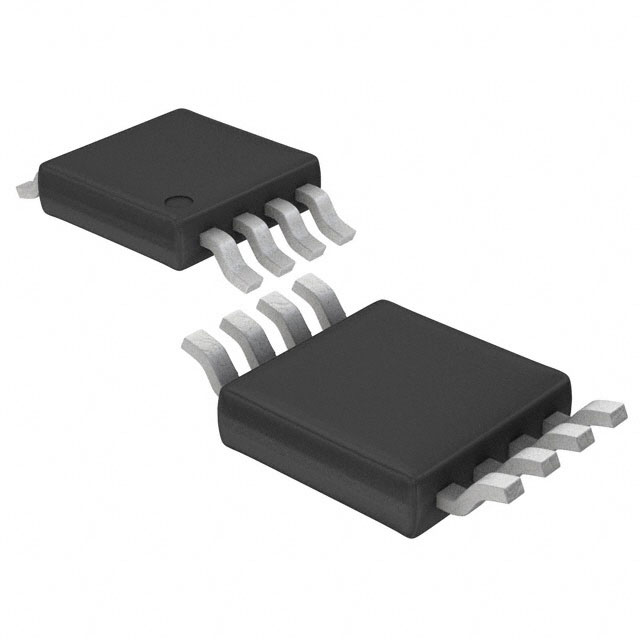
- 8-TSSOP, 8-MSOP (0.118", 3.00mm Width)
- Datasheet:
-
 LTC6930IMS8-8.19#TRPBF.pdf
- Description:
- IC OSC SILICON 8.192MHZ 8-MSOP
- Quantity:
- Payment:

- Shipping:

Inventory:4,879
Please send an inquiry. Send us your inquiry, and we will respond immediately.
Product details
Overview
LTC6930IMS8-8.19#TRPBF from Analog Devices (formerly Linear Technology) is a digitally controlled silicon oscillator delivering factory-programmed 8.192MHz master frequency with user-selectable divide-by-1 to 128 outputs (64kHz to 8.192MHz), ±0.1% frequency accuracy over –40°C to 85°C, 105µA typical supply current at 32kHz/3V, and <110µs start-up time. It serves as a low-power timing source in battery-operated microcontroller systems requiring stable clocking without external crystals.
For engineers reviewing the LTC6930IMS8-8.19#TRPBF datasheet, LTC6930IMS8-8.19#TRPBF pinout, LTC6930IMS8-8.19#TRPBF application, or LTC6930IMS8-8.19#TRPBF equivalent, key selection criteria include its 8-pin MSOP package, DIVA/DIVB/DIVC digital frequency control interface, RMS period jitter <0.8ps at 8.192MHz, and operation from 1.7V to 5.5V single supply.
Technical Context
The LTC6930IMS8-8.19#TRPBF implements a proprietary switched-capacitor feedback loop to stabilize a factory-trimmed master oscillator (8.192MHz), enabling <0.09% initial frequency error at 25°C. Its internal binary divider (N = 1–128) is selected via three CMOS logic inputs (DIVA/DIVB/DIVC), producing eight discrete output frequencies without external components.
Supply regulation and dual V+/GND pin pairs isolate the control loop from output driver noise, achieving typical RMS period jitter of 0.8ps at 8.192MHz and deterministic glitch-free transitions when changing DIV settings - critical for real-time embedded timing integrity.
Key Specifications
| Parameter | Value and Actual Design Meaning |
|---|---|
| Output Frequency Range | 64kHz to 8.192MHz (factory-set 8.192MHz master + /1–/128 divider) |
| Frequency Accuracy | ±0.1% max over –40°C to 85°C (LTC6930I grade) |
| Supply Voltage | 1.7V to 5.5V single supply - supports Li-ion or dual AA battery operation |
| Supply Current | 190µA typical at 8.192MHz/3V; 150µA at 32.768kHz/3V |
| RMS Period Jitter | 0.8ps at 8.192MHz/3V - enables clean timing for high-speed digital interfaces |
| Start-Up Time | <110µs to first valid output cycle - minimizes wake-up latency in duty-cycled systems |
| Operating Temp | –40°C to 85°C (industrial grade I-temp rating) |
Pinout & Package
Package: 8-lead plastic MSOP (MS8), 3mm × 4.9mm footprint, exposed pad not present (unlike DFN variant). Pin 1 marked by notch; pins 1/8 = V+, 2/6 = GND, 3 = DIVA, 4 = DIVB, 5 = DIVC, 7 = OUT.
| Pin/Terminal | Circuit Role | Design Meaning |
|---|---|---|
| V+ (Pins 1, 8) | Positive supply input | Dual supply pins reduce supply impedance; each requires local 0.1µF ceramic bypass to adjacent GND |
| GND (Pins 2, 6) | Ground reference | Low-inductance return path shared across analog/digital sections; must be connected together |
| DIVA, DIVB, DIVC (Pins 3, 4, 5) | Digital frequency select inputs | CMOS logic inputs (VIH ≥1.25V, VIL ≤1.25V); set /1–/128 divider ratio per Table 1 |
| OUT (Pin 7) | CMOS clock output | 40Ω series resistance; drives ≤50pF capacitive or 1kΩ resistive load; held low during start-up |
Key Features
| Feature | Design Value |
|---|---|
| No external timing components required | Self-contained silicon oscillator eliminates crystal, load caps, and matching network - reduces BOM and layout area |
| Ultralow power consumption | 150µA at 32.768kHz/3V enables multi-year battery life in RTC and sensor nodes |
| Deterministic DIV pin switching | Output updates within one clock cycle without runt pulses or glitches - safe for dynamic clock scaling |
| High immunity to supply noise | Internal regulation limits frequency drift to 0.07%/V - maintains timing accuracy in noisy power domains |
| Fast, monotonic start-up | <110µs to stable output with no overshoot or frequency slewing - simplifies power sequencing |
Applications
| Microprocessor Clock Source | Portable Medical Sensor Node |
|---|---|
Use Scenario: Providing main system clock to an ARM Cortex-M4 MCU in a handheld diagnostic device. IC Role / Device Role / Timing Role: Primary clock generator replacing quartz crystal oscillator; configured at /1 for 8.192MHz operation. Use Value: Eliminates crystal aging drift and board-level EMI susceptibility while maintaining ±0.1% accuracy over industrial temperature range. | Use Scenario: Timing engine for ultra-low-power ECG front-end sampling at 128Hz with sleep/wake cycles. IC Role / Device Role / Timing Role: Low-frequency clock source (configured at /128 = 64kHz) for ADC trigger and MCU wake-up timer. Use Value: 150µA supply current at 64kHz extends coin-cell battery life beyond 5 years; fast start-up ensures immediate sampling on wake. |
| Industrial PLC I/O Module | Smart Energy Meter Real-Time Clock |
Use Scenario: Synchronizing isolated CAN bus communication and GPIO polling in a DIN-rail mounted controller. IC Role / Device Role / Timing Role: Stable 4.096MHz clock (/2 setting) for UART baud rate generation and state machine timing. Use Value: ±0.1% accuracy over –40°C to 85°C prevents communication timeouts; dual V+/GND pins reject supply ripple from switching regulators. | Use Scenario: Precision timekeeping core in a Class 0.2 electricity meter requiring traceable RTC accuracy. IC Role / Device Role / Timing Role: 32.768kHz output (/256 not available; uses /128 = 64kHz → external /2 divider) for calendar/timekeeping subsystem. Use Value: 0.09% initial error and 30ppm/√kHr long-term drift meet IEC 62053-62 metrology requirements without oven-controlled compensation. |
Equivalent & Alternatives
The following parts are listed as comparable options for similar digitally controlled oscillator applications.
| Alternative Part | Technical Difference | Application Difference | Selection Advice |
|---|---|---|---|
| SiT1533AI-H4-33E-32.768E | 32.768kHz fixed-output MEMS oscillator; ±10ppm stability; no digital divider; 1.62–3.63V supply | Only provides 32.768kHz - lacks programmable divide capability and 8.192MHz base frequency | Select when only RTC-grade 32.768kHz is needed and digital frequency selection is unnecessary |
| MAX7375ETE+ | 3-output programmable clock generator; supports 1–170MHz; requires external crystal; 2.97–5.5V supply | Requires external 10MHz crystal; higher quiescent current (2mA typical); larger 16-pin TQFN package | Select when multiple synchronized clocks or wider frequency range is required, accepting higher power and external component cost |
Compared with SiT1533AI-H4-33E-32.768E and MAX7375ETE+, the LTC6930IMS8-8.19#TRPBF uniquely delivers factory-programmed 8.192MHz with on-chip /1–/128 division, sub-110µs start-up, and 150µA 32kHz operation - making it optimal for space-constrained, battery-powered systems needing flexible yet ultra-low-power timing.
Availability
LTC6930IMS8-8.19#TRPBF is available at Aetrix Electronics and suitable for portable medical devices, industrial PLC modules, smart energy meters, and battery-powered IoT edge nodes requiring stable component supply with guaranteed long-term continuity.
Supply support for LTC6930IMS8-8.19#TRPBF includes scheduled delivery planning, volume procurement assistance, BOM continuity management, traceable sourcing, and lifecycle availability coordination for OEM customers, industrial embedded developers, connected-device designers, and electronics production programs.
Manufacturer
Analog Devices acquired Linear Technology in 2017 and continues its legacy of precision analog and mixed-signal ICs for demanding industrial, automotive, and communications applications.
The LTC6930IMS8-8.19#TRPBF belongs to the LTC6930 precision µPower oscillator family, designed specifically to replace quartz-based timing solutions in space- and power-constrained embedded systems while maintaining ppm-level accuracy and fast wake-up performance.
FAQ
What is the maximum output frequency achievable with the LTC6930IMS8-8.19#TRPBF?
The LTC6930IMS8-8.19#TRPBF has a factory-programmed master oscillator frequency of 8.192MHz. When configured with DIVA=DIVB=DIVC=0 (divide-by-1), the output frequency is exactly 8.192MHz - its maximum possible output. This value is confirmed in Table 1 of the datasheet and applies across the full operating temperature and supply voltage range.
Does the LTC6930IMS8-8.19#TRPBF require external load capacitors like quartz crystals?
No, the LTC6930IMS8-8.19#TRPBF is a fully integrated silicon oscillator and requires no external load capacitors or crystals. Only 0.1µF ceramic bypass capacitors between each V+ pin and its adjacent GND pin are needed for stable operation - as specified in the recommended layout (Figure 1) and Applications Information section.
What is the guaranteed frequency accuracy of the LTC6930IMS8-8.19#TRPBF over temperature?
The LTC6930IMS8-8.19#TRPBF carries the "I" temperature grade, guaranteeing ±0.1% frequency accuracy over the full –40°C to 85°C operating range when V+ = 3V–3.6V. At wider supply ranges (1.7V–5.5V), accuracy degrades to ±0.8% max - both values are explicitly listed in the AC Electrical Characteristics table under Δf parameter.
Can the LTC6930IMS8-8.19#TRPBF drive a 50pF capacitive load reliably?
Yes, the LTC6930IMS8-8.19#TRPBF output driver is rated for up to 50pF capacitive load. Its typical series resistance is 40Ω at 3V, and supply current increases predictably with load capacitance (e.g., ~2.2mA at 8.192MHz/50pF/5.5V swing). The datasheet confirms this capability in the Output Driver and Loading section and Typical Performance Characteristics (Figure G05).
How does the LTC6930IMS8-8.19#TRPBF handle changes to the DIVA/DIVB/DIVC pins during operation?
The LTC6930IMS8-8.19#TRPBF responds to DIV pin changes within one clock cycle of the new setting, with no glitches, runt pulses, or frequency transients - as verified in the Switching the DIV Pins section and Figure G18 (Typical Output Waveform at DIV Pin Change). This deterministic behavior enables safe dynamic clock scaling in real-time systems.
LTC6930IMS8-8.19#TRPBF Specifications
- Product attributes
- Attribute value
- Manufacturer:
- Analog Devices Inc.
- Series:
- -
- Package/Case:
- 8-TSSOP, 8-MSOP (0.118", 3.00mm Width)
- Packaging:
- Tape & Reel (TR)
- Product Status:
- Active
- Type:
- Oscillator, Silicon
- Count:
- -
- Frequency:
- 8.192MHz
- Voltage - Supply:
- 1.7V ~ 5.5V
- Current - Supply:
- 880 µA
- Operating Temperature:
- -40°C ~ 85°C
- Supplier Device Package:
- 8-MSOP
- Mounting Type:
- Surface Mount
- Grade:
- -
- Qualification:
- -
LTC6930IMS8-8.19#TRPBF FAQ
1.How can I place an order for LTC6930IMS8-8.19#TRPBF through Aetrix?
Please submit a Request for Quotation (RFQ) for LTC6930IMS8-8.19#TRPBF on Aetrix. Our sales agent will provide a competitive quotation and guide you through the order confirmation once you accept the terms.
2.Are the price and stock information for LTC6930IMS8-8.19#TRPBF reliable?
The price and inventory of LTC6930IMS8-8.19#TRPBF are updated periodically and may fluctuate due to market conditions. Stock and pricing data are typically refreshed every 24 hours. Quotation validity for LTC6930IMS8-8.19#TRPBF is usually 5 days.
3.What payment methods are accepted for LTC6930IMS8-8.19#TRPBF?
We accept Wire Transfer, PayPal, Credit Card, Western Union, MoneyGram, and Escrow for LTC6930IMS8-8.19#TRPBF transactions.
Note: Certain payment methods may incur a processing fee.
4.How is shipping managed for LTC6930IMS8-8.19#TRPBF?
LTC6930IMS8-8.19#TRPBF orders can be shipped via leading logistics carriers, including DHL, UPS, FedEx, TNT, or Registered Mail.
Once your LTC6930IMS8-8.19#TRPBF order is processed, you will receive an email with the shipment details and tracking number.
Note: Tracking information may take up to 24 hours to appear. Express delivery typically takes 3–5 business days.
5.How can I obtain technical support or documentation for LTC6930IMS8-8.19#TRPBF?
For technical support, including LTC6930IMS8-8.19#TRPBF datasheets, pinout diagrams, or application guidance, please contact our engineering support team. They can provide detailed documentation and assistance for your LTC6930IMS8-8.19#TRPBF requirements.
6.How does Aetrix verify that LTC6930IMS8-8.19#TRPBF is sourced from the original manufacturer or authorized distributors?
All LTC6930IMS8-8.19#TRPBF products on Aetrix are procured from qualified distributors and authorized channels. Our dedicated quality assurance team conducts strict verification, including traceability checks and, if necessary, third-party testing. This ensures that LTC6930IMS8-8.19#TRPBF meets industry standards.
7.What is the process for return or replacement of LTC6930IMS8-8.19#TRPBF?
All LTC6930IMS8-8.19#TRPBF units undergo pre-shipment inspection (PSI). If there is an issue with LTC6930IMS8-8.19#TRPBF, returns or replacements are accepted under the following conditions:
1.Quantity discrepancies, incorrect items, or visible external defects (such as breakage or corrosion), acknowledged by Aetrix.
2.The issue is reported within 90 days of delivery.
3.The LTC6930IMS8-8.19#TRPBF part is unused and in its original packaging.
Return procedure for LTC6930IMS8-8.19#TRPBF:
1.Submit a request within 90 days.
2.Obtain a Return Material Authorization (RMA) from Aetrix.
LTC6930IMS8-8.19#TRPBF Tags

-
NE555DR
Texas Instruments
-
SA555DR
Texas Instruments
-
NA555DR
Texas Instruments
-
SE555DR
Texas Instruments
-
NE555P
Texas Instruments
-
CD4541BM96
Texas Instruments
-
CD4541BE
Texas Instruments
-
TLC555QDR
Texas Instruments
-
TLC555IDR
Texas Instruments
-
TLC555QDRQ1
Texas Instruments
-
TPL5010DDCR
Texas Instruments
-
TLC555CP
Texas Instruments
Tech Hub

A practical engineering guide to 3.3V and 5V logic compatibility, input thresholds, resistor dividers, translator ICs, MOSFET level shifting, I2C pull-ups, timing limits and power-sequencing risks.

The 74HC595 uses push-pull logic outputs, while the TPIC6B595 uses 50 V open-drain DMOS sinks for higher-power loads. This guide compares timing, current limits, 3.3 V interfacing, load wiring, thermal…

The 74HC595 converts serial data into eight stable parallel outputs. This guide covers pin functions, shift and storage timing, OE and MR behavior, drive-current limits, cascading, voltage compatibilit…

A technical comparison of level-sensitive latches and edge-triggered flip-flops, covering timing windows, setup and hold limits, master–slave operation, time borrowing, race-through, HDL inference and…

A D latch stores one bit while Enable controls when data can pass. This reference covers gate-level operation, truth tables, transparency, setup and hold timing, LE versus OE, common ICs and practical …

An SR latch stores one bit through cross-coupled feedback. This engineering reference covers NOR and NAND implementations, truth tables, forbidden-state recovery, gated operation, switch debouncing, fa…

Latch circuits retain one bit through feedback. This technical reference covers SR and D latches, truth tables, transparency, timing limits, latch-versus-flip-flop behavior, applications and common log…

An engineering guide to LED driver operation, constant-current and constant-voltage outputs, linear and switching topologies, dimming, IC selection, calculations, replacement compatibility, and fault c…

Operational amplifier guide covering op amp basics, feedback, ideal vs real op amps, common configurations, buffer circuits, offset, bias current, gain-bandwidth, slew rate, rail-to-rail limits and sel…

Jumper cables guide covering safe connection order, red and black clamp placement, final ground connection, cable gauge, length, clamp quality, copper vs CCA cables, jump starter comparison and battery…


