
 My Inquiry
 My Account


Analog Devices Inc. LTC6991HDCB#TRPBF
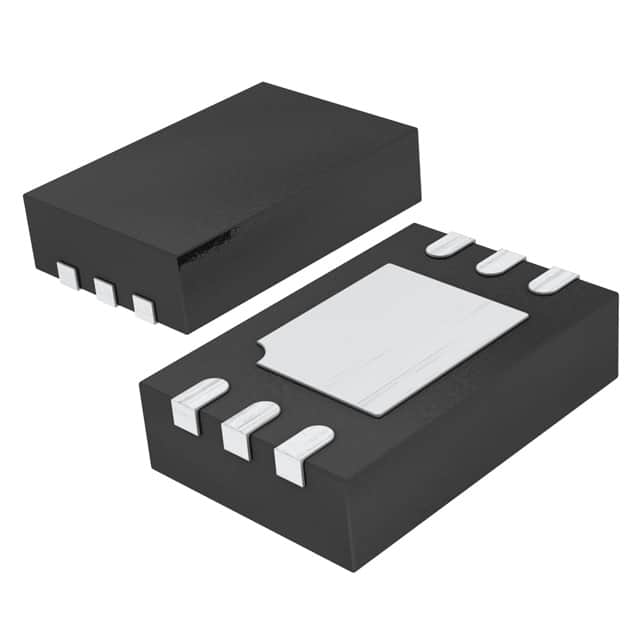
- Part No.:
- LTC6991HDCB#TRPBF
- Manufacturer:
- Analog Devices Inc.
- Category:
- Programmable Timers and Oscillators
- Package:
- 6-WFDFN Exposed Pad
- Datasheet:
-
 LTC6991HDCB#TRPBF.pdf
- Description:
- IC OSC SILICON PROG 6-DFN
- Quantity:
- Payment:

- Shipping:

Inventory:2,755
Please send an inquiry. Send us your inquiry, and we will respond immediately.
Product details
Overview
LTC6991HDCB#TRPBF from Analog Devices is a silicon-based low-frequency oscillator IC with programmable clock period from 1.024 ms to 34,360 seconds (29.1 µHz to 977 Hz), designed for long-duration timing in harsh environments. It features 50% duty cycle output, active-high/active-low configurable RST/OUT polarity via DIV pin voltage, and operates from 2.25 V to 5.5 V supply across –40°C to +125°C. Used in automotive watchdog timers and battery-powered intervalometers.
For engineers reviewing the LTC6991HDCB#TRPBF datasheet, LTC6991HDCB#TRPBF pinout, LTC6991HDCB#TRPBF application, or LTC6991HDCB#TRPBF equivalent, key selection criteria include guaranteed operation up to +125°C, ±1.5% max frequency error over temperature, 55–80 µA supply current, 6-pin DFN (2 mm × 3 mm) package, and reset propagation delay under 40 ns at 2.25 V.
Technical Context
The LTC6991HDCB#TRPBF integrates a master oscillator (1 MHz max) controlled by SET pin current (ISET = VSET/RSET), followed by a fixed ÷1024 divider and an 8-step programmable divider (NDIV = 1, 8, 64, ..., 2²¹). Output period is calculated as tOUT = NDIV × RSET / 50 kΩ × 1.024 ms, with RSET ranging 50 kΩ to 800 kΩ.
A 4-bit A/D converter on the DIV pin reads VDIV/V+ ratio to determine both NDIV and POL bit (controlling RST/OUT polarity). The internal digital filter ensures glitch-free DIVCODE transitions, and power-on reset holds OUT low for 0.5–8 ms depending on master clock period.
Key Specifications
| Parameter | Value and Actual Design Meaning |
|---|---|
| Output Period Range | 1.024 ms to 34,360 s - supports ultra-low-power wake-up intervals up to 9.54 hours without external RC timing components. |
| Frequency Accuracy | ±1.5% max over –40°C to +125°C - enables reliable timing in automotive engine control and industrial monitoring without calibration. |
| Supply Current | 55 µA to 80 µA at 2.25–5.5 V - allows multi-year operation from coin-cell batteries in portable sensors and IoT endpoints. |
| Operating Temperature | –40°C to +125°C - meets AEC-Q100 Grade H requirements for under-hood automotive applications. |
| Output Drive | ±20 mA CMOS - directly drives logic inputs, LEDs, or small MOSFET gates without external buffers. |
| Reset Propagation Delay | 16–40 ns - ensures precise pulse truncation for sub-microsecond timing control in safety-critical systems. |
| Start-Up Time | 0.5–8 ms - deterministic initialization enables synchronized system wake-up after power recovery. |
Pinout & Package
Package: 6-lead (2 mm × 3 mm) plastic DFN (DCB), exposed pad connected to GND. RoHS-compliant, lead-free finish, tape-and-reel (2500 pcs).
| Pin/Terminal | Circuit Role | Design Meaning |
|---|---|---|
| V+ (Pin 5) | Power supply input | Accepts 2.25 V to 5.5 V; requires local 0.1 µF bypass capacitor to GND for stable oscillator operation. |
| GND (Pin 2) | Ground reference | Low-inductance connection point for all analog and digital return paths; exposed pad must be soldered to PCB ground plane. |
| SET (Pin 3) | Frequency-setting input | Sinks ISET = 1.25–20 µA; voltage regulated to 1.00 V ±30 mV; connects to precision RSET resistor for accurate period programming. |
| OUT (Pin 6) | CMOS oscillator output | Swings rail-to-rail (GND to V+); 30 Ω output impedance; sources/sinks ±20 mA; polarity configured via DIV pin. |
| DIV (Pin 4) | Divider and polarity control | V+ referenced 4-bit A/D input; sets NDIV (1–2²¹) and POL bit (RST/OUT active-high/low) via resistor divider (VDIV/V+ = (DIVCODE + 0.5)/16 ±1.5%). |
| RST (Pin 1) | Output reset control | Asynchronous reset input; behavior depends on POL bit: active-high when POL = 0, active-low when POL = 1; propagates within 40 ns. |
Key Features
| Feature | Design Value |
|---|---|
| Programmable period range | 1.024 ms to 9.54 hours using single RSET resistor and DIV pin voltage - eliminates need for large capacitors or trimming in long-interval designs. |
| Reset-triggered pulse truncation | Enables dynamic duty-cycle reduction without stopping internal oscillator - critical for heartbeat signaling and energy-gated wake-up sequences. |
| Temperature-stable frequency | ±0.005 %/°C drift and ±1.5 % total error over –40°C to +125°C - ensures timing integrity in thermal cycling environments like automotive ECUs. |
| Low-power operation | 55–80 µA supply current across full voltage and temperature range - extends battery life in remote sensors and wearables beyond 5 years. |
| Glitch-free DIVCODE update | Digital filtering guarantees clean frequency transitions during runtime reconfiguration - prevents spurious pulses in safety-monitored systems. |
Applications
| Automotive Watchdog Timer | Industrial Intervalometer |
|---|---|
Use Scenario: Monitors microcontroller health in engine control units and ADAS modules, triggering safe shutdown or reset if no periodic service signal is received within programmed window. IC Role / Device Role / Timing Role: Standalone, fail-safe timing reference generating precise timeout intervals independent of MCU clock stability or software execution. Use Value: Guarantees functional safety compliance (ISO 26262 ASIL-B) via AEC-Q100 Grade H qualification and ±1.5% frequency accuracy over full automotive temperature range. |
Use Scenario: Controls periodic sampling of pressure, temperature, or vibration sensors in oil & gas pipelines or factory floor equipment. IC Role / Device Role / Timing Role: Low-power, high-accuracy interval generator enabling sensor wake-up only during measurement windows to minimize system energy consumption. Use Value: Achieves >5-year battery life using 55 µA typical supply current and 34,360 s maximum period - eliminates need for mains power or frequent maintenance. |
| Portable Medical Device Wake-Up | High-Vibration Equipment Monitor |
Use Scenario: Powers on diagnostic circuitry in wearable ECG or glucose monitors every 30 minutes to capture physiological data and transmit via BLE. IC Role / Device Role / Timing Role: Resettable oscillator providing deterministic, low-jitter wake-up trigger to enable synchronous sensor acquisition and radio transmission. Use Value: 15 ppm RMS period jitter and 500 µs start-up time ensure consistent measurement timing and minimal latency in time-critical diagnostics. |
Use Scenario: Detects abnormal vibration patterns in rotating machinery by initiating accelerometer bursts at precisely spaced intervals (e.g., every 2 seconds). IC Role / Device Role / Timing Role: Robust timing source immune to mechanical shock and EMI due to monolithic silicon oscillator architecture and CMOS output drive. Use Value: Operates reliably at –40°C to +125°C and withstands high-G environments where quartz crystals would fracture or drift unpredictably. |
Equivalent & Alternatives
The following parts are listed as comparable options for similar low-frequency oscillator applications.
| Alternative Part | Technical Difference | Application Difference | Selection Advice |
|---|---|---|---|
| LTC6991IDCB#TRPBF | Same architecture and pinout; rated for –40°C to +85°C (not +125°C) | Not qualified for under-hood automotive or high-temp industrial use | Select when ambient temperature stays below 85°C and cost sensitivity outweighs extended temp grade. |
| LTC6991HS6#TRPBF | Identical electrical specs; TSOT-23-6 package (2.9 mm × 1.6 mm) instead of DFN (2 mm × 3 mm) | Higher thermal resistance (θJA = 192°C/W vs 64°C/W) limits power dissipation in compact layouts | Choose for legacy board compatibility with SOT-23 footprints where space constraints prevent DFN adoption. |
Compared with LTC6991IDCB#TRPBF, the LTC6991HDCB#TRPBF delivers guaranteed operation at +125°C for automotive under-hood use; compared with LTC6991HS6#TRPBF, it offers superior thermal performance in space-constrained DFN layout while maintaining identical timing accuracy and reset functionality.
Availability
LTC6991HDCB#TRPBF is available at Aetrix Electronics and suitable for automotive watchdog timers, industrial intervalometers, and portable medical device wake-up circuits requiring stable component supply across extended temperature ranges and long production lifecycles.
Supply support for LTC6991HDCB#TRPBF includes scheduled delivery planning, volume procurement assistance, BOM continuity management, traceable sourcing, and lifecycle availability coordination for OEM customers, industrial embedded developers, connected-device designers, and electronics production programs.
Manufacturer
Analog Devices, Inc. is a global leader in high-performance analog, mixed-signal, and digital signal processing semiconductors, serving industrial, automotive, communications, and healthcare markets.
The LTC6991HDCB#TRPBF belongs to the TimerBlox® family of silicon timing devices, engineered specifically for long-duration, low-power, high-accuracy timing applications where quartz oscillators are impractical due to size, cost, or environmental limitations.
FAQ
What is the maximum operating temperature specification for the LTC6991HDCB#TRPBF?
The LTC6991HDCB#TRPBF is specified for continuous operation from –40°C to +125°C and is AEC-Q100 qualified for automotive Grade H applications. This rating is confirmed in the Absolute Maximum Ratings and Specified Temperature Range tables of the official Analog Devices datasheet Rev. D, where "LTC6991H" denotes the high-temperature grade variant packaged in the DCB (DFN) form factor.
How does the DIV pin configure both frequency division and output polarity in the LTC6991HDCB#TRPBF?
The DIV pin on the LTC6991HDCB#TRPBF connects to an internal V+-referenced 4-bit A/D converter that determines a DIVCODE value (0–15). The most significant bit (POL) of DIVCODE sets RST/OUT polarity (active-high or active-low), while the remaining bits select NDIV (1, 8, 64, ..., 2²¹). For example, DIVCODE = 2 sets POL = 0 and NDIV = 64, yielding tOUT = 64 × RSET / 50 kΩ × 1.024 ms.
Can the LTC6991HDCB#TRPBF generate a precise 1 Hz output, and what resistor values are required?
Yes, the LTC6991HDCB#TRPBF can generate 1 Hz (tOUT = 1000 ms) using NDIV = 64 and RSET = 763 kΩ per the equation RSET = (50 kΩ / 1.024 ms) × (tOUT / NDIV). A standard 1% 768 kΩ resistor yields –0.7% frequency error. With DIVCODE = 2 (R1 = 976 kΩ, R2 = 182 kΩ), the LTC6991HDCB#TRPBF achieves stable 1 Hz operation across –40°C to +125°C.
What is the supply current range of the LTC6991HDCB#TRPBF, and how does it scale with RSET?
The LTC6991HDCB#TRPBF draws 55–80 µA over its full operating range. Supply current decreases as RSET increases: at RSET = 50 kΩ, IS = 135–170 µA; at RSET = 800 kΩ, IS = 65–100 µA (typical 55–80 µA). This inverse relationship enables ultra-low-power design - e.g., 768 kΩ RSET reduces current to ~68 µA at 3.3 V, supporting >5-year coin-cell operation.
Is the LTC6991HDCB#TRPBF pin-compatible with other TimerBlox devices such as the LTC6992 or LTC6994?
No, the LTC6991HDCB#TRPBF is not pin-compatible with LTC6992 or LTC6994. It uses a 6-pin DFN (DCB) or TSOT-23 (S6) package with dedicated SET, DIV, RST, OUT, V+, and GND pins. In contrast, LTC6992 is an 8-pin device with MOD and FB pins, and LTC6994 is a 12-pin spread-spectrum modulator. Each TimerBlox part has unique pin functions and cannot be substituted without PCB redesign.
LTC6991HDCB#TRPBF Specifications
- Product attributes
- Attribute value
- Manufacturer:
- Analog Devices Inc.
- Series:
- TimerBlox®
- Package/Case:
- 6-WFDFN Exposed Pad
- Packaging:
- Tape & Reel (TR)
- Product Status:
- Active
- Type:
- Oscillator, Silicon
- Count:
- -
- Frequency:
- 29.1µHz ~ 977Hz
- Voltage - Supply:
- 2.25V ~ 5.5V
- Current - Supply:
- 135 µA
- Operating Temperature:
- -40°C ~ 125°C
- Supplier Device Package:
- 6-DFN (2x3)
- Mounting Type:
- Surface Mount
- Grade:
- -
- Qualification:
- -
LTC6991HDCB#TRPBF FAQ
1.How can I place an order for LTC6991HDCB#TRPBF through Aetrix?
Please submit a Request for Quotation (RFQ) for LTC6991HDCB#TRPBF on Aetrix. Our sales agent will provide a competitive quotation and guide you through the order confirmation once you accept the terms.
2.Are the price and stock information for LTC6991HDCB#TRPBF reliable?
The price and inventory of LTC6991HDCB#TRPBF are updated periodically and may fluctuate due to market conditions. Stock and pricing data are typically refreshed every 24 hours. Quotation validity for LTC6991HDCB#TRPBF is usually 5 days.
3.What payment methods are accepted for LTC6991HDCB#TRPBF?
We accept Wire Transfer, PayPal, Credit Card, Western Union, MoneyGram, and Escrow for LTC6991HDCB#TRPBF transactions.
Note: Certain payment methods may incur a processing fee.
4.How is shipping managed for LTC6991HDCB#TRPBF?
LTC6991HDCB#TRPBF orders can be shipped via leading logistics carriers, including DHL, UPS, FedEx, TNT, or Registered Mail.
Once your LTC6991HDCB#TRPBF order is processed, you will receive an email with the shipment details and tracking number.
Note: Tracking information may take up to 24 hours to appear. Express delivery typically takes 3–5 business days.
5.How can I obtain technical support or documentation for LTC6991HDCB#TRPBF?
For technical support, including LTC6991HDCB#TRPBF datasheets, pinout diagrams, or application guidance, please contact our engineering support team. They can provide detailed documentation and assistance for your LTC6991HDCB#TRPBF requirements.
6.How does Aetrix verify that LTC6991HDCB#TRPBF is sourced from the original manufacturer or authorized distributors?
All LTC6991HDCB#TRPBF products on Aetrix are procured from qualified distributors and authorized channels. Our dedicated quality assurance team conducts strict verification, including traceability checks and, if necessary, third-party testing. This ensures that LTC6991HDCB#TRPBF meets industry standards.
7.What is the process for return or replacement of LTC6991HDCB#TRPBF?
All LTC6991HDCB#TRPBF units undergo pre-shipment inspection (PSI). If there is an issue with LTC6991HDCB#TRPBF, returns or replacements are accepted under the following conditions:
1.Quantity discrepancies, incorrect items, or visible external defects (such as breakage or corrosion), acknowledged by Aetrix.
2.The issue is reported within 90 days of delivery.
3.The LTC6991HDCB#TRPBF part is unused and in its original packaging.
Return procedure for LTC6991HDCB#TRPBF:
1.Submit a request within 90 days.
2.Obtain a Return Material Authorization (RMA) from Aetrix.
LTC6991HDCB#TRPBF Tags

-
NE555DR
Texas Instruments
-
SA555DR
Texas Instruments
-
NA555DR
Texas Instruments
-
SE555DR
Texas Instruments
-
NE555P
Texas Instruments
-
CD4541BM96
Texas Instruments
-
CD4541BE
Texas Instruments
-
TLC555QDR
Texas Instruments
-
TLC555IDR
Texas Instruments
-
TLC555QDRQ1
Texas Instruments

-
TPL5010DDCR
Texas Instruments
-
TLC555CP
Texas Instruments
Tech Hub

A practical engineering guide to 3.3V and 5V logic compatibility, input thresholds, resistor dividers, translator ICs, MOSFET level shifting, I2C pull-ups, timing limits and power-sequencing risks.

The 74HC595 uses push-pull logic outputs, while the TPIC6B595 uses 50 V open-drain DMOS sinks for higher-power loads. This guide compares timing, current limits, 3.3 V interfacing, load wiring, thermal…

The 74HC595 converts serial data into eight stable parallel outputs. This guide covers pin functions, shift and storage timing, OE and MR behavior, drive-current limits, cascading, voltage compatibilit…

A technical comparison of level-sensitive latches and edge-triggered flip-flops, covering timing windows, setup and hold limits, master–slave operation, time borrowing, race-through, HDL inference and…

A D latch stores one bit while Enable controls when data can pass. This reference covers gate-level operation, truth tables, transparency, setup and hold timing, LE versus OE, common ICs and practical …

An SR latch stores one bit through cross-coupled feedback. This engineering reference covers NOR and NAND implementations, truth tables, forbidden-state recovery, gated operation, switch debouncing, fa…

Latch circuits retain one bit through feedback. This technical reference covers SR and D latches, truth tables, transparency, timing limits, latch-versus-flip-flop behavior, applications and common log…

An engineering guide to LED driver operation, constant-current and constant-voltage outputs, linear and switching topologies, dimming, IC selection, calculations, replacement compatibility, and fault c…

Operational amplifier guide covering op amp basics, feedback, ideal vs real op amps, common configurations, buffer circuits, offset, bias current, gain-bandwidth, slew rate, rail-to-rail limits and sel…

Jumper cables guide covering safe connection order, red and black clamp placement, final ground connection, cable gauge, length, clamp quality, copper vs CCA cables, jump starter comparison and battery…


