
 My Inquiry
 My Account


Analog Devices Inc. LTM2985CY#PBF

- Part No.:
- LTM2985CY#PBF
- Manufacturer:
- Analog Devices Inc.
- Category:
- Sensor, Transducer Amplifiers
- Package:
- Datasheet:
-
 LTM2985CY#PBF.pdf
- Description:
- ISOLATED HI ACCURACY DIGITAL TEM
- Quantity:
- Payment:

- Shipping:

Inventory:1,128
Please send an inquiry. Send us your inquiry, and we will respond immediately.
Product details
Overview
LTM2985CY#PBF from Analog Devices is an isolated 10-channel high-accuracy digital temperature measurement system with integrated 5kV isolation barrier, SPI interface, and user-programmable EEPROM. It directly digitizes thermocouples (Types B, E, J, K, N, S, R, T), 2-/3-/4-wire RTDs, thermistors, and diodes with 0.1°C accuracy, 24-bit resolution, and simultaneous 50Hz/60Hz rejection - deployed in industrial process control, power plant monitoring, and high-reliability test equipment.
For engineers reviewing the LTM2985CY#PBF datasheet, LTM2985CY#PBF pinout, LTM2985CY#PBF application, or LTM2985CY#PBF equivalent, key selection criteria include its galvanic isolation rating (5000VRMS), cold junction compensation architecture, ratiometric excitation current matching for RTD/thermistor measurements, and compatibility with LTC2986-1 software ecosystem.
Technical Context
The LTM2985CY#PBF integrates a precision 24-bit sigma-delta ADC, on-chip 2.5V reference (15ppm/°C max), isolated DC/DC converter (VCC2 = 4.75–5.25V), and fault-detection circuitry for open/short conditions across all 10 analog inputs. Its dual-domain architecture separates logic-side SPI (VL = 1.62–5.5V) from isolated analog domain (VCC2/GND2), enabling safe measurement of sensors referenced to noisy or floating grounds.
It implements automatic sensor-type detection per channel, supports 2- and 3-cycle conversion modes (164ms / 246ms typical), and embeds NIST-traceable polynomial coefficients for thermocouple linearization up to 14th order. The device performs real-time cold junction compensation using any supported sensor type connected to CH1–CH10, with no external components required for standard configurations.
Key Specifications
| Parameter | Value and Actual Design Meaning |
|---|---|
| Accuracy | ±0.1°C over full range - enables Class A RTD or Type K thermocouple compliance without system-level calibration. |
| Resolution | 24 bits with no missing codes - delivers 0.001°C effective resolution for fine-grained thermal trending. |
| Isolation Rating | 5000VRMS (1 min) - meets IEC 61010-1 reinforced insulation requirements for CAT II 1000V environments. |
| Input Channels | 10 flexible analog inputs (CH1–CH10) + COM - supports mixed-sensor deployments (e.g., 4x RTD + 3x thermocouple + 2x thermistor + 1x diode) on single board. |
| Reference Stability | 15ppm/°C max (C-grade) - ensures measurement integrity across 0°C to 70°C operating range without external reference. |
| Conversion Time | 164ms (2-cycle) / 246ms (3-cycle) - balances speed vs. 50/60Hz noise rejection for factory-floor EMI resilience. |
| EEPROM Endurance | 10,000 write cycles with 10-year data retention - stores custom coefficients, channel configurations, and calibration offsets persistently. |
Pinout & Package
Package: 66-ball BGA (22mm × 15mm × 3.66mm), RoHS-compliant SAC305 finish, MSL Level 4, 0°C to 70°C ambient operating range.
| Pin/Terminal | Circuit Role | Design Meaning |
|---|---|---|
| CH1–CH10 | Analog input channels | Configurable per-channel for thermocouple, RTD, thermistor, or diode sensing; support single-ended, differential, or ratiometric modes. |
| COM | Common reference node | Negative input for all single-ended measurements; tied to GND2 but not electrically identical to it due to isolation barrier. |
| VCC / VCC2 | Primary & isolated supply rails | VCC powers logic side (4.5–5.5V); VCC2 is internally generated 5V rail (±250mV) for analog domain - eliminates need for external isolated DC/DC. |
| SCK / SDI / SDO / CS / SDOE | SPI interface signals | Logic-side SPI bus (VL-referenced); SDOE enables tri-state control for multi-device buses; all meet 1.5MHz timing specs with 350ns min pulse width. |
| ON | System enable control | Active-high enable: asserts power-up sequence and isolation barrier handshake; low state places logic outputs in Hi-Z and disables VCC2 generation. |
| INT | Conversion completion interrupt | Open-drain output referenced to GND2; transitions HIGH after conversion completes - used for deterministic polling or IRQ-driven firmware. |
| VREF | Internal reference output | 2.5V ±10mV precision reference (15ppm/°C max); must be bypassed with 10µF to GND2 - not loadable beyond 100µA. |
Key Features
| Feature | Design Value |
|---|---|
| 5kV galvanic isolation barrier | Enables direct connection to high-voltage assets (e.g., motor windings, transformer bushings) without external isolators or level shifters. |
| Automatic cold junction compensation | Eliminates need for discrete cold-junction sensor and associated signal conditioning - uses any channel's RTD/thermistor/diode reading as CJC source. |
| Ratiometric excitation current sources | RTD/thermistor accuracy immune to current-source drift; matching error within ADC noise floor ensures <±0.01% gain error contribution. |
| Simultaneous 50Hz/60Hz rejection | Hardware-based filtering achieves >75dB normal-mode rejection at line frequencies - critical for AC-powered industrial enclosures. |
| On-chip EEPROM storage | Persists channel-specific sensor types, custom polynomials, linearization coefficients, and fault thresholds - enables field-reconfigurable sensor networks. |
Applications
| Industrial Process Control | Power Generation Monitoring |
|---|---|
|
Use Scenario: Real-time temperature profiling of boiler tubes, steam headers, and turbine casings in fossil-fuel and nuclear plants. IC Role / Device Role / Timing Role: Isolated front-end ADC converting Type K/N thermocouple outputs into calibrated °C values for PLC SCADA ingestion via SPI. Use Value: 5000VRMS isolation prevents ground-loop damage during maintenance hot-swaps; 0.1°C accuracy meets ASME PTC 19.3TW thermowell calibration requirements. |
Use Scenario: Distributed temperature sensing across generator stator windings, transformer oil sumps, and switchgear busbars. IC Role / Device Role / Timing Role: Multi-sensor hub digitizing PT-100 RTDs and 3904 diodes with automatic burnout detection and fault flagging. Use Value: 10-channel flexibility reduces board count vs. discrete solutions; built-in 50/60Hz rejection suppresses EMI from nearby VFDs and rectifiers. |
| Test & Measurement Equipment | High-Reliability Data Acquisition |
|
Use Scenario: Modular DAQ modules for semiconductor thermal validation chambers requiring traceable, NIST-compatible readings. IC Role / Device Role / Timing Role: Precision temperature engine performing cold-junction-compensated thermocouple linearization using embedded 14th-order polynomials. Use Value: On-chip EEPROM stores custom coefficients for non-standard thermocouples; 24-bit resolution enables sub-millidegree delta-T tracking over 1000+ hour soak tests. |
Use Scenario: Redundant sensor nodes in aerospace ground-support systems where single-point failure must be avoided. IC Role / Device Role / Timing Role: Fault-tolerant temperature monitor with automatic open/short detection, buffered inputs for external TVS protection, and INT-driven alerting. Use Value: Buffered inputs tolerate ±15mA transient currents; simultaneous channel scanning ensures no thermal event escapes detection between conversions. |
Equivalent & Alternatives
The following parts are listed as comparable options for similar isolated temperature measurement applications.
| Alternative Part | Technical Difference | Application Difference | Selection Advice |
|---|---|---|---|
| LTC2986-1 | No integrated isolation barrier; requires external isolated power and signal isolators; same software stack and sensor math engine. | Better suited for space-constrained designs where isolation can be implemented at system level (e.g., using ADuM series isolators). | Select LTC2986-1 when board layout allows separation of isolation components and higher design flexibility is needed. |
| AD7415ARMZ | Non-isolated, single-channel, 10-bit I²C local temperature sensor; no thermocouple/RTD support; ±2°C accuracy. | Limited to PCB-local die temperature monitoring; cannot interface with industrial sensors or withstand ground potential differences. | Choose AD7415ARMZ only for cost-sensitive, non-isolated board-temperature supervision - not a functional substitute. |
Compared with LTC2986-1, the LTM2985CY#PBF trades software compatibility for integrated isolation and reduced BOM count; versus AD7415ARMZ, it delivers 14× higher resolution, 20× better accuracy, and full sensor-type versatility - making it the sole option for certified isolated multi-sensor systems.
Availability
LTM2985CY#PBF is available at Aetrix Electronics and suitable for industrial process control, power generation monitoring, and high-reliability test equipment requiring stable component supply, long-term lifecycle assurance, and RoHS-compliant sourcing.
Supply support for LTM2985CY#PBF includes scheduled delivery planning, volume procurement assistance, BOM continuity management, traceable sourcing, and lifecycle availability coordination for OEM customers, industrial embedded developers, connected-device designers, and electronics production programs.
Manufacturer
Analog Devices, Inc. is a global leader in high-performance analog, mixed-signal, and digital signal processing semiconductors, serving industrial, automotive, communications, and healthcare markets.
The LTM2985CY#PBF belongs to Analog Devices' isolated precision measurement product line, designed specifically for high-accuracy, safety-certified temperature acquisition in electrically hostile environments where ground separation and noise immunity are mandatory.
FAQ
What is the operating temperature range for the LTM2985CY#PBF?
The LTM2985CY#PBF is specified for 0°C to 70°C ambient operation (C-grade). This range covers most industrial control cabinets and laboratory instrumentation environments. Junction temperature must not exceed 105°C, and thermal design should account for θJA = 31.7°C/W on the demo board layout. Derating is required above 70°C ambient unless heatsinking or airflow is added.
Does the LTM2985CY#PBF require external components for basic thermocouple operation?
No - the LTM2985CY#PBF integrates all necessary circuitry for thermocouple measurement, including cold junction compensation, linearization polynomials, excitation sources, and fault detection. Only decoupling capacitors (2.2µF on VCC/VL, 10µF on VREF) and optional input protection (TVS, RC filters) are needed. No external op-amps, references, or isolators are required for standard Type K/J/E operation.
How does the LTM2985CY#PBF handle RTD excitation current matching?
The LTM2985CY#PBF provides matched ratiometric excitation currents for RTD measurements, with matching error within the ADC's noise floor - eliminating gain error contribution from current-source variation. This ensures absolute accuracy depends only on the RTD's tolerance and lead-wire resistance, not on excitation current stability, simplifying system calibration.
Can the LTM2985CY#PBF measure negative voltages relative to GND2?
Yes - the LTM2985CY#PBF supports analog input voltages from (GND2 – 0.05V) to (VCC2 – 0.3V), enabling direct measurement of thermocouple outputs that swing negative during cold-junction compensation or low-temperature operation. This eliminates the need for level-shifting circuitry when measuring Type T or Type E thermocouples below 0°C.
What EEPROM capabilities does the LTM2985CY#PBF provide for field configuration?
The LTM2985CY#PBF includes 10,000-cycle, 10-year-retention EEPROM storing channel-specific sensor types, custom thermocouple/RTD/thermistor coefficients, fault thresholds, and calibration offsets. Configuration persists through power cycles and enables reprogramming in-system via SPI - critical for deploying identical hardware across diverse sensor fleets.
LTM2985CY#PBF Specifications
- Product attributes
- Attribute value
- Manufacturer:
- Analog Devices Inc.
- Series:
- -
- Packaging:
- Tray
- Product Status:
- Active
- Amplifier Type:
- General Purpose
- Voltage - Supply:
- 4.5V ~ 5.5V
- Output Type:
- SPI
- Current - Supply:
- 80 mA
- Operating Temperature:
- 0°C ~ 70°C
- Mounting Type:
- Surface Mount
LTM2985CY#PBF FAQ
1.How can I place an order for LTM2985CY#PBF through Aetrix?
Please submit a Request for Quotation (RFQ) for LTM2985CY#PBF on Aetrix. Our sales agent will provide a competitive quotation and guide you through the order confirmation once you accept the terms.
2.Are the price and stock information for LTM2985CY#PBF reliable?
The price and inventory of LTM2985CY#PBF are updated periodically and may fluctuate due to market conditions. Stock and pricing data are typically refreshed every 24 hours. Quotation validity for LTM2985CY#PBF is usually 5 days.
3.What payment methods are accepted for LTM2985CY#PBF?
We accept Wire Transfer, PayPal, Credit Card, Western Union, MoneyGram, and Escrow for LTM2985CY#PBF transactions.
Note: Certain payment methods may incur a processing fee.
4.How is shipping managed for LTM2985CY#PBF?
LTM2985CY#PBF orders can be shipped via leading logistics carriers, including DHL, UPS, FedEx, TNT, or Registered Mail.
Once your LTM2985CY#PBF order is processed, you will receive an email with the shipment details and tracking number.
Note: Tracking information may take up to 24 hours to appear. Express delivery typically takes 3–5 business days.
5.How can I obtain technical support or documentation for LTM2985CY#PBF?
For technical support, including LTM2985CY#PBF datasheets, pinout diagrams, or application guidance, please contact our engineering support team. They can provide detailed documentation and assistance for your LTM2985CY#PBF requirements.
6.How does Aetrix verify that LTM2985CY#PBF is sourced from the original manufacturer or authorized distributors?
All LTM2985CY#PBF products on Aetrix are procured from qualified distributors and authorized channels. Our dedicated quality assurance team conducts strict verification, including traceability checks and, if necessary, third-party testing. This ensures that LTM2985CY#PBF meets industry standards.
7.What is the process for return or replacement of LTM2985CY#PBF?
All LTM2985CY#PBF units undergo pre-shipment inspection (PSI). If there is an issue with LTM2985CY#PBF, returns or replacements are accepted under the following conditions:
1.Quantity discrepancies, incorrect items, or visible external defects (such as breakage or corrosion), acknowledged by Aetrix.
2.The issue is reported within 90 days of delivery.
3.The LTM2985CY#PBF part is unused and in its original packaging.
Return procedure for LTM2985CY#PBF:
1.Submit a request within 90 days.
2.Obtain a Return Material Authorization (RMA) from Aetrix.
LTM2985CY#PBF Tags
-
SEN-13879
SparkFun Electronics
-
GA-311
Panasonic Industrial Automation Sales
-
E32-T11N 2M
Omron Automation and Safety
-
FX-501P
Panasonic Industrial Automation Sales
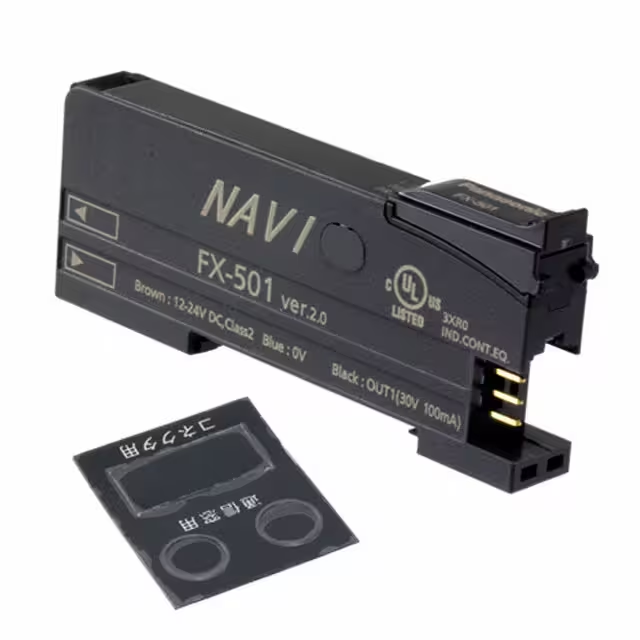
-
FX-501
Panasonic Industrial Automation Sales
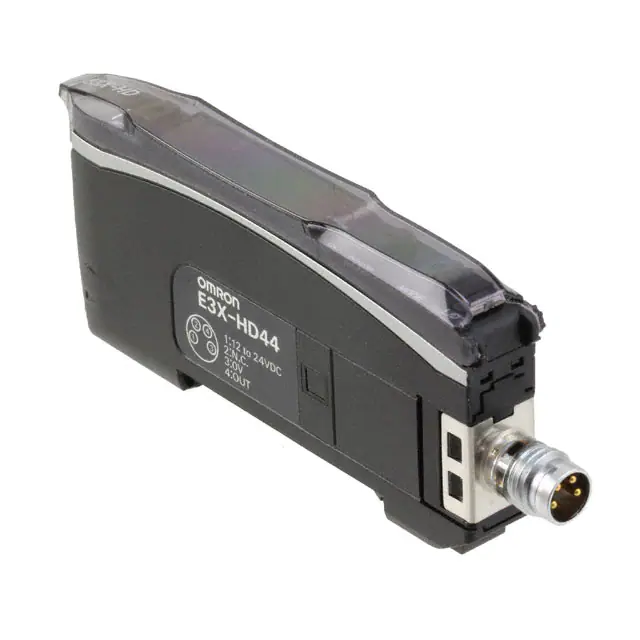
-
E3X-HD44
Omron Automation and Safety
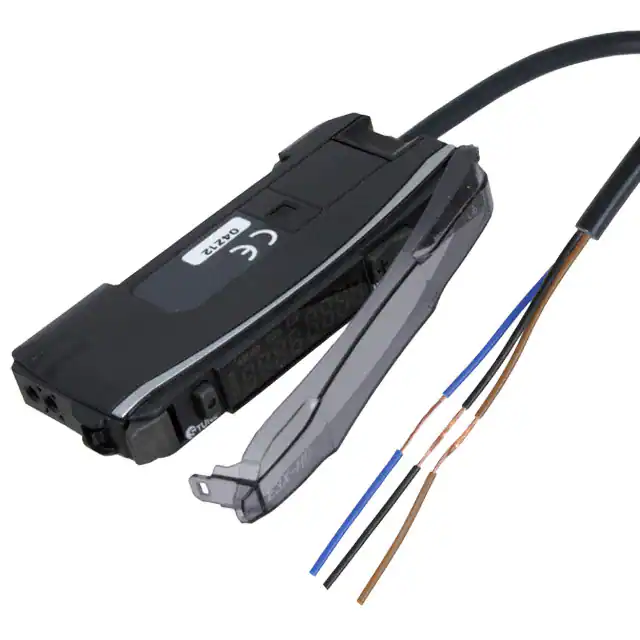
-
E3X-HD41 2M
Omron Automation and Safety
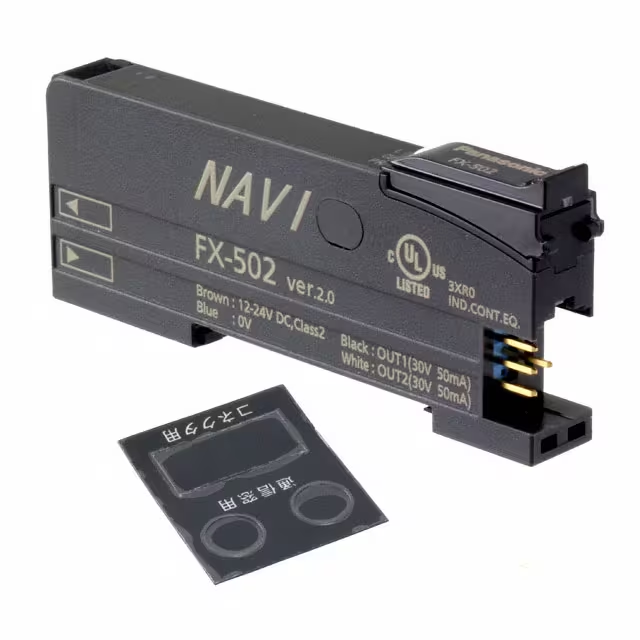
-
FX-502
Panasonic Industrial Automation Sales
-
ASTC0000
Red Lion Controls
-
E3X-HD11 2M
Omron Automation and Safety
-
E3NX-MA11
Omron Automation and Safety
-
ESPICO-ALL
PalmSens BV
Tech Hub

A practical engineering guide to 3.3V and 5V logic compatibility, input thresholds, resistor dividers, translator ICs, MOSFET level shifting, I2C pull-ups, timing limits and power-sequencing risks.

The 74HC595 uses push-pull logic outputs, while the TPIC6B595 uses 50 V open-drain DMOS sinks for higher-power loads. This guide compares timing, current limits, 3.3 V interfacing, load wiring, thermal…

The 74HC595 converts serial data into eight stable parallel outputs. This guide covers pin functions, shift and storage timing, OE and MR behavior, drive-current limits, cascading, voltage compatibilit…

A technical comparison of level-sensitive latches and edge-triggered flip-flops, covering timing windows, setup and hold limits, master–slave operation, time borrowing, race-through, HDL inference and…

A D latch stores one bit while Enable controls when data can pass. This reference covers gate-level operation, truth tables, transparency, setup and hold timing, LE versus OE, common ICs and practical …

An SR latch stores one bit through cross-coupled feedback. This engineering reference covers NOR and NAND implementations, truth tables, forbidden-state recovery, gated operation, switch debouncing, fa…

Latch circuits retain one bit through feedback. This technical reference covers SR and D latches, truth tables, transparency, timing limits, latch-versus-flip-flop behavior, applications and common log…

An engineering guide to LED driver operation, constant-current and constant-voltage outputs, linear and switching topologies, dimming, IC selection, calculations, replacement compatibility, and fault c…

Operational amplifier guide covering op amp basics, feedback, ideal vs real op amps, common configurations, buffer circuits, offset, bias current, gain-bandwidth, slew rate, rail-to-rail limits and sel…

Jumper cables guide covering safe connection order, red and black clamp placement, final ground connection, cable gauge, length, clamp quality, copper vs CCA cables, jump starter comparison and battery…


