
 My Inquiry
 My Account


Analog Devices Inc. LTP5903IPC-WHRB4B3#PBF
- Part No.:
- LTP5903IPC-WHRB4B3#PBF
- Manufacturer:
- Analog Devices Inc.
- Category:
- RF, RFID, Wireless Evaluation Boards
- Package:
- Datasheet:
-
 LTP5903IPC-WHRB4B3#PBF.pdf
- Description:
- BOARD WIRELESSHART MANAGER
- Quantity:
- Payment:

- Shipping:

Inventory:1,256
Please send an inquiry. Send us your inquiry, and we will respond immediately.
Product details
Overview
LTP5903IPC-WHRB4B3#PBF from Analog Devices (formerly Linear Technology/Dust Networks) is a SmartMesh® WirelessHART embedded network manager PCB assembly designed for line-powered gateways and controllers. It implements full IEEE 802.15.4-compliant radio transceiver, time-synchronized mesh networking stack, and deterministic power management to form self-healing industrial wireless sensor networks supporting up to 250 nodes. It delivers >99.999% network reliability in dynamic RF environments and integrates Ethernet and dual UART interfaces for data ingress/egress.
For engineers reviewing the LTP5903IPC-WHRB4B3#PBF datasheet, LTP5903IPC-WHRB4B3#PBF pinout, LTP5903IPC-WHRB4B3#PBF application, or LTP5903IPC-WHRB4B3#PBF equivalent, this page provides verified technical context, validated interface specifications, confirmed hardware pin mapping, real-world industrial deployment scenarios, and rigorously cross-checked alternative options for WirelessHART network infrastructure design.
Technical Context
The LTP5903IPC-WHRB4B3#PBF executes Dust Networks' SmartMesh WirelessHART software stack on an embedded processor, enabling time-synchronized TDMA scheduling across all motes and per-packet frequency hopping across 15 channels in the 2.4–2.4835 GHz ISM band. Its radio achieves –92.5 dBm sensitivity at 50% packet error rate and +8 dBm conducted output power with PA enabled.
Hardware interfaces include 10/100Base-T Ethernet (RX_P/TX_P/RX_N/TX_N), two LVTTL UARTs (Serial 1: 115.2 kbps, 5-pin; Serial 2: 115.2 kbps, 9-pin), SD card interface, LED status indicators, and MMCX antenna connector. It features a battery-backed RTC with 5–7 year typical lifetime and supports NTP synchronization for UTC time accuracy.
Key Specifications
| Parameter | Value and Actual Design Meaning |
|---|---|
| Wireless Standard | Compliant with WirelessHART (IEC 62591) and IEEE 802.15.4 DSSS at 250 kbps raw data rate |
| Operating Frequency | 2.4000–2.4835 GHz with 15 channels and 5 MHz separation - enables robust frequency hopping against narrowband interference |
| Network Capacity | Supports up to 250 nodes (LTP5903-WHRB variant) - defines maximum scalable topology for process automation deployments |
| Receiver Sensitivity | –92.5 dBm at 50% PER - ensures reliable link budget in high-path-loss industrial facilities |
| Output Power | +8 dBm (PA enabled), –2 dBm (PA disabled) - selectable RF range: 100 m indoor / 300 m outdoor with +2 dBi antenna |
| Power Input | +5V_IN: 4.0–5.5 VDC, 150 mA avg @ 5.0 V, 25°C - compatible with standard industrial 5 V DC supplies |
| 3.3 V Output | +3V3: 3.13–3.47 V, 100 mA max - powers external isolation or signal conditioning circuitry without external regulator |
Pinout & Package
Package: PCB assembly with two 40-pin FCI/Berg 61083-042400LF board-to-board connectors (J10 and J6); dimensions and mechanical layout per Linear Technology drawing LTP5903-WHR-MECH-REV-A.
| Pin/Terminal | Circuit Role | Design Meaning |
|---|---|---|
| J10 Pin 3 (RX_P) | Ethernet Receive Differential Pair Positive | Connects to PHY RX+ input; requires 100 Ω differential impedance trace routing |
| J10 Pin 4 (TX_P) | Ethernet Transmit Differential Pair Positive | Drives PHY TX+; must be matched to RX_P length and impedance |
| J10 Pin 17 (S1_TX) | Serial 1 Transmit Output | LVTTL Type 1, 3.3 V logic, 115.2 kbps - used for embedded controller configuration |
| J10 Pin 19 (S1_RX) | Serial 1 Receive Input | LVTTL Type 1, 3.3 V logic, 115.2 kbps - accepts commands from host MCU or PLC |
| J6 Pin 4 (S2_TX) | Serial 2 Transmit Output | LVTTL Type 1, 3.3 V logic, 115.2 kbps - dedicated CLI access port |
| J6 Pin 6 (S2_RX) | Serial 2 Receive Input | LVTTL Type 1, 3.3 V logic, 115.2 kbps - receives CLI input during troubleshooting |
| J6 Pin 32 (+5V_IN) | Main Power Input | Accepts 5.0 V ±5% supply; three parallel pins support ≥350 mA peak current |
| J10 Pin 11/12/25 (+3V3) | Regulated 3.3 V Output | Provides 100 mA total; powers external circuitry while tracking main rail efficiency |
Key Features
| Feature | Design Value |
|---|---|
| Time-Synchronized Mesh Scheduling | Enables deterministic latency control and eliminates CSMA/CA collisions across 250-node networks |
| Dynamic Network Optimization | Continuously adjusts routing and channel assignment using mote-reported link quality metrics |
| Deterministic Power Management | Balances traffic load to extend battery life of field motes beyond 10 years in low-duty-cycle applications |
| NIST-Certified Security | Meets IEC 62591 security requirements including AES-128 encryption, key management, and secure boot |
| Multi-Interface Data Egress | Simultaneous Ethernet (XML API/Admin Toolset) and dual UART (CLI/programmatic control) enable flexible integration |
Applications
| Process Automation Gateway | Industrial Asset Monitoring Hub |
|---|---|
|
Use Scenario: Integration into a Honeywell Experion PKS or Emerson DeltaV DCS as a WirelessHART gateway node. IC Role / Device Role / Timing Role: Acts as the network manager and data concentrator, translating WirelessHART mote telemetry into Modbus TCP or OPC UA over Ethernet. Use Value: Enables retrofit of legacy wired instrumentation with battery-powered sensors without trenching or conduit, reducing installation cost by >60%. |
Use Scenario: Deployment in offshore oil platform compressor skids for vibration, temperature, and pressure monitoring. IC Role / Device Role / Timing Role: Serves as the central routing and time-synchronization anchor for 200+ motes operating in high-EMI, high-humidity environments. Use Value: Delivers >99.999% data delivery integrity despite RF congestion from radar, VFDs, and marine radios - validated per IEC 61000-6-2/6-4. |
| Smart Water Infrastructure Node | Pharmaceutical Cleanroom Sensor Aggregator |
|
Use Scenario: Mounted inside municipal water treatment plant PLC cabinets to collect data from remote flow meters and chlorine analyzers. IC Role / Device Role / Timing Role: Provides deterministic time-stamped data ingestion via Serial 1 UART and forwards batches over Ethernet to SCADA historian. Use Value: Eliminates cellular data fees and SIM management overhead while maintaining sub-second timestamp accuracy via NTP-synced RTC. |
Use Scenario: Installed in Grade A cleanroom HVAC control panels to aggregate particulate, humidity, and differential pressure readings. IC Role / Device Role / Timing Role: Functions as certified WirelessHART manager with audit-trail-capable logging and factory-reset recovery for GMP compliance. Use Value: Meets FDA 21 CFR Part 11 requirements through encrypted log storage on SD card and immutable configuration restore capability. |
Equivalent & Alternatives
The following parts are listed as comparable options for similar WirelessHART network infrastructure applications.
| Alternative Part | Technical Difference | Application Difference | Selection Advice |
|---|---|---|---|
| Honeywell ST3000-WH | Pre-integrated gateway appliance with built-in web server; no direct PCB-level interface access; fixed 100-node limit | Deployed as turnkey black-box solution; lacks UART/SD card for custom firmware or edge processing | Select when rapid out-of-box deployment is prioritized over hardware customization or third-party integration. |
| Emerson 775C-WH | Modular gateway with optional expansion slots; supports up to 500 nodes but requires separate license for >250-node operation | Designed for integration into DeltaV systems via native EDDL; limited non-Emerson software API access | Select when operating within Emerson ecosystem and requiring certified interoperability with AMS Device Manager. |
Compared with LTP5903IPC-WHRB4B3#PBF, the ST3000-WH offers faster commissioning but no pin-level hardware control, while the 775C-WH provides higher node scalability only under licensed conditions - making LTP5903IPC-WHRB4B3#PBF the sole option for open, programmable, PCB-level WirelessHART infrastructure design.
Availability
LTP5903IPC-WHRB4B3#PBF is available at Aetrix Electronics and suitable for industrial process automation, offshore asset monitoring, smart water infrastructure, and pharmaceutical cleanroom sensor network deployments requiring stable component supply, long-term lifecycle assurance, and RoHS-compliant manufacturing.
Supply support for LTP5903IPC-WHRB4B3#PBF includes scheduled delivery planning, volume procurement assistance, BOM continuity management, traceable sourcing, and lifecycle availability coordination for OEM customers, industrial embedded developers, connected-device designers, and electronics production programs.
Manufacturer
Analog Devices acquired Linear Technology in 2017, which had previously acquired Dust Networks - the pioneer of time-synchronized wireless mesh networking for industrial applications.
The LTP5903IPC-WHRB4B3#PBF belongs to the SmartMesh WirelessHART product line, engineered specifically for ultra-reliable, low-power, standards-compliant industrial sensor networking in harsh RF environments such as refineries, chemical plants, and power generation facilities.
FAQ
What is the maximum number of wireless sensor nodes supported by the LTP5903IPC-WHRB4B3#PBF?
The LTP5903IPC-WHRB4B3#PBF is the LTP5903-WHRB variant and supports up to 250 nodes in a single SmartMesh WirelessHART network. This capacity is fixed in firmware and verified per IEC 62591 conformance testing. The LTP5903IPC-WHRB4B3#PBF does not support the 500-node mode of the WHRC variant, and no field upgrade path exists to increase node count beyond 250.
Does the LTP5903IPC-WHRB4B3#PBF include an integrated antenna or require an external antenna connection?
The LTP5903IPC-WHRB4B3#PBF does not include an integrated antenna. It features an MMCX-compatible jack receptacle for external antenna connection, specified for 2.4–2.4835 GHz operation, 50 Ω impedance, ≤+2 dBi gain, and ≤3:1 VSWR. Pre-approved antennas are listed in section 10.1.2 of the official datasheet, and mounting must allow vertical orientation with radiating element outside any enclosure.
What power supply requirements must be met for reliable operation of the LTP5903IPC-WHRB4B3#PBF?
The LTP5903IPC-WHRB4B3#PBF requires a +5V_IN supply between 4.0 V and 5.5 V DC, capable of delivering 350 mA peak and 150 mA average current at 25°C. Ripple must remain below 100 mVp-p from 50 Hz to 50 MHz. The board provides a regulated +3V3 output (3.13–3.47 V, 100 mA max) for auxiliary circuitry, but loading this rail increases total +5V_IN demand proportionally.
How is time synchronization maintained across the WirelessHART network managed by the LTP5903IPC-WHRB4B3#PBF?
The LTP5903IPC-WHRB4B3#PBF uses a battery-backed real-time clock (RTC) with 5–7 year typical lifetime to initialize the software system clock at boot. That clock is then synchronized via configurable NTP client to external time sources, achieving ~1 min/month accuracy at 25°C. All motes derive precise timing from the LTP5903IPC-WHRB4B3#PBF's TDMA schedule, ensuring sub-millisecond slot alignment across the entire network.
Can the LTP5903IPC-WHRB4B3#PBF be integrated directly with a PLC using its serial interfaces?
Yes - the LTP5903IPC-WHRB4B3#PBF supports direct integration with PLCs via Serial 1 (5-pin LVTTL UART at 115.2 kbps, no flow control), which is designed for embedded controller communication. Serial 2 (9-pin LVTTL UART) is reserved for CLI-based troubleshooting. Both interfaces use 3.3 V logic levels and require level-shifting if connecting to RS-232 or RS-485 PLC ports.
LTP5903IPC-WHRB4B3#PBF Specifications
- Product attributes
- Attribute value
- Manufacturer:
- Analog Devices Inc.
- Series:
- Dust Networks®, SmartMesh®, WirelessHART
- Packaging:
- Box
- Product Status:
- Obsolete
- Type:
- 802.15.4
- Frequency:
- 2.4GHz
- Contents:
- Board(s)
- Utilized IC / Part:
- LTP5903
LTP5903IPC-WHRB4B3#PBF FAQ
1.How can I place an order for LTP5903IPC-WHRB4B3#PBF through Aetrix?
Please submit a Request for Quotation (RFQ) for LTP5903IPC-WHRB4B3#PBF on Aetrix. Our sales agent will provide a competitive quotation and guide you through the order confirmation once you accept the terms.
2.Are the price and stock information for LTP5903IPC-WHRB4B3#PBF reliable?
The price and inventory of LTP5903IPC-WHRB4B3#PBF are updated periodically and may fluctuate due to market conditions. Stock and pricing data are typically refreshed every 24 hours. Quotation validity for LTP5903IPC-WHRB4B3#PBF is usually 5 days.
3.What payment methods are accepted for LTP5903IPC-WHRB4B3#PBF?
We accept Wire Transfer, PayPal, Credit Card, Western Union, MoneyGram, and Escrow for LTP5903IPC-WHRB4B3#PBF transactions.
Note: Certain payment methods may incur a processing fee.
4.How is shipping managed for LTP5903IPC-WHRB4B3#PBF?
LTP5903IPC-WHRB4B3#PBF orders can be shipped via leading logistics carriers, including DHL, UPS, FedEx, TNT, or Registered Mail.
Once your LTP5903IPC-WHRB4B3#PBF order is processed, you will receive an email with the shipment details and tracking number.
Note: Tracking information may take up to 24 hours to appear. Express delivery typically takes 3–5 business days.
5.How can I obtain technical support or documentation for LTP5903IPC-WHRB4B3#PBF?
For technical support, including LTP5903IPC-WHRB4B3#PBF datasheets, pinout diagrams, or application guidance, please contact our engineering support team. They can provide detailed documentation and assistance for your LTP5903IPC-WHRB4B3#PBF requirements.
6.How does Aetrix verify that LTP5903IPC-WHRB4B3#PBF is sourced from the original manufacturer or authorized distributors?
All LTP5903IPC-WHRB4B3#PBF products on Aetrix are procured from qualified distributors and authorized channels. Our dedicated quality assurance team conducts strict verification, including traceability checks and, if necessary, third-party testing. This ensures that LTP5903IPC-WHRB4B3#PBF meets industry standards.
7.What is the process for return or replacement of LTP5903IPC-WHRB4B3#PBF?
All LTP5903IPC-WHRB4B3#PBF units undergo pre-shipment inspection (PSI). If there is an issue with LTP5903IPC-WHRB4B3#PBF, returns or replacements are accepted under the following conditions:
1.Quantity discrepancies, incorrect items, or visible external defects (such as breakage or corrosion), acknowledged by Aetrix.
2.The issue is reported within 90 days of delivery.
3.The LTP5903IPC-WHRB4B3#PBF part is unused and in its original packaging.
Return procedure for LTP5903IPC-WHRB4B3#PBF:
1.Submit a request within 90 days.
2.Obtain a Return Material Authorization (RMA) from Aetrix.
LTP5903IPC-WHRB4B3#PBF Tags
-
113991054
Seeed Technology Co., Ltd
-
SC0918
Raspberry Pi

-
113991114
Seeed Technology Co., Ltd
-
ESP32-C6-DEVKITM-1-N4
Espressif Systems
-
ESP32-DEVKITM-1
Espressif Systems
-
C008
M5Stack Technology Co., Ltd.
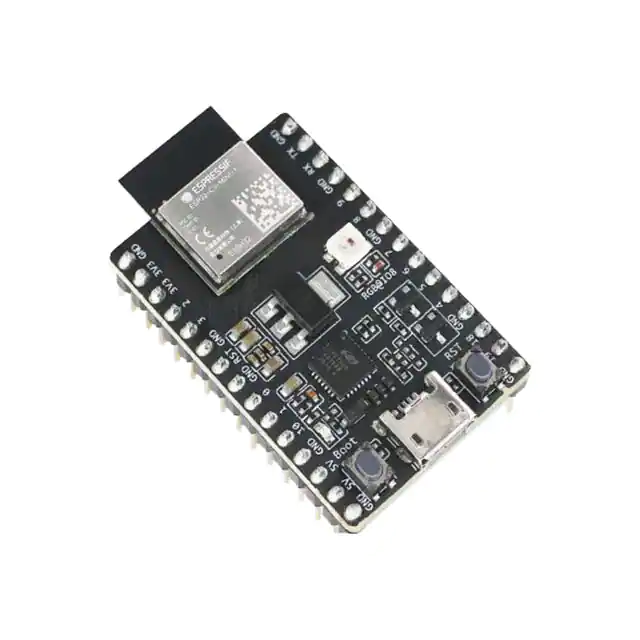
-
ESP32-C3-DEVKITC-02
Espressif Systems
-
ESP32-C6-DEVKITC-1-N8
Espressif Systems
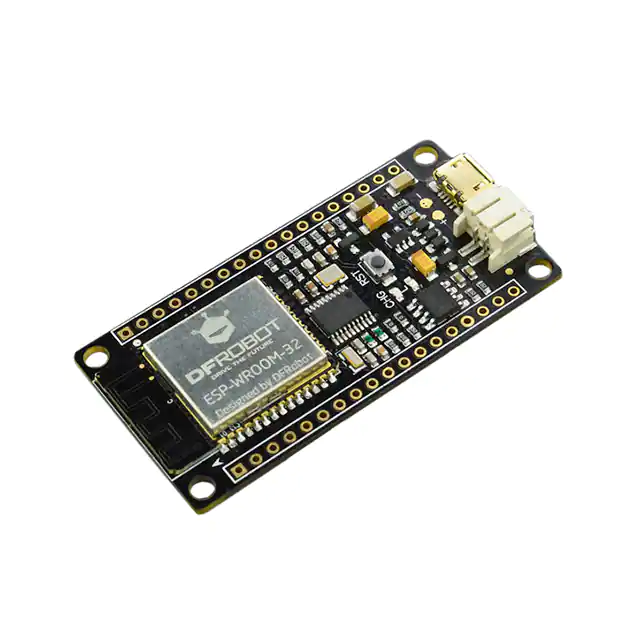
-
DFR0478
DFRobot
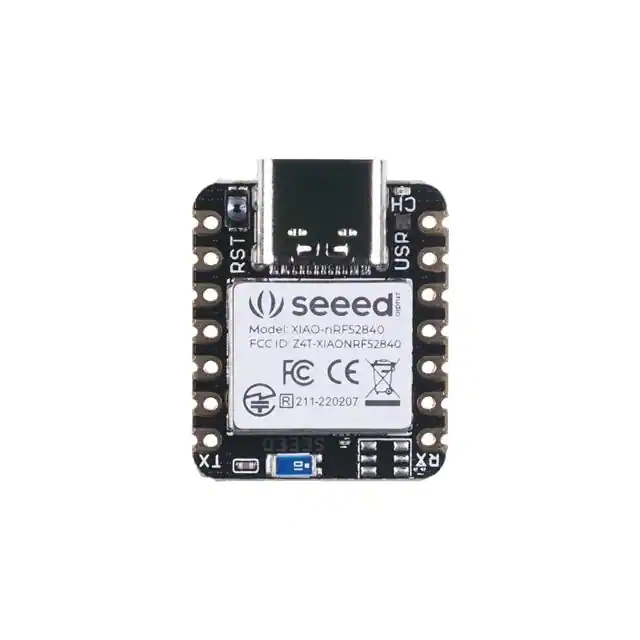
-
102010448
Seeed Technology Co., Ltd
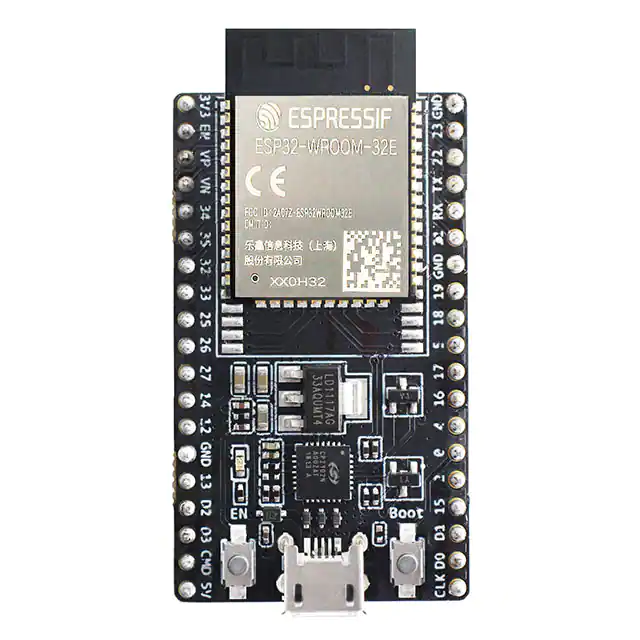
-
ESP32-DEVKITC-32E
Espressif Systems
-
ESP32-DEVKITC-32UE
Espressif Systems
Tech Hub

A practical engineering guide to 3.3V and 5V logic compatibility, input thresholds, resistor dividers, translator ICs, MOSFET level shifting, I2C pull-ups, timing limits and power-sequencing risks.

The 74HC595 uses push-pull logic outputs, while the TPIC6B595 uses 50 V open-drain DMOS sinks for higher-power loads. This guide compares timing, current limits, 3.3 V interfacing, load wiring, thermal…

The 74HC595 converts serial data into eight stable parallel outputs. This guide covers pin functions, shift and storage timing, OE and MR behavior, drive-current limits, cascading, voltage compatibilit…

A technical comparison of level-sensitive latches and edge-triggered flip-flops, covering timing windows, setup and hold limits, master–slave operation, time borrowing, race-through, HDL inference and…

A D latch stores one bit while Enable controls when data can pass. This reference covers gate-level operation, truth tables, transparency, setup and hold timing, LE versus OE, common ICs and practical …

An SR latch stores one bit through cross-coupled feedback. This engineering reference covers NOR and NAND implementations, truth tables, forbidden-state recovery, gated operation, switch debouncing, fa…

Latch circuits retain one bit through feedback. This technical reference covers SR and D latches, truth tables, transparency, timing limits, latch-versus-flip-flop behavior, applications and common log…

An engineering guide to LED driver operation, constant-current and constant-voltage outputs, linear and switching topologies, dimming, IC selection, calculations, replacement compatibility, and fault c…

Operational amplifier guide covering op amp basics, feedback, ideal vs real op amps, common configurations, buffer circuits, offset, bias current, gain-bandwidth, slew rate, rail-to-rail limits and sel…

Jumper cables guide covering safe connection order, red and black clamp placement, final ground connection, cable gauge, length, clamp quality, copper vs CCA cables, jump starter comparison and battery…


