
 My Inquiry
 My Account


onsemi LV5807MX-TLM-H
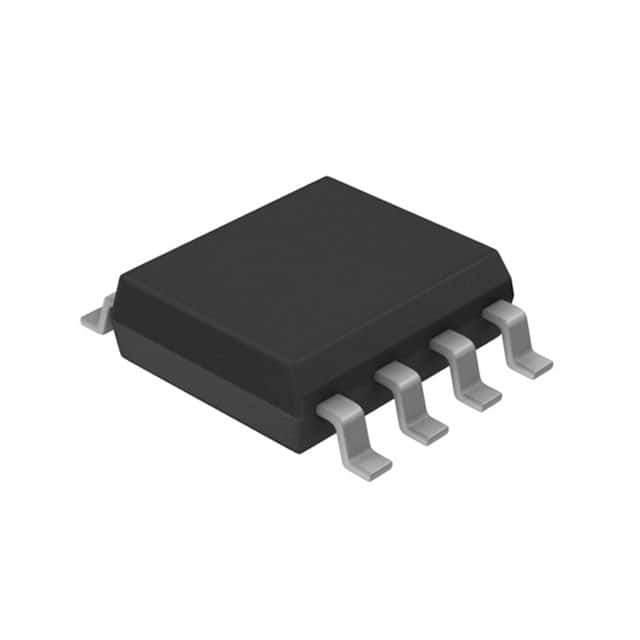
- Part No.:
- LV5807MX-TLM-H
- Manufacturer:
- onsemi
- Package:
- 8-SOIC (0.173", 4.40mm Width) Exposed Pad
- Datasheet:
-
 LV5807MX-TLM-H.pdf
- Description:
- IC REG BUCK ADJ 3A 8MFP
- Quantity:
- Payment:

- Shipping:

Inventory:3,972
Please send an inquiry. Send us your inquiry, and we will respond immediately.
Product details
Overview
LV5807MX-TLM-H from SANYO Semiconductor (now ON Semiconductor) is a single-channel step-down switching regulator IC with integrated 0.12 Ω high-side MOSFET, designed for high-efficiency DC/DC conversion delivering up to 3 A output current. It operates across 8–18 V input, delivers fixed 5 V or adjustable output via feedback resistor network, and features 385 kHz fixed-frequency current-mode control in a compact MFP8 (200mil) exposed-pad package for automotive and industrial power supplies.
For engineers reviewing the LV5807MX-TLM-H datasheet, pinout, applications, or equivalent options, key selection criteria include its 0.79 V reference voltage, 40 μA standby current, thermal shutdown at 160 °C, soft-start programmability, and pulse-by-pulse over-current protection - all critical for reliable 12 V-to-5 V/3.3 V point-of-load regulation in space-constrained systems.
Technical Context
This Bi-CMOS current-mode controller integrates a 0.12 Ω high-side switch and 5 Ω low-side switch, enabling efficient synchronous buck operation without external MOSFETs. Its 385 kHz oscillator provides stable switching with ±25 kHz tolerance, while the internal 0.79 V reference and <100 nA FB bias current support precise output voltage setting across line and load variations.
The IC implements multi-layer protection: pulse-by-pulse current limiting (5 A peak), thermal shutdown with 40 °C hysteresis, UVLO on EN pin (1.05–2.1 V threshold), and BOOT-SW voltage clamping (6.5 V max). Soft-start is externally programmable via a 10 μA constant current source charging an SS capacitor to control ramp rate.
Key Specifications
| Parameter | Value and Actual Design Meaning |
|---|---|
| Input voltage range | 8–18 V - supports standard 12 V automotive and industrial rails with 2 V margin below VIN max (20 V) |
| Output current capability | 3 A continuous - enabled by 0.12 Ω high-side RDS(on) and exposed-pad thermal design |
| Reference voltage | 0.79 V ±2% - sets output via resistive divider; enables accurate 3.3 V or 5 V regulation |
| Switching frequency | 385 kHz typ - balances EMI, inductor size, and efficiency for mid-power buck designs |
| Standby current | ≤40 μA - allows ultra-low-power shutdown in battery-backed or energy-sensitive systems |
| Efficiency @ 1 A | 90% @ VIN=12 V, VOUT=5 V - achieved via low RDS(on), synchronous rectification, and optimized gate drive |
| Thermal shutdown | 160 °C with 40 °C hysteresis - prevents latch-up and enables safe recovery after overload |
Pinout & Package
LV5807MX-TLM-H uses the MFP8 (200mil) surface-mount package with exposed thermal pad (pin 4 = GND), optimized for thermal dissipation on a 46.4 mm × 31.8 mm × 1.7 mm double-sided glass-epoxy PCB. Maximum allowable power dissipation is 2.05 W under specified board conditions.
| Pin/Terminal | Circuit Role | Design Meaning |
|---|---|---|
| 1 - BOOT | Bootstrap capacitor connection | Drives high-side gate above VIN; requires 0.1 μF ceramic cap + 15 Ω series resistor to limit dV/dt and protect SW pin |
| 2 - VIN | Main input supply | Accepts 8–18 V; requires ≥20 μF bulk capacitance (10 μF ×2) to ground for stability and transient response |
| 3 - SW | Power switch node | Connects to inductor and Schottky diode/catch FET; swings between GND and VIN+Vreg; rated to 20 V max |
| 4 - GND | Power and signal ground | Exposed pad must be soldered to PCB ground plane for thermal and electrical integrity |
| 5 - FB | Feedback input | Senses output voltage divider; 10 nA bias current enables high-resistor-divider networks for low quiescent loss |
| 6 - EN | Enable control | Active-high logic input; 1.57 V typical threshold; open-circuit disables IC with ≤40 μA current draw |
| 7 - COMP | Loop compensation | Connects external RC network to stabilize control loop; ties to error amplifier output |
| 8 - SS | Soft-start timing | 10 μA internal current source charges external capacitor; defines output voltage ramp time (e.g., 0.015 μF → 1.2 ms) |
Key Features
| Feature | Design Value |
|---|---|
| Integrated 0.12 Ω high-side MOSFET | Reduces conduction loss and eliminates external high-side driver complexity in synchronous buck topologies |
| Current-mode control architecture | Provides inherent cycle-by-cycle current limiting and simplified loop compensation vs. voltage-mode controllers |
| Pulse-by-pulse over-current protection | Detects and limits peak switch current to 5 A per cycle, preventing inductor saturation and MOSFET failure |
| Programmable soft-start | Prevents inrush current and output overshoot via external capacitor; avoids stress on input capacitors and load |
| Thermal shutdown with hysteresis | Shuts down at 160 °C junction temperature and resumes only after cooling to 120 °C, avoiding oscillatory behavior |
Applications
| Automotive Body Control Module | Industrial PLC I/O Power Supply |
|---|---|
Use Scenario: Regulating 12 V vehicle battery to stable 5 V for microcontroller, CAN transceiver, and sensor interfaces in door modules or lighting controllers. IC Role / Device Role / Timing Role: Primary synchronous buck regulator providing isolated, noise-immune 5 V rail with fast load-step response. Use Value: 0.12 Ω RDS(on) and 90% efficiency minimize heat buildup in sealed enclosures; EN pin enables sleep/wake coordination with MCU. | Use Scenario: Generating 3.3 V or 5 V from 12–24 V field bus for digital I/O isolators, ADC references, and FPGA configuration in modular PLC backplanes. IC Role / Device Role / Timing Role: Compact, thermally robust DC/DC converter supporting wide-input industrial rails with built-in fault protection. Use Value: MFP8 exposed-pad package achieves 2.05 W dissipation on standard PCB; thermal shutdown and OCP prevent field failures during short-circuit events. |
| Point-of-Load for Embedded Media Processors | Smart Sensor Hub Power Management |
Use Scenario: Local 5 V supply for video/audio SoCs in automotive infotainment head units where EMI and thermal density are critical. IC Role / Device Role / Timing Role: Fixed-frequency current-mode buck regulator with tight output regulation and low-noise switching profile. Use Value: 385 kHz switching enables small 10 μH inductors; FB pin's 10 nA bias allows high-R divider for minimal standby leakage. | Use Scenario: Powering multi-sensor nodes (temperature, humidity, motion) in building automation gateways requiring low-quiescent, reliable 3.3 V rail. IC Role / Device Role / Timing Role: Highly integrated step-down regulator with programmable soft-start and ultra-low 40 μA standby current. Use Value: Soft-start capacitor (e.g., 0.015 μF) ensures controlled wake-up; EN pin enables synchronized power sequencing across sensor subsystems. |
Equivalent & Alternatives
The following parts are listed as comparable options for similar step-down regulator applications.
| Alternative Part | Technical Difference | Application Difference | Selection Advice |
|---|---|---|---|
| MP2307DN-LF-Z (Monolithic Power) | 3.3 A rating, 500 kHz fSW, 0.14 Ω RDS(on), no exposed pad, SO-8 package | Higher switching frequency reduces inductor size but increases EMI sensitivity; lacks thermal pad for >2 W dissipation | Preferred for cost-sensitive, lower-power (<2 A) designs where PCB area is constrained but thermal budget is moderate |
| TPS5430DDAR (Texas Instruments) | 3 A, 500 kHz, external high-side FET required, SO-8 package, 0.8 V reference | Requires external MOSFET and bootstrap components; higher BOM count and layout complexity than integrated solution | Chosen when design flexibility (e.g., custom FET selection, higher voltage operation) outweighs integration benefits of LV5807MX-TLM-H |
Compared with MP2307DN-LF-Z and TPS5430DDAR, LV5807MX-TLM-H offers superior thermal performance via its exposed-pad MFP8 package and lower RDS(on), making it better suited for sustained 3 A loads in ambient temperatures up to 80 °C - especially where board-level heat spreading is limited.
Availability
LV5807MX-TLM-H is available at Aetrix Electronics and suitable for automotive body electronics, industrial PLC power rails, and embedded media processor point-of-load applications requiring stable component supply, long-term lifecycle support, and consistent parametric performance across production batches.
Supply support for LV5807MX-TLM-H includes scheduled delivery planning, volume procurement assistance, BOM continuity management, traceable sourcing, and lifecycle availability coordination for OEM customers, industrial embedded developers, connected-device designers, and electronics production programs.
Manufacturer
SANYO Semiconductor - acquired by ON Semiconductor in 2013 - specialized in high-reliability analog and power ICs for automotive and industrial markets, emphasizing thermal robustness and functional safety.
The LV5807MX-TLM-H belongs to SANYO's Bi-CMOS step-down regulator family, engineered specifically for 12 V automotive and industrial systems needing compact, self-contained, high-current DC/DC conversion with integrated protection.
FAQ
What is the maximum input voltage rating for LV5807MX-TLM-H?
The LV5807MX-TLM-H has a maximum input voltage rating of 20 V at the VIN pin. This includes margin for transient spikes and inductive kickback; designers must ensure coil and surge voltages remain within this limit at all times. The recommended operating range is 8–18 V, aligning with standard 12 V automotive and industrial supply rails.
How does the soft-start function work on LV5807MX-TLM-H?
The LV5807MX-TLM-H implements soft-start via a 10 μA internal current source connected to the SS pin. An external capacitor (e.g., 0.015 μF) is charged linearly to the 0.79 V reference, controlling output voltage ramp time. For LV5807MX-TLM-H, this prevents inrush current and ensures controlled power-up of downstream circuits like microcontrollers or FPGAs.
Can LV5807MX-TLM-H operate without an external Schottky diode?
Yes - LV5807MX-TLM-H integrates both high-side (0.12 Ω) and low-side (5 Ω) MOSFETs, enabling fully synchronous buck operation without an external diode. This improves efficiency and eliminates reverse recovery losses. However, the low-side RDS(on) is relatively high, so optimal efficiency at light loads may require careful inductor and layout design.
What thermal derating applies to LV5807MX-TLM-H at 80°C ambient?
At 80°C ambient, the LV5807MX-TLM-H's allowable power dissipation drops to approximately 1.15 W on the specified test board (46.4 mm × 31.8 mm × 1.7 mm, double-sided glass epoxy). This corresponds to ~2.3 A continuous output at 5 V (11.5 W input), assuming 90% efficiency. Derating curves are provided in the datasheet (No.A1495-2/5).
Is LV5807MX-TLM-H qualified for automotive applications?
LV5807MX-TLM-H is specified for operating temperatures from –20°C to +80°C and meets SANYO's "standard application" classification for automotive electronics such as body control modules and infotainment subsystems. It is not AEC-Q200 qualified or intended for safety-critical systems like ADAS or powertrain control, per manufacturer guidance in ENA1495A.
LV5807MX-TLM-H Specifications
- Product attributes
- Attribute value
- Manufacturer:
- onsemi
- Series:
- -
- Package/Case:
- 8-SOIC (0.173", 4.40mm Width) Exposed Pad
- Packaging:
- Tape & Reel (TR)
- Product Status:
- Obsolete
- Function:
- Step-Down
- Output Configuration:
- Positive
- Topology:
- Buck
- Output Type:
- Adjustable
- Number of Outputs:
- 1
- Voltage - Input (Min):
- 8V
- Voltage - Input (Max):
- 18V
- Voltage - Output (Min/Fixed):
- 0.79V
- Voltage - Output (Max):
- 14.4V
- Current - Output:
- 3A
- Frequency - Switching:
- 385kHz
- Synchronous Rectifier:
- Yes
- Operating Temperature:
- -20°C ~ 80°C (TA)
- Grade:
- -
- Qualification:
- -
- Mounting Type:
- Surface Mount
- Supplier Device Package:
- 8-MFP
LV5807MX-TLM-H FAQ
1.How can I place an order for LV5807MX-TLM-H through Aetrix?
Please submit a Request for Quotation (RFQ) for LV5807MX-TLM-H on Aetrix. Our sales agent will provide a competitive quotation and guide you through the order confirmation once you accept the terms.
2.Are the price and stock information for LV5807MX-TLM-H reliable?
The price and inventory of LV5807MX-TLM-H are updated periodically and may fluctuate due to market conditions. Stock and pricing data are typically refreshed every 24 hours. Quotation validity for LV5807MX-TLM-H is usually 5 days.
3.What payment methods are accepted for LV5807MX-TLM-H?
We accept Wire Transfer, PayPal, Credit Card, Western Union, MoneyGram, and Escrow for LV5807MX-TLM-H transactions.
Note: Certain payment methods may incur a processing fee.
4.How is shipping managed for LV5807MX-TLM-H?
LV5807MX-TLM-H orders can be shipped via leading logistics carriers, including DHL, UPS, FedEx, TNT, or Registered Mail.
Once your LV5807MX-TLM-H order is processed, you will receive an email with the shipment details and tracking number.
Note: Tracking information may take up to 24 hours to appear. Express delivery typically takes 3–5 business days.
5.How can I obtain technical support or documentation for LV5807MX-TLM-H?
For technical support, including LV5807MX-TLM-H datasheets, pinout diagrams, or application guidance, please contact our engineering support team. They can provide detailed documentation and assistance for your LV5807MX-TLM-H requirements.
6.How does Aetrix verify that LV5807MX-TLM-H is sourced from the original manufacturer or authorized distributors?
All LV5807MX-TLM-H products on Aetrix are procured from qualified distributors and authorized channels. Our dedicated quality assurance team conducts strict verification, including traceability checks and, if necessary, third-party testing. This ensures that LV5807MX-TLM-H meets industry standards.
7.What is the process for return or replacement of LV5807MX-TLM-H?
All LV5807MX-TLM-H units undergo pre-shipment inspection (PSI). If there is an issue with LV5807MX-TLM-H, returns or replacements are accepted under the following conditions:
1.Quantity discrepancies, incorrect items, or visible external defects (such as breakage or corrosion), acknowledged by Aetrix.
2.The issue is reported within 90 days of delivery.
3.The LV5807MX-TLM-H part is unused and in its original packaging.
Return procedure for LV5807MX-TLM-H:
1.Submit a request within 90 days.
2.Obtain a Return Material Authorization (RMA) from Aetrix.
LV5807MX-TLM-H Tags
-
TPS562201DDCR
Texas Instruments
-
MC34063ABD-TR
STMicroelectronics
-
TPS561201DDCR
Texas Instruments

-
MC33063ADR
Texas Instruments
-
MC34063ADR
Texas Instruments
-
TPS560200DBVR
Texas Instruments
-
AP3012KTR-G1
Diodes Incorporated
-
TLV61048DBVR
Texas Instruments
-
AZ34063UMTR-G1
Diodes Incorporated
-
TPS562200DDCR
Texas Instruments
-
AP62300TWU-7
Diodes Incorporated
-
MC34063EBD-TR
STMicroelectronics
Tech Hub
Counterfeit components can hide behind convincing markings and passing basic function tests. This engineering reference covers source traceability, external inspection, X-ray, XRF, electrical testing, …

A practical engineering and sourcing framework covering lifecycle verification, lifetime-buy calculations, replacement qualification, supplier checks and counterfeit-risk controls.

TTL and CMOS logic families differ in thresholds, loading, output drive, power and timing. This engineering guide compares 74HC and 74HCT, calculates noise margins and checks 3.3 V/5 V compatibility.

A practical engineering guide to 3.3V and 5V logic compatibility, input thresholds, resistor dividers, translator ICs, MOSFET level shifting, I2C pull-ups, timing limits and power-sequencing risks.

The 74HC595 uses push-pull logic outputs, while the TPIC6B595 uses 50 V open-drain DMOS sinks for higher-power loads. This guide compares timing, current limits, 3.3 V interfacing, load wiring, thermal…

The 74HC595 converts serial data into eight stable parallel outputs. This guide covers pin functions, shift and storage timing, OE and MR behavior, drive-current limits, cascading, voltage compatibilit…

A technical comparison of level-sensitive latches and edge-triggered flip-flops, covering timing windows, setup and hold limits, master–slave operation, time borrowing, race-through, HDL inference and…

A D latch stores one bit while Enable controls when data can pass. This reference covers gate-level operation, truth tables, transparency, setup and hold timing, LE versus OE, common ICs and practical …

An SR latch stores one bit through cross-coupled feedback. This engineering reference covers NOR and NAND implementations, truth tables, forbidden-state recovery, gated operation, switch debouncing, fa…

Latch circuits retain one bit through feedback. This technical reference covers SR and D latches, truth tables, transparency, timing limits, latch-versus-flip-flop behavior, applications and common log…


