
 My Inquiry
 My Account


STMicroelectronics M24C16-FMC6TG
- Part No.:
- M24C16-FMC6TG
- Manufacturer:
- STMicroelectronics
- Category:
- Memory
- Package:
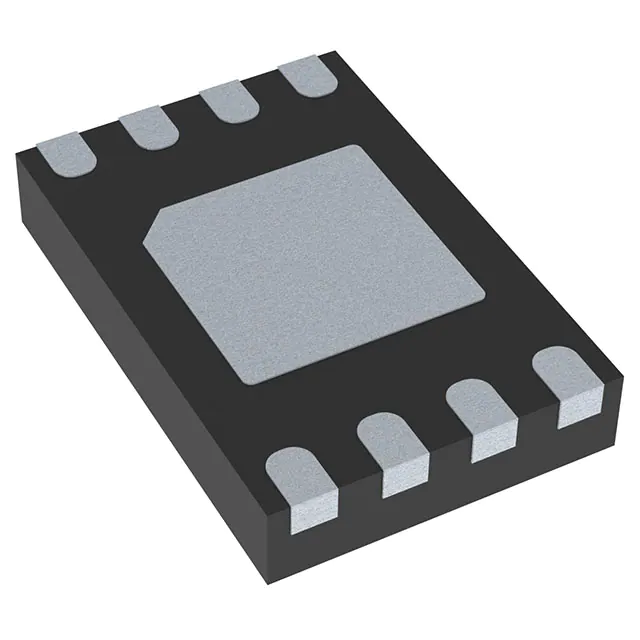
- 8-UFDFN Exposed Pad
- Datasheet:
-
 M24C16-FMC6TG.pdf
- Description:
- IC EEPROM 16KBIT I2C 8UFDFPN
- Quantity:
- Payment:

- Shipping:

Inventory:18,617
Please send an inquiry. Send us your inquiry, and we will respond immediately.
Product details
Overview
M24C16-FMC6TG from STMicroelectronics is a 16-Kbit I²C-compatible EEPROM organized as 2 K × 8 bits, operating as a nonvolatile serial memory slave device on standard and fast-mode I²C buses. It supports 400 kHz clock frequency, 1.7 V to 5.5 V supply (full temp range), 16-byte page write, and hardware write protection via WC pin. Used in industrial control modules for parameter storage and calibration data retention.
For engineers reviewing the M24C16-FMC6TG datasheet, M24C16-FMC6TG pinout, M24C16-FMC6TG application, or M24C16-FMC6TG equivalent, key selection criteria include low-voltage operation down to 1.7 V across –40 °C to +85 °C, 4 million write cycles, 200-year data retention, and ECOPACK2-compliant UFDFPN8 (2 × 3 mm) packaging with verified pin mapping.
Technical Context
The M24C16-FMC6TG implements a fully I²C-bus compliant slave interface with START/STOP detection, ACK/NACK handshaking, and 7-bit device addressing plus R/W bit. Its internal architecture includes an HV generator for EEPROM programming, page latches for burst writes, and a sequencer managing byte/page write timing and automatic address incrementing.
Write control (WC) provides hardware-level memory protection: when driven high, all write operations-including address and data bytes-are rejected with NACK, while read operations remain fully functional. The device integrates power-on reset (POR) and latch-up/ESD protection per AEC-Q100-002 and JEDEC J-STD-020D standards.
Key Specifications
| Parameter | Value and Actual Design Meaning |
|---|---|
| Memory size | 16 Kbit (2,048 × 8 bits), sufficient for firmware configuration tables or sensor calibration coefficients in space-constrained designs. |
| I²C clock support | Up to 400 kHz (fast mode), enabling sub-5 ms page writes without bus contention in real-time embedded systems. |
| Supply voltage range | 1.7 V to 5.5 V over full –40 °C to +85 °C range; enables direct interfacing with 1.8 V logic and legacy 3.3 V/5 V systems. |
| Write endurance | 4 million write cycles at 25 °C, supporting frequent field-updatable parameters in industrial HMI or metering applications. |
| Data retention | 200 years at 55 °C, ensuring long-term reliability of stored calibration or security keys without refresh mechanisms. |
| Page size | 16 bytes, matching common microcontroller DMA buffer sizes and minimizing I²C transaction overhead during bulk updates. |
| Write time | ≤5 ms for both byte and page writes, allowing deterministic timing budgeting in time-critical boot or initialization sequences. |
Pinout & Package
Package: UFDFPN8 (2 mm × 3 mm, 0.5 mm pitch, ECOPACK2-compliant). Exposed pad (EP) connected to VSS for thermal and EMI performance.
| Pin/Terminal | Circuit Role | Design Meaning |
|---|---|---|
| 1: SDA | Serial Data I/O | Open-drain bidirectional line; requires external pull-up; shares bus with other I²C slaves; supports wire-OR logic. |
| 2: SCL | Serial Clock Input | Master-generated clock; synchronizes all data transfers; rising edge samples SDA, falling edge allows SDA transition. |
| 3: WC | Write Control Input | Active-high hardware write protect; disables all write instructions when high; floating or low enables writes. |
| 4: VSS | Ground Reference | Primary return path for VCC; must be low-impedance; ties to exposed pad for thermal dissipation and noise reduction. |
| 5: VCC | Supply Voltage | 1.7–5.5 V input; decoupling capacitor (10–100 nF) required near pins 4/5 to suppress switching noise and ensure POR stability. |
| 6: NC | No Connect | Internally unconnected; must remain unconnected on PCB to avoid parasitic coupling or unintended biasing. |
| 7: NC | No Connect | Internally unconnected; left floating per design; no routing or stitching recommended. |
| 8: NC | No Connect | Internally unconnected; unused pin; no electrical or mechanical function in this variant. |
Key Features
| Feature | Design Value |
|---|---|
| Hardware write protection | WC pin disables all write operations globally-prevents accidental overwrites during power transients or firmware bugs. |
| Low-voltage operation | 1.7 V minimum supply across full industrial temperature range enables use in battery-backed or energy-harvesting systems. |
| ECOPACK2 packaging | Halogen-free, RoHS-compliant UFDFPN8 reduces environmental impact and meets global regulatory requirements for industrial equipment. |
| Polling-ready ACK protocol | Supports write-cycle polling via repeated Start + device address-eliminates fixed delay timing and improves system responsiveness. |
| Enhanced ESD robustness | 3 kV HBM ESD rating on all pins ensures reliable operation in handling-sensitive industrial assembly environments. |
Applications
| Industrial PLC Configuration Storage | Smart Energy Meter Calibration |
|---|---|
|
Use Scenario: Storing user-configurable I/O mapping, scaling factors, and alarm thresholds in programmable logic controllers. IC Role / Device Role / Timing Role: Nonvolatile parameter register accessed during startup and runtime via I²C; retains values across power cycles. Use Value: Enables field reconfiguration without firmware update; 1.7 V operation ensures compatibility with brown-out conditions in factory floor power grids. |
Use Scenario: Holding metrology calibration constants, tariff tables, and tamper-event logs in ANSI C12.22-compliant electricity meters. IC Role / Device Role / Timing Role: Secure, write-protected memory slave; WC pin prevents unauthorized calibration changes during service. Use Value: 200-year data retention guarantees accuracy compliance over meter lifetime; 4M write cycles support daily log updates for 10+ years. |
| Medical Device Settings Backup | Automotive Body Control Module (BCM) |
|
Use Scenario: Saving user preferences (e.g., display brightness, alarm volume) and device-specific calibration in portable diagnostic tools. IC Role / Device Role / Timing Role: I²C EEPROM interfaced to ARM Cortex-M0+ MCU; accessed during boot and settings save events. Use Value: UFDFPN8 footprint minimizes PCB area in handheld enclosures; ECOPACK2 compliance satisfies medical RoHS requirements. |
Use Scenario: Storing seat position memory, mirror presets, and lighting profiles in 12 V automotive BCMs with wide-input DC-DC supplies. IC Role / Device Role / Timing Role: Low-voltage EEPROM slave on LIN/I²C bridge subsystem; powered from 3.3 V rail derived from main battery. Use Value: 1.7 V operation ensures functionality during cold-crank (down to ~6.5 V battery → 3.3 V LDO dropout); write endurance supports 100k+ seat adjustments. |
Equivalent & Alternatives
The following parts are listed as comparable options for similar I²C EEPROM applications.
| Alternative Part | Technical Difference | Application Difference | Selection Advice |
|---|---|---|---|
| AT24C16D-SSHM-T (Microchip) | 1.8 V–5.5 V supply; 1 MHz I²C support; SO8/TSSOP8 only; no WC pin. | Lacks hardware write protect; higher speed useful only if master supports 1 MHz; no DFN5/DFN8 variants. | Select when 1 MHz bus timing is required and WC protection is managed in firmware. |
| BR24G16NUX-10 (ROHM) | 1.6 V–5.5 V; built-in write protect register (software-controlled); TSSOP8/UFDFPN8 available. | Software WP offers flexible zone protection but adds code complexity; lacks dedicated WC pin for fail-safe hardware lock. | Choose when multi-zone protection (e.g., separate config/log areas) is needed and firmware can manage WP register access. |
Compared with AT24C16D-SSHM-T and BR24G16NUX-10, the M24C16-FMC6TG uniquely combines guaranteed 1.7 V operation across full temperature range, dedicated hardware WC pin for unconditional write disable, and ECOPACK2 UFDFPN8 packaging-making it optimal for space-constrained, safety-critical industrial and medical designs requiring deterministic protection.
Availability
M24C16-FMC6TG is available at Aetrix Electronics and suitable for industrial PLCs, smart energy meters, portable medical devices, and automotive body control modules requiring stable component supply, long-lifecycle support, and RoHS-compliant packaging.
Supply support for M24C16-FMC6TG includes scheduled delivery planning, volume procurement assistance, BOM continuity management, traceable sourcing, and lifecycle availability coordination for OEM customers, industrial embedded developers, connected-device designers, and electronics production programs.
Manufacturer
STMicroelectronics is a global semiconductor leader headquartered in Geneva, designing and manufacturing microcontrollers, power ICs, sensors, and memory solutions for industrial, automotive, and consumer markets.
The M24Cxx series targets cost-sensitive, space-constrained embedded systems needing reliable, low-voltage serial EEPROM with hardware write protection and extended endurance-optimized for industrial automation, metering, and medical instrumentation.
FAQ
What is the function of the WC pin on M24C16-FMC6TG?
The WC (Write Control) pin is an active-high hardware write protect input. When driven high, it disables all write operations-including byte and page writes-regardless of I²C command or address. Reads remain fully functional. If left floating or pulled low, writes are enabled. This provides fail-safe protection against accidental overwrites during power-up, brown-out, or firmware errors.
Can M24C16-FMC6TG operate at 1.6 V?
No-M24C16-FMC6TG is rated for 1.7 V to 5.5 V across the full –40 °C to +85 °C temperature range. While the broader M24C16-F family supports 1.6 V to 1.7 V under limited temperature conditions (0 °C to +70 °C for write, –20 °C to +70 °C for read), the -FMC6TG variant is specified and tested only for 1.7 V minimum in industrial-grade operation.
How does the M24C16-FMC6TG handle page boundaries during write operations?
During page write, the device accepts up to 16 bytes starting from the addressed location. If the write crosses a 16-byte page boundary, data "rolls over" to the start of the same page-not the next page. For example, writing 16 bytes starting at address 0x0FF wraps from 0x0FF→0x0FF+15=0x10E, then continues at 0x100. This behavior is deterministic and documented in Section 5.1.2 of DS9194 Rev 11.
Is the UFDFPN8 package of M24C16-FMC6TG lead-free and RoHS-compliant?
Yes-the M24C16-FMC6TG uses STMicroelectronics' ECOPACK2 packaging, which is fully RoHS-compliant (2011/65/EU), halogen-free, and qualified per JEDEC J-STD-020D for Pb-free soldering. The UFDFPN8 footprint (2 mm × 3 mm, 0.5 mm pitch) includes an exposed VSS pad for thermal and EMI performance, and all materials meet ST's green product specifications.
M24C16-FMC6TG Specifications
- Product attributes
- Attribute value
- Manufacturer:
- STMicroelectronics
- Series:
- -
- Package/Case:
- 8-UFDFN Exposed Pad
- Packaging:
- Tape & Reel (TR)
- Product Status:
- Active
- Programmable:
- Not Verified
- Memory Type:
- Non-Volatile
- Memory Format:
- EEPROM
- Technology:
- EEPROM
- Memory Size:
- 16Kbit
- Memory Organization:
- 2K x 8
- Memory Interface:
- I2C
- Clock Frequency:
- 400 kHz
- Write Cycle Time - Word, Page:
- 5ms
- Access Time:
- 900 ns
- Voltage - Supply:
- 1.7V ~ 5.5V
- Operating Temperature:
- -40°C ~ 85°C (TA)
- Grade:
- -
- Qualification:
- -
- Mounting Type:
- Surface Mount
- Supplier Device Package:
- 8-UFDFPN (2x3)
M24C16-FMC6TG FAQ
1.How can I place an order for M24C16-FMC6TG through Aetrix?
Please submit a Request for Quotation (RFQ) for M24C16-FMC6TG on Aetrix. Our sales agent will provide a competitive quotation and guide you through the order confirmation once you accept the terms.
2.Are the price and stock information for M24C16-FMC6TG reliable?
The price and inventory of M24C16-FMC6TG are updated periodically and may fluctuate due to market conditions. Stock and pricing data are typically refreshed every 24 hours. Quotation validity for M24C16-FMC6TG is usually 5 days.
3.What payment methods are accepted for M24C16-FMC6TG?
We accept Wire Transfer, PayPal, Credit Card, Western Union, MoneyGram, and Escrow for M24C16-FMC6TG transactions.
Note: Certain payment methods may incur a processing fee.
4.How is shipping managed for M24C16-FMC6TG?
M24C16-FMC6TG orders can be shipped via leading logistics carriers, including DHL, UPS, FedEx, TNT, or Registered Mail.
Once your M24C16-FMC6TG order is processed, you will receive an email with the shipment details and tracking number.
Note: Tracking information may take up to 24 hours to appear. Express delivery typically takes 3–5 business days.
5.How can I obtain technical support or documentation for M24C16-FMC6TG?
For technical support, including M24C16-FMC6TG datasheets, pinout diagrams, or application guidance, please contact our engineering support team. They can provide detailed documentation and assistance for your M24C16-FMC6TG requirements.
6.How does Aetrix verify that M24C16-FMC6TG is sourced from the original manufacturer or authorized distributors?
All M24C16-FMC6TG products on Aetrix are procured from qualified distributors and authorized channels. Our dedicated quality assurance team conducts strict verification, including traceability checks and, if necessary, third-party testing. This ensures that M24C16-FMC6TG meets industry standards.
7.What is the process for return or replacement of M24C16-FMC6TG?
All M24C16-FMC6TG units undergo pre-shipment inspection (PSI). If there is an issue with M24C16-FMC6TG, returns or replacements are accepted under the following conditions:
1.Quantity discrepancies, incorrect items, or visible external defects (such as breakage or corrosion), acknowledged by Aetrix.
2.The issue is reported within 90 days of delivery.
3.The M24C16-FMC6TG part is unused and in its original packaging.
Return procedure for M24C16-FMC6TG:
1.Submit a request within 90 days.
2.Obtain a Return Material Authorization (RMA) from Aetrix.
M24C16-FMC6TG Tags
-
M24C02-WMN6TP
STMicroelectronics
-
AT24C02C-XHM-T
Microchip Technology
-
AT21CS01-STUM10-T
Microchip Technology

-
AT24C02C-SSHM-T
Microchip Technology
-
24LC01BT-I/OT
Microchip Technology
-
M24C02-FMC6TG
STMicroelectronics
-
AT24CS02-SSHM-T
Microchip Technology

-
93LC46BT-I/OT
Microchip Technology
-
AT24C04C-SSHM-T
Microchip Technology

-
24LC01BT-I/SN
Microchip Technology
-
24AA02UIDT-I/OT
Microchip Technology
-
AT24C08C-STUM-T
Microchip Technology
Tech Hub

A practical engineering and sourcing framework covering lifecycle verification, lifetime-buy calculations, replacement qualification, supplier checks and counterfeit-risk controls.

TTL and CMOS logic families differ in thresholds, loading, output drive, power and timing. This engineering guide compares 74HC and 74HCT, calculates noise margins and checks 3.3 V/5 V compatibility.

A practical engineering guide to 3.3V and 5V logic compatibility, input thresholds, resistor dividers, translator ICs, MOSFET level shifting, I2C pull-ups, timing limits and power-sequencing risks.

The 74HC595 uses push-pull logic outputs, while the TPIC6B595 uses 50 V open-drain DMOS sinks for higher-power loads. This guide compares timing, current limits, 3.3 V interfacing, load wiring, thermal…

The 74HC595 converts serial data into eight stable parallel outputs. This guide covers pin functions, shift and storage timing, OE and MR behavior, drive-current limits, cascading, voltage compatibilit…

A technical comparison of level-sensitive latches and edge-triggered flip-flops, covering timing windows, setup and hold limits, master–slave operation, time borrowing, race-through, HDL inference and…

A D latch stores one bit while Enable controls when data can pass. This reference covers gate-level operation, truth tables, transparency, setup and hold timing, LE versus OE, common ICs and practical …

An SR latch stores one bit through cross-coupled feedback. This engineering reference covers NOR and NAND implementations, truth tables, forbidden-state recovery, gated operation, switch debouncing, fa…

Latch circuits retain one bit through feedback. This technical reference covers SR and D latches, truth tables, transparency, timing limits, latch-versus-flip-flop behavior, applications and common log…

An engineering guide to LED driver operation, constant-current and constant-voltage outputs, linear and switching topologies, dimming, IC selection, calculations, replacement compatibility, and fault c…


