
 My Inquiry
 My Account


Renesas M30291FAVHP#U3A
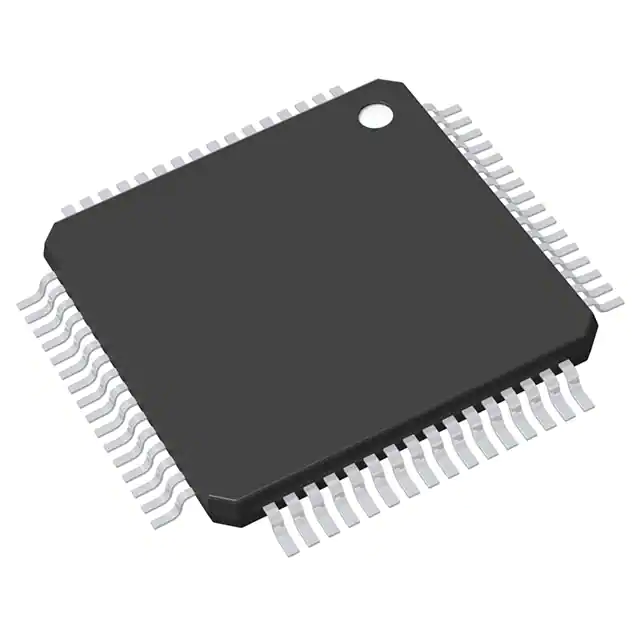
- Part No.:
- M30291FAVHP#U3A
- Manufacturer:
- Renesas
- Category:
- Microcontrollers
- Package:
- 64-LQFP
- Datasheet:
-
 M30291FAVHP#U3A.pdf
- Description:
- IC MCU 16BIT 96KB FLASH 64LFQFP
- Quantity:
- Payment:

- Shipping:

Inventory:3,185
Please send an inquiry. Send us your inquiry, and we will respond immediately.
Product details
Overview
M30291FAVHP#U3A from Renesas Electronics is a 16-bit CMOS microcontroller in the M16C/29 Group, designed for embedded control applications requiring integrated peripherals, low-power operation, and industrial-grade reliability. It features 256 KB on-chip Flash memory, 16 KB RAM, a 16-bit CPU core operating at up to 20 MHz, and supports CAN 2.0B communication. It is commonly used in motor control systems, industrial PLC modules, and HVAC controllers.
For engineers reviewing the M30291FAVHP#U3A datasheet, M30291FAVHP#U3A pinout, M30291FAVHP#U3A application, or M30291FAVHP#U3A equivalent, key selection considerations include its 100-pin LQFP package, CAN interface timing compliance, Flash endurance (10,000 write/erase cycles), and support for hardware watchdog and brown-out detection - all critical for deterministic real-time control in harsh environments.
Technical Context
The M30291FAVHP#U3A implements the M16C CPU architecture with 16-bit data bus width and 24-bit address space, enabling direct access to its full 256 KB Flash and 16 KB RAM without banking. Its clock system integrates main crystal oscillator (1–20 MHz), sub-oscillator (32.768 kHz), on-chip oscillator, and PLL for flexible clock generation including CPU clock (up to 20 MHz) and peripheral clocks (f1, f2, f8, f32, fSIO, fAD, fCAN0).
Peripheral integration includes one CAN controller (CAN 2.0B compliant), four 16-bit timer/counters with PWM output capability, 12-bit ADC (8-channel), UART, I²C-compatible serial interface, and 80 general-purpose I/O pins. Reset management includes hardware reset, software reset, watchdog timer reset, oscillation stop detection reset, and brown-out detection reset - all configurable via dedicated SFRs.
Key Specifications
| Parameter | Value and Actual Design Meaning |
|---|---|
| CPU Core | M16C/29 16-bit RISC core with 24-bit addressing, supporting 16-bit arithmetic and bit manipulation instructions for deterministic real-time control. |
| Flash Memory | 256 KB on-chip Flash with 10,000 write/erase cycles and 100-year data retention - sufficient for field-upgradable firmware in industrial equipment. |
| RAM Size | 16 KB on-chip RAM, fully accessible without wait states at 20 MHz - enables fast stack operations and real-time buffer handling. |
| Max Operating Frequency | 20 MHz CPU clock (with PLL), derived from external crystal or internal oscillator - ensures sub-50 ns instruction cycle time for time-critical ISR execution. |
| CAN Interface | Integrated CAN 2.0B controller supporting 1 Mbit/s baud rate, 32 message objects, and automatic retransmission - meets automotive and industrial CAN network requirements. |
| ADC Resolution | 12-bit successive approximation ADC with 8 input channels and ±1 LSB integral nonlinearity - suitable for precision analog sensing in motor current or temperature monitoring. |
| Package | 100-pin LQFP (14 mm × 14 mm, 0.5 mm pitch) with exposed thermal pad - provides mechanical stability and thermal dissipation for continuous 85°C ambient operation. |
Pinout & Package
The M30291FAVHP#U3A is housed in a 100-pin LQFP package with exposed thermal pad (package code: LQFP100-P-1414-0.50). Pin functions are defined per the M16C/29 Group Hardware Manual Rev.1.12, with dedicated power (VCC, VSS), clock (XIN, XOUT, SUBIN, SUBOUT), reset (RES), CAN (CANRX, CANTX), and multifunction I/O pins.
| Pin/Terminal | Circuit Role | Design Meaning |
|---|---|---|
| VCC / VSS | Power supply / Ground | Dual 5 V supply domains: VCC1 (core I/O), VCC2 (analog/ADC), each with dedicated VSS return - reduces noise coupling between digital and analog sections. |
| XIN / XOUT | Main crystal oscillator input/output | Supports 1–20 MHz fundamental-mode crystals; internal feedback resistor enables single-crystal configuration - eliminates need for external load capacitors in many designs. |
| CANRX / CANTX | CAN physical layer interface | Differential receiver input and dominant/recessive transmitter output compatible with ISO 11898-1 - connects directly to external CAN transceiver (e.g., TJA1040) without level-shifting. |
| AD0–AD7 | Analog input channels | Eight dedicated ADC input pins with programmable sampling window and internal reference (VREFH/VREFL) - enables simultaneous sampling of multiple sensor signals in motor control loops. |
| P0_0–P0_7 | Port 0 bidirectional I/O | 8-bit port with individual direction control, pull-up enable, and noise filter - configurable as general-purpose I/O or alternate function (e.g., UART0, timer outputs) via P0 register settings. |
Key Features
| Feature | Design Value |
|---|---|
| On-chip debug interface | Fully integrated on-chip debugging via single-wire SWD-like interface (using RES pin), enabling non-intrusive breakpoint setting and real-time variable monitoring without halting peripheral operation. |
| Low-power modes | Three power-saving modes (Wait, Stop, Sub-Stop) with wake-up latency < 10 µs from Wait mode - extends battery life in portable industrial instruments while maintaining CAN bus listen-only capability. |
| Hardware watchdog timer | Dedicated 15-bit free-running watchdog with independent clock source (sub-oscillator) and windowed refresh capability - prevents runaway code in safety-critical control loops without software dependency. |
| Brown-out detection | Programmable voltage detection thresholds (4.0 V, 3.5 V, 3.0 V) with interrupt and/or reset output - protects against erratic behavior during power supply sag in factory automation equipment. |
| Peripheral event chaining | Hardware-triggered peripheral synchronization (e.g., ADC start on timer match, PWM update on ADC end) - eliminates CPU overhead in closed-loop control applications like servo drive commutation. |
Applications
| Industrial Motor Control | Building Automation Controller |
|---|---|
Use Scenario: Closed-loop speed and torque control of 3-phase BLDC motors in conveyor systems and pumps. IC Role / Device Role / Timing Role: Primary MCU executing FOC algorithm, generating 6-channel PWM, sampling current/voltage sensors via ADC, and communicating status over CAN bus. Use Value: Integrated 12-bit ADC with hardware trigger synchronization and CAN 2.0B controller enable precise, jitter-free motor control without external co-processors or protocol translators. | Use Scenario: Central controller managing HVAC units, lighting zones, and occupancy sensors across commercial buildings. IC Role / Device Role / Timing Role: Real-time coordinator aggregating sensor data, executing scheduling logic, and interfacing with BACnet/IP gateways via UART and CAN. Use Value: 256 KB Flash supports multi-zone control firmware with OTA update capability; 16 KB RAM accommodates concurrent Modbus TCP and CAN protocol stacks. |
| Programmable Logic Controller (PLC) I/O Module | Industrial Safety Monitoring Unit |
Use Scenario: DIN-rail mounted digital I/O expansion module with 16-channel isolated inputs and 8-channel relay outputs. IC Role / Device Role / Timing Role: Local intelligence unit performing debounce filtering, state change detection, and CAN-based reporting to main PLC rack. Use Value: 80 GPIO pins with programmable noise filters and edge-detect interrupts allow direct connection to industrial sensors without external logic; hardware CRC engine validates configuration data integrity. | Use Scenario: Standalone emergency stop monitor verifying dual-channel safety inputs and controlling redundant contactor drivers. IC Role / Device Role / Timing Role: Safety-certifiable controller executing diagnostic routines (RAM test, Flash CRC, clock monitor) and enforcing SIL2-compliant response times (< 20 ms). Use Value: Brown-out detection with reset + interrupt, independent watchdog, and oscillation stop detection provide layered fault detection required for functional safety architectures per IEC 61508. |
Equivalent & Alternatives
The following parts are listed as comparable options for similar 16-bit industrial microcontroller applications.
| Alternative Part | Technical Difference | Application Difference | Selection Advice |
|---|---|---|---|
| R5F102MAASP#30 | RL78/G13-based; 32 KB Flash, 4 KB RAM, no CAN, lower max frequency (24 MHz CPU but 8 MHz peripheral bus) | Lacks integrated CAN; requires external transceiver and protocol stack - increases BOM cost and design complexity for CAN networks. | Select when CAN is not required and ultra-low power (0.52 µA STOP mode) is prioritized over real-time determinism. |
| MB9BF516RPMC-G-SNE2 | ARM Cortex-M3; 512 KB Flash, 64 KB RAM, dual CAN, higher performance (100 MHz), larger footprint (144-pin LQFP) | Higher code density and peripheral integration, but requires RTOS and more complex toolchain - increases development time for legacy C-based control firmware. | Select when migrating to scalable platform with future Ethernet or USB needs; not drop-in compatible due to architecture and pinout differences. |
Compared with R5F102MAASP#30 and MB9BF516RPMC-G-SNE2, the M30291FAVHP#U3A offers optimal balance of CAN-native integration, deterministic real-time response, and mature toolchain support - making it ideal for cost-sensitive, high-volume industrial control designs where architectural continuity matters.
Availability
M30291FAVHP#U3A is available at Aetrix Electronics and suitable for industrial motor control, building automation systems, and programmable logic controller (PLC) modules requiring stable component supply, long-term lifecycle assurance, and traceable sourcing.
Supply support for M30291FAVHP#U3A includes scheduled delivery planning, volume procurement assistance, BOM continuity management, traceable sourcing, and lifecycle availability coordination for OEM customers, industrial embedded developers, connected-device designers, and electronics production programs.
Manufacturer
Renesas Electronics Corporation is a global semiconductor leader specializing in microcontrollers, analog, power, and SoC solutions for industrial, automotive, and infrastructure markets.
The M16C/29 Group targets cost-effective, high-reliability embedded control applications in factory automation, HVAC, and motor drives - emphasizing integrated peripherals, low-power operation, and long-lifecycle support for industrial equipment.
FAQ
What is the maximum operating temperature range for the M30291FAVHP#U3A?
The M30291FAVHP#U3A is rated for industrial temperature operation from −40°C to +85°C ambient, verified per Renesas' Standard quality grade qualification. This range supports deployment in control cabinets, outdoor enclosures, and machinery environments without forced cooling. The device's thermal pad in the LQFP100 package enhances heat dissipation under sustained 20 MHz operation. Always refer to the "Electrical Characteristics" section of the M16C/29 Group Hardware Manual for derating curves and junction temperature limits specific to M30291FAVHP#U3A.
Does the M30291FAVHP#U3A support in-system programming (ISP) via its serial interface?
Yes, the M30291FAVHP#U3A supports in-system programming using the on-chip serial programming interface (SPI mode) via pins P1_0 (TXD0) and P1_1 (RXD0), with boot ROM activation triggered by holding P1_4 low during reset. This allows firmware updates without removing the IC from the PCB. The process requires a 5 V VCC supply and adheres to timing specifications in Section 14.3 of the M16C/29 Group Hardware Manual. M30291FAVHP#U3A's Flash memory endurance (10,000 cycles) supports field upgrades throughout product lifetime.
How does the CAN controller in the M30291FAVHP#U3A handle error frames and bus off recovery?
The M30291FAVHP#U3A's CAN module implements full CAN 2.0B error handling, including automatic transmission of active or passive error frames based on error counters (TEC/REC), and automatic bus-off recovery after 128 occurrences of 11 consecutive recessive bits. Error status is reported via CANERR flag in the CAN control register, and interrupt vectors are assigned for error, status change, and bus-off events. This behavior is documented in Section 12.4 of the M16C/29 Group Hardware Manual and ensures robust interoperability in multi-node industrial CAN networks. M30291FAVHP#U3A maintains compatibility with standard CAN transceivers and protocol analyzers.
Can the M30291FAVHP#U3A's ADC operate synchronously with PWM outputs for motor current sampling?
Yes, the M30291FAVHP#U3A supports hardware-triggered ADC conversion synchronized to PWM period edges. By configuring the timer output (e.g., TO0) as a trigger source for the ADC start signal (ADTRG), sampling can be precisely aligned to the center of the PWM dead-time interval - critical for accurate three-shunt current reconstruction in BLDC motor control. This feature is implemented via the ADTMR register and requires no CPU intervention. The M30291FAVHP#U3A's 12-bit ADC achieves ±1 LSB INL under these conditions, as confirmed in the device's electrical characteristics table.
Is the M30291FAVHP#U3A RoHS-compliant and lead-free?
Yes, the M30291FAVHP#U3A is RoHS-compliant and lead-free, meeting EU Directive 2011/65/EU requirements. Renesas confirms this status in its official product change notifications and material declarations. The LQFP100 package uses matte tin plating over copper leadframe, with no lead content in solderable terminations. Compliance documentation, including IMDS and RoHS certificates, is available through Renesas' website or authorized distributors. M30291FAVHP#U3A's environmental compliance aligns with Aetrix Electronics' sourcing policy for industrial-grade components.
M30291FAVHP#U3A Specifications
- Product attributes
- Attribute value
- Manufacturer:
- Renesas
- Package/Case:
- 64-LQFP
- Series:
- M16C™ M16C/Tiny/29
- Packaging:
- Tray
- Product Status:
- Obsolete
- Programmable:
- Not Verified
- Core Processor:
- M16C/60
- Core Size:
- 16-Bit
- Speed:
- 16MHz
- Connectivity:
- CANbus, I2C, IEBus, SIO, UART/USART
- Peripherals:
- DMA, POR, PWM, Voltage Detect, WDT
- Number of I/O:
- 55
- Program Memory Size:
- 96KB (96K x 8)
- Program Memory Type:
- FLASH
- EEPROM Size:
- -
- RAM Size:
- 8K x 8
- Voltage - Supply (Vcc/Vdd):
- 4.2V ~ 5.5V
- Data Converters:
- A/D 16x10b
- Oscillator Type:
- Internal
- Operating Temperature:
- -40°C ~ 85°C (TA)
- Grade:
- -
- Qualification:
- -
- Mounting Type:
- Surface Mount
- Supplier Device Package:
M30291FAVHP#U3A FAQ
1.How can I place an order for M30291FAVHP#U3A through Aetrix?
Please submit a Request for Quotation (RFQ) for M30291FAVHP#U3A on Aetrix. Our sales agent will provide a competitive quotation and guide you through the order confirmation once you accept the terms.
2.Are the price and stock information for M30291FAVHP#U3A reliable?
The price and inventory of M30291FAVHP#U3A are updated periodically and may fluctuate due to market conditions. Stock and pricing data are typically refreshed every 24 hours. Quotation validity for M30291FAVHP#U3A is usually 5 days.
3.What payment methods are accepted for M30291FAVHP#U3A?
We accept Wire Transfer, PayPal, Credit Card, Western Union, MoneyGram, and Escrow for M30291FAVHP#U3A transactions.
Note: Certain payment methods may incur a processing fee.
4.How is shipping managed for M30291FAVHP#U3A?
M30291FAVHP#U3A orders can be shipped via leading logistics carriers, including DHL, UPS, FedEx, TNT, or Registered Mail.
Once your M30291FAVHP#U3A order is processed, you will receive an email with the shipment details and tracking number.
Note: Tracking information may take up to 24 hours to appear. Express delivery typically takes 3–5 business days.
5.How can I obtain technical support or documentation for M30291FAVHP#U3A?
For technical support, including M30291FAVHP#U3A datasheets, pinout diagrams, or application guidance, please contact our engineering support team. They can provide detailed documentation and assistance for your M30291FAVHP#U3A requirements.
6.How does Aetrix verify that M30291FAVHP#U3A is sourced from the original manufacturer or authorized distributors?
All M30291FAVHP#U3A products on Aetrix are procured from qualified distributors and authorized channels. Our dedicated quality assurance team conducts strict verification, including traceability checks and, if necessary, third-party testing. This ensures that M30291FAVHP#U3A meets industry standards.
7.What is the process for return or replacement of M30291FAVHP#U3A?
All M30291FAVHP#U3A units undergo pre-shipment inspection (PSI). If there is an issue with M30291FAVHP#U3A, returns or replacements are accepted under the following conditions:
1.Quantity discrepancies, incorrect items, or visible external defects (such as breakage or corrosion), acknowledged by Aetrix.
2.The issue is reported within 90 days of delivery.
3.The M30291FAVHP#U3A part is unused and in its original packaging.
Return procedure for M30291FAVHP#U3A:
1.Submit a request within 90 days.
2.Obtain a Return Material Authorization (RMA) from Aetrix.
M30291FAVHP#U3A Tags

-
ATTINY4-TSHR
Microchip Technology
-
ATTINY10-TSHR
Microchip Technology
-
ATTINY10-TS8R
Microchip Technology

-
ATTINY202-SSNR
Microchip Technology
-
ATTINY202-SSFR
Microchip Technology
-
ATTINY402-SSNR
Microchip Technology

-
PIC16F15213T-I/MF
Microchip Technology
-
PIC16F15213-E/MF
Microchip Technology

-
PIC10F200T-I/OT
Microchip Technology
-
ATTINY412-SSNR
Microchip Technology
-
PIC10F202T-I/OT
Microchip Technology

-
ATTINY404-SSNR
Microchip Technology
Tech Hub

TTL and CMOS logic families differ in thresholds, loading, output drive, power and timing. This engineering guide compares 74HC and 74HCT, calculates noise margins and checks 3.3 V/5 V compatibility.

A practical engineering guide to 3.3V and 5V logic compatibility, input thresholds, resistor dividers, translator ICs, MOSFET level shifting, I2C pull-ups, timing limits and power-sequencing risks.

The 74HC595 uses push-pull logic outputs, while the TPIC6B595 uses 50 V open-drain DMOS sinks for higher-power loads. This guide compares timing, current limits, 3.3 V interfacing, load wiring, thermal…

The 74HC595 converts serial data into eight stable parallel outputs. This guide covers pin functions, shift and storage timing, OE and MR behavior, drive-current limits, cascading, voltage compatibilit…

A technical comparison of level-sensitive latches and edge-triggered flip-flops, covering timing windows, setup and hold limits, master–slave operation, time borrowing, race-through, HDL inference and…

A D latch stores one bit while Enable controls when data can pass. This reference covers gate-level operation, truth tables, transparency, setup and hold timing, LE versus OE, common ICs and practical …

An SR latch stores one bit through cross-coupled feedback. This engineering reference covers NOR and NAND implementations, truth tables, forbidden-state recovery, gated operation, switch debouncing, fa…

Latch circuits retain one bit through feedback. This technical reference covers SR and D latches, truth tables, transparency, timing limits, latch-versus-flip-flop behavior, applications and common log…

An engineering guide to LED driver operation, constant-current and constant-voltage outputs, linear and switching topologies, dimming, IC selection, calculations, replacement compatibility, and fault c…

Operational amplifier guide covering op amp basics, feedback, ideal vs real op amps, common configurations, buffer circuits, offset, bias current, gain-bandwidth, slew rate, rail-to-rail limits and sel…


