
 My Inquiry
 My Account


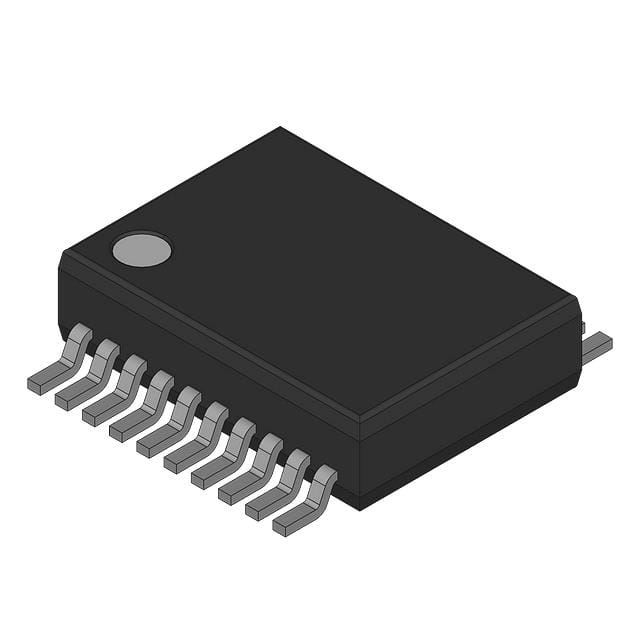
Renesas M34280E1GP
- Part No.:
- M34280E1GP
- Manufacturer:
- Renesas
- Category:
- Microcontrollers
- Package:
- -
- Datasheet:
-
 M34280E1GP.pdf
- Description:
- MICROCONTROLLER, 4 BIT, OTPROM,
- Quantity:
- Payment:

- Shipping:

Inventory:14,633
Please send an inquiry. Send us your inquiry, and we will respond immediately.
Product details
Overview
M34280E1GP from Renesas Electronics is a 4-bit single-chip CMOS microcomputer with 1024-word × 9-bit mask ROM and 32-word × 4-bit RAM, designed specifically for infrared remote control transmitters. It integrates a programmable 8-bit timer with auto-reload, carrier wave output on port CARR, key-on wakeup across 8 pins (D7, E0–E2, G0–G3), and operates from 1.8 V to 3.6 V supply voltage.
For engineers reviewing the M34280E1GP datasheet, M34280E1GP pinout, M34280E1GP application, or M34280E1GP equivalent, this device supports infrared carrier generation at f(XIN)/4, f(XIN)/8, f(XIN)/12, f(XIN)/64, f(XIN)/96, or fixed-H output, features ceramic resonator-based oscillation, and delivers 8.0 µs minimum instruction execution time at 4.0 MHz system clock.
Technical Context
The M34280E1GP implements a 4-bit ALU with registers A (4-bit), B (4-bit), D (3-bit), E (8-bit), and stack register SK (4-level). Its system clock derives from an external ceramic resonator connected between XIN and XOUT, with internal feedback resistor; instruction clock is STCK/4, and machine cycle equals one instruction clock cycle.
Timer 1 is an 8-bit binary down counter with reload register R1, selectable count source (CARRY signal or WDT bit 5), and configurable auto-control of carrier wave output via V1 register bits V12–V10. The device supports subroutine nesting up to 4 levels, though only 3 are usable when TABP p instruction is executed due to shared stack usage.
Key Specifications
| Parameter | Value and Actual Design Meaning |
|---|---|
| ROM size | 1024 words × 9 bits - fixed program storage for IR protocol encoding and key matrix logic |
| RAM size | 32 words × 4 bits - data storage for state variables, key scan buffers, and temporary computation |
| Supply voltage | 1.8 V to 3.6 V - enables battery-powered remote operation with alkaline or lithium coin cells |
| Min instruction time | 8.0 µs at f(XIN) = 4.0 MHz - determines real-time responsiveness for IR burst timing |
| Operating temp | –20 °C to +85 °C - qualified for consumer indoor remote control environments |
| Power dissipation | 400 µA active mode, 0.1 µA RAM back-up - extends battery life in standby and transmit states |
| Carrier outputs | f(XIN), f(XIN)/4, f(XIN)/8, f(XIN)/12, f(XIN)/64, f(XIN)/96, fixed-H - supports NEC, RC-5, and custom IR protocols |
Pinout & Package
Package: 20-pin plastic SOP (20P2N-A) - surface-mount compatible with standard IR remote PCB layouts and reflow profiles.
| Pin/Terminal | Circuit Role | Design Meaning |
|---|---|---|
| VDD | Power supply | Positive supply input (1.8–3.6 V); must be decoupled locally for stable IR carrier generation |
| VSS | Ground | 0 V reference; shared return path for all I/O and internal logic |
| XIN / XOUT | Oscillator interface | Connects external ceramic resonator (4.0 MHz typical); internal feedback resistor eliminates external component |
| D0–D6 | Output port | 7-bit open-drain P-channel output; drives IR LED anodes directly or via transistor switch |
| D7 | I/O port | 1-bit programmable pull-down I/O with key-on wakeup; used for auxiliary function or status signaling |
| E0–E2 | Input/output port | 2-bit open-drain output (E0,E1) + 1-bit input-only (E2); all support H-level key-on wakeup |
| G0–G3 | I/O port | 4-bit open-drain I/O with pull-down and key-on wakeup; forms column lines in 8×7 key matrix |
| CARR | Carrier output | CMOS output driving IR LED cathode; frequency controlled by timer or register settings |
Key Features
| Feature | Design Value |
|---|---|
| 7-carrier wave selection | Enables compliance with multiple IR standards (e.g., NEC 38 kHz, RC-5 36 kHz) without external oscillator change |
| 8-key-on wakeup inputs | Reduces system power by waking only on valid key press (D7, E0–E2, G0–G3), avoiding continuous polling |
| RAM back-up mode | Maintains 32-word × 4-bit RAM contents during deep sleep (0.1 µA), preserving key state and protocol counters |
| 4-level subroutine nesting | Supports modular firmware design with hierarchical IR encoding, error handling, and multi-protocol dispatch |
| Ceramic resonator interface | Eliminates need for external load capacitors or feedback resistor - reduces BOM count and layout area |
Applications
| TV Remote Control | AC Remote Control |
|---|---|
Use Scenario: Consumer television remote transmitting NEC-compatible 38 kHz modulated IR bursts with 8×7 key matrix. IC Role / Device Role / Timing Role: Primary controller executing IR protocol encoding, key scanning, and carrier wave generation on CARR pin. Use Value: Integrated timer auto-control ensures precise 38 kHz carrier timing without software overhead; 1.8 V operation extends AA/AAA battery life beyond 12 months. | Use Scenario: Air conditioner remote supporting dual-carrier (36 kHz/38 kHz) for mode-specific command sets. IC Role / Device Role / Timing Role: Dual-role controller managing temperature display interface and IR transmission with selectable carrier frequencies. Use Value: On-chip f(XIN)/4 and f(XIN)/8 outputs allow hardware-switched carrier selection - no firmware update needed for regional variants. |
| Set-Top Box Remote | Fan Remote Control |
Use Scenario: Compact set-top box remote requiring low-cost, high-reliability IR transmission with minimal external components. IC Role / Device Role / Timing Role: Standalone microcontroller handling key debounce, protocol formatting, and direct-drive IR LED output. Use Value: Open-drain D0–D6 ports drive IR LEDs at up to 20 mA per pin - eliminates discrete driver transistors and saves PCB space. | Use Scenario: Battery-powered ceiling fan remote with multi-speed, timer, and light control functions. IC Role / Device Role / Timing Role: System-on-chip managing rotary encoder input, LED indicators, and multi-burst IR transmission. Use Value: RAM back-up mode retains last fan speed setting during battery replacement - improves user experience and reduces support calls. |
Equivalent & Alternatives
The following parts are listed as comparable options for similar 4-bit IR microcontroller applications.
| Alternative Part | Technical Difference | Application Difference | Selection Advice |
|---|---|---|---|
| M34280M1GP | Same package, identical ROM/RAM size and pinout; differs only in mask ROM content (pre-programmed vs. blank) | Used where factory-programmed firmware is required; M34280E1GP supports customer-specific mask programming | Select M34280E1GP when custom IR protocol or key mapping is needed; M34280M1GP suits standardized OEM designs |
| uPD78F0503GC-GAD-AX | 8-bit, flash-based, 64 KB ROM, 4 KB RAM; requires external crystal and more complex power management | Targets advanced remotes with display drivers, Bluetooth coexistence, or firmware updates - not drop-in compatible | Choose only if future scalability, field updates, or mixed-signal integration outweigh cost and size penalties of M34280E1GP |
Compared with M34280M1GP, M34280E1GP offers identical hardware compatibility but enables customer-defined mask ROM programming, while uPD78F0503GC-GAD-AX provides flash flexibility at the cost of higher BOM, larger footprint, and increased design complexity for simple IR transmitters.
Availability
M34280E1GP is available at Aetrix Electronics and suitable for infrared remote control transmitters, consumer electronics keypads, and battery-powered wireless command modules requiring stable component supply, long-term lifecycle support, and RoHS-compliant packaging.
Supply support for M34280E1GP includes scheduled delivery planning, volume procurement assistance, BOM continuity management, traceable sourcing, and lifecycle availability coordination for OEM customers, industrial embedded developers, connected-device designers, and electronics production programs.
Manufacturer
Renesas Electronics Corporation is a global semiconductor leader specializing in microcontrollers, analog, and power solutions for automotive, industrial, and consumer markets.
The 4280 Group - including M34280E1GP - was engineered exclusively for cost-sensitive, ultra-low-power infrared remote control transmitters, emphasizing integrated carrier generation, key-scan efficiency, and minimal external component count.
FAQ
What is the maximum operating frequency of the M34280E1GP system clock?
The M34280E1GP system clock is derived from the external ceramic resonator connected to XIN/XOUT. Its maximum rated system clock frequency is f(XIN)/8, and with a 4.0 MHz resonator, this yields 500 kHz. The device is characterized for reliable operation up to 4.0 MHz resonator input, corresponding to 500 kHz system clock - exceeding this may cause timing violations in instruction execution or timer underflow behavior. Always verify timing margins using the M34280E1GP datasheet's AC characteristics table.
Does the M34280E1GP support in-circuit programming or firmware updates?
No, the M34280E1GP uses mask ROM, which is programmed during wafer fabrication and cannot be altered post-manufacture. Firmware is permanently fixed at production; changes require a new mask revision and re-spin. This makes M34280E1GP ideal for high-volume, stable-design applications like TV remotes where protocol and key mapping remain unchanged over product lifetime. For field-upgradable designs, consider Renesas' flash-based 78K or RL78 families instead of M34280E1GP.
How many key inputs can the M34280E1GP scan simultaneously in an 8×7 matrix?
The M34280E1GP supports full 8×7 key matrix scanning using ports D (7 outputs), D7 (1 I/O), E0–E2 (3 inputs), and G0–G3 (4 inputs), totaling 8 row and 7 column lines. Its key-on wakeup function activates on any of the 8 designated pins (D7, E0–E2, G0–G3), enabling immediate wake from low-power mode upon key press. The firmware must implement sequential row activation and column readback - no hardware key scanner is integrated, but the I/O configuration and wakeup logic minimize CPU overhead during idle periods for M34280E1GP-based remotes.
What is the purpose of the CARR pin on the M34280E1GP, and how is its output frequency selected?
The CARR pin on the M34280E1GP is a dedicated CMOS output for infrared carrier wave generation. Its frequency is selected via software-controlled register bits (V12–V10 in timer control register V1) and supports seven options: f(XIN), f(XIN)/4, f(XIN)/8, f(XIN)/12, f(XIN)/64, f(XIN)/96, or fixed-H level. Selection is independent of Timer 1 operation unless auto-control mode is enabled. This allows precise, jitter-free carrier output synchronized to the internal clock - critical for reliable IR receiver detection - without consuming CPU cycles or requiring external oscillator circuitry in M34280E1GP designs.
Can unused pins on the M34280E1GP be left floating, or do they require specific termination?
Unused pins on the M34280E1GP must not be left floating. Per the official Renesas documentation, D0–D7 should be either open-circuited *after* setting their output latches to "1", or tied to VDD; E0/E1 must have pull-down transistors disabled in software before opening or connecting to VDD; E2 and G0–G3 should be open-circuited *after* setting latches to "0" or tied to VSS. Floating pins risk undefined logic states, excess supply current, noise-induced resets, or latch-up. Always follow the M34280E1GP's "CONNECTIONS OF UNUSED PINS" section - proper termination is mandatory for stable operation in production remotes.
M34280E1GP Specifications
- Product attributes
- Attribute value
- Manufacturer:
- Renesas
- Package/Case:
- -
- Series:
- *
- Packaging:
- Bulk
- Product Status:
- Active
- Programmable:
- Not Verified
- Core Processor:
- -
- Core Size:
- -
- Speed:
- -
- Connectivity:
- -
- Peripherals:
- -
- Number of I/O:
- -
- Program Memory Size:
- -
- Program Memory Type:
- -
- EEPROM Size:
- -
- RAM Size:
- -
- Voltage - Supply (Vcc/Vdd):
- -
- Data Converters:
- -
- Oscillator Type:
- -
- Operating Temperature:
- -
- Grade:
- -
- Qualification:
- -
- Mounting Type:
- -
- Supplier Device Package:
M34280E1GP FAQ
1.How can I place an order for M34280E1GP through Aetrix?
Please submit a Request for Quotation (RFQ) for M34280E1GP on Aetrix. Our sales agent will provide a competitive quotation and guide you through the order confirmation once you accept the terms.
2.Are the price and stock information for M34280E1GP reliable?
The price and inventory of M34280E1GP are updated periodically and may fluctuate due to market conditions. Stock and pricing data are typically refreshed every 24 hours. Quotation validity for M34280E1GP is usually 5 days.
3.What payment methods are accepted for M34280E1GP?
We accept Wire Transfer, PayPal, Credit Card, Western Union, MoneyGram, and Escrow for M34280E1GP transactions.
Note: Certain payment methods may incur a processing fee.
4.How is shipping managed for M34280E1GP?
M34280E1GP orders can be shipped via leading logistics carriers, including DHL, UPS, FedEx, TNT, or Registered Mail.
Once your M34280E1GP order is processed, you will receive an email with the shipment details and tracking number.
Note: Tracking information may take up to 24 hours to appear. Express delivery typically takes 3–5 business days.
5.How can I obtain technical support or documentation for M34280E1GP?
For technical support, including M34280E1GP datasheets, pinout diagrams, or application guidance, please contact our engineering support team. They can provide detailed documentation and assistance for your M34280E1GP requirements.
6.How does Aetrix verify that M34280E1GP is sourced from the original manufacturer or authorized distributors?
All M34280E1GP products on Aetrix are procured from qualified distributors and authorized channels. Our dedicated quality assurance team conducts strict verification, including traceability checks and, if necessary, third-party testing. This ensures that M34280E1GP meets industry standards.
7.What is the process for return or replacement of M34280E1GP?
All M34280E1GP units undergo pre-shipment inspection (PSI). If there is an issue with M34280E1GP, returns or replacements are accepted under the following conditions:
1.Quantity discrepancies, incorrect items, or visible external defects (such as breakage or corrosion), acknowledged by Aetrix.
2.The issue is reported within 90 days of delivery.
3.The M34280E1GP part is unused and in its original packaging.
Return procedure for M34280E1GP:
1.Submit a request within 90 days.
2.Obtain a Return Material Authorization (RMA) from Aetrix.
M34280E1GP Tags

-
ATTINY4-TSHR
Microchip Technology
-
ATTINY10-TSHR
Microchip Technology
-
ATTINY10-TS8R
Microchip Technology

-
ATTINY202-SSNR
Microchip Technology
-
ATTINY202-SSFR
Microchip Technology
-
ATTINY402-SSNR
Microchip Technology
-
PIC16F15213T-I/MF
Microchip Technology
-
PIC16F15213-E/MF
Microchip Technology

-
PIC10F200T-I/OT
Microchip Technology
-
ATTINY412-SSNR
Microchip Technology
-
PIC10F202T-I/OT
Microchip Technology
-
ATTINY404-SSNR
Microchip Technology
Tech Hub

TTL and CMOS logic families differ in thresholds, loading, output drive, power and timing. This engineering guide compares 74HC and 74HCT, calculates noise margins and checks 3.3 V/5 V compatibility.

A practical engineering guide to 3.3V and 5V logic compatibility, input thresholds, resistor dividers, translator ICs, MOSFET level shifting, I2C pull-ups, timing limits and power-sequencing risks.

The 74HC595 uses push-pull logic outputs, while the TPIC6B595 uses 50 V open-drain DMOS sinks for higher-power loads. This guide compares timing, current limits, 3.3 V interfacing, load wiring, thermal…

The 74HC595 converts serial data into eight stable parallel outputs. This guide covers pin functions, shift and storage timing, OE and MR behavior, drive-current limits, cascading, voltage compatibilit…

A technical comparison of level-sensitive latches and edge-triggered flip-flops, covering timing windows, setup and hold limits, master–slave operation, time borrowing, race-through, HDL inference and…

A D latch stores one bit while Enable controls when data can pass. This reference covers gate-level operation, truth tables, transparency, setup and hold timing, LE versus OE, common ICs and practical …

An SR latch stores one bit through cross-coupled feedback. This engineering reference covers NOR and NAND implementations, truth tables, forbidden-state recovery, gated operation, switch debouncing, fa…

Latch circuits retain one bit through feedback. This technical reference covers SR and D latches, truth tables, transparency, timing limits, latch-versus-flip-flop behavior, applications and common log…

An engineering guide to LED driver operation, constant-current and constant-voltage outputs, linear and switching topologies, dimming, IC selection, calculations, replacement compatibility, and fault c…

Operational amplifier guide covering op amp basics, feedback, ideal vs real op amps, common configurations, buffer circuits, offset, bias current, gain-bandwidth, slew rate, rail-to-rail limits and sel…


