
 My Inquiry
 My Account


Renesas M37735EHBFP#D6
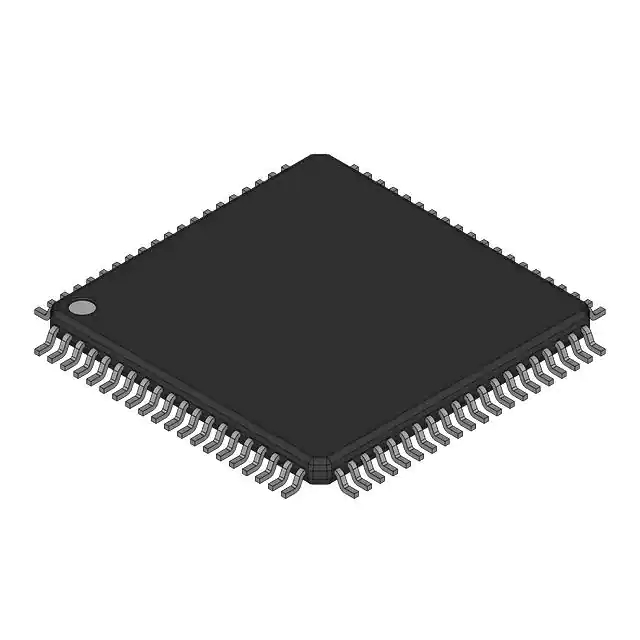
- Part No.:
- M37735EHBFP#D6
- Manufacturer:
- Renesas
- Category:
- Microcontrollers
- Package:
- -
- Datasheet:
-
 M37735EHBFP#D6.pdf
- Description:
- IC MCU 16BIT 124KB OTP
- Quantity:
- Payment:

- Shipping:

Inventory:4,335
Please send an inquiry. Send us your inquiry, and we will respond immediately.
Product details
Overview
M37735EHBFP#D6 from Mitsubishi Electric is a 16-bit single-chip microcomputer based on the 7700 Family core, featuring 124 KB PROM, 3.968 KB RAM, and integrated peripherals including five 16-bit timers (TA0–TA4), three UART/clock-synchronous serial I/O channels, an 8-channel 10-bit A-D converter, watchdog timer, and dual clock-generating circuits. It operates from a single 5 V ±10% supply and targets embedded control in office automation and industrial communication equipment.
For engineers reviewing the M37735EHBFP#D6 datasheet, M37735EHBFP#D6 pinout, M37735EHBFP#D6 application, or M37735EHBFP#D6 equivalent, key selection considerations include its 80-pin QFP package (80P6N-A), EPROM-mode programming capability (M5M27C101K-compatible), 25 MHz max external clock support with 160 ns fastest instruction execution, and 68 programmable I/O pins across ports P0–P8.
Technical Context
The M37735EHBFP#D6 implements a 16-bit parallel CPU with optional 8-bit operation mode and a bus interface unit optimized for fast memory access. Its architecture includes dual clock systems: a main oscillator (ceramic resonator or quartz crystal via XIN/XOUT) and a 32.768 kHz sub-clock (via XCIN/XCOUT on P77/P76), both configurable via oscillation control registers.
It supports three operational modes-single-chip, memory expansion, and microprocessor-selected by CNVSS pin level and software configuration. The device provides 19 interrupt types with 7 priority levels, programmable I/O direction per port, and dedicated peripheral functions multiplexed on P5–P8 pins (e.g., TA0–TA4, INT0–INT2, AN0–AN7, UART0/1/2).
Key Specifications
| Parameter | Value and Actual Design Meaning |
|---|---|
| Core Architecture | 16-bit Mitsubishi 7700 Family CPU with 8/16-bit flexible operation mode |
| PROM Size | 124 Kbytes - fixed program storage; not reprogrammable in-circuit |
| RAM Size | 3968 bytes - sufficient for real-time control stacks and data buffers |
| Max Clock Frequency | 25 MHz external - enables 160 ns fastest instruction execution time |
| A-D Converter | 10-bit resolution, 8-channel input - supports analog sensor interfacing with internal reference (VREF) |
| Supply Voltage | 5 V ±10% - compatible with standard TTL/CMOS logic rails and industrial power supplies |
| Power Dissipation | 47.5 mW typical at 25 MHz - low active power suitable for thermally constrained designs |
| Operating Temperature | –20 °C to +85 °C - qualified for commercial and industrial ambient environments |
Pinout & Package
Package: 80-pin plastic molded QFP (Outline 80P6N-A), surface-mount, 0.65 mm pitch.
| Pin/Terminal | Circuit Role | Design Meaning |
|---|---|---|
| P00–P07 | I/O Port P0 | 8-bit bidirectional port; functions as CS0–CS4, RSMP, A16/A17 in memory expansion mode |
| P50–P57 | I/O Port P5 + Timer/Key Inputs | Supports TA0–TA3 I/O and key interrupt inputs KI0–KI3; retains general I/O in single-chip mode |
| P60–P67 | I/O Port P6 + Timer/Interrupt Inputs | Provides TA4 I/O, external interrupts INT0–INT2, TB0–TB2 inputs, and φSUB output on P67 |
| P70–P77 | I/O Port P7 + A-D/UART2/XC | 8-channel A-D inputs (AN0–AN7); UART2 I/O (RXD2/CTS2/TXD2); XCIN/XCOUT for 32 kHz sub-clock |
| P80–P87 | I/O Port P8 + UART0/UART1 | Full-duplex UART0 (TXD0/RXD0) and UART1 (TXD1/RXD1) with CTS/RTS/CLK signals |
| XIN / XOUT | Main Clock Interface | Differential crystal/resonator connection point for primary 4.5–5.5 MHz system clock generation |
| RESET | Active-Low Reset Input | Asynchronous hardware reset; forces processor into known state and initializes register contents |
| CNVSS | Processor Mode Control | Connect to VSS to enable single-chip or memory expansion mode; microprocessor mode disabled per spec |
Key Features
| Feature | Design Value |
|---|---|
| EPROM Programming Mode | Compatible with M5M27C101K - enables in-system verification and development using standard EPROM programmers |
| Multi-Function Timers | Eight 16-bit timers (five TA + three TB) with capture/compare, PWM, and external trigger support |
| Serial Communication | Three independent UART/clock-synchronous serial interfaces - supports multi-protocol peripheral connectivity |
| Analog Integration | 8-channel 10-bit A-D converter with internal reference voltage input (VREF) and dedicated AVCC/AVSS rails |
| Interrupt Architecture | 19 interrupt sources with 7-level priority nesting - enables deterministic real-time response to mixed event types |
| Memory Expansion Support | Up to 1 Mbyte external memory space via multiplexed address/data bus and CS/WE/ALE controls |
Applications
| Office Automation Control | Industrial Communication Equipment |
|---|---|
Use Scenario: Embedded controller in digital copiers, multifunction printers, and document scanners requiring precise motor timing and sensor feedback. IC Role / Device Role / Timing Role: Central MCU managing print engine sequencing, paper path sensors, and user interface I/O via P0–P8 ports. Use Value: Integrated 10-bit A-D converter reads toner density and temperature sensors; dual clock system ensures stable timing for stepper motor control and UART-based firmware updates. |
Use Scenario: Main controller in networked industrial gateways handling protocol translation between fieldbus (e.g., Modbus RTU) and Ethernet. IC Role / Device Role / Timing Role: Real-time protocol processor using UART0/1/2 for serial interface bridging and TA/TB timers for precise baud rate generation and frame timing. Use Value: 68 I/O pins support GPIO expansion for status LEDs, relay drivers, and isolation control; 124 KB PROM stores dual firmware images for fail-safe field upgrades. |
| Commercial HVAC Controller | Factory Floor Test Fixture |
Use Scenario: Standalone HVAC zone controller monitoring temperature/humidity sensors and driving valve actuators and fan speed via PWM. IC Role / Device Role / Timing Role: Sensor fusion node using A-D inputs (AN0–AN7) and TA0–TA4 for PID loop timing and PWM output generation. Use Value: On-chip 32.768 kHz sub-clock (XCIN/XCOUT) enables accurate real-time scheduling without external RTC; low 47.5 mW dissipation reduces thermal load in sealed enclosures. |
Use Scenario: Automated test sequencer verifying PCB functionality by exercising digital I/O, analog inputs, and serial responses under controlled stimulus. IC Role / Device Role / Timing Role: Self-hosted test engine executing firmware-based test scripts, reading DUT outputs via P5–P7, and reporting results over UART1. Use Value: EPROM-mode compatibility (M5M27C101K) allows rapid firmware iteration during fixture development; 19 interrupt types support responsive fault detection and error logging. |
Equivalent & Alternatives
The following parts are listed as comparable options for similar 16-bit microcontroller applications.
| Alternative Part | Technical Difference | Application Difference | Selection Advice |
|---|---|---|---|
| M37735MHBFP#D6 | Same pinout and peripheral set, but uses mask ROM instead of PROM; no EPROM programming mode | Suitable for high-volume production where firmware is finalized and unchangeable | Select M37735MHBFP#D6 when PROM reprogrammability is unnecessary and cost-per-unit optimization is critical |
| HD64F7025F20 | Hitachi SH-1 core, 20 MHz max, 128 KB flash, 8 KB RAM; no built-in A-D or sub-clock oscillator | Requires external ADC and RTC; better suited for code-intensive applications with frequent firmware updates | Choose HD64F7025F20 when flash-based field updates and higher instruction throughput outweigh integrated analog needs |
Compared with M37735MHBFP#D6, the M37735EHBFP#D6 trades mask-ROM permanence for EPROM development flexibility; compared with HD64F7025F20, it offers superior analog integration and lower-power sub-clock timing but lacks flash update capability and modern toolchain support.
Availability
M37735EHBFP#D6 is available at Aetrix Electronics and suitable for office automation control, industrial communication equipment, commercial HVAC systems, factory floor test fixtures, and embedded instrumentation requiring stable component supply and long-term manufacturability.
Supply support for M37735EHBFP#D6 includes scheduled delivery planning, volume procurement assistance, BOM continuity management, traceable sourcing, and lifecycle availability coordination for OEM customers, industrial embedded developers, connected-device designers, and electronics production programs.
Manufacturer
Mitsubishi Electric Corporation is a Japanese multinational specializing in power systems, industrial automation, semiconductors, and electronic devices, with decades of leadership in microcontroller design for industrial and commercial applications.
The M37735 series was designed as a high-integration 16-bit MCU platform for cost-sensitive, reliability-critical embedded control in office equipment and industrial machinery, emphasizing analog interface capability, timer richness, and flexible memory configuration.
FAQ
What is the primary function of the M37735EHBFP#D6?
The M37735EHBFP#D6 is a 16-bit single-chip microcomputer optimized for embedded control applications. It integrates CPU, 124 KB PROM, 3.968 KB RAM, eight 16-bit timers, three serial interfaces, an 8-channel 10-bit A-D converter, and dual clock circuits. Its design centers on deterministic real-time operation in office automation and industrial equipment where analog sensing, precise timing, and reliable firmware execution are essential. The M37735EHBFP#D6 delivers this functionality in an 80-pin QFP package with full EPROM-mode compatibility for development.
Does the M37735EHBFP#D6 support in-system programming?
No, the M37735EHBFP#D6 does not support in-system programming. Its PROM is programmed externally using EPROM-mode (M5M27C101K-compatible) with 12.5 V VPP applied during programming cycles. Once programmed, the firmware is fixed and cannot be rewritten electrically. The M37735EHBFP#D6 requires UV erasure for reprogramming, and Mitsubishi explicitly states that the windowed EPROM version (M37735EHBFS) is intended only for evaluation-not mass production. The M37735EHBFP#D6 itself is a plastic QFP variant without a UV window.
What are the key differences between M37735EHBFP#D6 and M37735MHBFP#D6?
The M37735EHBFP#D6 and M37735MHBFP#D6 share identical pinouts, peripherals, and electrical specifications-but differ in memory type and programming capability. The M37735EHBFP#D6 uses PROM and supports EPROM-mode programming (M5M27C101K-compatible), while the M37735MHBFP#D6 uses mask ROM and has no programmable mode. Functionally, they are drop-in replacements except that M37735EHBFP#D6 requires specific initialization of bit 3 in oscillation control register 1 after reset, whereas M37735MHBFP#D6 does not.
Can the M37735EHBFP#D6 operate with an external 32.768 kHz clock source?
Yes, the M37735EHBFP#D6 supports external 32.768 kHz clock input via the XCIN pin (P77), with XCOUT (P76) configured as an I/O port in that mode. This is controlled by bit 2 of oscillation circuit control register 1: setting CC2 = 1 selects external sub-clock input and disables the internal 32 kHz oscillator. When used, the external clock must meet timing and drive strength requirements specified in the absolute maximum ratings, and the internal sub-clock circuitry (including P76/P77 oscillator function) is bypassed.
What is the role of the CNVSS pin on the M37735EHBFP#D6?
The CNVSS pin on the M37735EHBFP#D6 selects the processor operating mode. Per the datasheet, it must be connected to VSS (0 V) to enable single-chip or memory expansion mode; connecting CNVSS to VCC is explicitly prohibited and will prevent proper operation. Unlike the M37735MHBXXXFP, the M37735EHBFP#D6 does not support microprocessor mode via CNVSS = VCC. In single-chip mode, all ports function as general-purpose I/O with direction registers; in memory expansion mode, P0–P3 assume address/data/control roles per the BYTE pin setting.
M37735EHBFP#D6 Specifications
- Product attributes
- Attribute value
- Manufacturer:
- Renesas
- Package/Case:
- -
- Series:
- -
- Packaging:
- Bulk
- Product Status:
- Obsolete
- Programmable:
- Not Verified
- Core Processor:
- -
- Core Size:
- 16-Bit
- Speed:
- 25MHz
- Connectivity:
- SIO, UART/USART
- Peripherals:
- WDT
- Number of I/O:
- 68
- Program Memory Size:
- 124KB (124K x 8)
- Program Memory Type:
- OTP
- EEPROM Size:
- -
- RAM Size:
- 3.875K x 8
- Voltage - Supply (Vcc/Vdd):
- 4.5V ~ 5.5V
- Data Converters:
- A/D 8x10b
- Oscillator Type:
- External
- Operating Temperature:
- -20°C ~ 85°C (TA)
- Grade:
- -
- Qualification:
- -
- Mounting Type:
- -
- Supplier Device Package:
M37735EHBFP#D6 FAQ
1.How can I place an order for M37735EHBFP#D6 through Aetrix?
Please submit a Request for Quotation (RFQ) for M37735EHBFP#D6 on Aetrix. Our sales agent will provide a competitive quotation and guide you through the order confirmation once you accept the terms.
2.Are the price and stock information for M37735EHBFP#D6 reliable?
The price and inventory of M37735EHBFP#D6 are updated periodically and may fluctuate due to market conditions. Stock and pricing data are typically refreshed every 24 hours. Quotation validity for M37735EHBFP#D6 is usually 5 days.
3.What payment methods are accepted for M37735EHBFP#D6?
We accept Wire Transfer, PayPal, Credit Card, Western Union, MoneyGram, and Escrow for M37735EHBFP#D6 transactions.
Note: Certain payment methods may incur a processing fee.
4.How is shipping managed for M37735EHBFP#D6?
M37735EHBFP#D6 orders can be shipped via leading logistics carriers, including DHL, UPS, FedEx, TNT, or Registered Mail.
Once your M37735EHBFP#D6 order is processed, you will receive an email with the shipment details and tracking number.
Note: Tracking information may take up to 24 hours to appear. Express delivery typically takes 3–5 business days.
5.How can I obtain technical support or documentation for M37735EHBFP#D6?
For technical support, including M37735EHBFP#D6 datasheets, pinout diagrams, or application guidance, please contact our engineering support team. They can provide detailed documentation and assistance for your M37735EHBFP#D6 requirements.
6.How does Aetrix verify that M37735EHBFP#D6 is sourced from the original manufacturer or authorized distributors?
All M37735EHBFP#D6 products on Aetrix are procured from qualified distributors and authorized channels. Our dedicated quality assurance team conducts strict verification, including traceability checks and, if necessary, third-party testing. This ensures that M37735EHBFP#D6 meets industry standards.
7.What is the process for return or replacement of M37735EHBFP#D6?
All M37735EHBFP#D6 units undergo pre-shipment inspection (PSI). If there is an issue with M37735EHBFP#D6, returns or replacements are accepted under the following conditions:
1.Quantity discrepancies, incorrect items, or visible external defects (such as breakage or corrosion), acknowledged by Aetrix.
2.The issue is reported within 90 days of delivery.
3.The M37735EHBFP#D6 part is unused and in its original packaging.
Return procedure for M37735EHBFP#D6:
1.Submit a request within 90 days.
2.Obtain a Return Material Authorization (RMA) from Aetrix.
M37735EHBFP#D6 Tags

-
ATTINY4-TSHR
Microchip Technology
-
ATTINY10-TSHR
Microchip Technology
-
ATTINY10-TS8R
Microchip Technology

-
ATTINY202-SSNR
Microchip Technology
-
ATTINY202-SSFR
Microchip Technology
-
ATTINY402-SSNR
Microchip Technology

-
PIC16F15213T-I/MF
Microchip Technology
-
PIC16F15213-E/MF
Microchip Technology

-
PIC10F200T-I/OT
Microchip Technology
-
ATTINY412-SSNR
Microchip Technology
-
PIC10F202T-I/OT
Microchip Technology

-
ATTINY404-SSNR
Microchip Technology
Tech Hub

TTL and CMOS logic families differ in thresholds, loading, output drive, power and timing. This engineering guide compares 74HC and 74HCT, calculates noise margins and checks 3.3 V/5 V compatibility.

A practical engineering guide to 3.3V and 5V logic compatibility, input thresholds, resistor dividers, translator ICs, MOSFET level shifting, I2C pull-ups, timing limits and power-sequencing risks.

The 74HC595 uses push-pull logic outputs, while the TPIC6B595 uses 50 V open-drain DMOS sinks for higher-power loads. This guide compares timing, current limits, 3.3 V interfacing, load wiring, thermal…

The 74HC595 converts serial data into eight stable parallel outputs. This guide covers pin functions, shift and storage timing, OE and MR behavior, drive-current limits, cascading, voltage compatibilit…

A technical comparison of level-sensitive latches and edge-triggered flip-flops, covering timing windows, setup and hold limits, master–slave operation, time borrowing, race-through, HDL inference and…

A D latch stores one bit while Enable controls when data can pass. This reference covers gate-level operation, truth tables, transparency, setup and hold timing, LE versus OE, common ICs and practical …

An SR latch stores one bit through cross-coupled feedback. This engineering reference covers NOR and NAND implementations, truth tables, forbidden-state recovery, gated operation, switch debouncing, fa…

Latch circuits retain one bit through feedback. This technical reference covers SR and D latches, truth tables, transparency, timing limits, latch-versus-flip-flop behavior, applications and common log…

An engineering guide to LED driver operation, constant-current and constant-voltage outputs, linear and switching topologies, dimming, IC selection, calculations, replacement compatibility, and fault c…

Operational amplifier guide covering op amp basics, feedback, ideal vs real op amps, common configurations, buffer circuits, offset, bias current, gain-bandwidth, slew rate, rail-to-rail limits and sel…


