
 My Inquiry
 My Account


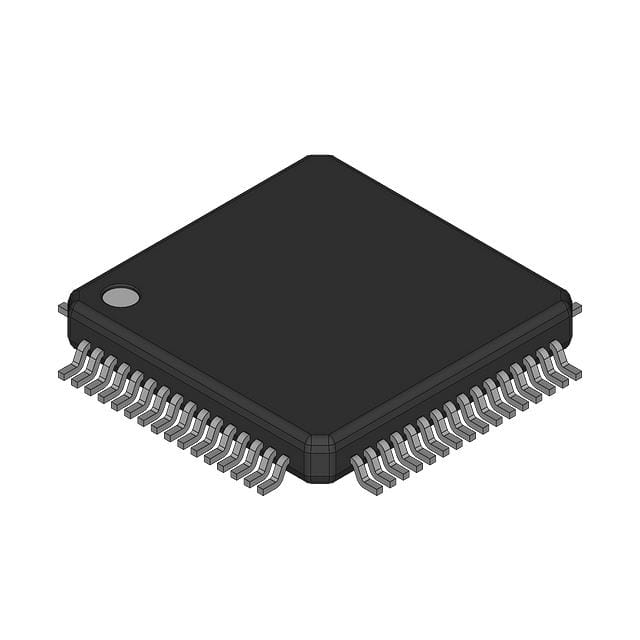
Renesas M38002E2FP
- Part No.:
- M38002E2FP
- Manufacturer:
- Renesas
- Category:
- Microcontrollers
- Package:
- -
- Datasheet:
-
 M38002E2FP.pdf
- Description:
- 8-BIT, UVPROM, MELPS740 CPU
- Quantity:
- Payment:

- Shipping:

Inventory:1,117
Please send an inquiry. Send us your inquiry, and we will respond immediately.
Product details
Overview
M38002E2FP from Renesas Electronics is an 8-bit CMOS single-chip microcomputer in the 3800 Group, featuring 24 KB mask ROM, 512-byte RAM, four 8-bit timers, UART or clock-synchronous serial I/O, and operation at up to 10 MHz with a 5 V supply. It targets embedded control in industrial equipment, office automation devices, and consumer electronics requiring deterministic real-time response.
For engineers reviewing the M38002E2FP datasheet, M38002E2FP pinout, M38002E2FP application, or M38002E2FP equivalent, key selection criteria include its 64-pin plastic QFP package (64P6N-A), mask ROM program retention, integrated watchdog timer, and support for single-chip mode without external memory.
Technical Context
The M38002E2FP implements the MELPS 740 CPU core with 16-bit address bus and 8-bit data bus, executing instructions in 1–4 cycles depending on opcode and addressing mode. It integrates a programmable clock generating circuit supporting XIN/XOUT crystal or external clock input, and supports both single-chip and memory expansion modes via dedicated control pins.
Interrupt handling uses a priority-encoded vector table with 16 interrupt sources including timer overflows, serial I/O events, and external INT pins. The CPU includes a processor status register with carry, zero, sign, and interrupt mask flags, and supports stack operations with automatic push/pop during interrupts and subroutine calls.
Key Specifications
| Parameter | Value and Actual Design Meaning |
|---|---|
| Core Architecture | MELPS 740 8-bit CPU with 16-bit address space and 1–4 cycle instruction execution |
| ROM Capacity | 24 KB mask ROM - factory-programmed nonvolatile storage for firmware, no field reprogramming |
| RAM Size | 512 bytes on-chip RAM - used for variables, stack, and temporary data without external memory access |
| Max Clock Frequency | 10 MHz - determines maximum instruction throughput and peripheral timing resolution |
| Supply Voltage | 4.5 V to 5.5 V - compatible with standard TTL/CMOS logic levels and industrial 5 V rails |
| Operating Temperature | −20 °C to +75 °C - rated for commercial/industrial ambient conditions per Renesas Standard grade |
| Timer Resources | Four independent 8-bit timers with prescaler - supports PWM generation, event counting, and time-based control loops |
Pinout & Package
Package: 64-pin plastic quad flat package (64P6N-A), 14 mm × 14 mm body, 0.8 mm lead pitch, surface-mount.
| Pin/Terminal | Circuit Role | Design Meaning |
|---|---|---|
| Vcc | Power supply | Main 5 V supply input for core and I/O; requires local decoupling capacitor |
| Vss | Ground | Digital ground reference; must be low-impedance connection to minimize noise coupling |
| XIN / XOUT | Crystal oscillator input/output | Connects to external quartz crystal (e.g., 4–10 MHz) to generate system clock |
| RESET | Active-low reset input | Asynchronous reset signal; held low for ≥1024 clock cycles to initialize CPU and peripherals |
| P00–P07 | Port 0 bidirectional I/O | 8-bit general-purpose port with internal pull-up resistors; configurable as input, output, or alternate function |
| P10–P17 | Port 1 bidirectional I/O | 8-bit general-purpose port; supports external interrupt inputs on P10–P13 |
| TXD / RXD | UART serial interface | Full-duplex asynchronous communication pins; compatible with RS-232 level shifters |
| INT0 / INT1 | External interrupt inputs | Edge-triggered interrupt request lines with programmable polarity and priority |
Key Features
| Feature | Design Value |
|---|---|
| Mask ROM programming | Factory-programmed 24 KB ROM enables secure, tamper-resistant firmware deployment with zero boot latency |
| Integrated watchdog timer | On-chip watchdog resets CPU if software fails to refresh within timeout window - prevents lockup in unattended systems |
| Single-chip mode operation | No external memory required; all code and data reside on-die - simplifies PCB layout and reduces BOM cost |
| Multiple serial interface options | Selectable UART or clock-synchronous serial I/O - supports host communication or daisy-chain sensor networks |
| Real-time port output capability | Dedicated port pins can generate precise timing pulses synchronized to internal clock - useful for motor control or LED dimming |
Applications
| Industrial Control Panel | Office Equipment Controller |
|---|---|
Use Scenario: Localized logic control in HVAC panels, PLC I/O modules, or power distribution monitors. IC Role / Device Role / Timing Role: Main controller executing state machines, reading analog/digital sensors, and driving relays or displays. Use Value: 24 KB mask ROM ensures firmware integrity across product lifetime; 4×8-bit timers enable concurrent timing of fan speed, temperature sampling, and alarm intervals. | Use Scenario: Embedded intelligence in printers, copiers, or document scanners managing paper path, motor sequencing, and user interface. IC Role / Device Role / Timing Role: System-on-chip managing peripheral drivers, button polling, and serial command parsing via UART. Use Value: Single-chip mode eliminates external memory, reducing board area and EMI; built-in watchdog guarantees recovery from print job hang conditions. |
| Consumer Appliance UI | Test & Measurement Front-End |
Use Scenario: Keypad scanning, display update, and sensor feedback in microwave ovens, washing machines, or air purifiers. IC Role / Device Role / Timing Role: Dedicated UI controller interfacing with membrane keypad, 7-segment display, and buzzer driver. Use Value: Port 0 and Port 1 provide 16 GPIOs with interrupt capability on keypress; real-time port output generates clean PWM for LED brightness control. | Use Scenario: Signal conditioning, trigger logic, and communication bridge in benchtop multimeters or oscilloscope accessories. IC Role / Device Role / Timing Role: Data acquisition coordinator converting ADC readings, applying calibration offsets, and transmitting results via UART. Use Value: 8-channel A/D converter (per 3802/3806 variants) is not present in M38002E2FP, but its deterministic 10 MHz timing ensures repeatable sampling intervals when paired with external ADCs. |
Equivalent & Alternatives
The following parts are listed as comparable options for similar 8-bit microcontroller applications.
| Alternative Part | Technical Difference | Application Difference | Selection Advice |
|---|---|---|---|
| M38003M6-XXXFP | 32 KB mask ROM, 1024-byte RAM, same 64-pin package and peripheral set | Higher firmware capacity supports more complex protocols or dual-application firmware images | Select when >24 KB code space is required without changing PCB layout |
| HD64F38002F | Renesas rebranded version post-merger; identical electrical and functional specs, updated marking | No functional or compatibility difference - direct replacement for legacy design continuity | Choose for new designs requiring current Renesas part numbering and support channels |
Compared with M38002E2FP, the M38003M6-XXXFP offers expanded memory for larger applications while maintaining pin and code compatibility, whereas the HD64F38002F provides identical functionality under Renesas' current naming convention - both serve as validated alternatives without requiring hardware redesign.
Availability
M38002E2FP is available at Aetrix Electronics and suitable for industrial control panels, office equipment controllers, and consumer appliance UIs requiring stable component supply and long-term manufacturing continuity.
Supply support for M38002E2FP includes scheduled delivery planning, volume procurement assistance, BOM continuity management, traceable sourcing, and lifecycle availability coordination for OEM customers, industrial embedded developers, connected-device designers, and electronics production programs.
Manufacturer
Renesas Electronics Corporation is a global semiconductor leader specializing in microcontrollers, analog, power, and SoC solutions for automotive, industrial, and IoT markets.
The 3800 Group microcontrollers were designed for cost-sensitive, high-reliability embedded control applications in commercial and industrial equipment - emphasizing deterministic timing, low-power operation, and robust I/O integration.
FAQ
What is the memory configuration of the M38002E2FP?
The M38002E2FP contains 24 KB of mask ROM for program storage and 512 bytes of on-chip RAM for data and stack operations. It does not include EEPROM or flash memory, and relies on factory-programmed ROM for firmware. This configuration supports fixed-function embedded applications where code stability and security are prioritized over field updates. The M38002E2FP uses a Harvard architecture with separate buses for instruction and data access.
Does the M38002E2FP support external memory expansion?
Yes, the M38002E2FP supports memory expansion mode via dedicated control pins (e.g., RD, WR, CS), enabling connection to external ROM, RAM, or peripherals using its 16-bit address and 8-bit data bus. However, it is typically deployed in single-chip mode - eliminating external memory - leveraging its 24 KB mask ROM and 512-byte RAM. Memory expansion is reserved for applications needing >24 KB code or additional data space beyond on-chip limits.
What package type is used for the M38002E2FP?
The M38002E2FP is packaged in a 64-pin plastic quad flat package (64P6N-A), measuring 14 mm × 14 mm with 0.8 mm lead pitch. This surface-mount package is RoHS-compliant and designed for reflow soldering. Pin compatibility is maintained across the 3800 Group's 64-pin variants, including M38002M4-XXXFP and M38003M6-XXXFP, allowing layout reuse in family-based designs.
Is the M38002E2FP suitable for automotive applications?
No, the M38002E2FP is classified as a Renesas Standard-grade device, rated for −20 °C to +75 °C operation and intended for computers, office equipment, industrial robots, and consumer appliances. It is not qualified to AEC-Q100 or automotive reliability standards. For automotive use, Renesas offers High Quality-grade microcontrollers such as those in the RL78/F1x or RH850 families - the M38002E2FP must not be deployed in safety-critical or vehicle-mounted systems without explicit written consent from Renesas.
How does the watchdog timer function in the M38002E2FP?
The M38002E2FP includes an on-chip watchdog timer that triggers a system reset if not cleared within its timeout period - typically configured via internal prescaler settings. The watchdog is enabled by default after reset and must be serviced regularly in firmware to prevent unintended resets. Its independence from the main CPU clock enhances reliability in fault-prone environments. This feature is critical for unattended systems like vending machines or remote sensors where software hangs must be autonomously recovered.
M38002E2FP Specifications
- Product attributes
- Attribute value
- Manufacturer:
- Renesas
- Package/Case:
- -
- Series:
- *
- Packaging:
- Bulk
- Product Status:
- Active
- Programmable:
- Not Verified
- Core Processor:
- -
- Core Size:
- -
- Speed:
- -
- Connectivity:
- -
- Peripherals:
- -
- Number of I/O:
- -
- Program Memory Size:
- -
- Program Memory Type:
- -
- EEPROM Size:
- -
- RAM Size:
- -
- Voltage - Supply (Vcc/Vdd):
- -
- Data Converters:
- -
- Oscillator Type:
- -
- Operating Temperature:
- -
- Grade:
- -
- Qualification:
- -
- Mounting Type:
- -
- Supplier Device Package:
M38002E2FP FAQ
1.How can I place an order for M38002E2FP through Aetrix?
Please submit a Request for Quotation (RFQ) for M38002E2FP on Aetrix. Our sales agent will provide a competitive quotation and guide you through the order confirmation once you accept the terms.
2.Are the price and stock information for M38002E2FP reliable?
The price and inventory of M38002E2FP are updated periodically and may fluctuate due to market conditions. Stock and pricing data are typically refreshed every 24 hours. Quotation validity for M38002E2FP is usually 5 days.
3.What payment methods are accepted for M38002E2FP?
We accept Wire Transfer, PayPal, Credit Card, Western Union, MoneyGram, and Escrow for M38002E2FP transactions.
Note: Certain payment methods may incur a processing fee.
4.How is shipping managed for M38002E2FP?
M38002E2FP orders can be shipped via leading logistics carriers, including DHL, UPS, FedEx, TNT, or Registered Mail.
Once your M38002E2FP order is processed, you will receive an email with the shipment details and tracking number.
Note: Tracking information may take up to 24 hours to appear. Express delivery typically takes 3–5 business days.
5.How can I obtain technical support or documentation for M38002E2FP?
For technical support, including M38002E2FP datasheets, pinout diagrams, or application guidance, please contact our engineering support team. They can provide detailed documentation and assistance for your M38002E2FP requirements.
6.How does Aetrix verify that M38002E2FP is sourced from the original manufacturer or authorized distributors?
All M38002E2FP products on Aetrix are procured from qualified distributors and authorized channels. Our dedicated quality assurance team conducts strict verification, including traceability checks and, if necessary, third-party testing. This ensures that M38002E2FP meets industry standards.
7.What is the process for return or replacement of M38002E2FP?
All M38002E2FP units undergo pre-shipment inspection (PSI). If there is an issue with M38002E2FP, returns or replacements are accepted under the following conditions:
1.Quantity discrepancies, incorrect items, or visible external defects (such as breakage or corrosion), acknowledged by Aetrix.
2.The issue is reported within 90 days of delivery.
3.The M38002E2FP part is unused and in its original packaging.
Return procedure for M38002E2FP:
1.Submit a request within 90 days.
2.Obtain a Return Material Authorization (RMA) from Aetrix.
M38002E2FP Tags

-
ATTINY4-TSHR
Microchip Technology
-
ATTINY10-TSHR
Microchip Technology
-
ATTINY10-TS8R
Microchip Technology

-
ATTINY202-SSNR
Microchip Technology
-
ATTINY202-SSFR
Microchip Technology
-
ATTINY402-SSNR
Microchip Technology

-
PIC16F15213T-I/MF
Microchip Technology
-
PIC16F15213-E/MF
Microchip Technology

-
PIC10F200T-I/OT
Microchip Technology
-
ATTINY412-SSNR
Microchip Technology
-
PIC10F202T-I/OT
Microchip Technology

-
ATTINY404-SSNR
Microchip Technology
Tech Hub

TTL and CMOS logic families differ in thresholds, loading, output drive, power and timing. This engineering guide compares 74HC and 74HCT, calculates noise margins and checks 3.3 V/5 V compatibility.

A practical engineering guide to 3.3V and 5V logic compatibility, input thresholds, resistor dividers, translator ICs, MOSFET level shifting, I2C pull-ups, timing limits and power-sequencing risks.

The 74HC595 uses push-pull logic outputs, while the TPIC6B595 uses 50 V open-drain DMOS sinks for higher-power loads. This guide compares timing, current limits, 3.3 V interfacing, load wiring, thermal…

The 74HC595 converts serial data into eight stable parallel outputs. This guide covers pin functions, shift and storage timing, OE and MR behavior, drive-current limits, cascading, voltage compatibilit…

A technical comparison of level-sensitive latches and edge-triggered flip-flops, covering timing windows, setup and hold limits, master–slave operation, time borrowing, race-through, HDL inference and…

A D latch stores one bit while Enable controls when data can pass. This reference covers gate-level operation, truth tables, transparency, setup and hold timing, LE versus OE, common ICs and practical …

An SR latch stores one bit through cross-coupled feedback. This engineering reference covers NOR and NAND implementations, truth tables, forbidden-state recovery, gated operation, switch debouncing, fa…

Latch circuits retain one bit through feedback. This technical reference covers SR and D latches, truth tables, transparency, timing limits, latch-versus-flip-flop behavior, applications and common log…

An engineering guide to LED driver operation, constant-current and constant-voltage outputs, linear and switching topologies, dimming, IC selection, calculations, replacement compatibility, and fault c…

Operational amplifier guide covering op amp basics, feedback, ideal vs real op amps, common configurations, buffer circuits, offset, bias current, gain-bandwidth, slew rate, rail-to-rail limits and sel…


