
 My Inquiry
 My Account


STMicroelectronics M41T94MQ6F
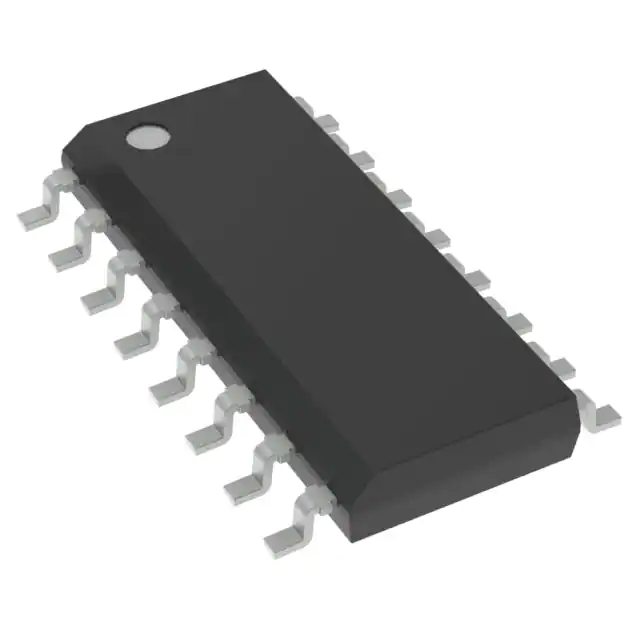
- Part No.:
- M41T94MQ6F
- Manufacturer:
- STMicroelectronics
- Category:
- Real Time Clocks
- Package:
- 16-SOIC (0.154", 3.90mm Width)
- Datasheet:
-
 M41T94MQ6F.pdf
- Description:
- IC RTC CLK/CALENDAR SPI 16SO
- Quantity:
- Payment:

- Shipping:

Inventory:5,978
Please send an inquiry. Send us your inquiry, and we will respond immediately.
Product details
Overview
M41T94MQ6F from STMicroelectronics is a serial real-time clock (RTC) IC with integrated 44-byte NVRAM, programmable alarm, watchdog timer, and battery-backed power-fail switchover. It features a 32.768 kHz crystal oscillator with 12.5 pF load capacitance, SPI interface up to 2 MHz, ultralow 500 nA battery supply current, and operates from 2.7–5.5 V. Used in industrial control panels for time-stamped event logging during mains failure.
For engineers reviewing the M41T94MQ6F datasheet, M41T94MQ6F pinout, M41T94MQ6F application, or M41T94MQ6F equivalent, key selection criteria include battery-switchover voltage thresholds (VPFD = 2.55–2.70 V or 4.20–4.50 V), BCD-formatted calendar registers with leap-year correction through year 2100, and SNAPHAT®-compatible 28-pin SOIC packaging with integrated crystal/battery support.
Technical Context
The M41T94MQ6F implements a full BCD calendar engine with automatic month-length and leap-year compensation (valid until 2100), using eight dedicated clock registers for century, year, month, date, day, hour, minute, second, and tenths/hundredths of a second. Its SPI slave interface supports CPOL/CPHA = ('0','0') or ('1','1') modes with strict timing: tCL/tCH ≥ 200 ns, fSCL ≤ 2 MHz, and input data latched on SCL rising edge.
Power management includes dual threshold detection (VSO = 2.65 V, VPFD = 2.55–2.70 V or 4.20–4.50 V), automatic VCC-to-battery switchover, and write protection hold time (tREC) after VCC recovery. The IRQ/FT/OUT pin serves triple function: open-drain interrupt output, frequency test point, and general-purpose output - configurable via control register bits.
Key Specifications
| Parameter | Value and Actual Design Meaning |
|---|---|
| Interface | SPI slave, 2 MHz max clock, CPOL/CPHA = ('0','0') or ('1','1') |
| RTC Accuracy | Crystal-based timing with automatic leap-year correction through year 2100 |
| Battery Current | 500 nA max - enables >10-year backup with standard 48 mAh lithium coin cell |
| Operating Voltage | 2.7–5.5 V VCC; 2.5–5.5 V oscillator supply - supports wide-input industrial rails |
| NVRAM Size | 44 bytes total: 8 for BCD clock/calendar, 12 for alarm/watchdog/SQW control, 24 for user RAM |
| Power-Fail Thresholds | Selectable VPFD: 2.55–2.70 V (THS = VSS) or 4.20–4.50 V (THS = VCC) |
| Watchdog Range | Programmable from 62.5 ms to 128 s - supports both fast fault recovery and long system timeouts |
Pinout & Package
Package: 16-lead SOIC (SO16/MQ), RoHS-compliant, 150 mil width. Pinout validated per STMicroelectronics DocID7564 Rev 8 Figures 2 and 3, Table 1.
| Pin/Terminal | Circuit Role | Design Meaning |
|---|---|---|
| E | Chip enable | Active-low SPI select; high-Z SDO when high; required H→L transition before any operation |
| SCL | Serial clock input | Synchronizes all SPI transfers; rising edge latches SDI, falling edge shifts out SDO |
| SDI | Serial data input | Receives command/address/data; MSB-first, 8-bit frames; sampled on SCL rising edge |
| SDO | Serial data output | Drives clock/calendar/NVRAM data; high-impedance when E is high |
| IRQ/FT/OUT | Open-drain multifunction output | Configurable as alarm interrupt, square-wave test output, or general-purpose signal |
| RST | Reset output | Open-drain active-low reset pulse generated by POR, RSTIN1, or RSTIN2 debounced inputs |
| VCC / VSS | Supply and ground | Primary power domain; VCC monitored for VPFD/VSO thresholds; VSS reference for all logic |
| VBAT | Battery supply input | Backup power source; powers RTC/NVRAM during VCC loss; requires external Li button cell |
| XI / XO | Crystal oscillator terminals | Connect external 32.768 kHz tuning fork crystal; internal 12.5 pF load capacitance |
| THS | Threshold select | Configures VPFD range: tied to VSS selects 2.55–2.70 V; tied to VCC selects 4.20–4.50 V |
| RSTIN1 / RSTIN2 | Debounced reset inputs | Hardware reset sources with internal 10 ms debounce; generate RST output and clear watchdog |
| SQW | Square wave output | Programmable frequency output (1 Hz, 4.096 kHz, 8.192 kHz, 32.768 kHz) for system timing sync |
| WDI | Watchdog input | Edge-triggered feed input; falling edge resets watchdog timer; open-drain compatible |
Key Features
| Feature | Design Value |
|---|---|
| Automatic calendar correction | BCD-encoded registers with built-in leap-year logic (valid through year 2100) and month-length adjustment |
| Low-power backup mode | 500 nA max battery current enables >10-year retention with 48 mAh Li cell - no external power management needed |
| Dual VPFD configuration | Selectable power-fail detection thresholds (2.55–2.70 V or 4.20–4.50 V) accommodate diverse supply rail designs |
| Triple-function IRQ pin | Single open-drain pin serves as alarm interrupt, frequency test point, and general-purpose output - reduces board routing |
| Integrated oscillator load | On-chip 12.5 pF capacitors eliminate external load caps - simplifies crystal layout and improves stability |
Applications
| Industrial Control Panel | Medical Device Logging |
|---|---|
Use Scenario: Time-stamping of operator actions and fault events in PLC-connected HMIs during AC mains interruption. IC Role / Device Role / Timing Role: Primary RTC with battery-backed NVRAM storing timestamps and system state across power cycles. Use Value: Maintains accurate wall-clock time and preserves critical event logs without external supervision or firmware intervention. | Use Scenario: Recording patient vital sign measurements with precise UTC-aligned timestamps in portable diagnostic equipment. IC Role / Device Role / Timing Role: Time-of-day source synchronized to NIST traceable clocks via periodic MCU calibration; stores timestamps in 44-byte NVRAM. Use Value: Enables audit-compliant data provenance with sub-second resolution and guaranteed retention during battery-only operation. |
| Smart Energy Meter | Building Automation Controller |
Use Scenario: Capturing kWh consumption intervals and tariff-switching events under brownout conditions in DIN-rail meters. IC Role / Device Role / Timing Role: High-reliability RTC with programmable alarm triggering tariff-change interrupts and watchdog monitoring MCU health. Use Value: Ensures billing accuracy and regulatory compliance by maintaining time integrity despite frequent grid voltage fluctuations. | Use Scenario: Scheduling HVAC setpoint changes and occupancy-based lighting control in commercial楼宇 systems with intermittent PoE power. IC Role / Device Role / Timing Role: Central timekeeper providing SQW output for sensor sampling synchronization and alarm-driven schedule execution. Use Value: Eliminates need for external time server dependency while supporting deterministic, low-jitter control loop timing. |
Equivalent & Alternatives
The following parts are listed as comparable options for similar real-time clock applications.
| Alternative Part | Technical Difference | Application Difference | Selection Advice |
|---|---|---|---|
| DS3231SN#T&R | Temperature-compensated crystal oscillator (TCXO); ±2 ppm accuracy vs. M41T94's ±20 ppm; I²C only, no SPI | Higher-accuracy timekeeping required in outdoor metering; lacks programmable watchdog and SQW output flexibility | Choose DS3231 for precision timing where temperature variation exceeds ±40°C; accept I²C-only interface and no alarm repeat modes |
| PCF8563T | I²C interface; 200 µA battery current (400× higher than M41T94); no integrated oscillator load caps; no watchdog timer | Cost-sensitive consumer devices with short battery life expectations; no requirement for hardware reset inputs or power-fail thresholds | Choose PCF8563 for basic RTC functions in battery-constrained but non-critical applications; avoid where long-term backup or robust power monitoring is needed |
Compared with DS3231SN#T&R and PCF8563T, the M41T94MQ6F uniquely combines SPI interface, ultra-low 500 nA battery draw, dual VPFD thresholds, hardware reset inputs, and programmable watchdog - making it optimal for industrial systems requiring deterministic power-fail response and long-term autonomous operation.
Availability
M41T94MQ6F is available at Aetrix Electronics and suitable for industrial control panels, smart energy meters, medical device logging, and building automation controllers requiring stable component supply across extended product lifecycles.
Supply support for M41T94MQ6F includes scheduled delivery planning, volume procurement assistance, BOM continuity management, traceable sourcing, and lifecycle availability coordination for OEM customers, industrial embedded developers, connected-device designers, and electronics production programs.
Manufacturer
STMicroelectronics is a global semiconductor leader headquartered in Geneva, Switzerland, designing and manufacturing microcontrollers, power ICs, sensors, and timing solutions for industrial, automotive, and embedded markets.
The M41T94MQ6F belongs to ST's real-time clock product line, engineered specifically for industrial systems needing reliable, low-power, battery-backed timekeeping with integrated power-fail management and hardware watchdog functionality.
FAQ
What crystal specifications are required for the M41T94MQ6F?
The M41T94MQ6F requires a standard 32.768 kHz tuning-fork crystal with series resistance ≤ 70 kΩ and shunt capacitance ≤ 7 pF. Its internal 12.5 pF load capacitance eliminates external capacitors, and the oscillator operates reliably across –40°C to +85°C ambient temperatures with typical frequency stability of ±20 ppm.
How does the M41T94MQ6F handle leap years and month-end rollovers?
The M41T94MQ6F implements fully autonomous calendar logic in hardware: it automatically adjusts day count for 28-, 29- (leap year), 30-, and 31-day months using BCD-encoded registers. Leap-year calculation is valid through year 2100 and requires no firmware intervention - all corrections occur transparently during clock update cycles.
Can the M41T94MQ6F operate without an external crystal?
No. The M41T94MQ6F requires an external 32.768 kHz crystal connected between XI and XO pins. It contains no internal RC oscillator; its timing accuracy and long-term stability depend entirely on the connected crystal and its matching to the internal 12.5 pF load capacitance. Operation without crystal results in halted RTC functionality.
What is the function of the THS pin, and how should it be configured?
The THS (Threshold Select) pin configures the power-fail detection voltage range: tying THS to VSS selects VPFD = 2.55–2.70 V for 3.3 V systems; tying THS to VCC selects VPFD = 4.20–4.50 V for 5 V systems. This single-pin configuration avoids external resistor dividers and ensures correct switchover behavior during brownouts.
M41T94MQ6F Specifications
- Product attributes
- Attribute value
- Manufacturer:
- STMicroelectronics
- Series:
- -
- Package/Case:
- 16-SOIC (0.154", 3.90mm Width)
- Packaging:
- Tape & Reel (TR)
- Product Status:
- Active
- Programmable:
- Not Verified
- Type:
- Clock/Calendar
- Features:
- Alarm, Leap Year, NVRAM, Square Wave Output, Watchdog Timer
- Memory Size:
- 44B
- Time Format:
- HH:MM:SS:hh (24 hr)
- Date Format:
- YY-MM-DD-dd
- Interface:
- SPI
- Voltage - Supply:
- 2.7V ~ 5.5V
- Voltage - Supply, Battery:
- 2.5V ~ 3.5V
- Current - Timekeeping (Max):
- 1.4mA @ 2.7V ~ 5.5V
- Operating Temperature:
- -40°C ~ 85°C
- Mounting Type:
- Surface Mount
- Grade:
- -
- Qualification:
- -
- Supplier Device Package:
- 16-SO
M41T94MQ6F FAQ
1.How can I place an order for M41T94MQ6F through Aetrix?
Please submit a Request for Quotation (RFQ) for M41T94MQ6F on Aetrix. Our sales agent will provide a competitive quotation and guide you through the order confirmation once you accept the terms.
2.Are the price and stock information for M41T94MQ6F reliable?
The price and inventory of M41T94MQ6F are updated periodically and may fluctuate due to market conditions. Stock and pricing data are typically refreshed every 24 hours. Quotation validity for M41T94MQ6F is usually 5 days.
3.What payment methods are accepted for M41T94MQ6F?
We accept Wire Transfer, PayPal, Credit Card, Western Union, MoneyGram, and Escrow for M41T94MQ6F transactions.
Note: Certain payment methods may incur a processing fee.
4.How is shipping managed for M41T94MQ6F?
M41T94MQ6F orders can be shipped via leading logistics carriers, including DHL, UPS, FedEx, TNT, or Registered Mail.
Once your M41T94MQ6F order is processed, you will receive an email with the shipment details and tracking number.
Note: Tracking information may take up to 24 hours to appear. Express delivery typically takes 3–5 business days.
5.How can I obtain technical support or documentation for M41T94MQ6F?
For technical support, including M41T94MQ6F datasheets, pinout diagrams, or application guidance, please contact our engineering support team. They can provide detailed documentation and assistance for your M41T94MQ6F requirements.
6.How does Aetrix verify that M41T94MQ6F is sourced from the original manufacturer or authorized distributors?
All M41T94MQ6F products on Aetrix are procured from qualified distributors and authorized channels. Our dedicated quality assurance team conducts strict verification, including traceability checks and, if necessary, third-party testing. This ensures that M41T94MQ6F meets industry standards.
7.What is the process for return or replacement of M41T94MQ6F?
All M41T94MQ6F units undergo pre-shipment inspection (PSI). If there is an issue with M41T94MQ6F, returns or replacements are accepted under the following conditions:
1.Quantity discrepancies, incorrect items, or visible external defects (such as breakage or corrosion), acknowledged by Aetrix.
2.The issue is reported within 90 days of delivery.
3.The M41T94MQ6F part is unused and in its original packaging.
Return procedure for M41T94MQ6F:
1.Submit a request within 90 days.
2.Obtain a Return Material Authorization (RMA) from Aetrix.
M41T94MQ6F Tags

-
MCP7940N-I/SN
Microchip Technology
-
MCP7940MT-I/MNY
Microchip Technology
-
PCF85063ATL/1,118
NXP USA Inc.
-
MCP7940NT-I/SN
Microchip Technology
-
MCP7940NT-I/MS
Microchip Technology
-
MCP7940N-I/MS
Microchip Technology
-
PCF85063AT/AY
NXP USA Inc.
-
PCF85063TP/1Z
NXP Semiconductors
-
PCF85063ATT/AJ
NXP USA Inc.
-
MCP7940NT-E/SN
Microchip Technology
-
MCP7940NT-I/MNY
Microchip Technology
-
MCP79400T-I/SN
Microchip Technology
Tech Hub

A practical engineering and sourcing framework covering lifecycle verification, lifetime-buy calculations, replacement qualification, supplier checks and counterfeit-risk controls.

TTL and CMOS logic families differ in thresholds, loading, output drive, power and timing. This engineering guide compares 74HC and 74HCT, calculates noise margins and checks 3.3 V/5 V compatibility.

A practical engineering guide to 3.3V and 5V logic compatibility, input thresholds, resistor dividers, translator ICs, MOSFET level shifting, I2C pull-ups, timing limits and power-sequencing risks.

The 74HC595 uses push-pull logic outputs, while the TPIC6B595 uses 50 V open-drain DMOS sinks for higher-power loads. This guide compares timing, current limits, 3.3 V interfacing, load wiring, thermal…

The 74HC595 converts serial data into eight stable parallel outputs. This guide covers pin functions, shift and storage timing, OE and MR behavior, drive-current limits, cascading, voltage compatibilit…

A technical comparison of level-sensitive latches and edge-triggered flip-flops, covering timing windows, setup and hold limits, master–slave operation, time borrowing, race-through, HDL inference and…

A D latch stores one bit while Enable controls when data can pass. This reference covers gate-level operation, truth tables, transparency, setup and hold timing, LE versus OE, common ICs and practical …

An SR latch stores one bit through cross-coupled feedback. This engineering reference covers NOR and NAND implementations, truth tables, forbidden-state recovery, gated operation, switch debouncing, fa…

Latch circuits retain one bit through feedback. This technical reference covers SR and D latches, truth tables, transparency, timing limits, latch-versus-flip-flop behavior, applications and common log…

An engineering guide to LED driver operation, constant-current and constant-voltage outputs, linear and switching topologies, dimming, IC selection, calculations, replacement compatibility, and fault c…


