
 My Inquiry
 My Account


STMicroelectronics M48T37Y-70MH6E
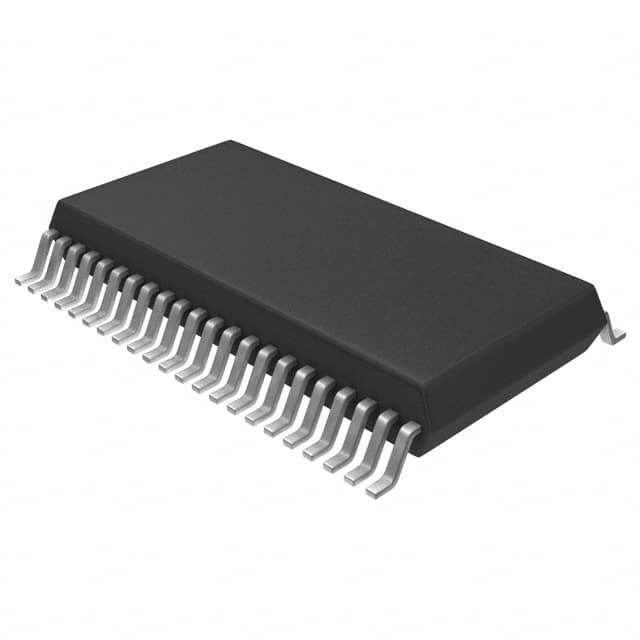
- Part No.:
- M48T37Y-70MH6E
- Manufacturer:
- STMicroelectronics
- Category:
- Real Time Clocks
- Package:
- 44-BSOP (0.337", 8.56mm Width) requires SNAPHAT
- Datasheet:
-
 M48T37Y-70MH6E.pdf
- Description:
- IC RTC CLK/CALENDAR PAR 44SOH
- Quantity:
- Payment:

- Shipping:

Inventory:2,485
Please send an inquiry. Send us your inquiry, and we will respond immediately.
Product details
Overview
M48T37Y-70MH6E from STMicroelectronics is a monolithic TIMEKEEPER® SRAM integrating 256 Kbit (32 K × 8) non-volatile static RAM, real-time clock, power-fail control circuitry, watchdog timer, and microprocessor reset generator - all in a single 44-pin SOIC package requiring external SNAPHAT® top for battery and crystal. It operates at 4.5–5.5 V, provides VPFD of 4.2–4.5 V, supports BCD-formatted time/date registers with automatic leap-year correction, and delivers ≥7 years data retention on internal lithium backup.
For engineers reviewing the M48T37Y-70MH6E datasheet, M48T37Y-70MH6E pinout, M48T37Y-70MH6E application, or M48T37Y-70MH6E equivalent, key selection considerations include its integrated battery-switchover voltage threshold (VPFD), alarm interrupt capability in battery-backup mode, frequency test output for software calibration, and compatibility with SNAPHAT® housing M4T28-BR12SH or M4T32-BR12SH.
Technical Context
The device implements a BiPORT™ dual-port memory architecture where clock registers (addresses 7FF1h–7FFFh) reside in the same SRAM array as user data and are updated once per second by dedicated clock logic - not accessed directly from oscillator counters. The 32.768 kHz crystal oscillator feeds a digital clock chain with programmable calibration via register 7FF8h.
Power management includes autonomous VCC monitoring: when supply drops below VPFD (4.2–4.5 V), it asserts write protection and high-Z outputs; below VSO, it switches to internal lithium cell while maintaining RTC and SRAM operation. The open-drain IRQ/FT pin serves dual roles - alarm interrupt or frequency test signal - controlled by bit D1 of register 7FFCh.
Key Specifications
| Parameter | Value and Actual Design Meaning |
|---|---|
| Memory size | 256 Kbit (32 K × 8) SRAM with BYTEWIDE™ access - enables direct byte-level read/write without external address latching. |
| Supply voltage | 4.5–5.5 V - compatible with standard 5 V microcontroller buses and ensures stable operation across industrial voltage tolerances. |
| VPFD range | 4.2–4.5 V - precise power-fail detect window triggers automatic write protection before data corruption occurs during brownout. |
| RTC accuracy | ±20 ppm typical over 0–70 °C - achieved via factory-trimmed crystal and software-calibratable oscillator using FT pin output. |
| Data retention | ≥7 years at 25 °C on internal lithium cell - eliminates need for external battery management during long-term backup. |
| Alarm function | Programmable daily/monthly alarm with active-low IRQ output - persists in battery-backup mode and supports repeat modes via RPT bits. |
| Watchdog timer | Configurable timeout (16 ms–1024 s) with WDS steering bit - provides hardware-level recovery for stalled microprocessors without external components. |
Pinout & Package
Package: 44-pin SOIC (SOH44), 330 mil width, surface-mountable with gold-plated socket contacts for mating SNAPHAT® top (ordered separately). Requires M4T28-BR12SH or M4T32-BR12SH housing containing 48 mAh or 120 mAh lithium coin cell and 32.768 kHz crystal.
| Pin/Terminal | Circuit Role | Design Meaning |
|---|---|---|
| A0–A14 | Address inputs | 15-bit address bus supporting full 32 Kbyte addressing; compatible with standard microprocessor address lines. |
| DQ0–DQ7 | Data I/O | 8-bit bidirectional data bus with three-state control via E/G - enables direct connection to 8-bit parallel system buses. |
| E | Chip enable | Active-low chip select; initiates READ/WRITE cycles and controls output enable when G is asserted. |
| G | Output enable | Active-low output gate; allows data bus sharing without contention during WRITE cycles when held high. |
| W | Write enable | Active-low write strobe; defines WRITE timing window together with E - supports both E- and W-controlled write protocols. |
| RST | Reset output | Open-drain reset signal with internal pull-up; asserts valid reset pulse during power-on and VCC brownout events. |
| IRQ/FT | Interrupt / frequency test | Open-drain multifunction pin: low-active alarm interrupt or 32.768 kHz test output for software calibration. |
| WDI | Watchdog input | Edge-triggered watchdog feed input; failure to toggle within programmed timeout causes RST assertion or IRQ pulse. |
| VCC | Supply voltage | Main 4.5–5.5 V power rail; monitored continuously for VPFD/VSO thresholds to manage backup switchover. |
| VSS | Ground | System reference ground; decoupling recommended near VCC pin to suppress noise-induced false power-fail detection. |
Key Features
| Feature | Design Value |
|---|---|
| Integrated battery-backed RTC + SRAM | Eliminates discrete RTC, backup capacitor, and external crystal - reduces BOM count and PCB footprint by ≥4 components. |
| SNAPHAT® top-mount architecture | Enables post-reflow installation of battery/crystal - prevents thermal damage during SMT reflow and simplifies end-of-line testing. |
| Programmable alarm in backup mode | Allows wake-up or status signaling even during main power loss - essential for energy-harvesting and battery-operated systems. |
| Microprocessor power-on reset | Guarantees clean initialization of host MCU regardless of VCC ramp rate or backup-mode entry - no external reset IC required. |
| Battery low flag (BL) | Read-only status bit (D3 of 7FF0h) alerts firmware of impending backup power exhaustion - enables graceful shutdown or alert logging. |
Applications
| Industrial PLCs | Medical Infusion Pumps |
|---|---|
|
Use Scenario: Maintaining accurate timestamped event logs and therapy schedules during AC mains interruption or battery-only operation. IC Role / Device Role / Timing Role: Primary real-time clock and non-volatile log storage with guaranteed data integrity during power transitions. Use Value: Ensures regulatory-compliant audit trails and dose timing accuracy without external RTC or backup supercapacitors. |
Use Scenario: Recording drug delivery history, calibration timestamps, and safety-critical alarms across extended clinical shifts. IC Role / Device Role / Timing Role: Timekeeping and secure parameter storage with battery-backed alarm for maintenance alerts. Use Value: Meets IEC 62304 Class C software requirements for persistent time-stamped therapy records. |
| Smart Energy Meters | Avionics Data Recorders |
|
Use Scenario: Storing tariff-switching schedules, demand-response timestamps, and tamper-event logs under intermittent grid power. IC Role / Device Role / Timing Role: High-reliability time source and secure metering data buffer with automatic brownout write protection. Use Value: Prevents revenue-loss data corruption during voltage sags and satisfies ANSI C12.1/IEC 62053-21 metering standards. |
Use Scenario: Capturing flight parameters with precise UTC timestamps during emergency power loss or engine shutdown. IC Role / Device Role / Timing Role: Certified backup timing module preserving cockpit voice and flight data recorder synchronization. Use Value: Supports DO-160 Section 22 crash survivability requirements with >7-year battery-backed timekeeping. |
Equivalent & Alternatives
The following parts are listed as comparable options for similar real-time clock + non-volatile memory applications.
| Alternative Part | Technical Difference | Application Difference | Selection Advice |
|---|---|---|---|
| DS12887+ (Maxim Integrated) | Legacy 5 V-only NV SRAM/RTC with integrated lithium battery; no SNAPHAT® modularity; fixed 200 mAhr battery; no software calibration. | Lacks frequency test output and programmable alarm repeat modes; requires full through-hole or SOIC-28 footprint. | Select if legacy pinout compatibility or MIL-STD-883 screening is required; avoid for new designs needing calibration or compact top-mount battery. |
| M48T59Y-70MH6E (STMicroelectronics) | Same SOH44 package but with 1 Mbit SRAM (128 K × 8); identical RTC, VPFD, and SNAPHAT® interface; higher current draw in active mode. | Supports larger firmware/data buffers but increases board area and cost; same backup runtime due to shared battery capacity. | Choose when >32 KB non-volatile storage is needed for bootloader or configuration tables - otherwise M48T37Y offers optimal cost/performance balance. |
Compared with DS12887+, M48T37Y-70MH6E provides modern software calibration and modular battery integration; versus M48T59Y, it delivers identical timing reliability at lower power and cost for applications needing ≤32 KB backup memory.
Availability
M48T37Y-70MH6E is available at Aetrix Electronics and suitable for industrial PLCs, medical infusion pumps, smart energy meters, and avionics data recorders requiring stable component supply, long-term lifecycle support, and RoHS-compliant manufacturing.
Supply support for M48T37Y-70MH6E includes scheduled delivery planning, volume procurement assistance, BOM continuity management, traceable sourcing, and lifecycle availability coordination for OEM customers, industrial embedded developers, connected-device designers, and electronics production programs.
Manufacturer
STMicroelectronics is a global semiconductor leader headquartered in Geneva, Switzerland, designing and manufacturing analog, microcontroller, power, and sensor solutions for industrial, automotive, and consumer markets.
M48T37Y belongs to ST's TIMEKEEPER® family - engineered specifically for systems demanding integrated, battery-backed timekeeping and non-volatile memory in space-constrained, high-reliability applications.
FAQ
What is the purpose of the SNAPHAT® top, and is it included with M48T37Y-70MH6E?
The SNAPHAT® top houses the lithium coin cell and 32.768 kHz crystal, enabling post-reflow assembly to prevent thermal damage. It is not included with M48T37Y-70MH6E - separate ordering of M4T28-BR12SH (48 mAh) or M4T32-BR12SH (120 mAh) is required. The SOIC package features gold-plated sockets for direct mechanical and electrical mating.
How does the M48T37Y-70MH6E handle power transitions between VCC and battery backup?
When VCC falls below VPFD (4.2–4.5 V), the device automatically enters write-protected mode and tri-states all outputs. At VSO (~4.0 V), it seamlessly switches to internal lithium power while sustaining RTC and SRAM operation. Upon VCC recovery above VPFD, it re-enables normal access after tREC (100 ms max), with no firmware intervention required.
Can the alarm function operate while the main system power is off?
Yes - the alarm remains fully functional in battery-backup mode. When enabled via AFE and ABE bits in register 7FF6h, matching of alarm registers (7FF2h–7FF5h) with real-time values triggers an active-low pulse on IRQ/FT, usable for wake-up or external interrupt signaling without VCC present.
What is the significance of the frequency test (FT) output, and how is it used?
The FT bit (D1 of 7FFCh) routes the 32.768 kHz oscillator signal to the IRQ/FT pin, enabling firmware-based clock calibration. By measuring FT period drift against a known reference, software adjusts the calibration value in register 7FF8h to compensate for crystal aging or temperature variation - improving long-term RTC accuracy beyond ±20 ppm.
M48T37Y-70MH6E Specifications
- Product attributes
- Attribute value
- Manufacturer:
- STMicroelectronics
- Series:
- Timekeeper®
- Package/Case:
- 44-BSOP (0.337", 8.56mm Width) requires SNAPHAT
- Packaging:
- Tube
- Product Status:
- Obsolete
- Programmable:
- Not Verified
- Type:
- Clock/Calendar
- Features:
- Alarm, Leap Year, Watchdog Timer
- Memory Size:
- -
- Time Format:
- HH:MM:SS (24 hr)
- Date Format:
- YY-MM-DD-dd
- Interface:
- Parallel
- Voltage - Supply:
- 4.5V ~ 5.5V
- Voltage - Supply, Battery:
- -
- Current - Timekeeping (Max):
- 3mA @ 4.5V ~ 5.5V
- Operating Temperature:
- -40°C ~ 85°C
- Mounting Type:
- Surface Mount
- Grade:
- -
- Qualification:
- -
- Supplier Device Package:
- 44-SOH
M48T37Y-70MH6E FAQ
1.How can I place an order for M48T37Y-70MH6E through Aetrix?
Please submit a Request for Quotation (RFQ) for M48T37Y-70MH6E on Aetrix. Our sales agent will provide a competitive quotation and guide you through the order confirmation once you accept the terms.
2.Are the price and stock information for M48T37Y-70MH6E reliable?
The price and inventory of M48T37Y-70MH6E are updated periodically and may fluctuate due to market conditions. Stock and pricing data are typically refreshed every 24 hours. Quotation validity for M48T37Y-70MH6E is usually 5 days.
3.What payment methods are accepted for M48T37Y-70MH6E?
We accept Wire Transfer, PayPal, Credit Card, Western Union, MoneyGram, and Escrow for M48T37Y-70MH6E transactions.
Note: Certain payment methods may incur a processing fee.
4.How is shipping managed for M48T37Y-70MH6E?
M48T37Y-70MH6E orders can be shipped via leading logistics carriers, including DHL, UPS, FedEx, TNT, or Registered Mail.
Once your M48T37Y-70MH6E order is processed, you will receive an email with the shipment details and tracking number.
Note: Tracking information may take up to 24 hours to appear. Express delivery typically takes 3–5 business days.
5.How can I obtain technical support or documentation for M48T37Y-70MH6E?
For technical support, including M48T37Y-70MH6E datasheets, pinout diagrams, or application guidance, please contact our engineering support team. They can provide detailed documentation and assistance for your M48T37Y-70MH6E requirements.
6.How does Aetrix verify that M48T37Y-70MH6E is sourced from the original manufacturer or authorized distributors?
All M48T37Y-70MH6E products on Aetrix are procured from qualified distributors and authorized channels. Our dedicated quality assurance team conducts strict verification, including traceability checks and, if necessary, third-party testing. This ensures that M48T37Y-70MH6E meets industry standards.
7.What is the process for return or replacement of M48T37Y-70MH6E?
All M48T37Y-70MH6E units undergo pre-shipment inspection (PSI). If there is an issue with M48T37Y-70MH6E, returns or replacements are accepted under the following conditions:
1.Quantity discrepancies, incorrect items, or visible external defects (such as breakage or corrosion), acknowledged by Aetrix.
2.The issue is reported within 90 days of delivery.
3.The M48T37Y-70MH6E part is unused and in its original packaging.
Return procedure for M48T37Y-70MH6E:
1.Submit a request within 90 days.
2.Obtain a Return Material Authorization (RMA) from Aetrix.
M48T37Y-70MH6E Tags

-
MCP7940N-I/SN
Microchip Technology
-
MCP7940MT-I/MNY
Microchip Technology
-
PCF85063ATL/1,118
NXP USA Inc.
-
MCP7940NT-I/SN
Microchip Technology
-
MCP7940NT-I/MS
Microchip Technology
-
MCP7940N-I/MS
Microchip Technology
-
PCF85063AT/AY
NXP USA Inc.
-
PCF85063TP/1Z
NXP Semiconductors
-
PCF85063ATT/AJ
NXP USA Inc.
-
MCP7940NT-E/SN
Microchip Technology
-
MCP7940NT-I/MNY
Microchip Technology
-
MCP79400T-I/SN
Microchip Technology
Tech Hub

A practical engineering and sourcing framework covering lifecycle verification, lifetime-buy calculations, replacement qualification, supplier checks and counterfeit-risk controls.

TTL and CMOS logic families differ in thresholds, loading, output drive, power and timing. This engineering guide compares 74HC and 74HCT, calculates noise margins and checks 3.3 V/5 V compatibility.

A practical engineering guide to 3.3V and 5V logic compatibility, input thresholds, resistor dividers, translator ICs, MOSFET level shifting, I2C pull-ups, timing limits and power-sequencing risks.

The 74HC595 uses push-pull logic outputs, while the TPIC6B595 uses 50 V open-drain DMOS sinks for higher-power loads. This guide compares timing, current limits, 3.3 V interfacing, load wiring, thermal…

The 74HC595 converts serial data into eight stable parallel outputs. This guide covers pin functions, shift and storage timing, OE and MR behavior, drive-current limits, cascading, voltage compatibilit…

A technical comparison of level-sensitive latches and edge-triggered flip-flops, covering timing windows, setup and hold limits, master–slave operation, time borrowing, race-through, HDL inference and…

A D latch stores one bit while Enable controls when data can pass. This reference covers gate-level operation, truth tables, transparency, setup and hold timing, LE versus OE, common ICs and practical …

An SR latch stores one bit through cross-coupled feedback. This engineering reference covers NOR and NAND implementations, truth tables, forbidden-state recovery, gated operation, switch debouncing, fa…

Latch circuits retain one bit through feedback. This technical reference covers SR and D latches, truth tables, transparency, timing limits, latch-versus-flip-flop behavior, applications and common log…

An engineering guide to LED driver operation, constant-current and constant-voltage outputs, linear and switching topologies, dimming, IC selection, calculations, replacement compatibility, and fault c…


