
 My Inquiry
 My Account


Renesas M51955BFP#TF0R
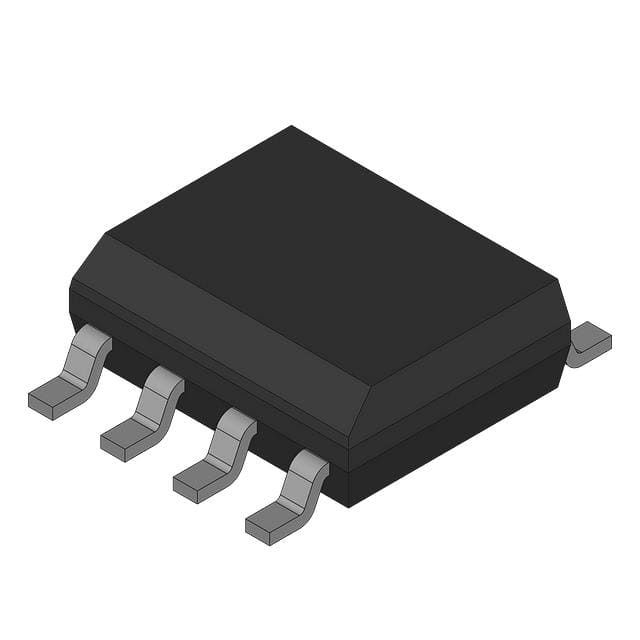
- Part No.:
- M51955BFP#TF0R
- Manufacturer:
- Renesas
- Category:
- Supervisors
- Package:
- -
- Datasheet:
-
 M51955BFP#TF0R.pdf
- Description:
- IC SUPERVISOR VOLT DET SYS RESET
- Quantity:
- Payment:

- Shipping:

Inventory:918
Please send an inquiry. Send us your inquiry, and we will respond immediately.
Product details
Overview
M51955BFP#TF0R from Texas Instruments is an 8-channel, 16-bit delta-sigma analog front-end IC designed for biopotential measurement systems. It integrates eight low-noise PGAs, eight high-resolution ADCs, built-in RLD and WCT amplifiers, internal oscillator and reference, and SPI interface - delivering 0.55 mW/channel power consumption, 12 μVPP input-referred noise (150 Hz BW, G = 6), and –105 dB CMRR for ECG signal acquisition in patient monitoring and Holter applications.
For engineers reviewing the M51955BFP#TF0R datasheet, M51955BFP#TF0R pinout, M51955BFP#TF0R application, or M51955BFP#TF0R equivalent, this device supports AAMI EC11, IEC60601-1, and IEC60601-2-27 compliance; offers programmable gain (1–12), data rates from 125 SPS to 8 kSPS, and daisy-chain capability for scalable channel count expansion in medical instrumentation designs.
Technical Context
The M51955BFP#TF0R implements a simultaneous-sampling delta-sigma architecture with per-channel programmable gain amplifiers and digital filtering. Its integrated RLD amplifier supports configurable current drive (±0.25 mA) and lead-off detection via excitation current sink/source, while the WCT amplifier provides Wilson Center Terminal generation for standard 12-lead ECG derivation.
It features an on-chip 2.048 MHz oscillator (±2% over 0°C to +70°C), internal 2.4 V or 4.0 V reference (±0.2% accuracy), and SPI-compatible serial interface operating at CPOL = 0, CPHA = 1. The device supports flexible power-down and standby modes, with quiescent channel power of 350 µW (3 V AVDD) and 620 µW (5 V AVDD).
Key Specifications
| Parameter | Value and Actual Design Meaning |
|---|---|
| Resolution | 16-bit delta-sigma ADC with no missing codes - ensures full dynamic range utilization in biopotential digitization. |
| Data Rate | 125 SPS to 8 kSPS - enables software-based pace detection and adaptive noise filtering across clinical and ambulatory use cases. |
| Input-Referred Noise | 12 μVPP (150 Hz BW, G = 6) - meets low-noise requirements for microvolt-level ECG and EEG signal capture. |
| CMRR | –105 dB at 50/60 Hz - suppresses common-mode interference from mains coupling in unshielded clinical environments. |
| Power per Channel | 0.55 mW - enables battery-operated, multi-day Holter monitors and wearable biosensors without thermal or runtime compromise. |
| Gain Range | 1, 2, 3, 4, 6, 8, or 12 - allows optimal signal conditioning for varying electrode impedances and biopotential amplitudes (e.g., ECG vs. EMG). |
| Operating Temp | 0°C to +70°C - validated for use in clinical bedside monitors and portable diagnostic equipment under ambient conditions. |
Pinout & Package
Package: TQFP-64 (PAG), 10 mm × 10 mm, 0.5 mm pitch, lead-free, RoHS-compliant.
| Pin/Terminal | Circuit Role | Design Meaning |
|---|---|---|
| IN1P–IN8P / IN1N–IN8N | Differential analog inputs | Eight fully independent, multiplexed biopotential input pairs - support direct connection to ECG electrodes with selectable PGA per channel. |
| RLDOUT / RLDIN / RLDINV / RLDREF | Right Leg Drive circuitry | Integrated RLD amplifier with dedicated input/output/inverting/noninverting terminals - enables active common-mode rejection without external op-amps. |
| WCT | Wilson Center Terminal output | Single-ended output derived from averaged limb leads - directly interfaces with standard 12-lead ECG electrode configurations. |
| TESTP_PACE_OUT1 / TESTN_PACE_OUT2 | Test/pace buffer outputs | Configurable single-ended test signal sources - used for system self-test, calibration, or pace detection channel selection. |
| SCLK / DIN / DOUT / CS / START / DRDY | SPI control and data interface | Full-duplex SPI with start-trigger and data-ready handshake - simplifies host MCU integration and real-time streaming synchronization. |
| PWDN / RESET / CLKSEL / DAISY_IN | System control and expansion | Hardware power-down, reset, clock source selection, and daisy-chain enable - supports low-power operation and modular multi-device architectures. |
Key Features
| Feature | Design Value |
|---|---|
| Built-in RLD amplifier | Drives ±0.25 mA into 50 kΩ||10 pF load with 0.2 V/µs slew rate - eliminates need for discrete RLD circuitry and reduces BOM count. |
| Integrated WCT generator | Provides Wilson terminal output with 30–89 kHz bandwidth depending on configuration - enables compact 12-lead ECG without external summing amplifiers. |
| Programmable lead-off detection | Supports 4, 8, 12, or 16 nA excitation current with ±20% accuracy - allows reliable electrode contact monitoring across diverse skin types and placements. |
| Onboard oscillator & reference | 2.048 MHz ±2% oscillator and 2.4 V/4.0 V ±0.2% reference - removes external timing components and improves system-level accuracy and layout simplicity. |
| Daisy-chain SPI interface | DAISY_IN pin enables cascading up to 16+ devices - scales channel count to 128+ without additional SPI buses or GPIO overhead. |
Applications
| ECG Patient Monitoring | Holter & Event Recorders |
|---|---|
Use Scenario: Continuous 12-lead ECG acquisition in hospital bedside or outpatient settings with real-time arrhythmia analysis. IC Role / Device Role / Timing Role: Primary analog front-end digitizing all limb and chest leads simultaneously with RLD-driven common-mode suppression and WCT synthesis. Use Value: Achieves AAMI EC11 and IEC60601-2-27 compliance using single-chip solution - reduces design cycle time and validation effort versus discrete PGA+ADC+amplifier stacks. | Use Scenario: Ambulatory 24–72 hour ECG recording with ultra-low power consumption and flash storage. IC Role / Device Role / Timing Role: Low-noise, low-power biopotential acquisition engine with programmable data rate (125–8 kSPS) and SPI streaming to microcontroller. Use Value: 0.55 mW/channel operation extends battery life to >7 days on coin-cell power - critical for unobtrusive long-term wearables. |
| Stress Testing Systems | Telemedicine ECG Terminals |
Use Scenario: Exercise treadmill ECG with motion artifact resilience and high-fidelity ST-segment analysis. IC Role / Device Role / Timing Role: High-CMRR (–105 dB), low-noise (12 μVPP) signal conditioning block enabling accurate waveform morphology preservation during dynamic activity. Use Value: Maintains diagnostic-grade fidelity at 8 kSPS sampling - supports software-based pace detection and transient ischemia identification. | Use Scenario: Home-use Bluetooth-enabled ECG devices transmitting data to cloud platforms for remote physician review. IC Role / Device Role / Timing Role: SPI-connected front-end with DRDY interrupt and daisy-chain readiness - simplifies firmware integration with wireless SoCs and enables future multi-lead upgrades. Use Value: Integrated test signals and lead-off detection provide automated self-test and patient guidance - improving first-time usability and data reliability. |
Equivalent & Alternatives
The following parts are listed as comparable options for similar biopotential front-end applications.
| Alternative Part | Technical Difference | Application Difference | Selection Advice |
|---|---|---|---|
| ADS1298RIPAG | 24-bit resolution, –40°C to +85°C extended temperature range, integrated respiration circuitry, higher THD performance (–100 dB) | Required for high-precision diagnostic ECG, stress testing, or industrial-grade environmental robustness | Select ADS1298RIPAG when 24-bit resolution, wider temperature range, or respiration monitoring is mandatory. |
| ADS1194IPAG | 4-channel version, identical architecture and pinout, lower power (3 mW total), reduced cost | Suitable for 3-lead ECG, fetal monitoring, or portable single-lead devices where channel count is constrained | Choose ADS1194IPAG for cost-sensitive, lower-channel-count applications without sacrificing noise or feature set. |
Compared with ADS1298RIPAG, M51955BFP#TF0R trades resolution and temperature range for lower power and cost; versus ADS1194IPAG, it doubles channel count and maintains identical per-channel performance - making it optimal for mid-tier 8-lead clinical and ambulatory systems.
Availability
M51955BFP#TF0R is available at Aetrix Electronics and suitable for ECG patient monitoring, Holter recorders, and telemedicine terminals requiring stable component supply, long-lifecycle support, and medical-grade traceability.
Supply support for M51955BFP#TF0R includes scheduled delivery planning, volume procurement assistance, BOM continuity management, traceable sourcing, and lifecycle availability coordination for OEM customers, industrial embedded developers, connected-device designers, and electronics production programs.
Manufacturer
Texas Instruments is a global semiconductor leader specializing in analog, embedded processing, and connectivity technologies for industrial, automotive, and medical markets.
The ADS119x family - including M51955BFP#TF0R - was engineered specifically for low-power, high-integration biopotential measurement, targeting ECG, EEG, and EMG systems that demand regulatory compliance, miniaturization, and design simplicity.
FAQ
What is the primary function of M51955BFP#TF0R in medical instrumentation?
M51955BFP#TF0R serves as a complete 8-channel analog front-end for biopotential measurements, integrating PGAs, ADCs, RLD and WCT amplifiers, oscillator, reference, and SPI interface. It enables compact, low-power ECG systems compliant with AAMI EC11 and IEC60601-2-27 standards - eliminating the need for multiple discrete signal-conditioning components in designs using M51955BFP#TF0R.
Does M51955BFP#TF0R support daisy-chaining for higher channel counts?
Yes, M51955BFP#TF0R supports daisy-chaining via its DAISY_IN pin, allowing multiple devices to be cascaded on a single SPI bus. This enables scalable channel expansion - for example, four M51955BFP#TF0R devices can deliver 32 synchronized channels - without requiring additional SPI peripherals or complex timing alignment in systems built around M51955BFP#TF0R.
What are the key power specifications of M51955BFP#TF0R at 3V analog supply?
At AVDD = 3 V, M51955BFP#TF0R draws 1.3 mA IAVDD and 0.5 mA IDVDD, resulting in 4.3–4.8 mW total quiescent power dissipation in normal mode. Per-channel power is 350 µW, supporting battery-powered applications like Holter monitors. Power-down mode reduces consumption to 10 µW - critical for sleep-state energy conservation in devices using M51955BFP#TF0R.
How does M51955BFP#TF0R implement lead-off detection?
M51955BFP#TF0R implements lead-off detection using programmable excitation current sources (4, 8, 12, or 16 nA) injected into electrode paths, with comparator threshold accuracy of ±30 mV. Detection frequency is configurable as fDR/4 or DC. This on-chip capability replaces external comparators and current sources - simplifying PCB layout and improving reliability in ECG systems based on M51955BFP#TF0R.
Is M51955BFP#TF0R pin-compatible with other ADS119x family members?
M51955BFP#TF0R uses the TQFP-64 (PAG) package and shares identical pinout and register map with ADS1198IPAG and ADS1196IPAG. This allows hardware reuse across 4-, 6-, and 8-channel variants. However, unused pins (e.g., IN5P–IN8P/N on ADS1194) must be tied to AVDD - a design consideration confirmed in the official datasheet for M51955BFP#TF0R.
M51955BFP#TF0R Specifications
- Product attributes
- Attribute value
- Manufacturer:
- Renesas
- Series:
- *
- Package/Case:
- -
- Packaging:
- Bulk
- Product Status:
- Obsolete
- Programmable:
- Not Verified
- Type:
- -
- Number of Voltages Monitored:
- -
- Voltage - Threshold:
- -
- Output:
- -
- Reset:
- -
- Reset Timeout:
- -
- Operating Temperature:
- -
- Grade:
- -
- Qualification:
- -
- Mounting Type:
- -
- Supplier Device Package:
- -
M51955BFP#TF0R FAQ
1.How can I place an order for M51955BFP#TF0R through Aetrix?
Please submit a Request for Quotation (RFQ) for M51955BFP#TF0R on Aetrix. Our sales agent will provide a competitive quotation and guide you through the order confirmation once you accept the terms.
2.Are the price and stock information for M51955BFP#TF0R reliable?
The price and inventory of M51955BFP#TF0R are updated periodically and may fluctuate due to market conditions. Stock and pricing data are typically refreshed every 24 hours. Quotation validity for M51955BFP#TF0R is usually 5 days.
3.What payment methods are accepted for M51955BFP#TF0R?
We accept Wire Transfer, PayPal, Credit Card, Western Union, MoneyGram, and Escrow for M51955BFP#TF0R transactions.
Note: Certain payment methods may incur a processing fee.
4.How is shipping managed for M51955BFP#TF0R?
M51955BFP#TF0R orders can be shipped via leading logistics carriers, including DHL, UPS, FedEx, TNT, or Registered Mail.
Once your M51955BFP#TF0R order is processed, you will receive an email with the shipment details and tracking number.
Note: Tracking information may take up to 24 hours to appear. Express delivery typically takes 3–5 business days.
5.How can I obtain technical support or documentation for M51955BFP#TF0R?
For technical support, including M51955BFP#TF0R datasheets, pinout diagrams, or application guidance, please contact our engineering support team. They can provide detailed documentation and assistance for your M51955BFP#TF0R requirements.
6.How does Aetrix verify that M51955BFP#TF0R is sourced from the original manufacturer or authorized distributors?
All M51955BFP#TF0R products on Aetrix are procured from qualified distributors and authorized channels. Our dedicated quality assurance team conducts strict verification, including traceability checks and, if necessary, third-party testing. This ensures that M51955BFP#TF0R meets industry standards.
7.What is the process for return or replacement of M51955BFP#TF0R?
All M51955BFP#TF0R units undergo pre-shipment inspection (PSI). If there is an issue with M51955BFP#TF0R, returns or replacements are accepted under the following conditions:
1.Quantity discrepancies, incorrect items, or visible external defects (such as breakage or corrosion), acknowledged by Aetrix.
2.The issue is reported within 90 days of delivery.
3.The M51955BFP#TF0R part is unused and in its original packaging.
Return procedure for M51955BFP#TF0R:
1.Submit a request within 90 days.
2.Obtain a Return Material Authorization (RMA) from Aetrix.
M51955BFP#TF0R Tags
-
MIC826SYMT-TR
Microchip Technology
-
APX803S-31SA-7
Diodes Incorporated
-
APX803L20-29SA-7
Diodes Incorporated

-
TPS3828-33DBVR
Texas Instruments

-
V6340RSP3B+
EM Microelectronic
-
EM6325CXSP5B-2.9+
EM Microelectronic
-
MCP120T-300I/TT
Microchip Technology
-
MCP130T-315I/TT
Microchip Technology
-
MCP120T-475I/TT
Microchip Technology
-
MCP111T-300E/TT
Microchip Technology
-
MCP120T-315I/TT
Microchip Technology
-
MCP809T-315I/TT
Microchip Technology
Tech Hub

TTL and CMOS logic families differ in thresholds, loading, output drive, power and timing. This engineering guide compares 74HC and 74HCT, calculates noise margins and checks 3.3 V/5 V compatibility.

A practical engineering guide to 3.3V and 5V logic compatibility, input thresholds, resistor dividers, translator ICs, MOSFET level shifting, I2C pull-ups, timing limits and power-sequencing risks.

The 74HC595 uses push-pull logic outputs, while the TPIC6B595 uses 50 V open-drain DMOS sinks for higher-power loads. This guide compares timing, current limits, 3.3 V interfacing, load wiring, thermal…

The 74HC595 converts serial data into eight stable parallel outputs. This guide covers pin functions, shift and storage timing, OE and MR behavior, drive-current limits, cascading, voltage compatibilit…

A technical comparison of level-sensitive latches and edge-triggered flip-flops, covering timing windows, setup and hold limits, master–slave operation, time borrowing, race-through, HDL inference and…

A D latch stores one bit while Enable controls when data can pass. This reference covers gate-level operation, truth tables, transparency, setup and hold timing, LE versus OE, common ICs and practical …

An SR latch stores one bit through cross-coupled feedback. This engineering reference covers NOR and NAND implementations, truth tables, forbidden-state recovery, gated operation, switch debouncing, fa…

Latch circuits retain one bit through feedback. This technical reference covers SR and D latches, truth tables, transparency, timing limits, latch-versus-flip-flop behavior, applications and common log…

An engineering guide to LED driver operation, constant-current and constant-voltage outputs, linear and switching topologies, dimming, IC selection, calculations, replacement compatibility, and fault c…

Operational amplifier guide covering op amp basics, feedback, ideal vs real op amps, common configurations, buffer circuits, offset, bias current, gain-bandwidth, slew rate, rail-to-rail limits and sel…


