
 My Inquiry
 My Account


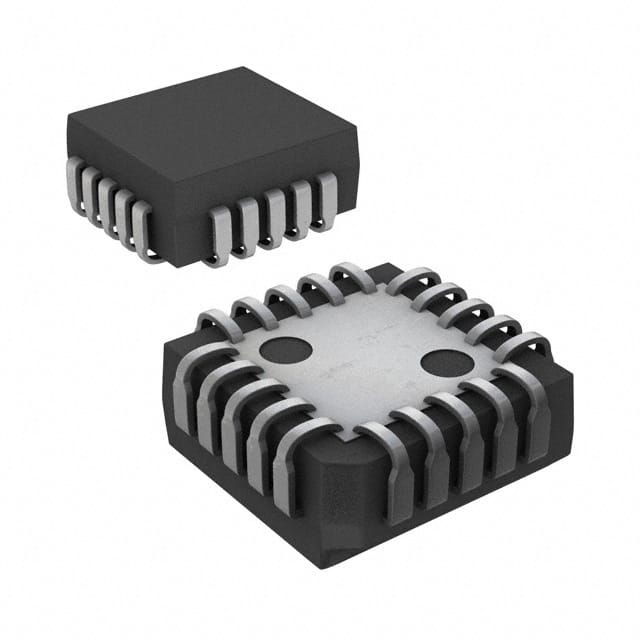
STMicroelectronics M5451Q
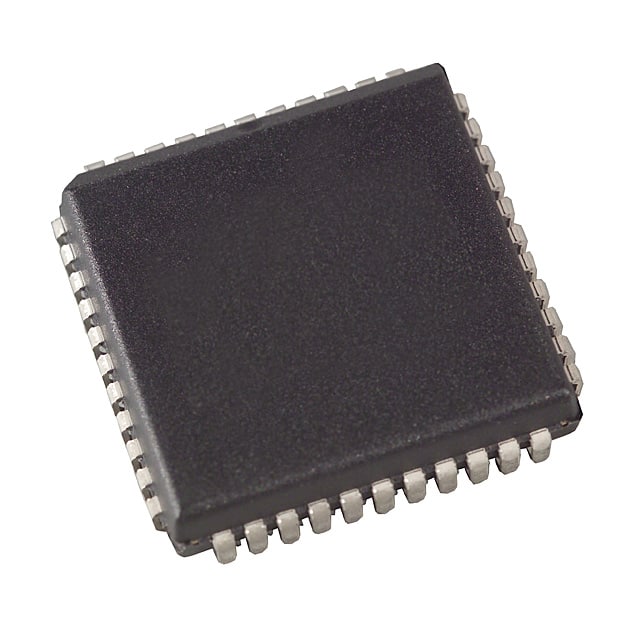
- Part No.:
- M5451Q
- Manufacturer:
- STMicroelectronics
- Category:
- Display Drivers
- Package:
- 44-LCC (J-Lead)
- Datasheet:
-
 M5451Q.pdf
- Description:
- IC LED DISPL DRVR 4/5 DGT 44PLCC
- Quantity:
- Payment:

- Shipping:

Inventory:4,171
Please send an inquiry. Send us your inquiry, and we will respond immediately.
Product details
Overview
M5451Q from STMicroelectronics is a 35-channel LED display driver IC with integrated current-sink outputs (15 mA typical per channel), serial data interface, and analog brightness control via external resistor on pin 19. It operates from 4.75 V to 13.2 V, supports non-multiplexed direct drive of alphanumeric displays, and is packaged in a 44-pin PLCC. Used in industrial instrumentation readouts and microprocessor-based display systems.
For engineers reviewing the M5451Q datasheet, M5451Q pinout, M5451Q application, or M5451Q equivalent, key selection criteria include its 35-bit serial shift register + latch architecture, internal 400 Ω brightness reference resistor, ±20% output current matching, and compatibility with TTL-level clock/data inputs at up to 0.5 MHz.
Technical Context
The M5451Q implements a static master-slave 35-bit shift register followed by parallel latches, enabling non-multiplexed LED segment control. Data loading occurs synchronously on the 36th clock edge after a leading "1" start bit, eliminating need for separate LOAD signals.
Brightness is set by an external variable resistor connected to pin 19 (VB), which sources 0–750 µA into an internal current mirror; output sink current scales linearly (e.g., 750 µA → 15 mA/channel). The device includes internal power-on reset and requires a 1 nF capacitor on pin 19 to suppress oscillation.
Key Specifications
| Parameter | Value and Actual Design Meaning |
|---|---|
| Output channels | 35 independent current-sink outputs for direct LED segment drive |
| Output current | 15 mA typical per channel at VB = 750 µA; max 40 mA absolute rating |
| Supply voltage | 4.75 V to 13.2 V - supports wide-range industrial rails without regulation |
| Input clock frequency | DC to 0.5 MHz - enables low-speed microcontroller interfacing without timing constraints |
| Output current matching | ±20% variation - ensures uniform LED brightness across all 35 segments |
| Brightness control | Analog via pin 19 (VB); 0–750 µA input sets full-scale output current |
| Logic compatibility | TTL-level inputs (VIH ≥ 2.2 V @ VDD ≤ 5.25 V) - interoperable with legacy 5 V MCUs |
Pinout & Package
Package: 44-pin Plastic Leaded Chip Carrier (PLCC44), 17.4 mm × 16.51 mm footprint, 3.65 mm height, JEDEC MS-026 compliant.
| Pin/Terminal | Circuit Role | Design Meaning |
|---|---|---|
| 1, 2, 3, ..., 17, 18, 20–34 | Output bit (sink) | 35 dedicated current-sink outputs - pins 1–17, 18, 20–34; pin 19 is brightness control, not output |
| 19 | Brightness control input | Analog current input (0–750 µA); sets global output current scaling via internal mirror |
| 21, 22 | Data In / Clock In | Serial interface: rising-edge-triggered clock and LSB-first data with start bit |
| 40 | VDD | Main supply rail (4.75–13.2 V); powers logic and output drivers |
| 29 | VSS | Ground reference for logic and output sinks |
Key Features
| Feature | Design Value |
|---|---|
| No external current-setting resistors | Internal 400 Ω reference resistor eliminates per-output Rset components and layout complexity |
| Continuous analog brightness control | Precision current mirror allows smooth dimming without PWM or digital register writes |
| 36-bit serial protocol with auto-load | Leading "1" + 35 data bits triggers automatic latch update on 36th clock - no separate LOAD signal required |
| Power-on reset & static shift register | Guarantees known initial state at startup; master-slave design enables continuous streaming without gaps |
Applications
| Industrial Instrumentation Readouts | Microprocessor Display Systems |
|---|---|
Use Scenario: Driving 5-digit alphanumeric LED displays in panel meters and process controllers. IC Role / Device Role / Timing Role: Direct segment driver with non-multiplexed output - eliminates external multiplexing logic and timing firmware overhead. Use Value: Reduces BOM count by removing 35 discrete current-limiting resistors and simplifies PCB routing with single serial interface. | Use Scenario: Interface between 8-bit microcontrollers (e.g., 8051 derivatives) and multi-digit LED displays in embedded HMI. IC Role / Device Role / Timing Role: Serial-to-parallel converter with integrated current sinks - accepts standard shift-out instructions without GPIO expansion. Use Value: Enables full 35-segment control using only two MCU I/O pins (DATA, CLOCK), freeing GPIO for sensors or communication. |
| Relay Driver Interfaces | Electronically Tuned Radio/TV Frontends |
Use Scenario: Driving LED status indicators for relay banks in PLC I/O modules. IC Role / Device Role / Timing Role: High-voltage-tolerant sink driver (VO(off) = 13.2 V) - directly interfaces with relay coil return paths referenced to VDD. Use Value: Eliminates need for optocouplers or level-shifting transistors when relays share common VDD rail. | Use Scenario: Segment control in FM/AM radio tuning displays with station identification and signal strength bars. IC Role / Device Role / Timing Role: Dedicated display controller synchronized to tuning controller's serial bus - handles display updates independently of RF processing. Use Value: Offloads display management from main controller, ensuring flicker-free updates during PLL frequency sweeps. |
Equivalent & Alternatives
The following parts are listed as comparable options for similar LED display driver applications.
| Alternative Part | Technical Difference | Application Difference | Selection Advice |
|---|---|---|---|
| MAX7219 | 8-digit, 64-segment scan driver with SPI interface and on-chip decoding; requires external current-setting resistor | Designed for multiplexed 7-segment displays; lacks direct 35-bit non-multiplexed output capability | Select for space-constrained designs needing digit-level control and built-in BCD decode |
| TLC59282 | 16-channel constant-current sink driver with PWM brightness control and 30 MHz SPI; no analog brightness input | Requires external shift register or MCU with high-speed SPI; no native 35-bit serial protocol | Select when precise per-channel PWM dimming and higher channel density per package are required |
Compared with MAX7219 and TLC59282, the M5451Q uniquely delivers 35-channel direct drive with analog brightness scaling and zero-external-resistor operation - ideal for fixed-format alphanumeric displays where simplicity and minimal component count outweigh programmability needs.
Availability
M5451Q is available at Aetrix Electronics and suitable for industrial instrumentation readouts, microprocessor display systems, and relay driver interfaces requiring stable component supply and long-lifecycle support.
Supply support for M5451Q includes scheduled delivery planning, volume procurement assistance, BOM continuity management, traceable sourcing, and lifecycle availability coordination for OEM customers, industrial embedded developers, connected-device designers, and electronics production programs.
Manufacturer
STMicroelectronics is a global semiconductor leader headquartered in Geneva, Switzerland, specializing in automotive, industrial, and power management ICs with broad manufacturing and quality certifications.
The M5451Q belongs to ST's legacy LED display driver product line, designed specifically for cost-sensitive, high-reliability alphanumeric display applications in industrial control and consumer electronics front panels.
FAQ
What is the maximum number of LEDs the M5451Q can drive simultaneously?
The M5451Q can drive all 35 outputs concurrently at up to 15 mA each. Total power dissipation must remain within limits: at Tamb = 85°C, maximum total power is 560 mW. With VO = 1 V per output and 35 segments active, total power is ~0.525 W - within safe operating area per Figure 7. Thermal derating applies above 85°C ambient.
Does the M5451Q require an external load signal for data latching?
No. The M5451Q uses a 36-bit serial frame (1 start bit + 35 data bits) where the 36th clock edge automatically generates an internal LOAD pulse. This eliminates need for a separate LOAD or strobe signal - simplifying interface to microcontrollers with basic shift-out capability.
Can the M5451Q drive LEDs with forward voltages above 3 V?
Yes. The off-state output voltage rating is 13.2 V, and VO(max) is limited only by VDD. When driving high-VF LEDs (e.g., white or blue), ensure VDD exceeds total LED VF plus margin. Output saturation voltage is ~0.5 V at 15 mA, so usable headroom is VDD − 0.5 V per segment.
Is a capacitor required on the brightness control pin (pin 19)?
Yes. A 1 nF capacitor must be connected between pin 19 and VSS to prevent oscillation in the internal current mirror. Omission may cause unstable output current and visible LED flicker. The capacitor stabilizes the feedback loop and is specified in the functional description on page 3 of the datasheet.
M5451Q Specifications
- Product attributes
- Attribute value
- Manufacturer:
- STMicroelectronics
- Series:
- -
- Package/Case:
- 44-LCC (J-Lead)
- Packaging:
- Tube
- Product Status:
- Obsolete
- Display Type:
- LED
- Configuration:
- Alphanumeric or Dot Matrix
- Interface:
- Serial
- Digits or Characters:
- 4 or 5 Digits
- Current - Supply:
- 7 mA
- Voltage - Supply:
- 4.75V ~ 13.2V
- Operating Temperature:
- -25°C ~ 85°C
- Grade:
- -
- Qualification:
- -
- Mounting Type:
- Surface Mount
- Supplier Device Package:
- 44-PLCC (16.58x16.58)
M5451Q FAQ
1.How can I place an order for M5451Q through Aetrix?
Please submit a Request for Quotation (RFQ) for M5451Q on Aetrix. Our sales agent will provide a competitive quotation and guide you through the order confirmation once you accept the terms.
2.Are the price and stock information for M5451Q reliable?
The price and inventory of M5451Q are updated periodically and may fluctuate due to market conditions. Stock and pricing data are typically refreshed every 24 hours. Quotation validity for M5451Q is usually 5 days.
3.What payment methods are accepted for M5451Q?
We accept Wire Transfer, PayPal, Credit Card, Western Union, MoneyGram, and Escrow for M5451Q transactions.
Note: Certain payment methods may incur a processing fee.
4.How is shipping managed for M5451Q?
M5451Q orders can be shipped via leading logistics carriers, including DHL, UPS, FedEx, TNT, or Registered Mail.
Once your M5451Q order is processed, you will receive an email with the shipment details and tracking number.
Note: Tracking information may take up to 24 hours to appear. Express delivery typically takes 3–5 business days.
5.How can I obtain technical support or documentation for M5451Q?
For technical support, including M5451Q datasheets, pinout diagrams, or application guidance, please contact our engineering support team. They can provide detailed documentation and assistance for your M5451Q requirements.
6.How does Aetrix verify that M5451Q is sourced from the original manufacturer or authorized distributors?
All M5451Q products on Aetrix are procured from qualified distributors and authorized channels. Our dedicated quality assurance team conducts strict verification, including traceability checks and, if necessary, third-party testing. This ensures that M5451Q meets industry standards.
7.What is the process for return or replacement of M5451Q?
All M5451Q units undergo pre-shipment inspection (PSI). If there is an issue with M5451Q, returns or replacements are accepted under the following conditions:
1.Quantity discrepancies, incorrect items, or visible external defects (such as breakage or corrosion), acknowledged by Aetrix.
2.The issue is reported within 90 days of delivery.
3.The M5451Q part is unused and in its original packaging.
Return procedure for M5451Q:
1.Submit a request within 90 days.
2.Obtain a Return Material Authorization (RMA) from Aetrix.
M5451Q Tags
-
PCA8561AHN/AY
NXP Semiconductors
-
SN74LS47N
Texas Instruments

-
PCF85176T/1Y
NXP Semiconductors
-
PCF85176H/1,518
NXP Semiconductors
-
BU9796AMUV-E2
Rohm Semiconductor
-
PCA85176H/Q900/1,5
NXP Semiconductors
-
PCF8537AH/1,518
NXP Semiconductors
-
LM3914VX/NOPB
Texas Instruments
-
PCF85134HL/1,118
NXP Semiconductors
-
AS1115-BSST
ams-OSRAM USA INC.
-
PCA8534AH/Q900/1,5
NXP Semiconductors
-
LM3914V/NOPB
Texas Instruments
Tech Hub

A practical engineering and sourcing framework covering lifecycle verification, lifetime-buy calculations, replacement qualification, supplier checks and counterfeit-risk controls.

TTL and CMOS logic families differ in thresholds, loading, output drive, power and timing. This engineering guide compares 74HC and 74HCT, calculates noise margins and checks 3.3 V/5 V compatibility.

A practical engineering guide to 3.3V and 5V logic compatibility, input thresholds, resistor dividers, translator ICs, MOSFET level shifting, I2C pull-ups, timing limits and power-sequencing risks.

The 74HC595 uses push-pull logic outputs, while the TPIC6B595 uses 50 V open-drain DMOS sinks for higher-power loads. This guide compares timing, current limits, 3.3 V interfacing, load wiring, thermal…

The 74HC595 converts serial data into eight stable parallel outputs. This guide covers pin functions, shift and storage timing, OE and MR behavior, drive-current limits, cascading, voltage compatibilit…

A technical comparison of level-sensitive latches and edge-triggered flip-flops, covering timing windows, setup and hold limits, master–slave operation, time borrowing, race-through, HDL inference and…

A D latch stores one bit while Enable controls when data can pass. This reference covers gate-level operation, truth tables, transparency, setup and hold timing, LE versus OE, common ICs and practical …

An SR latch stores one bit through cross-coupled feedback. This engineering reference covers NOR and NAND implementations, truth tables, forbidden-state recovery, gated operation, switch debouncing, fa…

Latch circuits retain one bit through feedback. This technical reference covers SR and D latches, truth tables, transparency, timing limits, latch-versus-flip-flop behavior, applications and common log…

An engineering guide to LED driver operation, constant-current and constant-voltage outputs, linear and switching topologies, dimming, IC selection, calculations, replacement compatibility, and fault c…


