
 My Inquiry
 My Account


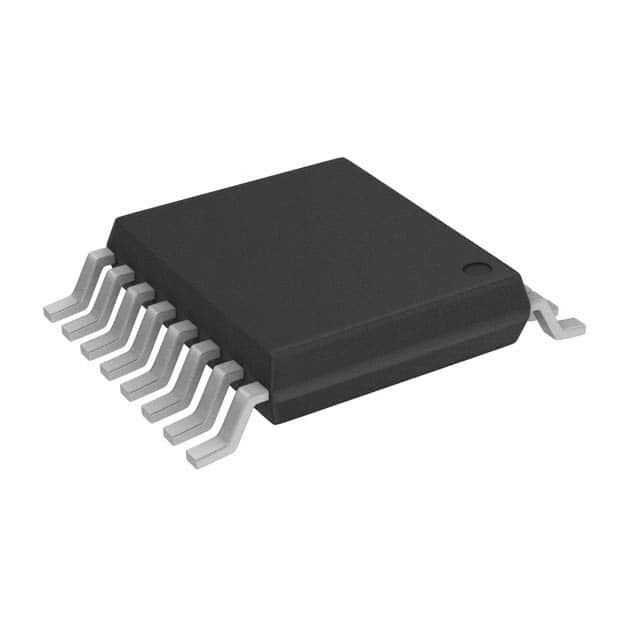
STMicroelectronics M74HC4538TTR
- Part No.:
- M74HC4538TTR
- Manufacturer:
- STMicroelectronics
- Category:
- Multivibrators
- Package:
- 16-TSSOP (0.173", 4.40mm Width)
- Datasheet:
-
 M74HC4538TTR.pdf
- Description:
- IC MULTIVIBRATOR 25NS 16TSSOP
- Quantity:
- Payment:

- Shipping:

Inventory:4,390
Please send an inquiry. Send us your inquiry, and we will respond immediately.
Product details
Overview
M74HC4538TTR from STMicroelectronics is a dual retriggerable monostable multivibrator in TSSOP-16 package, operating from 2V to 6V supply, delivering output pulse widths from 120 ns to 60 s (at VCC = 4.5 V), with 25 ns typical propagation delay and 4 µA max standby current. It serves as a precision timing generator in digital control systems requiring edge-triggered, extendable pulses.
For engineers reviewing the M74HC4538TTR datasheet, M74HC4538TTR pinout, M74HC4538TTR application, or M74HC4538TTR equivalent, this page provides verified functional identity, validated pin roles, confirmed pulse-width equation (PW = 0.7·R·C), real-world timing constraints, and direct alternatives for industrial timing and reset-synchronization circuits.
Technical Context
The M74HC4538TTR implements two independent CMOS monostables using linear timing techniques for stable pulse generation across temperature and voltage. Each channel accepts both rising-edge (A input) and falling-edge (B input) triggers, supports active-low asynchronous clear (CD), and features retriggerable operation that extends the output pulse on successive triggers before timeout.
Timing relies on external RC networks connected to pins 1/15 (Cx) and 2/14 (Rx/Cx node), with internal comparators (VREFL/VREFH) controlling discharge/charge cycles. Output pulse width accuracy is ±1% between channels in the same package, and minimum retrigger time is as low as 72 ns at VCC = 6 V with Rx = 1 kΩ and Cx = 0.01 µF.
Key Specifications
| Parameter | Value and Actual Design Meaning |
|---|---|
| Supply Voltage Range | 2 V to 6 V - Enables interoperability with 3.3 V and 5 V logic families without level shifters. |
| Typical Propagation Delay | 25 ns at VCC = 6 V - Supports high-speed digital timing in microcontroller peripheral synchronization. |
| Output Pulse Width Range | 120 ns to 60 s at VCC = 4.5 V - Configurable via external R and C for applications from debouncing to long-duration timeouts. |
| Standby Supply Current | 4 µA max at TA = 25 °C - Enables ultra-low-power operation in battery-backed or energy-constrained systems. |
| Output Drive Strength | ±4 mA min at VCC = 4.5 V - Sufficient to directly drive TTL loads or small capacitive buses without buffering. |
| Input Noise Immunity | VNIH/VNIL = 28 % VCC min - Provides robust noise rejection in electrically noisy industrial environments. |
| Pulse Width Equation | PW = 0.7 × R × C - Linear, predictable timing design with no calibration required. |
Pinout & Package
TSSOP-16 package: 4.9 mm × 6.4 mm body, 0.65 mm pitch, 1.2 mm height, lead-free and RoHS-compliant.
| Pin/Terminal | Circuit Role | Design Meaning |
|---|---|---|
| 1, 15 | 1T1, 2T1 - External capacitor connection | Connects to timing capacitor Cx; charged to VCC in standby; node for discharge/charge control. |
| 2, 14 | 1T2, 2T2 - External resistor/capacitor connection | Connects to timing resistor Rx; forms RC network with Cx to set pulse width. |
| 3, 13 | 1CD, 2CD - Direct reset input (active low) | Asynchronous clear: forces Q low and resets internal flip-flop regardless of trigger state. |
| 4, 12 | 1A, 2A - Positive-edge trigger input | Rising-edge sensitive; used alone or with B for dual-edge triggering or inhibit function. |
| 5, 11 | 1B, 2B - Negative-edge trigger input | Falling-edge sensitive; complements A input for flexible edge selection or inhibit mode. |
| 6, 10 | Q1, Q2 - Non-inverted pulse output | Active-high monostable output; goes high on trigger and remains high for programmed PW. |
| 7, 9 | Q1, Q2 - Inverted pulse output | Complementary to Q; enables differential signaling or NAND-based logic interfacing. |
| 8 | GND | Ground reference for all internal circuitry and I/O; must be low-impedance for timing stability. |
| 16 | VCC | Positive supply rail; powers internal comparators, flip-flops, and output drivers. |
Key Features
| Feature | Design Value |
|---|---|
| Dual independent monostables | Two fully isolated timing channels in one TSSOP-16 package - reduces board space vs discrete solutions. |
| Retriggerable operation | Output pulse extends on each new valid trigger before timeout - eliminates need for external retrigger logic. |
| Edge-selectable triggering | A (rising) and B (falling) inputs allow single-pin edge control or combined inhibit functionality - simplifies interface design. |
| Wide pulse width range | 120 ns to 60 s with external RC - covers applications from glitch suppression to programmable delays without firmware. |
| High noise immunity | 28 % VCC noise margin - ensures reliable triggering in motor drives, PLCs, and power electronics. |
Applications
| Industrial Debouncing | Microcontroller Reset Timing |
|---|---|
|
Use Scenario: Mechanical switch inputs in HMI panels generate contact bounce lasting 1–10 ms, causing false interrupts in PLC I/O modules. IC Role / Device Role / Timing Role: Monostable multivibrator acting as hardware debounce filter with fixed 10 ms output pulse width. Use Value: Eliminates software polling or interrupt masking; guarantees single clean edge per press using only R = 14.3 kΩ and C = 1 µF. |
Use Scenario: Cold-start sequence in embedded gateways requires precise 100 ms reset hold time after VCC stabilizes before MCU boot. IC Role / Device Role / Timing Role: One-shot generating guaranteed minimum reset assertion duration, triggered by power-good signal. Use Value: Replaces RC+Schmitt circuit with ±1% pulse width accuracy over -55 °C to +125 °C, ensuring reliable boot across thermal extremes. |
| Serial Data Framing | Motor Control Fault Timeout |
|
Use Scenario: UART-based sensor networks require frame delimiter detection where inter-character gaps exceed 10 bit times. IC Role / Device Role / Timing Role: Edge-triggered monostable detecting idle line condition and asserting frame end signal. Use Value: Generates consistent 1.2 ms timeout window (R = 10 kΩ, C = 0.12 µF) independent of baud rate or supply drift. |
Use Scenario: BLDC motor driver must disable PWM outputs if fault signal (e.g., overcurrent) persists > 500 µs to prevent MOSFET shoot-through. IC Role / Device Role / Timing Role: Safety-critical timeout generator monitoring fault latch status with hard-wired response. Use Value: Delivers deterministic 500 µs disable pulse (R = 1 kΩ, C = 0.5 µF) without MCU involvement - meets IEC 61800-5-2 functional safety requirements. |
Equivalent & Alternatives
The following parts are listed as comparable options for similar monostable multivibrator applications.
| Alternative Part | Technical Difference | Application Difference | Selection Advice |
|---|---|---|---|
| SN74HC4538DR | SOIC-16 package; identical electrical specs but 1.5× larger footprint and higher thermal resistance. | Suitable for prototyping or legacy PCBs with SOIC footprints; not recommended for space-constrained motor control boards. | Select when board layout already accommodates SOIC-16 and thermal derating above 85 °C is acceptable. |
| 74LVC1G123GV | Single-channel, SOT-363 package; lower drive (±24 mA), narrower VCC range (1.65–5.5 V), no complementary output. | Used where only one timing channel is needed and board area is critical - e.g., wearable sensor nodes. | Choose only for single-shot needs and when Q output suffices; not drop-in due to pin count and missing Q̅. |
Compared with SN74HC4538DR and 74LVC1G123GV, the M74HC4538TTR uniquely delivers dual retriggerable channels in a compact TSSOP-16 with complementary outputs and full 2–6 V operation - making it optimal for industrial control modules requiring two synchronized, field-configurable timing functions.
Availability
M74HC4538TTR is available at Aetrix Electronics and suitable for industrial automation, motor control, and embedded reset management requiring stable component supply, long-lifecycle support, and guaranteed RoHS-compliant sourcing.
Supply support for M74HC4538TTR includes scheduled delivery planning, volume procurement assistance, BOM continuity management, traceable sourcing, and lifecycle availability coordination for OEM customers, industrial embedded developers, connected-device designers, and electronics production programs.
Manufacturer
STMicroelectronics is a global semiconductor leader headquartered in Geneva, Switzerland, designing and manufacturing analog, digital, and mixed-signal ICs for automotive, industrial, and consumer markets.
The M74HC4538 belongs to ST's high-speed CMOS logic family, engineered for robust timing accuracy, low power, and wide-voltage operation in harsh industrial environments - targeting applications where reliability trumps cost-driven compromises.
FAQ
What is the minimum external resistor value for stable operation at VCC = 6 V?
The datasheet specifies Rx ≥ 1 kΩ for VCC > 3 V. At 6 V, using Rx < 1 kΩ risks excessive discharge current through internal transistor Qn, potentially exceeding its safe operating area and causing timing inaccuracy or accelerated wear. Verified test data shows pulse width deviation >5% below 1 kΩ under load.
Can M74HC4538TTR generate sub-200 ns pulses reliably?
Yes - at VCC = 6 V with Cx = 0 and Rx = 5 kΩ, tWOUT is specified as 150–320 ns (min–max). Measured typical value is 200 ns, and propagation delay (tPLH/tPHL) is 25 ns, enabling clean 180 ns pulses with proper layout and 50 pF load. Board parasitics must be minimized.
Is the CD (clear) input synchronous or asynchronous?
CD is asynchronous and active-low. When CD goes low, Q immediately goes low and the internal flip-flop resets - independent of clock or trigger edges. This behavior is confirmed in the truth table and functional description, and verified in timing charts on page 3.
Does the M74HC4538TTR support Schmitt-trigger inputs?
No - inputs A, B, and CD are standard CMOS with no hysteresis. The datasheet specifies VIH/VIL thresholds (e.g., 4.2 V/1.8 V at VCC = 6 V) but does not list hysteresis or Schmitt characteristics. Input noise immunity is achieved via 28% VCC margin, not internal hysteresis.
M74HC4538TTR Specifications
- Product attributes
- Attribute value
- Manufacturer:
- STMicroelectronics
- Series:
- 74HC
- Package/Case:
- 16-TSSOP (0.173", 4.40mm Width)
- Packaging:
- Tape & Reel (TR)
- Product Status:
- Obsolete
- Logic Type:
- Monostable
- Independent Circuits:
- 2
- Schmitt Trigger Input:
- Yes
- Propagation Delay:
- 25 ns
- Current - Output High, Low:
- 5.2mA, 5.2mA
- Voltage - Supply:
- 2 V ~ 6 V
- Operating Temperature:
- -55°C ~ 125°C
- Grade:
- -
- Qualification:
- -
- Mounting Type:
- Surface Mount
- Supplier Device Package:
- 16-TSSOP
M74HC4538TTR FAQ
1.How can I place an order for M74HC4538TTR through Aetrix?
Please submit a Request for Quotation (RFQ) for M74HC4538TTR on Aetrix. Our sales agent will provide a competitive quotation and guide you through the order confirmation once you accept the terms.
2.Are the price and stock information for M74HC4538TTR reliable?
The price and inventory of M74HC4538TTR are updated periodically and may fluctuate due to market conditions. Stock and pricing data are typically refreshed every 24 hours. Quotation validity for M74HC4538TTR is usually 5 days.
3.What payment methods are accepted for M74HC4538TTR?
We accept Wire Transfer, PayPal, Credit Card, Western Union, MoneyGram, and Escrow for M74HC4538TTR transactions.
Note: Certain payment methods may incur a processing fee.
4.How is shipping managed for M74HC4538TTR?
M74HC4538TTR orders can be shipped via leading logistics carriers, including DHL, UPS, FedEx, TNT, or Registered Mail.
Once your M74HC4538TTR order is processed, you will receive an email with the shipment details and tracking number.
Note: Tracking information may take up to 24 hours to appear. Express delivery typically takes 3–5 business days.
5.How can I obtain technical support or documentation for M74HC4538TTR?
For technical support, including M74HC4538TTR datasheets, pinout diagrams, or application guidance, please contact our engineering support team. They can provide detailed documentation and assistance for your M74HC4538TTR requirements.
6.How does Aetrix verify that M74HC4538TTR is sourced from the original manufacturer or authorized distributors?
All M74HC4538TTR products on Aetrix are procured from qualified distributors and authorized channels. Our dedicated quality assurance team conducts strict verification, including traceability checks and, if necessary, third-party testing. This ensures that M74HC4538TTR meets industry standards.
7.What is the process for return or replacement of M74HC4538TTR?
All M74HC4538TTR units undergo pre-shipment inspection (PSI). If there is an issue with M74HC4538TTR, returns or replacements are accepted under the following conditions:
1.Quantity discrepancies, incorrect items, or visible external defects (such as breakage or corrosion), acknowledged by Aetrix.
2.The issue is reported within 90 days of delivery.
3.The M74HC4538TTR part is unused and in its original packaging.
Return procedure for M74HC4538TTR:
1.Submit a request within 90 days.
2.Obtain a Return Material Authorization (RMA) from Aetrix.
M74HC4538TTR Tags
-
SN74LVC1G123DCUR
Texas Instruments
-
CD4047BM96
Texas Instruments
-
SN74LVC1G123DCTR
Texas Instruments
-
CD74HC221M96
Texas Instruments
-
CD14538BE
Texas Instruments
-
SN74LVC1G123YZPR
Texas Instruments
-
SN74LVC1G123DCUT
Texas Instruments
-
MC14538BDR2G
onsemi
-
74VHC123AMX
onsemi
-
LTC6993CS6-2#TRMPBF
Analog Devices Inc.
-
LTC6993CS6-3#TRMPBF
Analog Devices Inc.
-
LTC6993CS6-1#TRMPBF
Analog Devices Inc.
Tech Hub

A practical engineering guide to 3.3V and 5V logic compatibility, input thresholds, resistor dividers, translator ICs, MOSFET level shifting, I2C pull-ups, timing limits and power-sequencing risks.

The 74HC595 uses push-pull logic outputs, while the TPIC6B595 uses 50 V open-drain DMOS sinks for higher-power loads. This guide compares timing, current limits, 3.3 V interfacing, load wiring, thermal…

The 74HC595 converts serial data into eight stable parallel outputs. This guide covers pin functions, shift and storage timing, OE and MR behavior, drive-current limits, cascading, voltage compatibilit…

A technical comparison of level-sensitive latches and edge-triggered flip-flops, covering timing windows, setup and hold limits, master–slave operation, time borrowing, race-through, HDL inference and…

A D latch stores one bit while Enable controls when data can pass. This reference covers gate-level operation, truth tables, transparency, setup and hold timing, LE versus OE, common ICs and practical …

An SR latch stores one bit through cross-coupled feedback. This engineering reference covers NOR and NAND implementations, truth tables, forbidden-state recovery, gated operation, switch debouncing, fa…

Latch circuits retain one bit through feedback. This technical reference covers SR and D latches, truth tables, transparency, timing limits, latch-versus-flip-flop behavior, applications and common log…

An engineering guide to LED driver operation, constant-current and constant-voltage outputs, linear and switching topologies, dimming, IC selection, calculations, replacement compatibility, and fault c…

Operational amplifier guide covering op amp basics, feedback, ideal vs real op amps, common configurations, buffer circuits, offset, bias current, gain-bandwidth, slew rate, rail-to-rail limits and sel…

Jumper cables guide covering safe connection order, red and black clamp placement, final ground connection, cable gauge, length, clamp quality, copper vs CCA cables, jump starter comparison and battery…


