
 My Inquiry
 My Account


Monolithic Power Systems Inc. MA782GGU-P
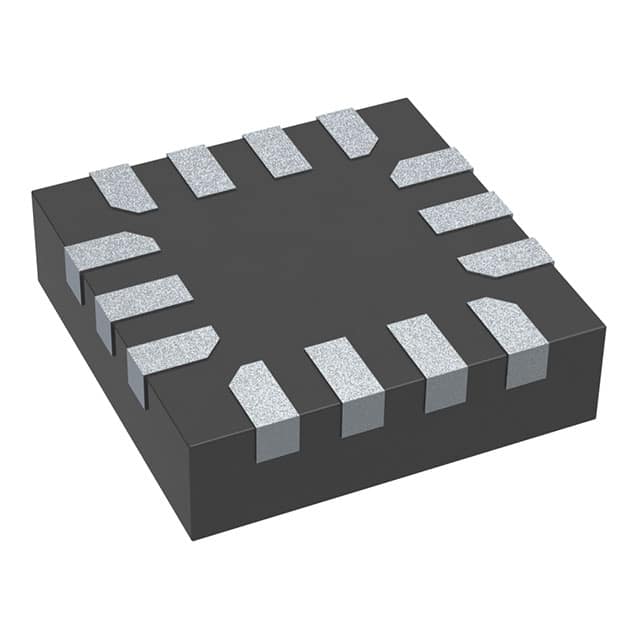
- Part No.:
- MA782GGU-P
- Manufacturer:
- Monolithic Power Systems Inc.
- Category:
- Angle, Linear Position Measuring
- Package:
- 14-UFQFN
- Datasheet:
-
 MA782GGU-P.pdf
- Description:
- ULTRA-SMALL, LOW-POWER ANGLE SEN
- Quantity:
- Payment:

- Shipping:

Inventory:4,939
Please send an inquiry. Send us your inquiry, and we will respond immediately.
Product details
Overview
MA782GGU-P from Monolithic Power Systems is an ultra-small, low-power contactless absolute angle sensor IC that detects the angular position of a diametrically magnetized rotating magnet using Spinaxis™ phase-detection technology. It delivers 8–12-bit resolution, <0.5 µA idle current, and SPI interface output with integrated wake-up interrupt and magnetic field strength alarm. It operates from 3.3 V across –40°C to +125°C in QFN-14 (2 mm × 2 mm) packaging, targeting battery-powered HMI and motion-sensing applications.
For engineers reviewing the MA782GGU-P datasheet, MA782GGU-P pinout, MA782GGU-P application, or MA782GGU-P equivalent, this page provides verified technical context on its power cycling modes, ASC timing control, magnetic field threshold detection, and NVM-configurable zero-angle calibration - all critical for low-power rotary encoder design in portable and automotive-adjacent systems.
Technical Context
The MA782GGU-P implements a digital open-loop angle measurement architecture based on time-to-digital conversion of Hall-derived sinusoidal phase signals, eliminating arctangent computation or feedback interpolators. Its front-end operates at 1 MHz sampling rate and supports configurable digital filtering via programmable filter window (FW), yielding effective resolution from 8 to 12 bits with ±0.7° INL at 25°C.
Three distinct power modes - Active (10 mA), Idle (<1 µA), and Automatic Sampling Cycle (ASC) - are controlled via EN and ASC pins or internal NVM registers. The on-chip 128 MHz high-frequency clock enables precise latency control (4–16,000 µs), while magnetic field strength detection (MGL/MGH flags) uses configurable thresholds with ±5 mT accuracy and –600 ppm/°C temperature drift.
Key Specifications
| Parameter | Value and Actual Design Meaning |
|---|---|
| Angle Resolution | 8–12-bit programmable effective resolution; determines smallest detectable mechanical rotation step (e.g., 0.088° at 12-bit full scale). |
| Idle Current | <0.5 µA at TA ≤ 85°C; enables multi-year battery life in always-on sensing nodes like smart locks. |
| Active Current | 10 mA typical; supports real-time angle streaming at up to 1.1 MHz refresh rate in continuous mode. |
| INL Accuracy | ±1.1° over –40°C to +125°C; ensures consistent angular linearity across automotive and industrial thermal environments. |
| SPI Interface | Mode 0/3, 25 MHz max clock; enables robust, low-pin-count communication with microcontrollers without external level shifters. |
| Magnetic Field Range | 30–100 mT operational range; accommodates standard NdFeB magnets (e.g., Ø5×3 mm N35) with ≥1.5 mm air gap. |
| Operating Temp | –40°C to +125°C; qualified for under-hood, e-bike, and industrial motor control mounting locations. |
| Package | QFN-14 (2 mm × 2 mm, 0.5 mm height); enables PCB space savings in foldable displays and compact HMI dials. |
Pinout & Package
MA782GGU-P is housed in a thermally enhanced, lead-free QFN-14 package (2 mm × 2 mm, 0.5 mm height) with exposed thermal pad. Pin 1 is marked by a dot; top-side marking includes "KV" product code, year code "Y", and lot number "LLL".
| Pin/Terminal | Circuit Role | Design Meaning |
|---|---|---|
| 1 SCLK | SPI clock input | Synchronizes data transfer; supports up to 25 MHz; idle state depends on SPI mode (low for Mode 0, high for Mode 3). |
| 2 MGL | Magnetic field low alarm output | Open-drain flag asserted when sensed field drops below configured MGLT threshold; used for magnet detachment diagnostics. |
| 3 TEST | Factory test pin | Must be connected to GND in production; floating or high states may disrupt initialization or calibration. |
| 4 GND | Power and signal ground reference | Primary return path for VDD, VDDIO, and analog front-end; requires low-impedance connection to PCB ground plane. |
| 5 MISO | SPI data output | 3-state output delivering angle or register data MSB-first; driven only when /CS is low and SCLK active. |
| 6 ASC | Automatic sampling cycle enable input | When pulled high, activates on-chip low-power clock to autonomously cycle between active/idle modes per NVM settings. |
| 7 /CS | SPI chip select input | Active-low signal initiating SPI frame; must remain low for full 16-bit transaction; rising edge releases output buffer. |
| 8 MOSI | SPI data input | Accepts 16-bit command frames (read/write angle/register); latched on SCLK rising edge in Mode 0. |
| 9 NVM | NVM busy indicator output | Open-drain signal high during NVM write/restore operations; must be monitored before issuing new NVM commands. |
| 10 ND | New data ready flag | Asserted when filtered angle data is stable and updated; used to trigger host read without polling latency. |
| 11 EN | Enable input | Pull high to enter Active mode; pull low or leave unconnected (via internal pull-down) for Idle mode operation. |
| 12 VDDIO | I/O supply voltage | 1.8–3.3 V tolerant; sets logic levels for SPI interface independently of VDD; decoupling required. |
| 13 VDD | Analog/digital core supply | 3.3 V nominal (3.0–3.6 V range); powers Hall front-end, ADC, and digital blocks; requires 1 µF local decoupling. |
| 14 DV | Data valid indicator | High when digital filter output has stabilized; confirms angle value meets specified noise and latency criteria. |
Key Features
| Feature | Design Value |
|---|---|
| Spinaxis™ angle sensing | Direct phase-to-digital conversion eliminates arctan computation, reducing MCU processing load and enabling deterministic latency. |
| Configurable filter window (FW) | Adjustable digital filter time constant (4–16,000 µs) trades resolution bandwidth for noise rejection - critical for vibration-prone e-bike throttle mounts. |
| On-chip NVM storage | Persists zero-angle offset, power-cycle parameters, and magnetic thresholds across power cycles - removes need for host-based calibration retention. |
| Wake-up angle interrupt | ND and MGL/MGH flags enable system-level wake from deep sleep upon mechanical movement or magnet displacement - essential for portable device power management. |
| Off-axis & on-axis support | Valid operation with both end-of-shaft and side-shaft magnet configurations; allows flexible mechanical integration without redesigning housing or shaft geometry. |
| Magnetic field strength monitoring | Dual-threshold (MGL/MGH) detection with ±5 mT accuracy enables real-time diagnostics for magnet aging, misalignment, or contamination in smart door lock actuators. |
Applications
| Smart Door Lock Actuator | E-Bike Throttle Control |
|---|---|
|
Use Scenario: Detecting rotational position of motor-driven deadbolt mechanism during locking/unlocking sequence. IC Role / Device Role / Timing Role: Absolute angle sensor providing real-time position feedback to MCU for closed-loop stall detection and torque limiting. Use Value: <0.5 µA idle current extends coin-cell battery life beyond 3 years; ±1.1° INL ensures reliable end-stop recognition across temperature extremes. |
Use Scenario: Measuring twist-grip rotation on e-bike handlebar to control motor assist level. IC Role / Device Role / Timing Role: Contactless angle transducer interfacing directly to MCU via SPI, with ND flag triggering ADC sampling only on movement. Use Value: Off-axis mounting capability simplifies mechanical integration into existing grip housings; 30–100 mT field tolerance accommodates cost-effective ferrite magnets. |
| Tablet Foldable Display Hinge | Low-Power Rotary HMI Dial |
|
Use Scenario: Sensing hinge angle between dual-display panels to enable auto-rotate, split-screen, or sleep/wake functions. IC Role / Device Role / Timing Role: Ultra-compact angle encoder mounted on hinge axis, communicating via SPI to application processor during lid-open events. Use Value: QFN-14 (2 mm × 2 mm) footprint fits within narrow hinge cavity; ASC mode reduces average current to ~100 µA for multi-day tablet standby. |
Use Scenario: Replacing potentiometers in battery-powered audio mixer knobs or IoT device configuration dials. IC Role / Device Role / Timing Role: Digital angle source with wake-on-turn capability, driving low-power MCU GPIO interrupts instead of continuous polling. Use Value: Magnetic field alarm (MGL) detects dial removal or tampering; NVM-stored zero-angle survives battery replacement without recalibration. |
Equivalent & Alternatives
The following parts are listed as comparable options for similar absolute contactless angle sensing applications.
| Alternative Part | Technical Difference | Application Difference | Selection Advice |
|---|---|---|---|
| AMS AS5600 | 12-bit resolution, 3.3–5.5 V supply, no built-in wake-up interrupt or magnetic field alarm; I²C-only interface. | Lacks ASC power cycling and field diagnostics; requires external wake controller and voltage translation for 1.8 V I/O domains. | Choose if I²C infrastructure exists and field monitoring is unnecessary; avoid where sub-µA idle current or SPI compatibility is mandatory. |
| Texas Instruments TMAG5170 | 3-axis linear Hall sensor with angle calculation offloaded to host; 20-bit raw output, 1.71–3.6 V supply, no on-chip NVM. | Requires host-side angle computation and calibration storage; higher BOM count due to external processing and memory needs. | Prefer when multi-axis field analysis or custom algorithm tuning is required; not suitable for standalone, self-contained angle reporting. |
Compared with AS5600 and TMAG5170, MA782GGU-P uniquely integrates wake-up interrupt, magnetic field alarm, and NVM-based configuration in a 2 mm × 2 mm QFN - delivering lower system-level power, smaller footprint, and reduced firmware complexity for battery-constrained HMI applications.
Availability
MA782GGU-P is available at Aetrix Electronics and suitable for smart door locks, e-bike throttle controls, foldable tablet hinges, and low-power rotary HMI dials requiring stable component supply, long-term lifecycle assurance, and RoHS-compliant sourcing.
Supply support for MA782GGU-P includes scheduled delivery planning, volume procurement assistance, BOM continuity management, traceable sourcing, and lifecycle availability coordination for OEM customers, industrial embedded developers, connected-device designers, and electronics production programs.
Manufacturer
Monolithic Power Systems (MPS) is a fabless semiconductor company specializing in high-performance power management and sensing solutions, with global design centers and AEC-Q100-qualified product lines.
The MagAlpha® family, including MA782GGU-P, is engineered for ultra-low-power, high-accuracy angular position sensing in portable, automotive, and industrial motion-control systems - emphasizing integration, thermal robustness, and magnetic resilience.
FAQ
What is the minimum air gap required between the MA782GGU-P and a diametrically magnetized cylinder magnet?
The recommended air gap is 1.5 mm for optimal linearity and resolution with a standard Ø5×3 mm N35 neodymium magnet. Performance remains functional down to 0.5 mm, but INL degrades beyond ±1.1° and field sensitivity increases. Mechanical placement precision must be within ±0.5 mm to maintain specified accuracy across temperature.
Can MA782GGU-P operate with a 1.8 V I/O supply while VDD remains at 3.3 V?
Yes. VDDIO accepts 1.8–3.3 V independently of VDD (3.0–3.6 V), allowing direct SPI interfacing with 1.8 V microcontrollers without level shifters. Input thresholds scale accordingly: VIH is 1.2 V min at 1.8 V VDDIO, and VOL is guaranteed ≤0.4 V at 4 mA sink current.
How does the Automatic Sampling Cycle (ASC) mode reduce average current consumption?
ASC alternates between Active mode (10 mA, full sensing) and Idle mode (<0.5 µA, SPI-only). Average current scales linearly with duty cycle - e.g., 1% active time yields ~100 µA average. The on-chip low-power clock controls tACTIVE and tCYCLE, both stored in NVM and configurable via SPI write to registers 18 and 19.
Is the zero-angle position factory-calibrated or user-configurable?
The zero-angle offset is fully user-configurable and stored in on-chip NVM. It can be set via SPI write to register 0x01 (ZRO) and persists across power cycles. Default zero is defined by magnetic field orientation at power-up unless overwritten; no factory calibration trim is performed.
Does MA782GGU-P support both clockwise and counterclockwise rotation direction reporting?
Yes. Rotation direction is configurable via bit RD (bit 0) in register 0x09. Setting RD = 1 reverses output polarity so angle increases counterclockwise - matching mechanical convention in many HMI dials and hinge designs without requiring host-side sign inversion.
What happens to the ND and DV pins during Idle mode?
In Idle mode, ND remains low (no new data), and DV stays low (no valid filtered output). Both pins become active only after transition to Active mode and completion of front-end startup (35 µs) and digital filter stabilization (τ-dependent). ND asserts first, followed by DV once filter settles.
Can magnetic field strength thresholds be adjusted in real time during operation?
Yes. MGLT (magnetic low threshold) and MGHT (magnetic high threshold) are stored in registers 0x1A and 0x1B and can be modified via SPI write at any time. Threshold changes take effect immediately on next field sampling cycle; no NVM store is required unless persistence across power cycles is needed.
MA782GGU-P Specifications
- Product attributes
- Attribute value
- Manufacturer:
- Monolithic Power Systems Inc.
- Package/Case:
- 14-UFQFN
- Series:
- -
- Packaging:
- Tape & Reel (TR)
- Product Status:
- Active
- Programmable:
- -
- For Measuring:
- Angle
- Technology:
- Hall Effect
- Rotation Angle - Electrical, Mechanical:
- -
- Linear Range:
- -
- Output:
- SPI
- Output Signal:
- -
- Actuator Type:
- External Magnet, Not Included
- Linearity:
- -
- Resistance:
- -
- Resistance Tolerance:
- -
- Voltage - Supply:
- 3V ~ 3.6V
- Mounting Type:
- Surface Mount
- Termination Style:
- SMD (SMT) Tab
- Operating Temperature:
- -40°C ~ 125°C
- Grade:
- -
- Qualification:
- -
- Supplier Device Package:
- 14-QFN (2x2)
MA782GGU-P FAQ
1.How can I place an order for MA782GGU-P through Aetrix?
Please submit a Request for Quotation (RFQ) for MA782GGU-P on Aetrix. Our sales agent will provide a competitive quotation and guide you through the order confirmation once you accept the terms.
2.Are the price and stock information for MA782GGU-P reliable?
The price and inventory of MA782GGU-P are updated periodically and may fluctuate due to market conditions. Stock and pricing data are typically refreshed every 24 hours. Quotation validity for MA782GGU-P is usually 5 days.
3.What payment methods are accepted for MA782GGU-P?
We accept Wire Transfer, PayPal, Credit Card, Western Union, MoneyGram, and Escrow for MA782GGU-P transactions.
Note: Certain payment methods may incur a processing fee.
4.How is shipping managed for MA782GGU-P?
MA782GGU-P orders can be shipped via leading logistics carriers, including DHL, UPS, FedEx, TNT, or Registered Mail.
Once your MA782GGU-P order is processed, you will receive an email with the shipment details and tracking number.
Note: Tracking information may take up to 24 hours to appear. Express delivery typically takes 3–5 business days.
5.How can I obtain technical support or documentation for MA782GGU-P?
For technical support, including MA782GGU-P datasheets, pinout diagrams, or application guidance, please contact our engineering support team. They can provide detailed documentation and assistance for your MA782GGU-P requirements.
6.How does Aetrix verify that MA782GGU-P is sourced from the original manufacturer or authorized distributors?
All MA782GGU-P products on Aetrix are procured from qualified distributors and authorized channels. Our dedicated quality assurance team conducts strict verification, including traceability checks and, if necessary, third-party testing. This ensures that MA782GGU-P meets industry standards.
7.What is the process for return or replacement of MA782GGU-P?
All MA782GGU-P units undergo pre-shipment inspection (PSI). If there is an issue with MA782GGU-P, returns or replacements are accepted under the following conditions:
1.Quantity discrepancies, incorrect items, or visible external defects (such as breakage or corrosion), acknowledged by Aetrix.
2.The issue is reported within 90 days of delivery.
3.The MA782GGU-P part is unused and in its original packaging.
Return procedure for MA782GGU-P:
1.Submit a request within 90 days.
2.Obtain a Return Material Authorization (RMA) from Aetrix.
MA782GGU-P Tags
-
TLV493DA1B6HTSA2
Infineon Technologies
-
EVW-AE4001B14
Panasonic Electronic Components
-
3382G-1-103G
Bourns Inc.
-
TLE5501E0001XUMA1
Infineon Technologies
-
HAL830UT-A
TDK-Micronas GmbH
-
TLE5009E1000FUMA1
Infineon Technologies
-
TLE5501E0002XUMA1
Infineon Technologies
-
HAL3725DJ-A
TDK-Micronas GmbH
-
HAL3727DJ-A
TDK-Micronas GmbH
-
HMC1501-TR
Honeywell Aerospace
-
HMC1512-TR
Honeywell Aerospace

-
AAS33001LLEATR-5
Allegro MicroSystems
Tech Hub

Operational amplifier guide covering op amp basics, feedback, ideal vs real op amps, common configurations, buffer circuits, offset, bias current, gain-bandwidth, slew rate, rail-to-rail limits and sel…

Jumper cables guide covering safe connection order, red and black clamp placement, final ground connection, cable gauge, length, clamp quality, copper vs CCA cables, jump starter comparison and battery…

LDO regulator guide covering low dropout voltage, power dissipation, thermal design, PSRR, output noise, capacitor stability, adjustable LDO circuits, LDO vs buck converter and datasheet selection chec…

Conditional Access Module guide covering CAM meaning, CI/CI+ interface, smart card authorization, DVB security workflow, TV and set-top box compatibility, internal electronics, ESD protection, connecto…

Guide to electronic component obsolescence covering EOL risk, PCN/PDN notices, last-time buy planning, replacement options, form-fit-function validation, counterfeit risk and BOM lifecycle management.

18650 battery guide covering lithium-ion cell basics, 3.6V/3.7V voltage, 4.2V charging, mAh and Wh capacity, protected cells, chargers, BMS, series-parallel packs, holders, welding and sourcing checks.…

Hall effect sensor guide covering working principle, linear and digital sensors, Arduino circuits, current sensing, speed detection, automotive applications, A3144 examples, signal filtering and datash…

Product Change Notification guide for electronic components, covering PCN meaning, PCN vs PDN/EOL, common change types, risk levels, form-fit-function review, engineering validation, BOM control, LTB/L…

A practical guide to blend door actuators, covering HVAC function, symptoms, location, AC and heater issues, reset and calibration, replacement cost, electrical diagnosis, compatibility checks, and rep…

Engineering guide to Raspberry Pi alternatives, covering chip-level differences, Orange Pi, ROCK, Jetson, Banana Pi, NanoPi, Compute Module, Pico, GPIO, camera, HAT compatibility, and replacement risks…


