
 My Inquiry
 My Account


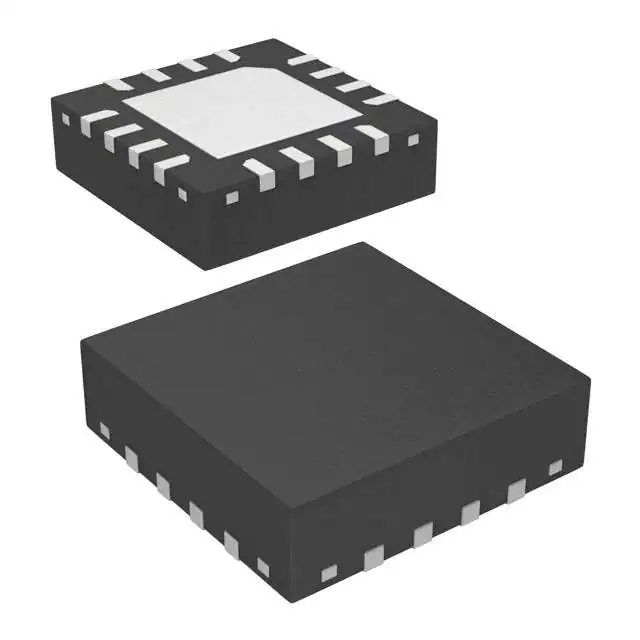
Monolithic Power Systems Inc. MA820GQ-P
- Part No.:
- MA820GQ-P
- Manufacturer:
- Monolithic Power Systems Inc.
- Category:
- Angle, Linear Position Measuring
- Package:
- 16-VFQFN Exposed Pad
- Datasheet:
-
 MA820GQ-P.pdf
- Description:
- SENSOR ANGLE SMD
- Quantity:
- Payment:

- Shipping:

Inventory:3,623
Please send an inquiry. Send us your inquiry, and we will respond immediately.
Product details
Overview
MA820GQ-P from Monolithic Power Systems is an 8-bit contactless magnetic angle encoder with ABZ quadrature output and dual magnetic field threshold detection for push/pull button functionality. It replaces potentiometers in manual controls, delivers programmable 1–64 pulses per channel per revolution via SPI, operates at up to 200 rpm, and features on-chip NVM for zero-angle, pulse count, and threshold storage.
For engineers reviewing the MA820GQ-P datasheet, MA820GQ-P pinout, MA820GQ-P application, or MA820GQ-P equivalent, this page provides verified technical context, ABZ timing behavior, magnetic field threshold calibration, SPI register mapping, and QFN-16 layout guidance for human-machine interface designs requiring robust, wear-free angular sensing.
Technical Context
The MA820GQ-P uses Spinaxis™ phase-detection architecture-measuring magnetic field direction via time-to-digital conversion of sinusoidal zero-crossings-enabling open-loop 8-bit absolute angle output at 850–1100 kHz refresh rate without arctangent computation or feedback loops. Its front-end delivers raw angle data at 1 MHz before digital filtering.
ABZ incremental output is generated by internal edge synthesis synchronized to a 16 MHz clock, with programmable hysteresis (2.1°) and jitter bounded at 0.4° (overall), while MGH/MGL logic outputs respond to field strength crossing independently set MGHT/MGLT thresholds (3-bit resolution, ±6 mT hysteresis, -600 ppm/°C drift).
Key Specifications
| Parameter | Value and Actual Design Meaning |
|---|---|
| Resolution | 8-bit absolute angle (0–359.995° in 0.005° steps); effective noise-limited resolution confirmed at 3σ = 0.01° rms. |
| ABZ Pulses per Channel | Programmable 1–64 via SPI registers 0x4/0x5; defines edges per turn (4–256), directly setting encoder granularity for motion control. |
| Magnetic Field Range | Operates at 30–60 mT typical; linearity guaranteed across full 30–100 mT range with INL ≤1.1° over -40°C to +125°C. |
| Supply & Power | 3.3 V ±10%, 11.7 mA typical; enables direct integration into 3.3 V microcontroller systems without level-shifting or LDO overhead. |
| Operating Temperature | -40°C to +125°C ambient; validated for automotive cabin, white goods motor control, and industrial HMI environments. |
| SPI Interface | Mode 0/3 auto-detected, 25 MHz max SCLK; 16-bit frames for angle read, register read/write; 20 ms NVM write delay required after configuration. |
| Filter Cutoff | 90 Hz fixed low-pass filter; balances noise rejection against latency-4 ms propagation delay at constant speed, no added steady-state latency. |
Pinout & Package
MA820GQ-P is housed in a thermally enhanced QFN-16 package (3 mm × 3 mm, 0.5 mm pitch) with exposed thermal pad recommended for grounding. Pin numbering follows standard top-view orientation with Pin 1 at top-left corner.
| Pin/Terminal | Circuit Role | Design Meaning |
|---|---|---|
| 1 /A | Inverted Channel A output | Differential ABZ signal pair; enables noise-immune quadrature decoding in EMI-prone environments. |
| 2 A | Channel A output | Primary incremental pulse train; rising/falling edges define position increments aligned to magnet rotation. |
| 3 Z | Index pulse output | Single-cycle-per-revolution marker; position and width programmable via ILIP bits in register 0x4. |
| 4 MOSI | SPI data input | Accepts 16-bit command frames; internal pull-down ensures safe state during power-up or MCU reset. |
| 5 CS | SPI chip select | Active-low enable; internal pull-up eliminates need for external resistor in most MCU interfaces. |
| 6 B | Channel B output | Quadrature partner to A; 90° phase shift enables direction detection and 4× interpolation. |
| 7 MISO | SPI data output | Returns angle or register data; high-impedance when CS inactive; internal pull-down prevents floating state. |
| 8 GND | Power ground | Reference for all analog/digital circuits; must be connected to low-impedance system ground plane. |
| 9 /Z | Inverted Index pulse | Differential complement to Z; improves index reliability in noisy applications. |
| 10 TEST | Factory test pin | Must be tied to GND in production; left unconnected risks undefined behavior or latch-up. |
| 11 MGL | Magnetic Low flag | Logic high when field drops below MGLT threshold; used for pull-button detection or proximity alert. |
| 12 SCLK | SPI clock input | Drives synchronous data transfer; internal pull-down ensures idle-low state for Mode 0 compatibility. |
| 13 VDD | 3.3 V supply | Requires local 1 µF ceramic decoupling capacitor placed adjacent to pin; exposed pad enhances thermal dissipation. |
| 14 N/C | No connection | Internally unconnected; must remain floating-no routing or soldering permitted. |
| 15 /B | Inverted Channel B output | Differential complement to B; supports robust ABZ decoding under common-mode interference. |
| 16 MGH | Magnetic High flag | Logic high when field exceeds MGHT threshold; used for push-button actuation or magnetic presence detection. |
Key Features
| Feature | Design Value |
|---|---|
| Contactless 8-bit angle sensing | Eliminates mechanical wear and contact bounce; achieves >100 million cycle lifetime in rotary knob applications. |
| Programmable ABZ resolution | 1–64 pulses per channel per revolution configurable via SPI-enables matching to host controller counter resolution without hardware change. |
| Dual magnetic threshold detection | Independent MGL/MGH logic outputs with 3-bit programmable thresholds (26–112 mT) and 6 mT hysteresis-supports push-pull button emulation with single magnet. |
| On-chip non-volatile memory | Stores zero-angle offset, PPT value, and MGHT/MGLT settings; retains configuration across power cycles without external EEPROM. |
| Spinaxis™ open-loop architecture | Delivers deterministic 4 ms latency and 0.4° ABZ jitter without closed-loop interpolation-ideal for real-time motion feedback. |
Applications
| Rotary Knob Control Interfaces | Manual Controls for Industrial HMIs |
|---|---|
|
Use Scenario: Precision volume, brightness, or parameter adjustment on medical device panels or audio mixers. IC Role / Device Role / Timing Role: Absolute angle sensor providing 0.005° step resolution and ABZ quadrature for smooth, glitch-free UI navigation. Use Value: Replaces electro-mechanical potentiometers with infinite lifetime, eliminating wiper noise and calibration drift over temperature. |
Use Scenario: Operator-adjustable setpoints on PLC-mounted control dials in factory automation cabinets. IC Role / Device Role / Timing Role: Contactless angular transducer delivering 850–1100 kHz absolute updates and ABZ pulses for microcontroller-based position tracking. Use Value: Maintains ±1.1° INL across -40°C to +125°C, ensuring consistent calibration in unconditioned industrial enclosures. |
| Automotive HVAC & Seat Controls | White Goods Motor Position Feedback |
|
Use Scenario: Climate control knobs and seat position dials in passenger compartments. IC Role / Device Role / Timing Role: Magnetic angle encoder with integrated push-button detection (MGH/MGL) enabling dual-function rotary+press input on single shaft. Use Value: Meets automotive-grade temp range (-40°C to +125°C) and supports 5mm airgap operation with N35 magnets-reducing assembly tolerance burden. |
Use Scenario: Drum rotation sensing in washing machines and dishwasher detergent dispensers. IC Role / Device Role / Timing Role: Absolute position sensor feeding motor control loop with 8-bit resolution and 4 ms latency for precise cycle timing. Use Value: Enables closed-loop drum angle control without optical encoder contamination risk-resistant to dust, moisture, and vibration. |
Equivalent & Alternatives
The following parts are listed as comparable options for similar magnetic angle encoder applications.
| Alternative Part | Technical Difference | Application Difference | Selection Advice |
|---|---|---|---|
| AMS AS5048B | 14-bit resolution, I²C-only interface, no native ABZ output-requires external logic or MCU firmware to generate quadrature. | Lacks integrated push-button detection; requires separate Hall switch or analog comparator for button function. | Select when higher resolution is critical and ABZ generation can be handled in software or FPGA. |
| TDK TMR2003D | Tunnel magnetoresistance (TMR) sensing; 12-bit resolution, 3.3 V supply, but only serial output-no ABZ or MGH/MGL flags. | No built-in button detection or programmable pulses; requires external circuitry for index or push functionality. | Choose for ultra-low power (<5 mA) or high-field immunity (>150 mT), but accept added system complexity. |
Compared with AS5048B and TMR2003D, MA820GQ-P uniquely integrates ABZ hardware generation, dual magnetic threshold logic, and on-chip NVM in a single QFN-16 package-reducing BOM count and firmware overhead for cost-sensitive HMI and appliance designs.
Availability
MA820GQ-P is available at Aetrix Electronics and suitable for rotary knob control interfaces, automotive HVAC actuators, and white goods motor position feedback requiring stable component supply across extended temperature ranges and long product lifecycles.
Supply support for MA820GQ-P includes scheduled delivery planning, volume procurement assistance, BOM continuity management, traceable sourcing, and lifecycle availability coordination for OEM customers, industrial embedded developers, connected-device designers, and electronics production programs.
Manufacturer
Monolithic Power Systems (MPS) is a fabless semiconductor company specializing in high-performance power management and sensing ICs, with design centers in the U.S., China, and Taiwan.
The MagAlpha® family-including MA820GQ-P-is engineered for contactless angular position sensing in human-machine interfaces, replacing potentiometers and optical encoders with robust, programmable magnetic solutions.
FAQ
What magnet configuration is required for reliable MA820GQ-P operation?
The MA820GQ-P is optimized for diametrically magnetized cylindrical neodymium (N35) magnets, typically Ø5 mm × 3 mm, mounted with ≤1.0 mm airgap. Field strength must exceed 30 mT at the sensor's sensitive volume (centered within 50 µm of package surface); performance degrades below this threshold, with linearity and resolution falling outside spec.
How is the zero-angle position programmed and retained?
Zero angle is set by writing a 16-bit complementary value to registers 0x0 and 0x1 (Z[15:0]) via SPI. This value is stored in on-chip non-volatile memory and automatically loaded at power-on. For example, to set zero at 20°, write decimal 61895 (0xF1C7) across both registers-no external memory or calibration routine needed.
Can MA820GQ-P generate true differential ABZ signals?
Yes-MA820GQ-P provides fully differential ABZ outputs: A and /A, B and /B, Z and /Z. Each pair is internally matched for timing and drive strength, enabling noise-rejecting RS-422-style reception without external comparators or line drivers.
What is the maximum rotational speed supported for accurate ABZ output?
The MA820GQ-P maintains specified ABZ jitter (≤0.4°) and edge accuracy up to 200 rpm. At higher speeds, systematic jitter increases due to finite update rate (16 MHz ABZ clock) and mechanical limitations of magnet mounting-not electrical limits of the IC itself.
How does the programmable filter cutoff affect latency and noise?
The 90 Hz low-pass filter reduces angle noise without adding steady-state latency; propagation delay remains fixed at 4 ms under constant-speed rotation. Lowering cutoff further (via custom firmware or future revisions) would increase latency, but 90 Hz is the only factory-set value-no user adjustment is possible.
Is the exposed thermal pad electrically connected internally?
No-the exposed pad is a thermal and mechanical feature only, not tied to any internal node. MPS recommends connecting it to GND for optimal thermal dissipation (θJC = 12 °C/W), mechanical stability, and EMI shielding-but it may be left floating if PCB layout constraints prevent grounding.
What happens if the 20 ms NVM write delay is not observed during SPI register programming?
If less than 20 ms elapses between the first (write command) and second (acknowledge) SPI frames, the non-volatile memory write fails silently-the register retains its previous value, and the second frame returns the old content. This is a hard timing requirement, not a recommendation.
MA820GQ-P Specifications
- Product attributes
- Attribute value
- Manufacturer:
- Monolithic Power Systems Inc.
- Package/Case:
- 16-VFQFN Exposed Pad
- Series:
- -
- Packaging:
- Tape & Reel (TR)
- Product Status:
- Active
- Programmable:
- -
- For Measuring:
- Angle
- Technology:
- Hall Effect
- Rotation Angle - Electrical, Mechanical:
- -
- Linear Range:
- -
- Output:
- -
- Output Signal:
- Programmable
- Actuator Type:
- External Magnet, Not Included
- Linearity:
- -
- Resistance:
- -
- Resistance Tolerance:
- -
- Voltage - Supply:
- 3.3V
- Mounting Type:
- Surface Mount
- Termination Style:
- SMD (SMT) Tab
- Operating Temperature:
- -40°C ~ 125°C
- Grade:
- -
- Qualification:
- -
- Supplier Device Package:
- 16-QFN (3x3)
MA820GQ-P FAQ
1.How can I place an order for MA820GQ-P through Aetrix?
Please submit a Request for Quotation (RFQ) for MA820GQ-P on Aetrix. Our sales agent will provide a competitive quotation and guide you through the order confirmation once you accept the terms.
2.Are the price and stock information for MA820GQ-P reliable?
The price and inventory of MA820GQ-P are updated periodically and may fluctuate due to market conditions. Stock and pricing data are typically refreshed every 24 hours. Quotation validity for MA820GQ-P is usually 5 days.
3.What payment methods are accepted for MA820GQ-P?
We accept Wire Transfer, PayPal, Credit Card, Western Union, MoneyGram, and Escrow for MA820GQ-P transactions.
Note: Certain payment methods may incur a processing fee.
4.How is shipping managed for MA820GQ-P?
MA820GQ-P orders can be shipped via leading logistics carriers, including DHL, UPS, FedEx, TNT, or Registered Mail.
Once your MA820GQ-P order is processed, you will receive an email with the shipment details and tracking number.
Note: Tracking information may take up to 24 hours to appear. Express delivery typically takes 3–5 business days.
5.How can I obtain technical support or documentation for MA820GQ-P?
For technical support, including MA820GQ-P datasheets, pinout diagrams, or application guidance, please contact our engineering support team. They can provide detailed documentation and assistance for your MA820GQ-P requirements.
6.How does Aetrix verify that MA820GQ-P is sourced from the original manufacturer or authorized distributors?
All MA820GQ-P products on Aetrix are procured from qualified distributors and authorized channels. Our dedicated quality assurance team conducts strict verification, including traceability checks and, if necessary, third-party testing. This ensures that MA820GQ-P meets industry standards.
7.What is the process for return or replacement of MA820GQ-P?
All MA820GQ-P units undergo pre-shipment inspection (PSI). If there is an issue with MA820GQ-P, returns or replacements are accepted under the following conditions:
1.Quantity discrepancies, incorrect items, or visible external defects (such as breakage or corrosion), acknowledged by Aetrix.
2.The issue is reported within 90 days of delivery.
3.The MA820GQ-P part is unused and in its original packaging.
Return procedure for MA820GQ-P:
1.Submit a request within 90 days.
2.Obtain a Return Material Authorization (RMA) from Aetrix.
MA820GQ-P Tags
-
TLV493DA1B6HTSA2
Infineon Technologies
-
EVW-AE4001B14
Panasonic Electronic Components
-
3382G-1-103G
Bourns Inc.
-
TLE5501E0001XUMA1
Infineon Technologies
-
HAL830UT-A
TDK-Micronas GmbH
-
TLE5009E1000FUMA1
Infineon Technologies
-
TLE5501E0002XUMA1
Infineon Technologies
-
HAL3725DJ-A
TDK-Micronas GmbH
-
HAL3727DJ-A
TDK-Micronas GmbH
-
HMC1501-TR
Honeywell Aerospace
-
HMC1512-TR
Honeywell Aerospace

-
AAS33001LLEATR-5
Allegro MicroSystems
Tech Hub

Operational amplifier guide covering op amp basics, feedback, ideal vs real op amps, common configurations, buffer circuits, offset, bias current, gain-bandwidth, slew rate, rail-to-rail limits and sel…

Jumper cables guide covering safe connection order, red and black clamp placement, final ground connection, cable gauge, length, clamp quality, copper vs CCA cables, jump starter comparison and battery…

LDO regulator guide covering low dropout voltage, power dissipation, thermal design, PSRR, output noise, capacitor stability, adjustable LDO circuits, LDO vs buck converter and datasheet selection chec…

Conditional Access Module guide covering CAM meaning, CI/CI+ interface, smart card authorization, DVB security workflow, TV and set-top box compatibility, internal electronics, ESD protection, connecto…

Guide to electronic component obsolescence covering EOL risk, PCN/PDN notices, last-time buy planning, replacement options, form-fit-function validation, counterfeit risk and BOM lifecycle management.

18650 battery guide covering lithium-ion cell basics, 3.6V/3.7V voltage, 4.2V charging, mAh and Wh capacity, protected cells, chargers, BMS, series-parallel packs, holders, welding and sourcing checks.…

Hall effect sensor guide covering working principle, linear and digital sensors, Arduino circuits, current sensing, speed detection, automotive applications, A3144 examples, signal filtering and datash…

Product Change Notification guide for electronic components, covering PCN meaning, PCN vs PDN/EOL, common change types, risk levels, form-fit-function review, engineering validation, BOM control, LTB/L…

A practical guide to blend door actuators, covering HVAC function, symptoms, location, AC and heater issues, reset and calibration, replacement cost, electrical diagnosis, compatibility checks, and rep…

Engineering guide to Raspberry Pi alternatives, covering chip-level differences, Orange Pi, ROCK, Jetson, Banana Pi, NanoPi, Compute Module, Pico, GPIO, camera, HAT compatibility, and replacement risks…


