
 My Inquiry
 My Account


Monolithic Power Systems Inc. MAQ470GQE-AEC1-Z
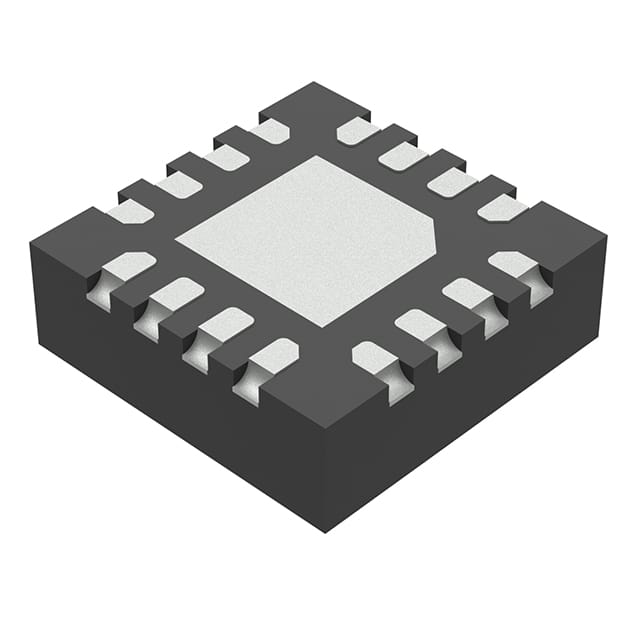
- Part No.:
- MAQ470GQE-AEC1-Z
- Manufacturer:
- Monolithic Power Systems Inc.
- Category:
- Angle, Linear Position Measuring
- Package:
- 16-VFQFN Exposed Pad
- Datasheet:
-
 MAQ470GQE-AEC1-Z.pdf
- Description:
- 12-BIT, AUTOMOTIVE ANGLE SENSORW
- Quantity:
- Payment:

- Shipping:

Inventory:3,566
Please send an inquiry. Send us your inquiry, and we will respond immediately.
Product details
Overview
MAQ470GQE-AEC1-Z from Monolithic Power Systems is a 12-bit automotive-grade absolute angle sensor using Spinaxis™ phase-detection technology to measure angular position of diametrically magnetized rotors at speeds up to 60,000 rpm. It delivers ABZ quadrature (programmable 1–256 pulses/turn), 12-bit PWM, and SPI/SSI serial outputs with ±1.1° INL over –40°C to +125°C, targeting steering angle, throttle, and transmission position sensing in AEC-Q100 Grade 1 systems.
For engineers reviewing the MAQ470GQE-AEC1-Z datasheet, MAQ470GQE-AEC1-Z pinout, MAQ470GQE-AEC1-Z application, or MAQ470GQE-AEC1-Z equivalent, this page provides verified technical context, validated pin functions, real-world magnetic mounting guidance, ABZ jitter specs at 255 PPT, and field-strength diagnostic thresholds confirmed per MPS Rev. 1.2 documentation.
Technical Context
The MAQ470 employs a time-to-digital converter (TDC) to digitize magnetic field angle via zero-crossing phase detection of sinusoidal Hall signals-eliminating arctangent computation or closed-loop interpolators. Its front-end operates open-loop at 1 MHz, feeding a digital filter with programmable 390 Hz cutoff (τ = 0.38/Fcutoff) that adds no latency under steady-state rotation.
On-chip non-volatile memory stores zero-angle offset, ABZ pulse count (PPT), magnetic field thresholds (MGLT/MGHT), and rotation direction (RD). Field strength diagnostics use dual digital outputs (MGH/MGL) with ±5 mT accuracy and –600 ppm/°C drift, enabling axial movement detection and magnet health monitoring in end-of-shaft or side-shaft configurations.
Key Specifications
| Parameter | Value and Actual Design Meaning |
|---|---|
| Angle resolution | 12-bit absolute (11.0–12.8 bit effective, 3σ noise) |
| INL error | ±1.1° over –40°C to +125°C, enabling <0.3° mechanical positioning tolerance |
| ABZ update rate | 16 MHz max, supporting 255 PPT at >100 krpm without interpolation loss |
| PWM output | 12-bit resolution at 204–264 Hz, delivering 0.087°/LSB granularity for analog-like feedback |
| Supply & temp | 3.3 V ±10%, 10.2–13.8 mA, –40°C to +150°C junction (AEC-Q100 Grade 1 qualified) |
| Magnetic field range | 30–60 mT operational, with programmable MGLT/MGHT thresholds for diagnostics |
| Digital interfaces | SPI Mode 0/3 (25 MHz max) with parity; SSI with dummy clock start; both 16-bit MSB-first |
Pinout & Package
MAQ470GQE-AEC1-Z is housed in a wettable-flank QFN-16 (3 mm × 3 mm) package optimized for automotive reflow and optical solder inspection. Exposed thermal pad recommended to be connected to GND for thermal and electrical stability.
| Pin/Terminal | Circuit Role | Design Meaning |
|---|---|---|
| 1 SSD | SSI data out | Serial output for SSI angle readout only; high-impedance when idle |
| 2 A | ABZ channel A | Differential-capable quadrature output; 0.7 V/ns slew rate supports high-speed edge detection |
| 3 Z | ABZ index | Programmable ILIP-defined index pulse width; used for homing and multi-turn synchronization |
| 4 MOSI | SPI data in | Internal pull-down enables robust CS-driven communication; accepts 16-bit register writes |
| 5 CS | SPI chip select | Active-low; internal pull-up ensures safe default state during power-up or bus contention |
| 6 B | ABZ channel B | 90° phase-shifted complement to A; enables direction detection and 4× interpolation |
| 7 MISO | SPI data out | Internal pull-down active in high-Z state; delivers 16-bit angle or register reads with parity bit on 17th clock |
| 8 GND | Supply ground | Primary reference for all analog/digital circuits; connects to exposed thermal pad |
| 9 PWM | PWM output | Open-drain capable; 2.4 V VOH / 0.4 V VOL at 4 mA supports direct MCU GPIO capture |
| 10 TEST | Test terminal | Must be tied to GND; unused in production; enables factory test modes |
| 11 MGL | Low-field flag | Active-high digital output asserting when sensed field drops below MGLT threshold |
| 12 SCLK | SPI clock | Internal pull-down; 40 ns min period supports 25 MHz operation with layout-dependent margins |
| 13 VDD | 3.3 V supply | Requires local 1 µF decoupling; 2.0 W max power dissipation at TA = 25°C (θJA = 50°C/W) |
| 14 NC | No connection | Pin must remain unconnected; not internally bonded or tested |
| 15 SSCK | SSI clock | Low-idle protocol with mandatory dummy rising edge; 0.2–16 µs period supports flexible timing |
| 16 MGH | High-field flag | Active-high digital output asserting when sensed field exceeds MGHT threshold |
Key Features
| Feature | Design Value |
|---|---|
| Spinaxis™ phase-detection architecture | Direct angle digitization without arctan or feedback loops-enables deterministic 10 µs latency and eliminates interpolation errors |
| Programmable ABZ pulses per turn (PPT) | 1–256 selectable values stored in NVM; allows matching to gear ratios or controller resolution requirements without hardware change |
| Magnetic field strength diagnostics | Two independent thresholds (MGLT/MGHT) with ±5 mT accuracy enable real-time magnet detachment or air-gap shift detection |
| On-chip NVM configuration storage | 1000-cycle endurance at 25°C; retains zero-angle, PPT, RD, and field thresholds across power cycles |
| Wettable-flank QFN-16 package | Enables automated optical solder-joint inspection in automotive PCB assembly-critical for ASIL-B functional safety compliance |
Applications
| Steering Angle Sensing | Throttle Position Monitoring |
|---|---|
|
Use Scenario: Real-time measurement of rack-and-pinion steering shaft rotation in electric power steering (EPS) systems. IC Role / Device Role / Timing Role: Absolute angle sensor providing primary feedback for motor torque control loop with <10 µs propagation delay. Use Value: ±1.1° INL over full temperature range ensures accurate lane-keeping assist (LKA) and automatic emergency steering (AES) actuation within ASIL-C constraints. |
Use Scenario: Detection of accelerator pedal rotation in gasoline and hybrid powertrains with redundant position feedback. IC Role / Device Role / Timing Role: Dual-output sensor delivering simultaneous ABZ (for speed/direction) and PWM (for analog-equivalent redundancy) signals. Use Value: Independent MGL/MGH flags verify magnet integrity during pedal actuation-preventing false fault triggers caused by temporary field attenuation. |
| Transmission Gear Selector | Electric Brake Caliper Position |
|
Use Scenario: Rotary position sensing of PRNDL selector shaft in 8-speed automatic transmissions with park lock verification. IC Role / Device Role / Timing Role: AEC-Q100 Grade 1 sensor interfacing to transmission control unit (TCU) via SPI for configuration and ABZ for real-time gear tracking. Use Value: Programmable zero-angle offset allows mechanical calibration during assembly-reducing end-of-line test time and eliminating trim potentiometers. |
Use Scenario: Linear-to-rotary conversion of brake caliper piston travel using cam-follower mechanism in electromechanical brake (EMB) systems. IC Role / Device Role / Timing Role: Side-shaft mounted sensor measuring off-axis magnetic field angle; compensated via BCT/ETY/ETX register trimming. Use Value: Bias current trimming (BCT) corrects for mechanical misalignment-achieving <0.5° linearity error despite ±0.5 mm placement tolerance on caliper housing. |
Equivalent & Alternatives
The following parts are listed as comparable options for similar absolute angle sensing applications.
| Alternative Part | Technical Difference | Application Difference | Selection Advice |
|---|---|---|---|
| AMS AS5055A | 12-bit resolution, SPI-only interface, no ABZ/PWM outputs; requires external encoder IC for quadrature | Lacks integrated ABZ generation-increases BOM count and PCB area in EPS or transmission designs needing native quadrature | Select when ABZ is unnecessary and SPI-only interface suffices; lower cost but higher system integration effort |
| Texas Instruments TMAG5170 | 16-bit resolution, 3-axis field measurement, I²C/SPI, no ABZ/PWM; supports XYZ vector reporting | Provides raw magnetic vector data-not pre-processed angle-requiring host-side angle computation and filtering | Select when multi-axis field analysis or custom algorithm deployment is required; not drop-in for ABZ/PWM signal chains |
Compared with AS5055A and TMAG5170, MAQ470GQE-AEC1-Z uniquely integrates ABZ, PWM, and field diagnostics in a single AEC-Q100-qualified die-reducing system-level complexity for automotive motion control where deterministic angle output and built-in health monitoring are mandatory.
Availability
MAQ470GQE-AEC1-Z is available at Aetrix Electronics and suitable for automotive steering systems, transmission gear selectors, and electric brake calipers requiring stable component supply with full AEC-Q100 qualification and long-term lifecycle support.
Supply support for MAQ470GQE-AEC1-Z includes scheduled delivery planning, volume procurement assistance, BOM continuity management, traceable sourcing, and lifecycle availability coordination for OEM customers, industrial embedded developers, connected-device designers, and electronics production programs.
Manufacturer
Monolithic Power Systems (MPS) is a fabless semiconductor company specializing in high-performance power management and sensing solutions for automotive, industrial, and computing markets.
The MagAlpha product line delivers contactless magnetic angle sensors optimized for automotive motion control-designed to replace potentiometers and resolver-based systems with higher reliability, smaller footprint, and integrated diagnostics.
FAQ
What is the maximum rotational speed supported by the MAQ470GQE-AEC1-Z?
The MAQ470GQE-AEC1-Z supports continuous operation up to 60,000 rpm with full 12-bit resolution and <0.3° ABZ jitter at 255 pulses per turn. This capability is enabled by its 1 MHz front-end sampling rate and open-loop Spinaxis™ architecture, which avoids latency accumulation from interpolation or feedback loops.
How does the MAQ470GQE-AEC1-Z handle magnetic field variations during operation?
It uses two independently programmable thresholds (MGLT and MGHT) to generate MGL and MGH digital flags indicating field strength deviations. These flags have ±5 mT accuracy and –600 ppm/°C drift, allowing real-time detection of magnet displacement, demagnetization, or foreign ferrous material intrusion in the sensing path.
Can the MAQ470GQE-AEC1-Z be mounted off-axis (side-shaft), and how is linearity maintained?
Yes, side-shaft mounting is explicitly supported. Linearity is restored via on-chip bias current trimming (BCT register) and X/Y direction enable bits (ETX/ETY), which compensate for field vector distortion. Factory calibration data shows <0.5° error after trimming-even with ±0.5 mm mechanical placement tolerance.
What is the purpose of the TEST pin (Pin 10), and how should it be connected?
Pin 10 (TEST) is reserved for factory test modes and must be hard-connected to GND in all production applications. Leaving it floating may cause undefined behavior during power-up or interfere with internal self-test sequences required for AEC-Q100 compliance.
Does the MAQ470GQE-AEC1-Z support both SPI and SSI simultaneously, and what are the key protocol differences?
No-SPI and SSI are mutually exclusive interfaces sharing physical pins (SSD/MISO, SSCK/SCLK). SSI uses low-idle clock with mandatory dummy rising edge and supports angle readout only; SPI supports full register access, parity checking, and auto-mode detection (Mode 0/3) at up to 25 MHz.
How is zero-angle calibration performed, and is it retained after power cycling?
Zero-angle offset is programmed into 16-bit Z register (addresses 0x0–0x1) via SPI write and stored in on-chip NVM. The value persists across power cycles and is automatically loaded at startup-enabling one-time mechanical alignment during manufacturing without external EEPROM or host MCU intervention.
What is the significance of the wettable flanks on the QFN-16 package?
Wettable flanks provide vertical sidewall metallization on all perimeter pins, enabling automated optical inspection (AOI) of solder fillets during reflow. This is mandated for automotive PCB assembly per IPC-A-610 Class 3 standards and supports ASIL-B functional safety audits by verifying interconnect integrity.
MAQ470GQE-AEC1-Z Specifications
- Product attributes
- Attribute value
- Manufacturer:
- Monolithic Power Systems Inc.
- Package/Case:
- 16-VFQFN Exposed Pad
- Series:
- -
- Packaging:
- Tape & Reel (TR)
- Product Status:
- Active
- Programmable:
- -
- For Measuring:
- Angle
- Technology:
- Hall Effect
- Rotation Angle - Electrical, Mechanical:
- -
- Linear Range:
- -
- Output:
- PWM, SPI
- Output Signal:
- Programmable
- Actuator Type:
- External Magnet, Not Included
- Linearity:
- -
- Resistance:
- -
- Resistance Tolerance:
- -
- Voltage - Supply:
- 3V ~ 3.6V
- Mounting Type:
- Surface Mount, Wettable Flank
- Termination Style:
- SMD (SMT) Tab
- Operating Temperature:
- -40°C ~ 125°C
- Grade:
- -
- Qualification:
- -
- Supplier Device Package:
- 16-QFN (3x3)
MAQ470GQE-AEC1-Z FAQ
1.How can I place an order for MAQ470GQE-AEC1-Z through Aetrix?
Please submit a Request for Quotation (RFQ) for MAQ470GQE-AEC1-Z on Aetrix. Our sales agent will provide a competitive quotation and guide you through the order confirmation once you accept the terms.
2.Are the price and stock information for MAQ470GQE-AEC1-Z reliable?
The price and inventory of MAQ470GQE-AEC1-Z are updated periodically and may fluctuate due to market conditions. Stock and pricing data are typically refreshed every 24 hours. Quotation validity for MAQ470GQE-AEC1-Z is usually 5 days.
3.What payment methods are accepted for MAQ470GQE-AEC1-Z?
We accept Wire Transfer, PayPal, Credit Card, Western Union, MoneyGram, and Escrow for MAQ470GQE-AEC1-Z transactions.
Note: Certain payment methods may incur a processing fee.
4.How is shipping managed for MAQ470GQE-AEC1-Z?
MAQ470GQE-AEC1-Z orders can be shipped via leading logistics carriers, including DHL, UPS, FedEx, TNT, or Registered Mail.
Once your MAQ470GQE-AEC1-Z order is processed, you will receive an email with the shipment details and tracking number.
Note: Tracking information may take up to 24 hours to appear. Express delivery typically takes 3–5 business days.
5.How can I obtain technical support or documentation for MAQ470GQE-AEC1-Z?
For technical support, including MAQ470GQE-AEC1-Z datasheets, pinout diagrams, or application guidance, please contact our engineering support team. They can provide detailed documentation and assistance for your MAQ470GQE-AEC1-Z requirements.
6.How does Aetrix verify that MAQ470GQE-AEC1-Z is sourced from the original manufacturer or authorized distributors?
All MAQ470GQE-AEC1-Z products on Aetrix are procured from qualified distributors and authorized channels. Our dedicated quality assurance team conducts strict verification, including traceability checks and, if necessary, third-party testing. This ensures that MAQ470GQE-AEC1-Z meets industry standards.
7.What is the process for return or replacement of MAQ470GQE-AEC1-Z?
All MAQ470GQE-AEC1-Z units undergo pre-shipment inspection (PSI). If there is an issue with MAQ470GQE-AEC1-Z, returns or replacements are accepted under the following conditions:
1.Quantity discrepancies, incorrect items, or visible external defects (such as breakage or corrosion), acknowledged by Aetrix.
2.The issue is reported within 90 days of delivery.
3.The MAQ470GQE-AEC1-Z part is unused and in its original packaging.
Return procedure for MAQ470GQE-AEC1-Z:
1.Submit a request within 90 days.
2.Obtain a Return Material Authorization (RMA) from Aetrix.
MAQ470GQE-AEC1-Z Tags
-
TLV493DA1B6HTSA2
Infineon Technologies
-
EVW-AE4001B14
Panasonic Electronic Components
-
3382G-1-103G
Bourns Inc.
-
TLE5501E0001XUMA1
Infineon Technologies
-
HAL830UT-A
TDK-Micronas GmbH
-
TLE5009E1000FUMA1
Infineon Technologies
-
TLE5501E0002XUMA1
Infineon Technologies
-
HAL3725DJ-A
TDK-Micronas GmbH
-
HAL3727DJ-A
TDK-Micronas GmbH
-
HMC1501-TR
Honeywell Aerospace
-
HMC1512-TR
Honeywell Aerospace

-
AAS33001LLEATR-5
Allegro MicroSystems
Tech Hub

Operational amplifier guide covering op amp basics, feedback, ideal vs real op amps, common configurations, buffer circuits, offset, bias current, gain-bandwidth, slew rate, rail-to-rail limits and sel…

Jumper cables guide covering safe connection order, red and black clamp placement, final ground connection, cable gauge, length, clamp quality, copper vs CCA cables, jump starter comparison and battery…

LDO regulator guide covering low dropout voltage, power dissipation, thermal design, PSRR, output noise, capacitor stability, adjustable LDO circuits, LDO vs buck converter and datasheet selection chec…

Conditional Access Module guide covering CAM meaning, CI/CI+ interface, smart card authorization, DVB security workflow, TV and set-top box compatibility, internal electronics, ESD protection, connecto…

Guide to electronic component obsolescence covering EOL risk, PCN/PDN notices, last-time buy planning, replacement options, form-fit-function validation, counterfeit risk and BOM lifecycle management.

18650 battery guide covering lithium-ion cell basics, 3.6V/3.7V voltage, 4.2V charging, mAh and Wh capacity, protected cells, chargers, BMS, series-parallel packs, holders, welding and sourcing checks.…

Hall effect sensor guide covering working principle, linear and digital sensors, Arduino circuits, current sensing, speed detection, automotive applications, A3144 examples, signal filtering and datash…

Product Change Notification guide for electronic components, covering PCN meaning, PCN vs PDN/EOL, common change types, risk levels, form-fit-function review, engineering validation, BOM control, LTB/L…

A practical guide to blend door actuators, covering HVAC function, symptoms, location, AC and heater issues, reset and calibration, replacement cost, electrical diagnosis, compatibility checks, and rep…

Engineering guide to Raspberry Pi alternatives, covering chip-level differences, Orange Pi, ROCK, Jetson, Banana Pi, NanoPi, Compute Module, Pico, GPIO, camera, HAT compatibility, and replacement risks…


