
 My Inquiry
 My Account


Analog Devices Inc./Maxim Integrated MAX038CPP
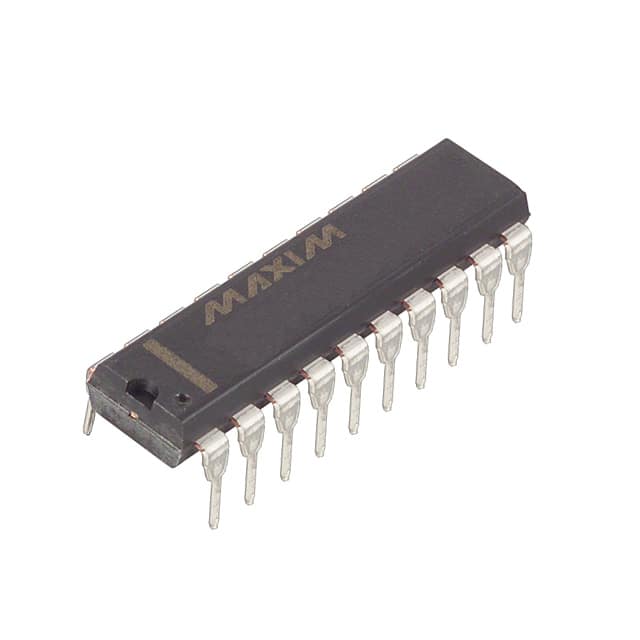
- Part No.:
- MAX038CPP
- Manufacturer:
- Analog Devices Inc./Maxim Integrated
- Package:
- 20-DIP (0.300", 7.62mm)
- Datasheet:
-
 MAX038CPP.pdf
- Description:
- IC FUNCTION GENERATOR 20DIP
- Quantity:
- Payment:

- Shipping:

Inventory:1,476
Please send an inquiry. Send us your inquiry, and we will respond immediately.
Product details
Overview
MAX038CPP from Maxim Integrated is a high-frequency precision function generator IC producing triangle, sawtooth, sine, square, and pulse waveforms with 0.1Hz–20MHz frequency range, ±2.3V duty-cycle control, and 2VP-P low-impedance output. It operates from ±5V supplies, features independent frequency/duty-cycle adjustment, and is used in voltage-controlled oscillators, FSK generators, and PLL reference sources.
For engineers reviewing the MAX038CPP datasheet, MAX038CPP pinout, MAX038CPP application, or MAX038CPP equivalent, this page delivers verified specifications including 0.1Ω output resistance, 200ppm/°C frequency drift, 2.50V internal bandgap reference, 15%–85% adjustable duty cycle, and TTL-compatible SYNC output for system synchronization.
Technical Context
The MAX038CPP implements a relaxation oscillator architecture using constant-current charging/discharging of an external capacitor (COSC) to generate triangle and square waves simultaneously. Frequency is set by IIN current (2µA–750µA), FADJ voltage (±2.4V), and COSC value (20pF–>100µF), with Fo = IIN/CF (MHz/pF) at VFADJ = 0V.
Duty cycle is controlled independently via DADJ (±2.3V), altering the charge/discharge current ratio while maintaining near-constant frequency. A dedicated 2.50V bandgap reference (REF) enables precise resistor-based programming of IIN, FADJ, and DADJ, and supports sine-wave distortion minimization through fine-duty-cycle tuning.
Key Specifications
| Parameter | Value and Actual Design Meaning |
|---|---|
| Frequency Range | 0.1Hz to 20MHz - supports audio, RF, and test equipment signal generation without external multipliers |
| Output Amplitude | 2VP-P, symmetrical about ground - eliminates DC blocking capacitors in AC-coupled stages |
| Output Impedance | 0.1Ω - drives ±20mA into 50Ω loads with minimal amplitude droop |
| Frequency Tempco | 200ppm/°C - ensures stable timing over 0°C to +70°C industrial temperature range |
| Duty Cycle Range | 15% to 85% - enables full-range PWM and sawtooth synthesis with ±2.3V analog control |
| Reference Voltage | 2.50V ±20mV - provides stable bias for precision resistor networks controlling IIN/FADJ/DADJ |
| SYNC Output | 50% duty cycle, TTL/CMOS compatible - synchronizes external logic or clock domains without additional level-shifting |
Pinout & Package
MAX038CPP is housed in a 20-pin plastic DIP package (0°C to +70°C operating range), with five isolated GND pins requiring local star grounding per layout guidelines.
| Pin/Terminal | Circuit Role | Design Meaning |
|---|---|---|
| 1 (REF) | Bandgap voltage reference output | 2.50V source for accurate resistor-based current/voltage programming of IIN, FADJ, DADJ |
| 3 (A0), 4 (A1) | Waveform selection address inputs | TTL/CMOS-compatible logic selects sine/square/triangle output in <0.3µs with no phase dependency |
| 5 (COSC) | External timing capacitor node | Connects to grounded capacitor (20pF–100µF); voltage swing is 0V to –1V - requires low-leakage, low-TC dielectric |
| 7 (DADJ) | Duty-cycle control input | ±2.3V analog input adjusts output duty cycle from 15% to 85%; also tunes sine-wave symmetry to minimize THD |
| 8 (FADJ) | Frequency adjust input | ±2.4V analog input modulates center frequency by ±70%; used for FM, sweeping, or PLL fine-tuning |
| 10 (IIN) | Primary frequency programming current input | 2µA–750µA current sets base frequency (Fo = IIN/CF); accepts voltage-driven operation via RIN from REF |
| 14 (SYNC) | Internal oscillator synchronization output | TTL/CMOS square wave with fixed 50% duty cycle; rising edge aligned to zero-crossing of sine/triangle outputs |
| 19 (OUT) | Waveform output | Low-impedance (0.1Ω) 2VP-P output driving up to ±20mA; waveform selected by A0/A1; no external buffering needed for 50Ω loads |
Key Features
| Feature | Design Value |
|---|---|
| Independent frequency and duty-cycle control | Enables simultaneous FM and PWM without interaction-critical for FSK modulation and swept-sine testing |
| 2.50V internal bandgap reference | Stable, low-drift (20ppm/°C) voltage source eliminates need for external precision references when setting IIN/FADJ/DADJ |
| Low-distortion sine output | THD ≤2.0% at 100kHz - achieved via on-chip triangle-to-sine shaping; further reduced by DADJ fine-tuning |
| Integrated phase detector (PDI/PDO) | Allows direct PLL implementation: PDO current output connects to FADJ to lock MAX038CPP to external clock without external ICs |
| High-speed SYNC output | Rising edge synchronized to zero-crossing of sine/triangle outputs - enables precise triggering and multi-channel phase alignment |
Applications
| Voltage-Controlled Oscillator (VCO) | FSK Signal Generator |
|---|---|
Use Scenario: Generating tunable carrier signals in analog communication transceivers and frequency-hopping systems. IC Role / Device Role / Timing Role: Core VCO providing linear frequency response to control voltage (FADJ/IIN) with 20MHz bandwidth and low phase noise. Use Value: Eliminates discrete transistor VCO design complexity; achieves ±70% frequency sweep with single op-amp and 2.50V reference. |
Use Scenario: Producing binary FSK waveforms for telemetry, RFID, and legacy data modems. IC Role / Device Role / Timing Role: Dual-tone generator switching between sine/square outputs at two distinct frequencies via A0/A1 logic and FADJ voltage states. Use Value: No external MUX or switching circuitry required; frequency accuracy maintained across temperature due to 200ppm/°C tempco. |
| Precision Function Generator | Phase-Locked Loop Reference Source |
Use Scenario: Lab-grade bench equipment generating calibrated triangle, sawtooth, and pulse waveforms for circuit validation. IC Role / Device Role / Timing Role: Primary waveform engine delivering 0.1Hz–20MHz range with <0.5% triangle nonlinearity and <2% sine THD. Use Value: Reduces external component count to one capacitor (COSC) and three resistors (RIN, RF, RD) for full functionality. |
Use Scenario: Locking local oscillator frequency to GPS-disciplined or crystal-referenced master clocks in instrumentation. IC Role / Device Role / Timing Role: PLL integrator core using internal phase detector (PDI/PDO) and FADJ as loop control input. Use Value: Single-chip solution replaces discrete XOR phase detector + op-amp + VCO; PDO's 500µA current drive simplifies loop filter design. |
Equivalent & Alternatives
The following parts are listed as comparable options for similar high-frequency waveform generator applications.
| Alternative Part | Technical Difference | Application Difference | Selection Advice |
|---|---|---|---|
| AD9833BRMZ | Digital DDS architecture; SPI interface; 0–12.5MHz output; requires external clock; no analog duty-cycle control | Better frequency resolution and phase control; unsuitable for analog FM/PWM where voltage control is mandatory | Select AD9833BRMZ for digitally programmable, jitter-sensitive applications; avoid when analog voltage tuning or >12.5MHz is required |
| ICL8038CPD | Legacy function generator; 0.001Hz–1MHz range; higher THD (>3%); no SYNC output; single-supply capable | Limited bandwidth and distortion performance; lacks modern features like 2.50V reference and phase detector | Select ICL8038CPD only for cost-sensitive, sub-1MHz designs where MAX038CPP's 20MHz range and low THD are unnecessary |
Compared with AD9833BRMZ and ICL8038CPD, MAX038CPP uniquely combines analog voltage-controlled frequency/duty-cycle tuning, 20MHz bandwidth, integrated SYNC, and on-chip phase detection-making it the only choice for mixed-signal PLLs, analog FSK, and wideband swept-source test systems.
Availability
MAX038CPP is available at Aetrix Electronics and suitable for precision function generators, voltage-controlled oscillators, FSK modulators, phase-locked loops, and frequency synthesizers requiring stable component supply across industrial temperature ranges.
Supply support for MAX038CPP includes scheduled delivery planning, volume procurement assistance, BOM continuity management, traceable sourcing, and lifecycle availability coordination for OEM customers, industrial embedded developers, connected-device designers, and electronics production programs.
Manufacturer
Maxim Integrated (now part of Analog Devices) is a semiconductor company specializing in precision analog, mixed-signal, and power management ICs for industrial, communications, and computing applications.
The MAX038 product line was designed as a monolithic high-frequency function generator targeting test equipment, communications, and instrumentation where analog programmability, wide bandwidth, and low distortion are essential.
FAQ
What is the maximum operating frequency of the MAX038CPP?
The MAX038CPP achieves a maximum operating frequency of 20MHz under standard conditions (CF ≤ 15pF, IIN = 500µA). At higher frequencies, waveform distortion increases, and operation above 20MHz is possible but not characterized for THD or symmetry. The 20MHz limit reflects guaranteed performance across the 0°C to +70°C temperature range with typical external components.
How does the MAX038CPP generate its 2.50V reference voltage?
The MAX038CPP integrates a precision 2.50V bandgap voltage reference (REF pin) with ±20mV initial accuracy and 20ppm/°C temperature coefficient. This reference is internally generated and buffered, enabling accurate resistor-based current programming of IIN, FADJ, and DADJ without external references. It can source up to 4mA or sink 100µA while maintaining regulation.
Can the MAX038CPP produce a sawtooth waveform?
Yes, the MAX038CPP produces a sawtooth waveform by applying a DC offset to the DADJ input, which skews the charge/discharge current ratio of the internal oscillator capacitor (COSC). While not a dedicated output mode, sawtooth generation is explicitly supported in the datasheet as a primary application of the independent duty-cycle control feature.
What is the purpose of the five GND pins on the MAX038CPP?
The MAX038CPP has five separate GND pins (pins 2, 6, 9, 11, 18) that are not internally connected. They must all be tied to a quiet, low-impedance ground plane near the device to minimize noise coupling-especially critical for the COSC node and analog control inputs (FADJ, DADJ). This separation isolates digital (DGND), analog (GND), and power return paths to preserve signal integrity.
Does the MAX038CPP require external passive components to operate?
Yes, the MAX038CPP requires at minimum an external timing capacitor (COSC) connected to pin 5 and ground, plus decoupling capacitors on V+, V-, DV+, and REF. For basic operation, a single resistor (RIN) from REF to IIN sets the base frequency. Additional resistors enable manual FADJ/DADJ control, and a capacitor on COSC determines frequency range and stability.
MAX038CPP Specifications
- Product attributes
- Attribute value
- Manufacturer:
- Analog Devices Inc./Maxim Integrated
- Series:
- -
- Package/Case:
- 20-DIP (0.300", 7.62mm)
- Packaging:
- Tube
- Product Status:
- Obsolete
- Programmable:
- Not Verified
- Type:
- Function Generator
- PLL:
- No
- Input:
- CMOS, TTL
- Output:
- CMOS, TTL
- Number of Circuits:
- 1
- Ratio - Input:Output:
- 1:3
- Differential - Input:Output:
- No/No
- Frequency - Max:
- 40MHz
- Divider/Multiplier:
- Yes/Yes
- Voltage - Supply:
- 4.75V ~ 5.25V
- Operating Temperature:
- 0°C ~ 70°C
- Mounting Type:
- Through Hole
- Grade:
- -
- Qualification:
- -
- Supplier Device Package:
- 20-PDIP
MAX038CPP FAQ
1.How can I place an order for MAX038CPP through Aetrix?
Please submit a Request for Quotation (RFQ) for MAX038CPP on Aetrix. Our sales agent will provide a competitive quotation and guide you through the order confirmation once you accept the terms.
2.Are the price and stock information for MAX038CPP reliable?
The price and inventory of MAX038CPP are updated periodically and may fluctuate due to market conditions. Stock and pricing data are typically refreshed every 24 hours. Quotation validity for MAX038CPP is usually 5 days.
3.What payment methods are accepted for MAX038CPP?
We accept Wire Transfer, PayPal, Credit Card, Western Union, MoneyGram, and Escrow for MAX038CPP transactions.
Note: Certain payment methods may incur a processing fee.
4.How is shipping managed for MAX038CPP?
MAX038CPP orders can be shipped via leading logistics carriers, including DHL, UPS, FedEx, TNT, or Registered Mail.
Once your MAX038CPP order is processed, you will receive an email with the shipment details and tracking number.
Note: Tracking information may take up to 24 hours to appear. Express delivery typically takes 3–5 business days.
5.How can I obtain technical support or documentation for MAX038CPP?
For technical support, including MAX038CPP datasheets, pinout diagrams, or application guidance, please contact our engineering support team. They can provide detailed documentation and assistance for your MAX038CPP requirements.
6.How does Aetrix verify that MAX038CPP is sourced from the original manufacturer or authorized distributors?
All MAX038CPP products on Aetrix are procured from qualified distributors and authorized channels. Our dedicated quality assurance team conducts strict verification, including traceability checks and, if necessary, third-party testing. This ensures that MAX038CPP meets industry standards.
7.What is the process for return or replacement of MAX038CPP?
All MAX038CPP units undergo pre-shipment inspection (PSI). If there is an issue with MAX038CPP, returns or replacements are accepted under the following conditions:
1.Quantity discrepancies, incorrect items, or visible external defects (such as breakage or corrosion), acknowledged by Aetrix.
2.The issue is reported within 90 days of delivery.
3.The MAX038CPP part is unused and in its original packaging.
Return procedure for MAX038CPP:
1.Submit a request within 90 days.
2.Obtain a Return Material Authorization (RMA) from Aetrix.
MAX038CPP Tags
-
CD74HCT4046AM96
Texas Instruments
-
MC14046BDWR2G
onsemi

-
501MILFT
Renesas
-
CD74HC7046AM
Texas Instruments
-
CDCVF2505PWR
Texas Instruments

-
RC19004A100GNL#KB0
Renesas
-
SI5351A-B-GTR
Skyworks Solutions Inc.
-
CY2305SXI-1T
Infineon Technologies
-
570BILFT
Renesas
-
CDCE913PWR
Texas Instruments
-
CY2305SXI-1HT
Infineon Technologies
-
DS1086LU+T
Analog Devices Inc./Maxim Integrated
Tech Hub

A practical engineering guide to 3.3V and 5V logic compatibility, input thresholds, resistor dividers, translator ICs, MOSFET level shifting, I2C pull-ups, timing limits and power-sequencing risks.

The 74HC595 uses push-pull logic outputs, while the TPIC6B595 uses 50 V open-drain DMOS sinks for higher-power loads. This guide compares timing, current limits, 3.3 V interfacing, load wiring, thermal…

The 74HC595 converts serial data into eight stable parallel outputs. This guide covers pin functions, shift and storage timing, OE and MR behavior, drive-current limits, cascading, voltage compatibilit…

A technical comparison of level-sensitive latches and edge-triggered flip-flops, covering timing windows, setup and hold limits, master–slave operation, time borrowing, race-through, HDL inference and…

A D latch stores one bit while Enable controls when data can pass. This reference covers gate-level operation, truth tables, transparency, setup and hold timing, LE versus OE, common ICs and practical …

An SR latch stores one bit through cross-coupled feedback. This engineering reference covers NOR and NAND implementations, truth tables, forbidden-state recovery, gated operation, switch debouncing, fa…

Latch circuits retain one bit through feedback. This technical reference covers SR and D latches, truth tables, transparency, timing limits, latch-versus-flip-flop behavior, applications and common log…

An engineering guide to LED driver operation, constant-current and constant-voltage outputs, linear and switching topologies, dimming, IC selection, calculations, replacement compatibility, and fault c…

Operational amplifier guide covering op amp basics, feedback, ideal vs real op amps, common configurations, buffer circuits, offset, bias current, gain-bandwidth, slew rate, rail-to-rail limits and sel…

Jumper cables guide covering safe connection order, red and black clamp placement, final ground connection, cable gauge, length, clamp quality, copper vs CCA cables, jump starter comparison and battery…


