
 My Inquiry
 My Account


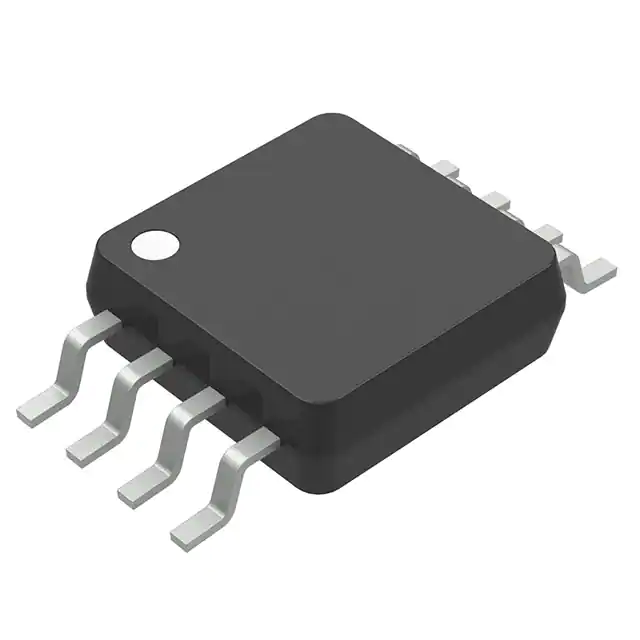
Analog Devices Inc./Maxim Integrated MAX1087EKA-T
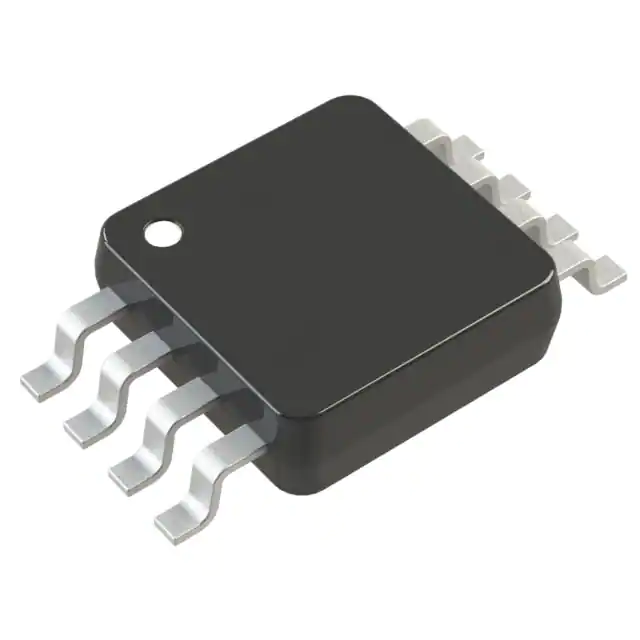
- Part No.:
- MAX1087EKA-T
- Manufacturer:
- Analog Devices Inc./Maxim Integrated
- Category:
- Analog to Digital Converters (ADC)
- Package:
- SOT-23-8
- Datasheet:
-
 MAX1087EKA-T.pdf
- Description:
- 10-BIT, TRUE-DIFFERENTIAL ADC
- Quantity:
- Payment:

- Shipping:

Inventory:4,650
Please send an inquiry. Send us your inquiry, and we will respond immediately.
Product details
Overview
MAX1087EKA-T from Maxim Integrated is a 10-bit, 2-channel single-ended analog-to-digital converter (ADC) in an 8-pin SOT23 package, operating from a +3V supply. It delivers 150ksps sampling rate, ±1.0 LSB INL, 61dB SINAD, and auto-shutdown current of 0.2µA - optimized for portable temperature monitors and low-power data acquisition systems.
For engineers reviewing the MAX1087EKA-T datasheet, MAX1087EKA-T pinout, MAX1087EKA-T application, or MAX1087EKA-T equivalent, this device supports SPI/QSPI/MICROWIRE interfaces, features internal conversion clocking, true single-supply +3V operation, and 1.4µs track/hold acquisition - critical for battery-powered sensor front-ends requiring minimal PCB area and sub-200µA active current.
Technical Context
The MAX1087EKA-T implements a successive-approximation register (SAR) ADC architecture with integrated track-and-hold, supporting two single-ended analog inputs (AIN1, AIN2) referenced to GND. Conversion is initiated by CNVST edge transitions, with MSB available at DOUT after 3.7µs and full 12-bit serial output (10 data + 2 sub-bits) clocked via SCLK up to 8MHz.
It uses an internal 4MHz oscillator (±10% tolerance), eliminating external clock dependency, and employs AutoShutdown™ between conversions to reduce current to 0.2µA. Input protection diodes clamp AIN pins to VDD/GND, enabling safe operation with input voltages from GND to VDD+50mV.
Key Specifications
| Parameter | Value and Actual Design Meaning |
|---|---|
| Resolution | 10-bit SAR - delivers 1024 discrete digital codes over full-scale range |
| Sampling Rate | 150ksps maximum - supports real-time capture of signals up to ~100kHz full-linear bandwidth |
| INL / DNL | ±1.0 LSB / no missing codes - ensures monotonicity and <0.1% end-point linearity error |
| Supply Voltage | +2.7V to +3.6V - compatible with standard 3V logic rails and Li-ion battery discharge profiles |
| Active Current | 200µA at 150ksps - enables >5-year battery life in 1ksps wake-up sensor nodes |
| Shutdown Current | 0.2µA - reduces quiescent load during idle intervals without external enable control |
| SINAD | 61dB at 10kHz - sufficient for 9.8 ENOB in precision temperature or pressure sensing |
Pinout & Package
Package: 8-pin SOT23 (3.0mm × 1.6mm × 1.1mm), RoHS-compliant, top mark AAEV.
| Pin/Terminal | Circuit Role | Design Meaning |
|---|---|---|
| VDD (Pin 1) | Positive supply input | Accepts +2.7V to +3.6V; requires local 0.1µF bypass to GND for noise immunity |
| AIN1 (Pin 2) | Analog input channel 1 | Single-ended input referenced to GND; selected when CNVST pulse is high-only |
| AIN2 (Pin 3) | Analog input channel 2 | Single-ended input referenced to GND; selected by CNVST high-low-high sequence |
| GND (Pin 4) | Analog/digital ground reference | Common return for VDD, REF, and analog inputs; must be star-connected to minimize noise coupling |
| REF (Pin 5) | External reference voltage input | Accepts +1.0V to VDD+50mV; sets full-scale range (e.g., +2.5V → 0–2.5V input span) |
| CNVST (Pin 6) | Conversion start/control | Rising edge powers up device and enters track mode; falling edge triggers hold & conversion |
| DOUT (Pin 7) | Serial data output | 3-wire SPI-compatible; outputs MSB-first 12-bit stream (10 data + 2 sub-bits) on SCLK falling edge |
| SCLK (Pin 8) | Serial clock input | Accepts up to 8MHz clock; controls data timing; CPOL=0, CPHA=0 required for SPI/QSPI/MICROWIRE |
Key Features
| Feature | Design Value |
|---|---|
| AutoShutdown™ between conversions | Reduces average current to <0.2µA at 1ksps - eliminates need for external power gating |
| Internal conversion clock | 4MHz oscillator (±10%) - removes external clock source and layout complexity |
| True single-ended dual-channel input | AIN1/AIN2 share same GND reference - simplifies sensor interfacing without differential amplifiers |
| SPI/QSPI/MICROWIRE compatibility | CPOL=0/CPHA=0 interface - enables direct connection to common microcontroller serial peripherals |
| Low acquisition time | 1.4µs tACQ - supports fast channel switching and high-throughput multiplexed sensing |
Applications
| Portable Temperature Monitors | Flowmeters |
|---|---|
Use Scenario: Battery-powered handheld thermometers measuring thermistor or RTD outputs in field service tools. IC Role / Device Role / Timing Role: ADC digitizes conditioned analog voltage from temperature sensor; CNVST-triggered single-shot conversion minimizes energy per reading. Use Value: 200µA active current and 0.2µA shutdown extend AA battery life beyond 3 years at 10s sampling interval. | Use Scenario: Ultrasonic or turbine-based flow sensors in smart water/gas meters requiring periodic analog signal sampling. IC Role / Device Role / Timing Role: Converts differential pressure or rotational speed analog outputs into digital values for microcontroller processing. Use Value: 150ksps rate and 61dB SINAD support accurate amplitude and zero-crossing detection for flow calculation algorithms. |
| Touch Screens | Low Power Data Acquisition |
Use Scenario: Resistive touch panel controllers in medical handhelds where ESD robustness and low standby drain are critical. IC Role / Device Role / Timing Role: Reads X/Y electrode voltages sequentially using AIN1/AIN2 channel selection via CNVST timing. Use Value: Internal track-and-hold and 1.4µs acquisition enable stable readings even with high-impedance panel traces. | Use Scenario: Wireless sensor nodes collecting vibration, humidity, or ambient light data in industrial predictive maintenance systems. IC Role / Device Role / Timing Role: Front-end ADC for multi-sensor analog aggregation before RF transmission. Use Value: 8-pin SOT23 footprint saves PCB space vs. SOIC alternatives; 3V operation aligns with common PMIC output rails. |
Equivalent & Alternatives
The following parts are listed as comparable options for similar 10-bit SAR ADC applications.
| Alternative Part | Technical Difference | Application Difference | Selection Advice |
|---|---|---|---|
| ADS7822UID | 8-pin MSOP, 125ksps max, 2.7–5.25V supply, no AutoShutdown, 1.25µA standby | Lacks automatic power cycling; requires external control for low-duty-cycle operation | Choose when higher resolution (12-bit) is needed and system can manage external shutdown sequencing |
| MCP3202-I/P | 8-pin PDIP/SOIC, 100ksps, 2.7–5.5V, SPI-only, 500nA standby, no internal clock | Requires external SCLK; larger package; lower sampling rate but better DNL (±0.5 LSB) | Prefer for legacy through-hole designs or where ultra-low standby (<1µA) outweighs speed and size constraints |
Compared with ADS7822UID and MCP3202-I/P, the MAX1087EKA-T uniquely combines 150ksps speed, 0.2µA AutoShutdown, internal clock, and 8-pin SOT23 size - making it optimal for space-constrained, battery-operated systems needing rapid, autonomous conversions without MCU intervention.
Availability
MAX1087EKA-T is available at Aetrix Electronics and suitable for portable temperature monitors, flowmeters, and touch screens requiring stable component supply across extended production lifecycles.
Supply support for MAX1087EKA-T includes scheduled delivery planning, volume procurement assistance, BOM continuity management, traceable sourcing, and lifecycle availability coordination for OEM customers, industrial embedded developers, connected-device designers, and electronics production programs.
Manufacturer
Maxim Integrated (now part of Analog Devices) designs precision analog, mixed-signal, and power management ICs for industrial, medical, and consumer applications.
The MAX1086–MAX1089 family targets ultra-low-power, space-constrained data acquisition - delivering 10-bit accuracy with micropower consumption and minimal board footprint for battery-powered sensor systems.
FAQ
What is the maximum sampling rate supported by the MAX1087EKA-T?
The MAX1087EKA-T supports a maximum sampling rate of 150ksps. At this rate, the device draws 200µA from a +3V supply and completes conversion in 3.7µs after the CNVST falling edge. This rate is sustained with VDD = +2.7V to +3.6V and fSCLK ≤ 8MHz, enabling real-time capture of signals within its 100kHz full-linear bandwidth.
Does the MAX1087EKA-T require an external reference voltage?
Yes, the MAX1087EKA-T requires an external reference voltage applied to the REF pin. It accepts VREF from +1.0V to VDD+50mV (e.g., +2.5V typical), and a 0.1µF bypass capacitor to GND is mandatory for optimal performance. The reference directly defines the full-scale input range (0 to VREF for unipolar operation), and internal circuitry does not include a reference buffer or generator.
How are the two analog input channels selected on the MAX1087EKA-T?
Channel selection on the MAX1087EKA-T is controlled solely by CNVST timing: a single high pulse selects AIN1; a high–low–high pulse sequence selects AIN2. After power-up or shutdown, the default channel is AIN1. If fewer than 12 bits are clocked out before the next CNVST rising edge, the device toggles to the alternate channel - ensuring deterministic, software-controlled multiplexing without additional control lines.
What serial interface protocols is the MAX1087EKA-T compatible with?
The MAX1087EKA-T is fully compatible with SPI, QSPI, and MICROWIRE protocols using CPOL = 0 and CPHA = 0. It outputs 12 bits (10 data + 2 sub-bits) MSB-first on DOUT, synchronized to SCLK falling edges. QSPI allows full 10-bit read in one 12-bit transaction; SPI and MICROWIRE require two 8-bit reads to retrieve all data, with proper handling of trailing sub-bits.
What is the purpose of the two sub-bits (S1, S0) in the MAX1087EKA-T serial output?
The two sub-bits (S1, S0) in the MAX1087EKA-T's 12-bit serial output provide additional resolution beyond the primary 10-bit result, supporting enhanced dithering or averaging techniques. They are always transmitted after the 10 data bits (B9–B0) and must be clocked out to maintain synchronization - omission causes channel or mode toggling on the next CNVST cycle. These bits are not calibration coefficients but part of the SAR conversion residue.
MAX1087EKA-T Specifications
- Product attributes
- Attribute value
- Manufacturer:
- Analog Devices Inc./Maxim Integrated
- Series:
- -
- Package/Case:
- SOT-23-8
- Packaging:
- Bulk
- Product Status:
- Active
- Number of Bits:
- 10
- Sampling Rate (Per Second):
- 150
- Number of Inputs:
- 2
- Input Type:
- Differential, Single Ended
- Data Interface:
- 3-Wire Serial, Microwire, QSPI, SPI
- Configuration:
- S/H-ADC
- Ratio - S/H:ADC:
- 1:1
- Number of A/D Converters:
- 1
- Architecture:
- SAR
- Reference Type:
- External
- Voltage - Supply, Analog:
- 2.7V ~ 3.6V
- Voltage - Supply, Digital:
- 2.7V ~ 3.6V
- Features:
- -
- Operating Temperature:
- -40°C ~ 85°C
- Supplier Device Package:
- SOT-23-8
- Mounting Type:
- Surface Mount
- Grade:
- -
- Qualification:
- -
MAX1087EKA-T FAQ
1.How can I place an order for MAX1087EKA-T through Aetrix?
Please submit a Request for Quotation (RFQ) for MAX1087EKA-T on Aetrix. Our sales agent will provide a competitive quotation and guide you through the order confirmation once you accept the terms.
2.Are the price and stock information for MAX1087EKA-T reliable?
The price and inventory of MAX1087EKA-T are updated periodically and may fluctuate due to market conditions. Stock and pricing data are typically refreshed every 24 hours. Quotation validity for MAX1087EKA-T is usually 5 days.
3.What payment methods are accepted for MAX1087EKA-T?
We accept Wire Transfer, PayPal, Credit Card, Western Union, MoneyGram, and Escrow for MAX1087EKA-T transactions.
Note: Certain payment methods may incur a processing fee.
4.How is shipping managed for MAX1087EKA-T?
MAX1087EKA-T orders can be shipped via leading logistics carriers, including DHL, UPS, FedEx, TNT, or Registered Mail.
Once your MAX1087EKA-T order is processed, you will receive an email with the shipment details and tracking number.
Note: Tracking information may take up to 24 hours to appear. Express delivery typically takes 3–5 business days.
5.How can I obtain technical support or documentation for MAX1087EKA-T?
For technical support, including MAX1087EKA-T datasheets, pinout diagrams, or application guidance, please contact our engineering support team. They can provide detailed documentation and assistance for your MAX1087EKA-T requirements.
6.How does Aetrix verify that MAX1087EKA-T is sourced from the original manufacturer or authorized distributors?
All MAX1087EKA-T products on Aetrix are procured from qualified distributors and authorized channels. Our dedicated quality assurance team conducts strict verification, including traceability checks and, if necessary, third-party testing. This ensures that MAX1087EKA-T meets industry standards.
7.What is the process for return or replacement of MAX1087EKA-T?
All MAX1087EKA-T units undergo pre-shipment inspection (PSI). If there is an issue with MAX1087EKA-T, returns or replacements are accepted under the following conditions:
1.Quantity discrepancies, incorrect items, or visible external defects (such as breakage or corrosion), acknowledged by Aetrix.
2.The issue is reported within 90 days of delivery.
3.The MAX1087EKA-T part is unused and in its original packaging.
Return procedure for MAX1087EKA-T:
1.Submit a request within 90 days.
2.Obtain a Return Material Authorization (RMA) from Aetrix.
MAX1087EKA-T Tags
-
ADC081C021CIMKX/NOPB
Texas Instruments
-
MCP3021A5T-E/OT
Microchip Technology
-
TLA2024IRUGR
Texas Instruments
-
MCP3221A5T-E/OT
Microchip Technology
-
MCP3221A5T-I/OT
Microchip Technology
-
MCP3221A4T-E/OT
Microchip Technology
-
MCP3221A6T-E/OT
Microchip Technology
-
MCP3221A0T-E/OT
Microchip Technology
-
MCP3221A1T-E/OT
Microchip Technology

-
ADC121S021CIMFX/NOPB
Texas Instruments
-
MCP3001-I/MS
Microchip Technology

-
MCP3001-I/SN
Microchip Technology
Tech Hub

A practical engineering guide to 3.3V and 5V logic compatibility, input thresholds, resistor dividers, translator ICs, MOSFET level shifting, I2C pull-ups, timing limits and power-sequencing risks.

The 74HC595 uses push-pull logic outputs, while the TPIC6B595 uses 50 V open-drain DMOS sinks for higher-power loads. This guide compares timing, current limits, 3.3 V interfacing, load wiring, thermal…

The 74HC595 converts serial data into eight stable parallel outputs. This guide covers pin functions, shift and storage timing, OE and MR behavior, drive-current limits, cascading, voltage compatibilit…

A technical comparison of level-sensitive latches and edge-triggered flip-flops, covering timing windows, setup and hold limits, master–slave operation, time borrowing, race-through, HDL inference and…

A D latch stores one bit while Enable controls when data can pass. This reference covers gate-level operation, truth tables, transparency, setup and hold timing, LE versus OE, common ICs and practical …

An SR latch stores one bit through cross-coupled feedback. This engineering reference covers NOR and NAND implementations, truth tables, forbidden-state recovery, gated operation, switch debouncing, fa…

Latch circuits retain one bit through feedback. This technical reference covers SR and D latches, truth tables, transparency, timing limits, latch-versus-flip-flop behavior, applications and common log…

An engineering guide to LED driver operation, constant-current and constant-voltage outputs, linear and switching topologies, dimming, IC selection, calculations, replacement compatibility, and fault c…

Operational amplifier guide covering op amp basics, feedback, ideal vs real op amps, common configurations, buffer circuits, offset, bias current, gain-bandwidth, slew rate, rail-to-rail limits and sel…

Jumper cables guide covering safe connection order, red and black clamp placement, final ground connection, cable gauge, length, clamp quality, copper vs CCA cables, jump starter comparison and battery…


