
 My Inquiry
 My Account


Analog Devices Inc./Maxim Integrated MAX12930EASA+
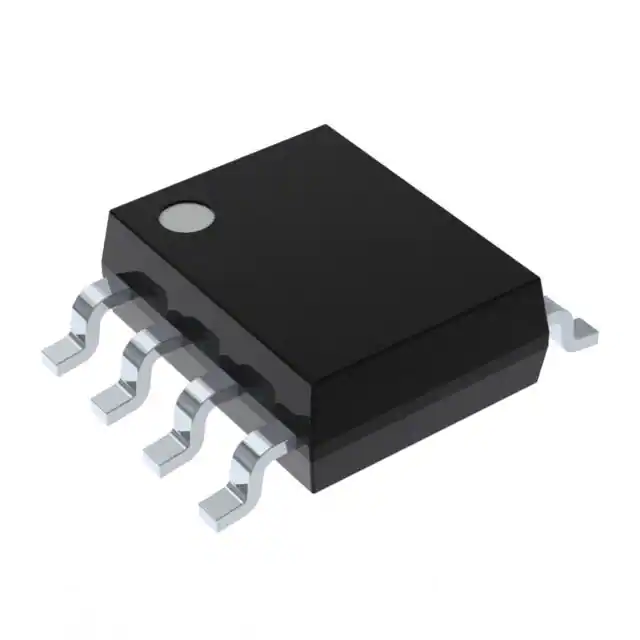
- Part No.:
- MAX12930EASA+
- Manufacturer:
- Analog Devices Inc./Maxim Integrated
- Category:
- Digital Isolators
- Package:
- 8-SOIC (0.154", 3.90mm Width)
- Datasheet:
-
 MAX12930EASA+.pdf
- Description:
- DIGITAL ISOLATOR 3.75KVRMS 2CH
- Quantity:
- Payment:

- Shipping:

Inventory:217
Please send an inquiry. Send us your inquiry, and we will respond immediately.
Product details
Overview
MAX12930EASA+ from Analog Devices is a 2-channel, unidirectional digital galvanic isolator in an 8-pin narrow-body SOIC package, rated for 3kVRMS isolation (60s), 445VRMS working voltage, and 25Mbps data rate. It features independent 1.71V–5.5V dual supplies (VDDA/VDDB), 50kV/µs CMTI, and operates across –40°C to +125°C ambient. It enables isolated digital I/O in industrial fieldbus and battery management systems.
For engineers reviewing the MAX12930EASA+ datasheet, MAX12930EASA+ pinout, MAX12930EASA+ application, or MAX12930EASA+ equivalent, key selection criteria include channel directionality (unidirectional), default output state (low), narrow-body creepage (4mm), CTI ≥400 Group II insulation, and compatibility with 1.8V–5.5V logic level translation across isolated domains.
Technical Context
The MAX12930EASA+ implements capacitive-based galvanic isolation using Maxim's proprietary process, supporting only same-direction signal flow across its two independent unidirectional channels. Its architecture includes integrated refresh circuitry to maintain output accuracy during static input conditions and undervoltage lockout (1.5V–1.66V threshold) on both VDDA and VDDB rails.
It delivers 25Mbps maximum data rate with propagation delay of 17.4–32.5ns (tPLH), pulse width distortion ≤4ns, and peak eye jitter of 250ps at 25Mbps - all specified over full temperature and supply range (1.71V–5.5V per side). The device supports bidirectional level shifting via separate A- and B-side supplies without external components.
Key Specifications
| Parameter | Value and Actual Design Meaning |
|---|---|
| VISO (60s) | 3000VRMS - certified withstand voltage for safety-critical isolation in industrial environments |
| VIOWM | 445VRMS continuous working voltage - defines max RMS potential difference across isolation barrier |
| Data Rate | 25Mbps - supports high-speed serial interfaces like isolated SPI or digital I/O with <40ns min pulse width |
| CMTI | 50kV/µs typical - ensures robust noise immunity against fast transients in motor drives and power converters |
| Supply Range | 1.71V–5.5V per side - enables direct interfacing with 1.8V, 2.5V, 3.3V, and 5V logic domains |
| Operating Temp | –40°C to +125°C - qualified for under-hood automotive, industrial PLC, and battery pack monitoring |
| Default Output | Low - output remains logic low when input is unpowered or open-circuit, critical for fail-safe system design |
Pinout & Package
MAX12930EASA+ uses an 8-pin narrow-body SOIC package (S8MS-22, outline 21-0041) with 4mm creepage/clearance and CTI ≥400 (Group II).
| Pin/Terminal | Circuit Role | Design Meaning |
|---|---|---|
| 1: VDDA | Side A power supply | Bypass with 0.1µF ceramic capacitor to GNDA; sets logic-high level on input side |
| 2: IN1 | Channel 1 input | Accepts 1.71V–5.5V logic signals; VIH = 0.7×VDDA, VIL = 0.8V (VDDA ≥2.25V) |
| 3: IN2 | Channel 2 input | Independent unidirectional input; identical electrical specs to IN1 |
| 4: GNDA | Side A ground reference | Return path for VDDA and inputs; galvanically isolated from GNDB |
| 5: VDDB | Side B power supply | Bypass with 0.1µF ceramic capacitor to GNDB; sets logic-high level on output side |
| 6: OUT1 | Channel 1 output | Push-pull CMOS/TTL-compatible output; VOH ≥ VDDA–0.4V, VOL ≤ 0.4V @ 4mA |
| 7: OUT2 | Channel 2 output | Independent unidirectional output; matches OUT1 specs and timing |
| 8: GNDB | Side B ground reference | Return path for VDDB and outputs; galvanically isolated from GNDA |
Key Features
| Feature | Design Value |
|---|---|
| Unidirectional dual-channel architecture | Enables isolated digital I/O expansion without cross-talk or direction conflict between channels |
| Integrated refresh circuit | Maintains correct output state indefinitely during static input - eliminates need for external watchdog or toggling |
| Independent dual-supply operation | Allows level translation between 1.8V microcontroller and 5V sensor interface without external level shifters |
| High CMTI (50kV/µs) | Prevents data corruption in noisy environments such as variable-frequency drives and industrial inverters |
| Fail-safe default-low outputs | Ensures known logic state during power loss or open-circuit input - critical for safety interlocks and shutdown circuits |
Applications
| Industrial Fieldbus I/O | Isolated Battery Monitoring |
|---|---|
Use Scenario: Isolating digital status and control lines between PLC CPU and remote I/O modules in harsh factory environments. IC Role / Device Role / Timing Role: Unidirectional signal isolator transferring command and feedback bits across 3kVRMS barrier with <33ns propagation delay. Use Value: Prevents ground loop currents and high-voltage transients from disrupting communication while enabling 25Mbps update rates for real-time diagnostics. | Use Scenario: Isolating cell voltage measurement data and balancing commands between battery management IC and MCU in EV traction packs. IC Role / Device Role / Timing Role: Dual-channel isolator transmitting ADC readouts (OUT1) and balance-enable signals (OUT2) from high-side domain to low-side controller. Use Value: Enables safe, accurate monitoring at up to 125°C ambient with 445VRMS working voltage - exceeding ISO 6469-3 requirements for functional insulation. |
| Medical Sensor Interface | Isolated RS-232/RS-485 Control |
Use Scenario: Galvanically isolating patient-connected analog front-end signals from host processing unit in diagnostic equipment. IC Role / Device Role / Timing Role: Unidirectional isolator conveying digital control signals (e.g., gain selection, filter enable) from isolated MCU to sensor ASIC. Use Value: Meets IEC 60601-1 creepage (4mm) and CTI ≥400 requirements for BF-rated medical devices without additional insulation barriers. | Use Scenario: Isolating UART TX/RX lines between microcontroller and RS-232 transceiver in industrial HMI panels. IC Role / Device Role / Timing Role: Two independent unidirectional paths - one for TX→transceiver, one for transceiver→RX - preserving signal integrity at 25Mbps. Use Value: Eliminates ground bounce and ESD-induced latch-up in long cable runs while supporting standard UART baud rates up to 10Mbps. |
Equivalent & Alternatives
The following parts are listed as comparable options for similar digital isolator applications.
| Alternative Part | Technical Difference | Application Difference | Selection Advice |
|---|---|---|---|
| Si8620ED-IS | 2-channel, unidirectional, 3.75kVRMS, 25Mbps, 1.7–5.5V supplies, default-high outputs | Higher isolation rating but lacks default-low option; different pinout (SOIC-8 but non-compatible mapping) | Select when higher isolation margin is required and default-high behavior aligns with system reset logic |
| ISO6721DR | 2-channel, unidirectional, 5000VRMS, 25Mbps, 1.7–5.5V, default-low outputs, wider SOIC-16 package | Requires PCB redesign due to 16-pin wide-body footprint and 8mm creepage; higher VIOWM (848VRMS) | Select when 5kVRMS certification and enhanced working voltage are mandatory, and layout allows wider package |
Compared with Si8620ED-IS and ISO6721DR, MAX12930EASA+ provides optimal fit for space-constrained designs needing 3kVRMS isolation, default-low failsafe behavior, and pin-compatible replacement in existing narrow SOIC-8 layouts - without sacrificing 25Mbps throughput or 1.8V logic compatibility.
Availability
MAX12930EASA+ is available at Aetrix Electronics and suitable for industrial fieldbus I/O, battery management systems, and medical sensor interfaces requiring stable component supply, long-term lifecycle support, and RoHS-compliant sourcing.
Supply support for MAX12930EASA+ includes scheduled delivery planning, volume procurement assistance, BOM continuity management, traceable sourcing, and lifecycle availability coordination for OEM customers, industrial embedded developers, connected-device designers, and electronics production programs.
Manufacturer
Analog Devices is a global leader in high-performance analog, mixed-signal, and digital signal processing technologies, serving industrial, automotive, communications, and healthcare markets.
The MAX12930EASA+ belongs to Analog Devices' MAX12930/MAX12931 family of low-power, high-CMTI digital isolators designed specifically for robust galvanic isolation in space-constrained, thermally demanding applications where dual-supply level shifting and fail-safe defaults are essential.
FAQ
What is the isolation voltage rating of the MAX12930EASA+?
The MAX12930EASA+ is rated for 3000VRMS isolation voltage for 60 seconds (VISO), with a maximum working isolation voltage (VIOWM) of 445VRMS. It meets UL1577 and CSA Bulletin 5A safety standards for narrow-body SOIC packages and supports basic insulation per VDE 0884-11 with VIORM = 630VPK.
Does the MAX12930EASA+ support level shifting between different logic voltages?
Yes, the MAX12930EASA+ supports true bidirectional level shifting: VDDA (1.71V–5.5V) sets the input-side logic levels, and VDDB (1.71V–5.5V) sets the output-side logic levels. This allows seamless interfacing between, for example, a 1.8V microcontroller and a 5V peripheral without external level translators.
What is the default output state of the MAX12930EASA+ and why does it matter?
The MAX12930EASA+ has a default-low output state, meaning outputs go low when inputs are unpowered or open-circuit. This is critical for fail-safe system design - e.g., keeping a motor disable signal asserted during power-up or fault conditions - and eliminates ambiguity in safety-critical control paths.
Can the MAX12930EASA+ be used in automotive applications?
Yes, the MAX12930EASA+ is qualified for operation from –40°C to +125°C ambient and supports automotive subsystems such as battery monitoring, body control modules, and isolated sensor interfaces. Its 445VRMS working voltage and 50kV/µs CMTI meet requirements for functional insulation in 12V/48V architectures.
How does the MAX12930EASA+ handle static input conditions?
The MAX12930EASA+ includes an integrated refresh circuit that periodically samples and retransmits the input state, ensuring correct output accuracy even when inputs remain static for extended periods - eliminating the need for external clocking or toggling to maintain isolation integrity.
MAX12930EASA+ Specifications
- Product attributes
- Attribute value
- Manufacturer:
- Analog Devices Inc./Maxim Integrated
- Series:
- -
- Package/Case:
- 8-SOIC (0.154", 3.90mm Width)
- Packaging:
- Tube
- Product Status:
- Active
- Technology:
- Capacitive Coupling
- Type:
- CAN, RS232, RS422, RS485
- Isolated Power:
- No
- Number of Channels:
- 2
- Inputs - Side 1/Side 2:
- 2/0
- Channel Type:
- Unidirectional
- Voltage - Isolation:
- 3000Vrms
- Common Mode Transient Immunity (Min):
- 50kV/µs (Typ)
- Data Rate:
- 25Mbps
- Propagation Delay tpLH / tpHL (Max):
- 32.5ns, 33.6ns
- Pulse Width Distortion (Max):
- 4ns
- Rise / Fall Time (Typ):
- 1.6ns, 1.4ns (Max)
- Voltage - Supply:
- 1.71V ~ 5.5V
- Grade:
- -
- Qualification:
- -
- Operating Temperature:
- -40°C ~ 125°C
- Mounting Type:
- Surface Mount
- Supplier Device Package:
- 8-SOIC
MAX12930EASA+ FAQ
1.How can I place an order for MAX12930EASA+ through Aetrix?
Please submit a Request for Quotation (RFQ) for MAX12930EASA+ on Aetrix. Our sales agent will provide a competitive quotation and guide you through the order confirmation once you accept the terms.
2.Are the price and stock information for MAX12930EASA+ reliable?
The price and inventory of MAX12930EASA+ are updated periodically and may fluctuate due to market conditions. Stock and pricing data are typically refreshed every 24 hours. Quotation validity for MAX12930EASA+ is usually 5 days.
3.What payment methods are accepted for MAX12930EASA+?
We accept Wire Transfer, PayPal, Credit Card, Western Union, MoneyGram, and Escrow for MAX12930EASA+ transactions.
Note: Certain payment methods may incur a processing fee.
4.How is shipping managed for MAX12930EASA+?
MAX12930EASA+ orders can be shipped via leading logistics carriers, including DHL, UPS, FedEx, TNT, or Registered Mail.
Once your MAX12930EASA+ order is processed, you will receive an email with the shipment details and tracking number.
Note: Tracking information may take up to 24 hours to appear. Express delivery typically takes 3–5 business days.
5.How can I obtain technical support or documentation for MAX12930EASA+?
For technical support, including MAX12930EASA+ datasheets, pinout diagrams, or application guidance, please contact our engineering support team. They can provide detailed documentation and assistance for your MAX12930EASA+ requirements.
6.How does Aetrix verify that MAX12930EASA+ is sourced from the original manufacturer or authorized distributors?
All MAX12930EASA+ products on Aetrix are procured from qualified distributors and authorized channels. Our dedicated quality assurance team conducts strict verification, including traceability checks and, if necessary, third-party testing. This ensures that MAX12930EASA+ meets industry standards.
7.What is the process for return or replacement of MAX12930EASA+?
All MAX12930EASA+ units undergo pre-shipment inspection (PSI). If there is an issue with MAX12930EASA+, returns or replacements are accepted under the following conditions:
1.Quantity discrepancies, incorrect items, or visible external defects (such as breakage or corrosion), acknowledged by Aetrix.
2.The issue is reported within 90 days of delivery.
3.The MAX12930EASA+ part is unused and in its original packaging.
Return procedure for MAX12930EASA+:
1.Submit a request within 90 days.
2.Obtain a Return Material Authorization (RMA) from Aetrix.
MAX12930EASA+ Tags

-
ISO1212DBQR
Texas Instruments
-
ISO6721BDR
Texas Instruments
-
SI8710AC-B-ISR
Skyworks Solutions Inc.
-
ISO7720FDR
Texas Instruments
-
ISO7721DR
Texas Instruments
-
ISO7721FDR
Texas Instruments
-
SI8710CC-B-ISR
Skyworks Solutions Inc.
-
ISO6741FQDWRQ1
Texas Instruments

-
ISO7721DWVR
Texas Instruments
-
ISO7762FDBQR
Texas Instruments

-
ISO7741DWR
Texas Instruments
-
ISO7741FDWR
Texas Instruments
Tech Hub

A practical engineering guide to 3.3V and 5V logic compatibility, input thresholds, resistor dividers, translator ICs, MOSFET level shifting, I2C pull-ups, timing limits and power-sequencing risks.

The 74HC595 uses push-pull logic outputs, while the TPIC6B595 uses 50 V open-drain DMOS sinks for higher-power loads. This guide compares timing, current limits, 3.3 V interfacing, load wiring, thermal…

The 74HC595 converts serial data into eight stable parallel outputs. This guide covers pin functions, shift and storage timing, OE and MR behavior, drive-current limits, cascading, voltage compatibilit…

A technical comparison of level-sensitive latches and edge-triggered flip-flops, covering timing windows, setup and hold limits, master–slave operation, time borrowing, race-through, HDL inference and…

A D latch stores one bit while Enable controls when data can pass. This reference covers gate-level operation, truth tables, transparency, setup and hold timing, LE versus OE, common ICs and practical …

An SR latch stores one bit through cross-coupled feedback. This engineering reference covers NOR and NAND implementations, truth tables, forbidden-state recovery, gated operation, switch debouncing, fa…

Latch circuits retain one bit through feedback. This technical reference covers SR and D latches, truth tables, transparency, timing limits, latch-versus-flip-flop behavior, applications and common log…

An engineering guide to LED driver operation, constant-current and constant-voltage outputs, linear and switching topologies, dimming, IC selection, calculations, replacement compatibility, and fault c…

Operational amplifier guide covering op amp basics, feedback, ideal vs real op amps, common configurations, buffer circuits, offset, bias current, gain-bandwidth, slew rate, rail-to-rail limits and sel…

Jumper cables guide covering safe connection order, red and black clamp placement, final ground connection, cable gauge, length, clamp quality, copper vs CCA cables, jump starter comparison and battery…


