
 My Inquiry
 My Account


Analog Devices Inc./Maxim Integrated MAX16059ATT32+
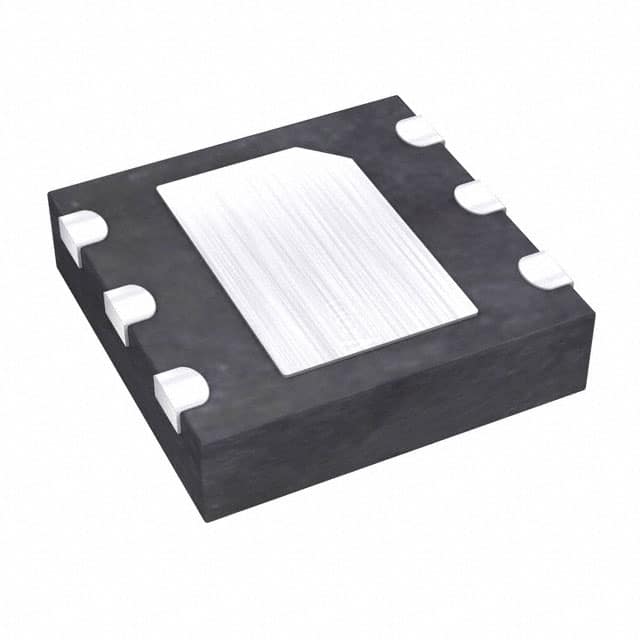
- Part No.:
- MAX16059ATT32+
- Manufacturer:
- Analog Devices Inc./Maxim Integrated
- Category:
- Supervisors
- Package:
- 6-WDFN Exposed Pad
- Datasheet:
-
 MAX16059ATT32+.pdf
- Description:
- IC SUPERVISOR 1 CHANNEL 6TDFN
- Quantity:
- Payment:

- Shipping:

Inventory:1,638
Please send an inquiry. Send us your inquiry, and we will respond immediately.
Product details
Overview
MAX16059ATT32+ from Maxim Integrated is a 6-pin TDFN ultra-low-power microprocessor supervisory circuit with factory-trimmed 3.200V reset threshold, 125nA typical supply current, adjustable reset timeout (via external SRT capacitor), and no watchdog timer. It asserts an active-low push-pull RESET output during VCC brownout, manual reset, or power-up/down sequencing - deployed in glucose monitors, portable medical devices, and battery-powered metering systems.
For engineers reviewing the MAX16059ATT32+ datasheet, MAX16059ATT32+ pinout, MAX16059ATT32+ application, or MAX16059ATT32+ equivalent, this page delivers verified technical context, exact pin functions, real-world timing behavior, automotive-grade (-40°C to +125°C) thermal performance, and validated alternative options for low-power system supervision.
Technical Context
The MAX16059ATT32+ implements a precision voltage-monitoring architecture with ±2.5% reset threshold tolerance over temperature, guaranteed RESET validity down to VCC = 1.1V, and immunity to transients ≤40µs at 100mV overdrive. Its internal ramp-based timing engine uses SRT capacitor charging to generate programmable reset timeout periods from 10.5ms to 24.2s.
Unlike watchdog-equipped variants (MAX16056/MAX16058), the MAX16059ATT32+ omits WDI, WDS, and SWT pins - simplifying layout and eliminating watchdog configuration overhead while retaining MR input, push-pull RESET, and full transient immunity. It operates across 1.1V–5.5V supply range with 210nA max ICC at +125°C.
Key Specifications
| Parameter | Value and Actual Design Meaning |
|---|---|
| Reset Threshold Voltage | 3.200V (factory-trimmed, ±2.5% over -40°C to +125°C) - ensures reliable brownout detection for 3.3V systems with margin. |
| Supply Current (ICC) | 125nA typ @ +25°C, 400nA max @ +125°C - enables multi-year battery life in always-on medical sensors. |
| Operating Voltage Range | 1.1V to 5.5V - supports supervision of Li-ion, coin-cell, and wide-input industrial rails without external regulators. |
| Reset Timeout Range | 10.5ms to 24.2s (set by 39pF–4.7µF SRT capacitor) - accommodates µP boot times from fast MCUs to complex SoCs. |
| Reset Output Type | Push-pull active-low - drives logic directly without pull-up resistor; sinks 1.2mA @ VCC ≥ 2.7V for robust noise immunity. |
| Temperature Range | -40°C to +125°C - qualified for under-hood automotive, industrial HVAC, and portable patient monitors. |
| VCC to RESET Delay | 80µs - fast response to supply collapse prevents firmware corruption during rapid power loss. |
Pinout & Package
MAX16059ATT32+ uses a 6-pin 3mm × 3mm TDFN-EP package with exposed pad (EP) for thermal enhancement. Pin 1 is RESET; pin 2 is GND; pin 3 is MR; pin 4 is SRT; pin 5 is VCC; pin 6 is NC. EP must be connected to GND per datasheet recommendation.
| Pin/Terminal | Circuit Role | Design Meaning |
|---|---|---|
| 1 - RESET | Active-low push-pull reset output | Asserts low during brownout/manual reset; holds low for capacitor-programmed timeout; drives µP /EN or /RESET directly. |
| 2 - GND | Ground reference | Primary return path for all internal circuits; connects to EP for optimal thermal dissipation (θJC = 9°C/W). |
| 3 - MR | Manual-reset input | CMOS-compatible active-low trigger; no internal pullup - requires external VCC tie or switch-to-GND; 1µs minimum pulse width. |
| 4 - SRT | Reset timeout capacitor terminal | Connects to GND via external capacitor (39pF–4.7µF); sets tRP = 5.15×10⁶ × CSRT (seconds); low-leakage X7R ceramic recommended. |
| 5 - VCC | Power supply and monitored rail input | Supplies device and provides voltage for threshold comparison; bypass with 0.1µF ceramic to GND; valid operation from 1.1V. |
| 6 - N.C. | No connection | Not internally bonded; must remain unconnected - no routing or solder mask required. |
Key Features
| Feature | Design Value |
|---|---|
| Ultra-low 125nA supply current | Enables >10-year battery life in glucose meters and wearable sensors using CR2032 or similar cells. |
| Factory-trimmed 3.200V reset threshold | Eliminates external resistor divider; guarantees ±2.5% accuracy across full automotive temperature range. |
| Capacitor-adjustable reset timeout | Supports µP boot sequences from 10ms (ARM Cortex-M0+) to 24s (Linux-capable SoCs) without firmware changes. |
| Guaranteed RESET validity down to VCC = 1.1V | Ensures deterministic reset assertion even during deep brownout - critical for flash write integrity in low-VCC states. |
| 3mm × 3mm TDFN-EP package | Reduces PCB area by 65% vs. SOIC-8; EP improves thermal performance for high-density portable designs. |
Applications
| Glucose Monitoring Systems | Patient Vital Sign Monitors |
|---|---|
|
Use Scenario: Continuous glucose monitoring (CGM) patch worn for 7–14 days on battery power, requiring fail-safe reset during low-battery shutdown. IC Role / Device Role: Primary brownout supervisor ensuring MCU resets cleanly before VCC drops below flash programming voltage. Use Value: 125nA ICC extends CR2032 battery life beyond 12 months in standby; 3.200V threshold matches LiPo discharge curve endpoint. |
Use Scenario: Portable ECG/SpO₂ monitor used in ambulances and home care, operating from rechargeable Li-ion with strict safety-critical reset behavior. IC Role / Device Role: System-level power supervisor validating VCC prior to ADC initialization and sensor biasing. Use Value: -40°C to +125°C rating ensures reliability in vehicle cabins; push-pull RESET eliminates pull-up leakage in low-power sleep modes. |
| Smart Energy Meters | HVAC Thermostats |
|
Use Scenario: ANSI C12.20-compliant electricity meter with optical port, RF mesh, and tamper detection - powered from AC line or backup capacitor. IC Role / Device Role: Single-rail supervisor for main 3.3V domain, asserting RESET during AC dropout or capacitor sag. Use Value: 80µs VCC-to-RESET delay prevents spurious resets during 50/60Hz ripple; 1.1V valid RESET ensures last-chance firmware save before power loss. |
Use Scenario: Wi-Fi-enabled thermostat with display, sensors, and relay drivers - powered from 24VAC transformer with local 3.3V LDO. IC Role / Device Role: Supervisory guard for microcontroller during transformer inrush, lightning-induced transients, or brownout events. Use Value: Transient immunity up to 40µs at 100mV overdrive prevents nuisance resets during HVAC compressor startup; 3mm × 3mm footprint saves space on compact PCBs. |
Equivalent & Alternatives
The following parts are listed as comparable options for similar microprocessor supervisory applications.
| Alternative Part | Technical Difference | Application Difference | Selection Advice |
|---|---|---|---|
| MAX16057ATT32+ | Identical pinout, package, reset threshold, and timing; same push-pull RESET; no watchdog - functionally identical part with different top mark (ATU vs ATT). | No functional difference; both rated -40°C to +125°C; both use 6-pin TDFN-EP. | Select MAX16057ATT32+ only if legacy BOM specifies that top mark; otherwise MAX16059ATT32+ is preferred due to newer revision status. |
| TPS3808G33DBVR | Fixed 3.3V threshold (±0.5%), 1.6µA ICC, SOT-23-6 package; no capacitor-adjustable timeout - timeout fixed at 200ms/350ms/1.1s options. | Higher supply current limits battery life; fixed timeout lacks flexibility for diverse µP boot profiles; smaller SOT-23 footprint but higher θJA (210°C/W). | Choose TPS3808G33DBVR only for cost-sensitive, non-battery applications where 200ms reset suffices and 1.6µA ICC is acceptable. |
Compared with MAX16059ATT32+, MAX16057ATT32+ offers identical functionality with minor marking variance, while TPS3808G33DBVR trades nanoPower efficiency and timeout flexibility for lower unit cost and tighter threshold accuracy - making it suitable only for line-powered systems with fixed timing needs.
Availability
MAX16059ATT32+ is available at Aetrix Electronics and suitable for glucose monitors, portable patient monitors, smart energy meters, and HVAC thermostats requiring stable component supply across automotive and industrial temperature ranges.
Supply support for MAX16059ATT32+ includes scheduled delivery planning, volume procurement assistance, BOM continuity management, traceable sourcing, and lifecycle availability coordination for OEM customers, industrial embedded developers, connected-device designers, and electronics production programs.
Manufacturer
Maxim Integrated (now part of Analog Devices) designs precision analog, mixed-signal, and power-management ICs for demanding industrial, automotive, and medical applications.
The MAX16056–MAX16059 family targets ultra-low-power system supervision in battery-constrained environments, emphasizing nanoamp quiescent current, wide temperature operation, and capacitor-programmable timing without software overhead.
FAQ
What is the factory-trimmed reset threshold voltage for MAX16059ATT32+?
The MAX16059ATT32+ has a factory-trimmed reset threshold of 3.200V (typical), with ±2.5% tolerance over the full -40°C to +125°C operating range. This value is confirmed in Table 1 of the datasheet under suffix "32", and applies specifically to the MAX16059ATT32+ variant - not to other suffixes or family members like MAX16056.
Does MAX16059ATT32+ include a watchdog timer?
No, the MAX16059ATT32+ does not include a watchdog timer. As stated in the General Description and Ordering Information, only MAX16056/MAX16058 variants feature watchdog functionality. The MAX16059ATT32+ is a watchdog-free version with simplified 6-pin pinout (no WDI, WDS, or SWT pins), matching the MAX16057 series.
What package type and dimensions does MAX16059ATT32+ use?
The MAX16059ATT32+ uses a 6-pin TDFN-EP (Thin Dual Flat No-lead with Exposed Pad) package measuring 3mm × 3mm × 0.8mm. The exposed pad (EP) must be soldered to GND for thermal and electrical performance, as specified in the Package Information section and Pin Description table.
How is the reset timeout period set on MAX16059ATT32+?
The reset timeout period on MAX16059ATT32+ is set by connecting an external capacitor (CSRT) between the SRT pin (pin 4) and GND. The relationship is tRP = 5.15 × 10⁶ × CSRT (seconds), supporting 10.5ms to 24.2s with capacitors from 39pF to 4.7µF. X7R ceramic capacitors are recommended for low leakage and stable temperature coefficient.
Is MAX16059ATT32+ suitable for automotive applications?
Yes, MAX16059ATT32+ is fully specified for the -40°C to +125°C automotive temperature range and qualified per AEC-Q100 stress test requirements. Its guaranteed performance across this range, combined with transient immunity and 1.1V RESET validity, makes it appropriate for under-dash, engine bay, and ADAS-related supervision tasks.
MAX16059ATT32+ Specifications
- Product attributes
- Attribute value
- Manufacturer:
- Analog Devices Inc./Maxim Integrated
- Series:
- -
- Package/Case:
- 6-WDFN Exposed Pad
- Packaging:
- Bulk
- Product Status:
- Obsolete
- Programmable:
- Not Verified
- Type:
- Simple Reset/Power-On Reset
- Number of Voltages Monitored:
- 1
- Voltage - Threshold:
- 3.2V
- Output:
- Open Drain or Open Collector
- Reset:
- Active Low
- Reset Timeout:
- Adjustable/Selectable
- Operating Temperature:
- -40°C ~ 125°C (TA)
- Grade:
- -
- Qualification:
- -
- Mounting Type:
- Surface Mount
- Supplier Device Package:
- 6-TDFN (3x3)
MAX16059ATT32+ FAQ
1.How can I place an order for MAX16059ATT32+ through Aetrix?
Please submit a Request for Quotation (RFQ) for MAX16059ATT32+ on Aetrix. Our sales agent will provide a competitive quotation and guide you through the order confirmation once you accept the terms.
2.Are the price and stock information for MAX16059ATT32+ reliable?
The price and inventory of MAX16059ATT32+ are updated periodically and may fluctuate due to market conditions. Stock and pricing data are typically refreshed every 24 hours. Quotation validity for MAX16059ATT32+ is usually 5 days.
3.What payment methods are accepted for MAX16059ATT32+?
We accept Wire Transfer, PayPal, Credit Card, Western Union, MoneyGram, and Escrow for MAX16059ATT32+ transactions.
Note: Certain payment methods may incur a processing fee.
4.How is shipping managed for MAX16059ATT32+?
MAX16059ATT32+ orders can be shipped via leading logistics carriers, including DHL, UPS, FedEx, TNT, or Registered Mail.
Once your MAX16059ATT32+ order is processed, you will receive an email with the shipment details and tracking number.
Note: Tracking information may take up to 24 hours to appear. Express delivery typically takes 3–5 business days.
5.How can I obtain technical support or documentation for MAX16059ATT32+?
For technical support, including MAX16059ATT32+ datasheets, pinout diagrams, or application guidance, please contact our engineering support team. They can provide detailed documentation and assistance for your MAX16059ATT32+ requirements.
6.How does Aetrix verify that MAX16059ATT32+ is sourced from the original manufacturer or authorized distributors?
All MAX16059ATT32+ products on Aetrix are procured from qualified distributors and authorized channels. Our dedicated quality assurance team conducts strict verification, including traceability checks and, if necessary, third-party testing. This ensures that MAX16059ATT32+ meets industry standards.
7.What is the process for return or replacement of MAX16059ATT32+?
All MAX16059ATT32+ units undergo pre-shipment inspection (PSI). If there is an issue with MAX16059ATT32+, returns or replacements are accepted under the following conditions:
1.Quantity discrepancies, incorrect items, or visible external defects (such as breakage or corrosion), acknowledged by Aetrix.
2.The issue is reported within 90 days of delivery.
3.The MAX16059ATT32+ part is unused and in its original packaging.
Return procedure for MAX16059ATT32+:
1.Submit a request within 90 days.
2.Obtain a Return Material Authorization (RMA) from Aetrix.
MAX16059ATT32+ Tags
-
MIC826SYMT-TR
Microchip Technology
-
APX803S-31SA-7
Diodes Incorporated
-
APX803L20-29SA-7
Diodes Incorporated
-
TPS3828-33DBVR
Texas Instruments

-
V6340RSP3B+
EM Microelectronic
-
EM6325CXSP5B-2.9+
EM Microelectronic
-
MCP120T-300I/TT
Microchip Technology
-
MCP130T-315I/TT
Microchip Technology
-
MCP120T-475I/TT
Microchip Technology
-
MCP111T-300E/TT
Microchip Technology
-
MCP120T-315I/TT
Microchip Technology
-
MCP809T-315I/TT
Microchip Technology
Tech Hub

A practical engineering guide to 3.3V and 5V logic compatibility, input thresholds, resistor dividers, translator ICs, MOSFET level shifting, I2C pull-ups, timing limits and power-sequencing risks.

The 74HC595 uses push-pull logic outputs, while the TPIC6B595 uses 50 V open-drain DMOS sinks for higher-power loads. This guide compares timing, current limits, 3.3 V interfacing, load wiring, thermal…

The 74HC595 converts serial data into eight stable parallel outputs. This guide covers pin functions, shift and storage timing, OE and MR behavior, drive-current limits, cascading, voltage compatibilit…

A technical comparison of level-sensitive latches and edge-triggered flip-flops, covering timing windows, setup and hold limits, master–slave operation, time borrowing, race-through, HDL inference and…

A D latch stores one bit while Enable controls when data can pass. This reference covers gate-level operation, truth tables, transparency, setup and hold timing, LE versus OE, common ICs and practical …

An SR latch stores one bit through cross-coupled feedback. This engineering reference covers NOR and NAND implementations, truth tables, forbidden-state recovery, gated operation, switch debouncing, fa…

Latch circuits retain one bit through feedback. This technical reference covers SR and D latches, truth tables, transparency, timing limits, latch-versus-flip-flop behavior, applications and common log…

An engineering guide to LED driver operation, constant-current and constant-voltage outputs, linear and switching topologies, dimming, IC selection, calculations, replacement compatibility, and fault c…

Operational amplifier guide covering op amp basics, feedback, ideal vs real op amps, common configurations, buffer circuits, offset, bias current, gain-bandwidth, slew rate, rail-to-rail limits and sel…

Jumper cables guide covering safe connection order, red and black clamp placement, final ground connection, cable gauge, length, clamp quality, copper vs CCA cables, jump starter comparison and battery…


