
 My Inquiry
 My Account


Analog Devices Inc./Maxim Integrated MAX16060ETE+
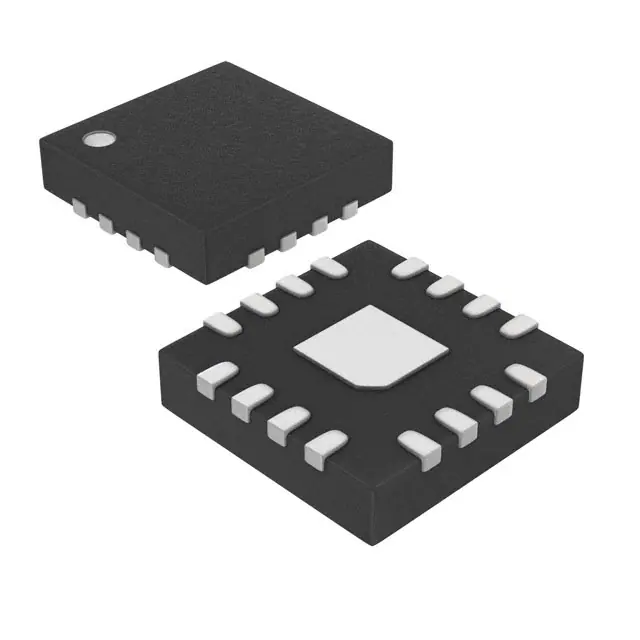
- Part No.:
- MAX16060ETE+
- Manufacturer:
- Analog Devices Inc./Maxim Integrated
- Category:
- Supervisors
- Package:
- 16-WQFN Exposed Pad
- Datasheet:
-
 MAX16060ETE+.pdf
- Description:
- IC SUPERVISOR 4 CHANNEL 16TQFN
- Quantity:
- Payment:

- Shipping:

Inventory:167
Please send an inquiry. Send us your inquiry, and we will respond immediately.
Product details
Overview
The MAX16060ETE+ from Maxim Integrated is a 1% accurate quad-voltage microprocessor supervisor in a 16-pin 4mm × 4mm thin QFN package, monitoring four independent supply rails (e.g., 3.3V, 2.5V, 1.8V, and adjustable down to 0.4V) with ±1% threshold accuracy over –40°C to +125°C. It provides four open-drain OUT_ outputs, one active-low RESET output, manual reset (MR), watchdog timer (1.6s typical timeout), and margin enable functionality - used in multivoltage ASIC power sequencing and server board supervisory systems.
For engineers reviewing the MAX16060ETE+ datasheet, MAX16060ETE+ pinout, MAX16060ETE+ application, or MAX16060ETE+ equivalent, this page delivers verified specifications including 140ms minimum reset timeout, internal 30µA pullups on all outputs, TOL-selectable 5%/10% threshold tolerance, guaranteed RESET assertion down to VCC = 1V, and watchdog startup delay of 54s - critical for automotive and industrial embedded power integrity validation.
Technical Context
The MAX16060ETE+ implements independent voltage comparators per monitored rail, each with hysteresis (0.5% of threshold) and configurable thresholds via external resistor dividers for adjustable inputs. Its reset logic combines OR-ed fault detection across all four IN_ inputs and MR, holding RESET asserted until all voltages exceed thresholds and MR is deasserted, with timeout governed by internal 140ms minimum or external capacitor on SRT pin.
Watchdog operation uses edge-triggered reset clearing with 54s startup window; WDI unconnected disables it. All outputs are open-drain with internal 30µA pullups to VCC and tolerate external pullup voltages up to 5.5V, enabling interoperability with mixed-supply logic domains without external resistors.
Key Specifications
| Parameter | Value and Actual Design Meaning |
|---|---|
| Monitored Voltages | Four independent rails (IN1–IN4), including fixed 3.3V/2.5V/1.8V and adjustable down to 0.4V |
| Threshold Accuracy | ±1% over –40°C to +125°C - enables precise brownout detection without calibration |
| Reset Timeout | 140ms minimum (SRT = VCC); adjustable via external capacitor (e.g., 1500pF → 3.09ms) |
| Watchdog Timeout | 1.6s typical (1.12s–2.4s range); 54s startup delay prevents false trigger at power-up |
| Supply Range | VCC = 1.0V to 5.5V - RESET remains asserted down to VCC = 1V for fail-safe operation |
| Output Type | Open-drain OUT1–OUT4 and RESET with internal 30µA pullups - eliminates need for external pullup resistors |
| Operating Temp | –40°C to +125°C - qualified for under-hood automotive and industrial control applications |
Pinout & Package
MAX16060ETE+ is housed in a 16-pin thin QFN package (4mm × 4mm, exposed pad), optimized for thermal dissipation and high-density PCB layouts. The EP pad must be soldered to ground plane for thermal management but is not an electrical GND connection.
| Pin | Circuit Role | Design Meaning |
|---|---|---|
| 1,2,14,15 | IN3, IN4, IN1, IN2 | Four monitored voltage inputs - support fixed thresholds (3.3V/2.5V/1.8V) or adjustable (0.4V min) via resistor divider |
| 3 | WDI | Watchdog timer input - rising/falling edges clear timeout; unconnected disables watchdog |
| 4 | GND | Ground reference for all analog comparators and digital logic |
| 5 | VCC | Unmonitored power supply input - powers internal circuitry and provides pullup reference |
| 6–7,11–12 | OUT3, OUT4, OUT2, OUT1 | Open-drain outputs - go low when respective IN_ falls below threshold; 30µA internal pullup to VCC |
| 8 | MR | Active-low manual reset - asserts RESET when pulled low; 20kΩ internal pullup to VCC |
| 9 | SRT | Set reset timeout - connect capacitor to GND to extend timeout beyond 140ms minimum |
| 10 | MARGIN | Active-low margin enable - deasserts all OUT_ and RESET during test mode regardless of input voltages |
| 13 | RESET | Active-low system reset output - asserts if any IN_ fails or MR is asserted; 30µA internal pullup |
| 16 | TOL | Threshold tolerance select - GND = 5%, VCC = 10% - sets hysteresis and accuracy band |
Key Features
| Feature | Design Value |
|---|---|
| 1% threshold accuracy over temperature | Enables reliable undervoltage detection across full –40°C to +125°C range without recalibration |
| Internal 30µA output pullups | Eliminates four external pullup resistors, reducing BOM count and PCB area in compact designs |
| Adjustable reset timeout (140ms min) | Supports both fixed timing (SRT = VCC) and precision adjustment (e.g., 100pF → 0.206ms) for diverse system boot requirements |
| Watchdog timer with 54s startup delay | Prevents spurious reset during power-rail stabilization while ensuring runtime supervision after boot |
| Margin enable function | Allows safe deassertion of all outputs during production margin testing without altering input conditions |
| TOL-selectable 5%/10% threshold tolerance | Permits trade-off between noise immunity (10%) and precision (5%) based on system noise environment |
Applications
| Server Power Sequencing | Automotive ADAS Controller |
|---|---|
Use Scenario: Monitoring 3.3V I/O, 2.5V core, 1.8V memory, and adjustable 1.2V rail in x86 server motherboard power tree. IC Role / Device Role / Timing Role: Quad-voltage supervisor providing independent fault signaling and synchronized system reset via shared RESET output. Use Value: Ensures all rails stabilize before CPU release, preventing lockup during cold boot or brownout recovery. |
Use Scenario: Supervising multiple domain supplies (5V sensor, 3.3V MCU, 1.8V SerDes, adjustable 1.2V AI accelerator) in radar ECU. IC Role / Device Role / Timing Role: Fault-detection hub with watchdog and margin test support for ISO 26262 ASIL-B compliance. Use Value: Guarantees RESET assertion down to VCC = 1V during cranking, meeting automotive cold-cranking voltage drop requirements. |
| Industrial PLC Backplane | Networking Switch ASIC |
Use Scenario: Monitoring isolated 24V-to-5V, 5V-to-3.3V, 3.3V-to-1.8V, and adjustable 1.0V FPGA I/O rails in modular I/O chassis. IC Role / Device Role / Timing Role: Multirail supervisor with TOL pin configured for 10% tolerance to accommodate industrial supply ripple. Use Value: Reduces false resets caused by transient noise on long backplane traces while maintaining deterministic reset timing. |
Use Scenario: Validating power integrity of 12-core switch ASIC with 0.85V core, 1.2V I/O, 3.3V management, and adjustable 1.8V SerDes supplies. IC Role / Device Role / Timing Role: Quad-monitor enabling per-rail debug visibility via individual OUT_ signals plus global RESET coordination. Use Value: Enables root-cause isolation of rail failures during bring-up without requiring oscilloscope probing of each supply. |
Equivalent & Alternatives
The following parts are listed as comparable options for similar quad-voltage supervisor applications.
| Alternative Part | Technical Difference | Application Difference | Selection Advice |
|---|---|---|---|
| TPS3307-33DGNR | Triple-supervisor (3 inputs), no watchdog, fixed 3.3V/2.5V/1.8V thresholds only, no adjustable inputs | Lacks fourth monitor channel and adjustable threshold capability - unsuitable for 4-rail systems with custom voltages | Select only if system has exactly three fixed rails and no watchdog requirement |
| ADM1266ACPZ | 12-channel sequencer/supervisor with I²C interface, programmable thresholds, and EEPROM configuration - significantly higher complexity and cost | Requires firmware integration and configuration; overqualified for simple quad-monitoring without sequencing needs | Choose only when dynamic reconfiguration, event logging, or multi-phase sequencing is required |
Compared with TPS3307-33DGNR and ADM1266ACPZ, the MAX16060ETE+ uniquely balances quad-rail monitoring, ±1% accuracy, adjustable thresholds, integrated watchdog, and minimal external components - making it optimal for cost-sensitive, space-constrained multivoltage systems needing deterministic reset behavior without software overhead.
Availability
MAX16060ETE+ is available at Aetrix Electronics and suitable for server power sequencing, automotive ADAS controllers, industrial PLC backplanes, and networking switch ASICs requiring stable component supply across extended temperature ranges and long production lifecycles.
Supply support for MAX16060ETE+ includes scheduled delivery planning, volume procurement assistance, BOM continuity management, traceable sourcing, and lifecycle availability coordination for OEM customers, industrial embedded developers, connected-device designers, and electronics production programs.
Manufacturer
Maxim Integrated (now part of Analog Devices) designs precision analog and mixed-signal ICs for demanding industrial, automotive, and computing applications, emphasizing reliability, accuracy, and integration.
The MAX16060 series belongs to Maxim's µP supervisor product line, engineered specifically for high-accuracy, multivoltage system monitoring in harsh environments where supply rail integrity directly impacts functional safety and uptime.
FAQ
What is the minimum VCC voltage at which MAX16060ETE+ guarantees RESET assertion?
The MAX16060ETE+ guarantees RESET remains asserted down to VCC = 1.0V, ensuring fail-safe behavior during severe brownout or battery-cranking conditions. This specification is validated across –40°C to +125°C and allows the device to hold system reset even as main supply collapses - a critical feature for automotive and industrial applications where supply instability is common. The MAX16060ETE+ continues monitoring and asserting RESET until VCC recovers above 1.62V (UVLO rising threshold).
How does the TOL pin affect threshold accuracy and hysteresis in MAX16060ETE+?
The TOL pin on MAX16060ETE+ selects between 5% (TOL = GND) and 10% (TOL = VCC) total threshold tolerance, directly impacting both initial accuracy and hysteresis magnitude. For example, a 3.3V threshold becomes 3.069V–3.135V at 5% tolerance versus 2.904V–2.970V at 10%. Hysteresis remains fixed at 0.5% of threshold regardless of TOL setting. This dual-mode selection allows designers to prioritize precision (5%) in clean environments or noise immunity (10%) in electrically noisy industrial settings - all without changing bill of materials.
Can MAX16060ETE+ monitor a 1.2V supply rail, and how is it configured?
Yes, MAX16060ETE+ can monitor a 1.2V rail using its adjustable input capability (e.g., IN3 or IN4 configured as ADJ in Table 1). With TOL = GND, the internal threshold is 0.394V; a resistor divider (R1/R2 = (1.2V / 0.394V) – 1 ≈ 2.05) scales the 1.2V input down to 0.394V at the comparator input. The device supports thresholds as low as 0.4V, and the 1% accuracy applies to the scaled threshold - enabling precise 1.2V supervision with <12mV absolute error across temperature. No additional components beyond two resistors are required.
What happens to MAX16060ETE+ outputs when the MARGIN pin is pulled low?
When the MARGIN pin of MAX16060ETE+ is pulled low, all four OUT_ outputs and the RESET output are immediately deasserted (driven high-impedance, allowing external pullups to set logic-high state), regardless of actual input voltage conditions. This function is designed for production margin testing - enabling verification of downstream logic response to "good" rail states without altering actual supply voltages. The deassertion occurs within 50µs (tMD), and outputs remain deasserted as long as MARGIN is held low, providing deterministic test control without affecting supervisor internal state.
Is the watchdog timer in MAX16060ETE+ enabled by default, and how is it disabled?
The watchdog timer in MAX16060ETE+ is enabled by default and requires no configuration. It starts its 54s startup delay upon power-up and begins counting after the first WDI edge. To disable it, leave the WDI pin unconnected - the internal 400nA detector recognizes the floating state and inhibits watchdog operation. Connecting WDI to a static logic level (high or low) will cause timeout assertion; only true high-impedance disconnection disables it. This design prevents accidental activation while allowing simple hardware disable without firmware or external components.
MAX16060ETE+ Specifications
- Product attributes
- Attribute value
- Manufacturer:
- Analog Devices Inc./Maxim Integrated
- Series:
- -
- Package/Case:
- 16-WQFN Exposed Pad
- Packaging:
- Tube
- Product Status:
- Active
- Programmable:
- Not Verified
- Type:
- Multi-Voltage Supervisor
- Number of Voltages Monitored:
- 4
- Voltage - Threshold:
- Adjustable/Selectable
- Output:
- Open Drain or Open Collector
- Reset:
- Active Low
- Reset Timeout:
- 140ms/Adjustable Minimum
- Operating Temperature:
- -40°C ~ 125°C (TA)
- Grade:
- -
- Qualification:
- -
- Mounting Type:
- Surface Mount
- Supplier Device Package:
- 16-TQFN (4x4)
MAX16060ETE+ FAQ
1.How can I place an order for MAX16060ETE+ through Aetrix?
Please submit a Request for Quotation (RFQ) for MAX16060ETE+ on Aetrix. Our sales agent will provide a competitive quotation and guide you through the order confirmation once you accept the terms.
2.Are the price and stock information for MAX16060ETE+ reliable?
The price and inventory of MAX16060ETE+ are updated periodically and may fluctuate due to market conditions. Stock and pricing data are typically refreshed every 24 hours. Quotation validity for MAX16060ETE+ is usually 5 days.
3.What payment methods are accepted for MAX16060ETE+?
We accept Wire Transfer, PayPal, Credit Card, Western Union, MoneyGram, and Escrow for MAX16060ETE+ transactions.
Note: Certain payment methods may incur a processing fee.
4.How is shipping managed for MAX16060ETE+?
MAX16060ETE+ orders can be shipped via leading logistics carriers, including DHL, UPS, FedEx, TNT, or Registered Mail.
Once your MAX16060ETE+ order is processed, you will receive an email with the shipment details and tracking number.
Note: Tracking information may take up to 24 hours to appear. Express delivery typically takes 3–5 business days.
5.How can I obtain technical support or documentation for MAX16060ETE+?
For technical support, including MAX16060ETE+ datasheets, pinout diagrams, or application guidance, please contact our engineering support team. They can provide detailed documentation and assistance for your MAX16060ETE+ requirements.
6.How does Aetrix verify that MAX16060ETE+ is sourced from the original manufacturer or authorized distributors?
All MAX16060ETE+ products on Aetrix are procured from qualified distributors and authorized channels. Our dedicated quality assurance team conducts strict verification, including traceability checks and, if necessary, third-party testing. This ensures that MAX16060ETE+ meets industry standards.
7.What is the process for return or replacement of MAX16060ETE+?
All MAX16060ETE+ units undergo pre-shipment inspection (PSI). If there is an issue with MAX16060ETE+, returns or replacements are accepted under the following conditions:
1.Quantity discrepancies, incorrect items, or visible external defects (such as breakage or corrosion), acknowledged by Aetrix.
2.The issue is reported within 90 days of delivery.
3.The MAX16060ETE+ part is unused and in its original packaging.
Return procedure for MAX16060ETE+:
1.Submit a request within 90 days.
2.Obtain a Return Material Authorization (RMA) from Aetrix.
MAX16060ETE+ Tags
-
MIC826SYMT-TR
Microchip Technology
-
APX803S-31SA-7
Diodes Incorporated
-
APX803L20-29SA-7
Diodes Incorporated
-
TPS3828-33DBVR
Texas Instruments

-
V6340RSP3B+
EM Microelectronic
-
EM6325CXSP5B-2.9+
EM Microelectronic
-
MCP120T-300I/TT
Microchip Technology
-
MCP130T-315I/TT
Microchip Technology
-
MCP120T-475I/TT
Microchip Technology
-
MCP111T-300E/TT
Microchip Technology
-
MCP120T-315I/TT
Microchip Technology
-
MCP809T-315I/TT
Microchip Technology
Tech Hub

A practical engineering guide to 3.3V and 5V logic compatibility, input thresholds, resistor dividers, translator ICs, MOSFET level shifting, I2C pull-ups, timing limits and power-sequencing risks.

The 74HC595 uses push-pull logic outputs, while the TPIC6B595 uses 50 V open-drain DMOS sinks for higher-power loads. This guide compares timing, current limits, 3.3 V interfacing, load wiring, thermal…

The 74HC595 converts serial data into eight stable parallel outputs. This guide covers pin functions, shift and storage timing, OE and MR behavior, drive-current limits, cascading, voltage compatibilit…

A technical comparison of level-sensitive latches and edge-triggered flip-flops, covering timing windows, setup and hold limits, master–slave operation, time borrowing, race-through, HDL inference and…

A D latch stores one bit while Enable controls when data can pass. This reference covers gate-level operation, truth tables, transparency, setup and hold timing, LE versus OE, common ICs and practical …

An SR latch stores one bit through cross-coupled feedback. This engineering reference covers NOR and NAND implementations, truth tables, forbidden-state recovery, gated operation, switch debouncing, fa…

Latch circuits retain one bit through feedback. This technical reference covers SR and D latches, truth tables, transparency, timing limits, latch-versus-flip-flop behavior, applications and common log…

An engineering guide to LED driver operation, constant-current and constant-voltage outputs, linear and switching topologies, dimming, IC selection, calculations, replacement compatibility, and fault c…

Operational amplifier guide covering op amp basics, feedback, ideal vs real op amps, common configurations, buffer circuits, offset, bias current, gain-bandwidth, slew rate, rail-to-rail limits and sel…

Jumper cables guide covering safe connection order, red and black clamp placement, final ground connection, cable gauge, length, clamp quality, copper vs CCA cables, jump starter comparison and battery…


