
 My Inquiry
 My Account


Analog Devices Inc./Maxim Integrated MAX16962EVKIT#
- Part No.:
- MAX16962EVKIT#
- Manufacturer:
- Analog Devices Inc./Maxim Integrated
- Package:
- Datasheet:
-
 MAX16962EVKIT#.pdf
- Description:
- EVAL BOARD FOR MAX16962
- Quantity:
- Payment:

- Shipping:

Inventory:3,974
Please send an inquiry. Send us your inquiry, and we will respond immediately.
Product details
Overview
MAX16962EVKIT# from Maxim Integrated is an evaluation kit for the MAX16962 4A, 2.2MHz synchronous step-down DC-DC converter. It supports input voltages from 2.7V to 5.5V and delivers adjustable output voltages from 0.8V to 3.6V with ±3.7%/+2.6% regulation accuracy over load, line, and temperature. The kit enables rapid validation of automotive-grade point-of-load power delivery in infotainment systems and industrial control units.
For engineers reviewing the MAX16962EVKIT# datasheet, MAX16962EVKIT# pinout, MAX16962EVKIT# application, or MAX16962EVKIT# equivalent, this kit provides full hardware reference design, preconfigured layout, thermal performance data, and test points for efficiency, transient response, soft-start timing, and power-good assertion-critical for automotive power system qualification.
Technical Context
The MAX16962EVKIT# implements the MAX16962 IC in its 16-pin TQFN-EP package with parallel LX1/LX2 switching nodes, dual PGND paths, and factory-configurable SYNC I/O. It supports both forced-PWM (2.2MHz fixed) and SKIP modes, with spread-spectrum option enabled on select variants.
Key design elements include a 0.47µH shielded inductor, 47µF/4.7µF/1µF ceramic output capacitor stack, 20kΩ pull-up on PG, 10Ω current-sense resistor, and dedicated test points for VPV, VOUT, EN, PWM, and PG. Layout follows Maxim's PCB guidelines: exposed pad soldered to solid ground plane, short high-current loops, and noise-isolated feedback network.
Key Specifications
| Parameter | Value and Actual Design Meaning |
|---|---|
| Supported IC | MAX16962 synchronous buck converter (TQFN-EP or TSSOP-EP package) |
| Input Voltage Range | 2.7V to 5.5V - matches automotive battery rail with cold-crank tolerance |
| Output Current Capability | Up to 4A continuous - validated with thermal derating per JEDEC 51-7 multilayer board |
| Switching Frequency | 2.2MHz fixed (PWM mode) - enables all-ceramic design and avoids AM-band interference |
| Soft-Start Time | 8ms fixed - limits inrush current during power-up in sensitive infotainment modules |
| Power-Good Delay | 16ms timeout - ensures stable output before system logic release |
| Thermal Management | Exposed pad connected to ≥4 cm² copper ground plane - achieves ≤40°C/W junction-to-ambient |
Availability
MAX16962EVKIT# is available at Aetrix Electronics and suitable for automotive infotainment development, industrial PLC power subsystem validation, and military-grade DC-DC qualification requiring stable component supply and full design support.
Supply support for MAX16962EVKIT# includes scheduled delivery planning, volume procurement assistance, BOM continuity management, traceable sourcing, and lifecycle availability coordination for OEM customers, industrial embedded developers, connected-device designers, and electronics production programs.
Manufacturer
Maxim Integrated (now part of Analog Devices) designs precision analog, mixed-signal, and power management ICs for automotive, industrial, and communications applications.
The MAX16962 product line targets automotive-grade point-of-load regulation with high efficiency, low EMI, and robust thermal performance across -40°C to +125°C operation.
FAQ
What is the primary function of the MAX16962EVKIT#?
The MAX16962EVKIT# is an evaluation platform for the MAX16962 synchronous step-down DC-DC converter. It provides a fully assembled, tested circuit enabling engineers to validate voltage regulation, efficiency, transient response, thermal behavior, and protection features-including soft-start, power-good timing, overcurrent, and overtemperature response-under real-world automotive and industrial operating conditions. The MAX16962EVKIT# includes test points, jumpers for mode selection, and documented layout practices aligned with Maxim's design recommendations.
Does the MAX16962EVKIT# support both fixed-output and adjustable-output versions of the MAX16962?
Yes, the MAX16962EVKIT# supports both configurations. It ships with the MAX16962 configured for adjustable output via the OUTS pin, using an external resistive divider (R1/R2) to set VOUT between 0.8V and 3.6V. Factory-preset variants (e.g., 1.2V, 1.8V, 3.3V) can be substituted directly onto the same board, as the EVKIT# layout accommodates either configuration without modification. The MAX16962EVKIT# schematic and bill of materials explicitly define jumper options and feedback network placement for both use cases.
Can the MAX16962EVKIT# demonstrate spread-spectrum operation?
Yes, the MAX16962EVKIT# supports spread-spectrum frequency modulation when used with MAX16962 variants marked "S" in the Selector Guide (e.g., SAUE or SATE). With spread-spectrum enabled, the internal oscillator deviates ±6% around 2.2MHz, reducing peak radiated emissions by distributing energy across a wider bandwidth. Emission measurements and spectral plots are included in the MAX16962EVKIT# user guide, confirming compliance with CISPR 25 Class 5 requirements for automotive applications. The MAX16962EVKIT# does not require firmware or external programming to activate this feature.
How is synchronization implemented on the MAX16962EVKIT#?
The MAX16962EVKIT# implements the factory-programmable SYNC pin as either input or output depending on the installed MAX16962 variant. When configured as an input (e.g., RAUE), it accepts external clocks from 1.7MHz to 2.4MHz to synchronize multiple converters; when configured as an output (e.g., SAUE), it delivers a 90° phase-shifted 2.2MHz signal. The MAX16962EVKIT# includes test points and routing to monitor SYNC waveform integrity and verify phase alignment across synchronized rails. No additional components are required for basic sync functionality.
What thermal performance data is provided with the MAX16962EVKIT#?
The MAX16962EVKIT# documentation includes measured junction temperature rise vs. load current at TA = +70°C and +125°C, using thermocouples on the IC's exposed pad and adjacent copper. At 4A output with VIN = 5V and VOUT = 1.2V, junction temperature remains ≤115°C under natural convection on a 4-layer board with 2oz copper and ≥4 cm² ground plane-well below the 150°C absolute maximum. Thermal images and IR camera data confirm uniform heat spreading via the EP connection. The MAX16962EVKIT# also specifies derating curves for ambient temperatures above +70°C, consistent with the IC's 25mW/°C thermal resistance rating.
MAX16962EVKIT# Specifications
- Product attributes
- Attribute value
- Manufacturer:
- Analog Devices Inc./Maxim Integrated
- Series:
- -
- Packaging:
- Box
- Product Status:
- Obsolete
- Main Purpose:
- DC/DC, Step Down
- Outputs and Type:
- 1 Non-Isolated Output
- Voltage - Output:
- -
- Current - Output:
- -
- Voltage - Input:
- 4A
- Regulator Topology:
- -
- Frequency - Switching:
- Buck
- Contents:
- 2.2MHz
- Utilized IC / Part:
- Board(s)
- Power - Output:
- MAX16962
MAX16962EVKIT# FAQ
1.How can I place an order for MAX16962EVKIT# through Aetrix?
Please submit a Request for Quotation (RFQ) for MAX16962EVKIT# on Aetrix. Our sales agent will provide a competitive quotation and guide you through the order confirmation once you accept the terms.
2.Are the price and stock information for MAX16962EVKIT# reliable?
The price and inventory of MAX16962EVKIT# are updated periodically and may fluctuate due to market conditions. Stock and pricing data are typically refreshed every 24 hours. Quotation validity for MAX16962EVKIT# is usually 5 days.
3.What payment methods are accepted for MAX16962EVKIT#?
We accept Wire Transfer, PayPal, Credit Card, Western Union, MoneyGram, and Escrow for MAX16962EVKIT# transactions.
Note: Certain payment methods may incur a processing fee.
4.How is shipping managed for MAX16962EVKIT#?
MAX16962EVKIT# orders can be shipped via leading logistics carriers, including DHL, UPS, FedEx, TNT, or Registered Mail.
Once your MAX16962EVKIT# order is processed, you will receive an email with the shipment details and tracking number.
Note: Tracking information may take up to 24 hours to appear. Express delivery typically takes 3–5 business days.
5.How can I obtain technical support or documentation for MAX16962EVKIT#?
For technical support, including MAX16962EVKIT# datasheets, pinout diagrams, or application guidance, please contact our engineering support team. They can provide detailed documentation and assistance for your MAX16962EVKIT# requirements.
6.How does Aetrix verify that MAX16962EVKIT# is sourced from the original manufacturer or authorized distributors?
All MAX16962EVKIT# products on Aetrix are procured from qualified distributors and authorized channels. Our dedicated quality assurance team conducts strict verification, including traceability checks and, if necessary, third-party testing. This ensures that MAX16962EVKIT# meets industry standards.
7.What is the process for return or replacement of MAX16962EVKIT#?
All MAX16962EVKIT# units undergo pre-shipment inspection (PSI). If there is an issue with MAX16962EVKIT#, returns or replacements are accepted under the following conditions:
1.Quantity discrepancies, incorrect items, or visible external defects (such as breakage or corrosion), acknowledged by Aetrix.
2.The issue is reported within 90 days of delivery.
3.The MAX16962EVKIT# part is unused and in its original packaging.
Return procedure for MAX16962EVKIT#:
1.Submit a request within 90 days.
2.Obtain a Return Material Authorization (RMA) from Aetrix.
MAX16962EVKIT# Tags
-
DFR0571
DFRobot
-
DFR0379
DFRobot
-
DFR0205
DFRobot
-
1385
Adafruit Industries LLC
-
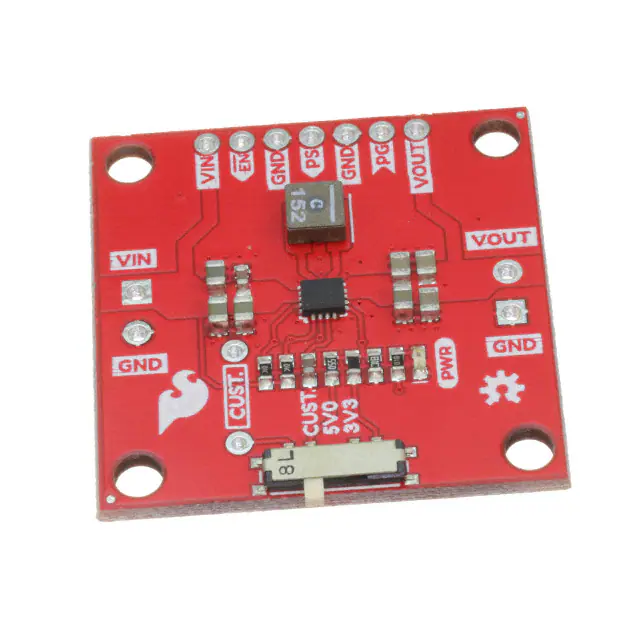
COM-15208
SparkFun Electronics
-
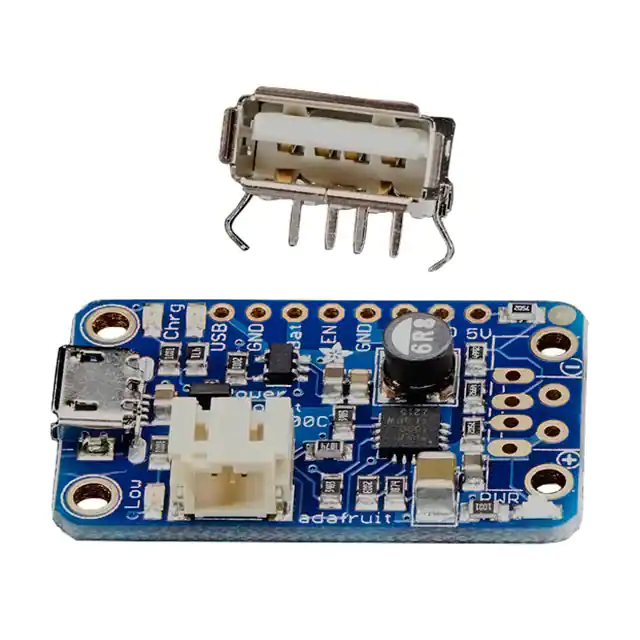
1944
Adafruit Industries LLC
-
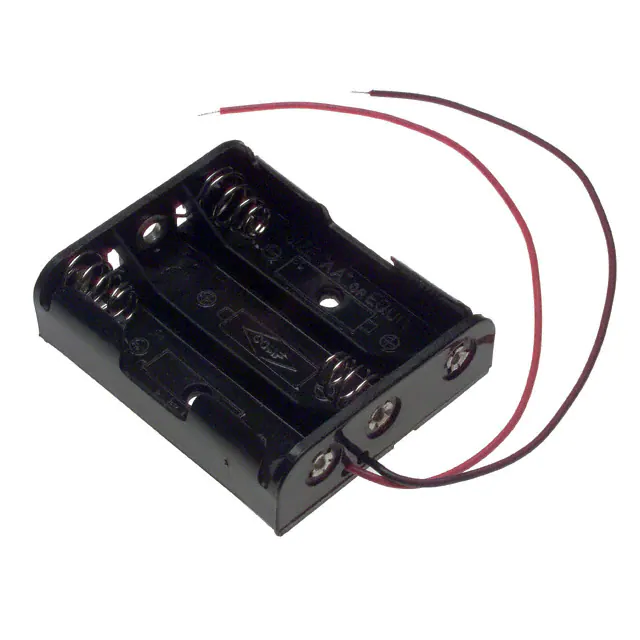
2465
Adafruit Industries LLC
-
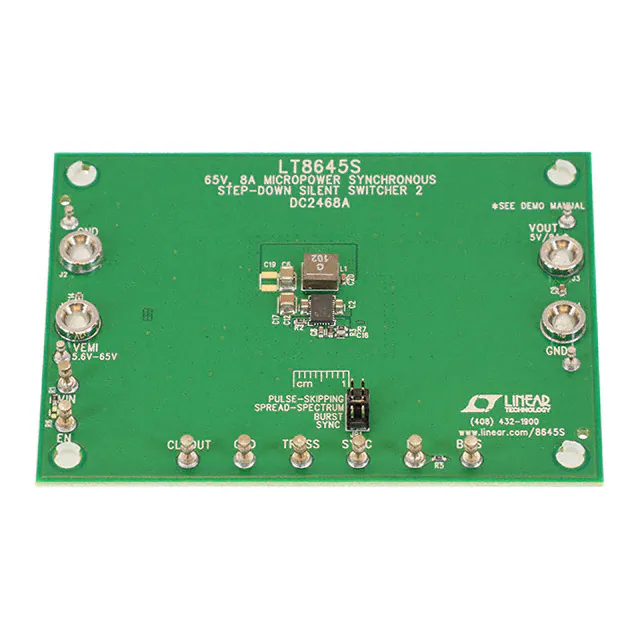
DC2468A
Analog Devices Inc.
-
DC2841A
Analog Devices Inc.

-
TPS552892EVM-111
Texas Instruments
-
TPS55289EVM-093
Texas Instruments
-
EPC9158
EPC
Tech Hub

An engineering guide to LED driver operation, constant-current and constant-voltage outputs, linear and switching topologies, dimming, IC selection, calculations, replacement compatibility, and fault c…

Operational amplifier guide covering op amp basics, feedback, ideal vs real op amps, common configurations, buffer circuits, offset, bias current, gain-bandwidth, slew rate, rail-to-rail limits and sel…

Jumper cables guide covering safe connection order, red and black clamp placement, final ground connection, cable gauge, length, clamp quality, copper vs CCA cables, jump starter comparison and battery…

LDO regulator guide covering low dropout voltage, power dissipation, thermal design, PSRR, output noise, capacitor stability, adjustable LDO circuits, LDO vs buck converter and datasheet selection chec…

Conditional Access Module guide covering CAM meaning, CI/CI+ interface, smart card authorization, DVB security workflow, TV and set-top box compatibility, internal electronics, ESD protection, connecto…

Guide to electronic component obsolescence covering EOL risk, PCN/PDN notices, last-time buy planning, replacement options, form-fit-function validation, counterfeit risk and BOM lifecycle management.

18650 battery guide covering lithium-ion cell basics, 3.6V/3.7V voltage, 4.2V charging, mAh and Wh capacity, protected cells, chargers, BMS, series-parallel packs, holders, welding and sourcing checks.…

Hall effect sensor guide covering working principle, linear and digital sensors, Arduino circuits, current sensing, speed detection, automotive applications, A3144 examples, signal filtering and datash…

Product Change Notification guide for electronic components, covering PCN meaning, PCN vs PDN/EOL, common change types, risk levels, form-fit-function review, engineering validation, BOM control, LTB/L…

A practical guide to blend door actuators, covering HVAC function, symptoms, location, AC and heater issues, reset and calibration, replacement cost, electrical diagnosis, compatibility checks, and rep…


