
 My Inquiry
 My Account


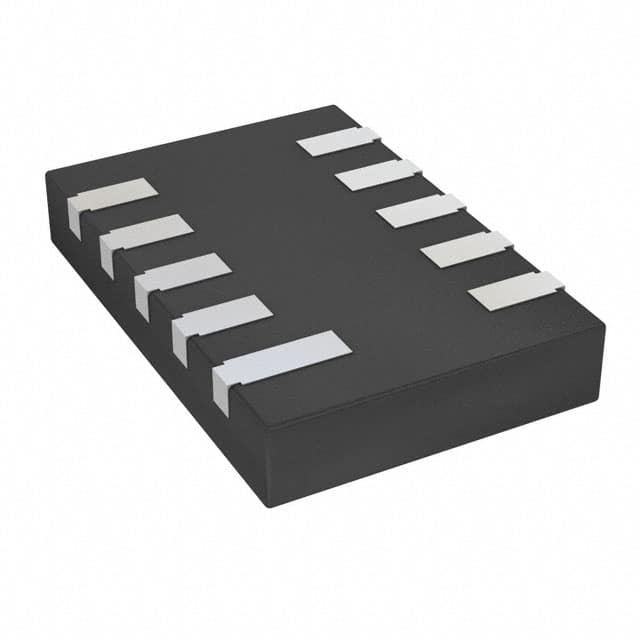
Analog Devices Inc./Maxim Integrated MAX17260SETD+T
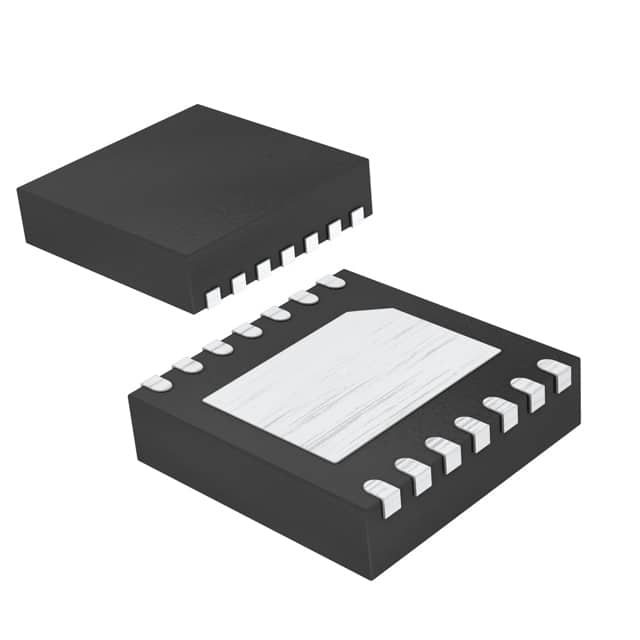
- Part No.:
- MAX17260SETD+T
- Manufacturer:
- Analog Devices Inc./Maxim Integrated
- Category:
- Battery Management
- Package:
- 14-WFDFN Exposed Pad
- Datasheet:
-
 MAX17260SETD+T.pdf
- Description:
- IC BATT MON LI-ION 1CELL 14TDFN
- Quantity:
- Payment:

- Shipping:

Inventory:4,988
Please send an inquiry. Send us your inquiry, and we will respond immediately.
Product details
Overview
The MAX17260SETD+T from Analog Devices is an ultra-low-power, single-cell lithium-ion/lithium-iron-phosphate fuel gauge IC implementing the ModelGauge™ m5 EZ algorithm. It performs precision voltage (±20mV), current (±1% reading), and temperature (±1°C) measurements, supports both high-side and low-side current sensing with 1mΩ–1000mΩ sense resistors, and delivers accurate state-of-charge (%), remaining capacity (mAh), time-to-empty/full, and battery aging metrics - deployed in wearables, smartwatches, and medical devices.
For engineers reviewing the MAX17260SETD+T datasheet, MAX17260SETD+T pinout, MAX17260SETD+T application, or MAX17260SETD+T equivalent, key selection considerations include its 5.1μA hibernate current, ModelGauge m5 EZ's no-characterization requirement, dual-sensing topology flexibility, ±1°C internal temperature accuracy, and I²C interface compatibility with Intel DBPT v2 dynamic power estimation standards.
Technical Context
The MAX17260SETD+T integrates a 12-bit ADC, 32kHz oscillator, 1.8V LDO regulator, and ModelGauge m5 EZ core that fuses coulomb-counting linearity with voltage-based long-term stability. Its adaptive algorithm eliminates SOC drift without requiring full/empty calibration cycles and invokes special correction near end-of-discharge to force error convergence to 0%.
It supports dual current-sensing configurations via dedicated CSPH (high-side positive), CSPL/GND (low-side positive), and CSN (sense resistor negative) terminals, with automatic topology detection at startup. The IC also embeds serial number storage and registers compliant with Intel DBPT v2 for dynamic system-level power budgeting.
Key Specifications
| Parameter | Value and Actual Design Meaning |
|---|---|
| Operating Current (Hibernate) | 5.1μA - enables multi-week runtime in always-on wearable battery monitoring without compromising accuracy. |
| Voltage Measurement Error | ±20mV over -40°C to +85°C - ensures reliable cell voltage tracking across industrial temperature ranges. |
| Current Sensing Accuracy | ±1% of reading - maintains precise capacity estimation under varying load profiles and discharge rates. |
| Temperature Accuracy | ±1°C (internal sensor) - provides robust thermal compensation for SOC and aging calculations without external thermistor. |
| Sense Resistor Range | 1mΩ to 1000mΩ - accommodates high-current power tools and ultra-low-power hearables using same IC. |
| I²C Interface Speed | Up to 400kHz - supports fast host polling and real-time alert response in resource-constrained microcontrollers. |
| Supply Voltage Range | 2.3V to 4.9V - covers full Li+ (2.5–4.4V) and LiFePO₄ (2.0–3.6V) operational windows with margin. |
Pinout & Package
The MAX17260SETD+T is packaged in a 3mm × 3mm, 14-pin TDFN (Package Code: T1433+2C) with exposed pad (EP) for thermal dissipation. Pin assignments are validated per Maxim Integrated datasheet Rev 2 (7/24).
| Pin/Terminal | Circuit Role | Design Meaning |
|---|---|---|
| BATT | Battery voltage input & IC power supply | Direct connection to cell anode; powers internal circuitry and enables voltage measurement with 78.125μV resolution. |
| CSN | Sense resistor negative terminal | Startup-detection node identifying high-side vs. low-side configuration; requires Kelvin connection to sense resistor. |
| CSPH | High-side sense resistor positive terminal | Used only in high-side sensing; must be tied to BATT in low-side mode to avoid misconfiguration. |
| CSPL / GND | Low-side sense resistor positive terminal & ground reference | In TDFN: CSPL is dedicated pin; in WLP: shared GND/CSPL bump - mandates Kelvin routing to cell-side sense resistor. |
| SCL / SDA | I²C clock and bidirectional data lines | Open-drain with internal pulldown; support standard-mode (400kHz) communication and bus disconnection detection. |
| ALRT | Active-low interrupt output | Signals voltage, SOC, temperature, current, or 1% SOC change events; requires external pull-up for host wake-up. |
| TH | Thermistor input / battery detect | Supports NTC thermistor (10kΩ/100kΩ) or direct BATT tie; detects insertion/removal via voltage threshold (91–99% VBATT). |
| REG | 1.8V LDO output | Stable internal rail; requires 0.47μF ceramic bypass capacitor - not intended for external loading. |
Key Features
| Feature | Design Value |
|---|---|
| No battery characterization required | ModelGauge m5 EZ eliminates lab-based impedance profiling and full/empty cycling - reduces firmware integration effort by >70%. |
| Automatic aging compensation | Tracks capacity loss, resistance growth, and cycle count independently - enables predictive battery replacement scheduling. |
| Dual current-sensing topology | Hardware-configurable high-side or low-side sensing via CSN/CSPH/CSPL pin states - avoids PCB redesign when changing power path architecture. |
| Intel DBPT v2 register compatibility | Exposes RepCap, TTE, Power, and Status registers in standardized format - allows OS-level dynamic CPU turbo power capping. |
| End-of-discharge error elimination | Special correction mechanism forces SOC error → 0% as voltage approaches VEmpty - prevents premature shutdown in critical applications. |
Applications
| Wearable Health Monitoring | Smartwatch Battery Management |
|---|---|
|
Use Scenario: Continuous heart-rate and SpO₂ monitoring in compact wrist-worn devices with 150mAh Li-ion cells. IC Role / Device Role / Timing Role: Primary fuel gauge providing real-time SOC, time-to-empty, and cycle-odometer data to BLE SoC every 30 seconds. Use Value: Enables <1% SOC estimation error over 500+ charge cycles while sustaining 5.1μA hibernate current - extending usable battery life by 12% versus legacy gauges. |
Use Scenario: Multi-day smartwatch operation with ambient light sensing, GPS logging, and haptic feedback. IC Role / Device Role / Timing Role: Fuel gauge and dynamic power estimator feeding Intel DBPT v2-compliant power budgets to application processor during turbo boost. Use Value: Delivers accurate time-to-empty under variable load (1mA–200mA) and supports safe CPU overclocking without thermal throttling or unexpected shutdown. |
| Portable Medical Sensor | Wireless Hearing Aid |
|
Use Scenario: FDA-cleared glucose monitor with Bluetooth LE transmission and 72-hour runtime on 120mAh LiFePO₄ cell. IC Role / Device Role / Timing Role: Single-cell fuel gauge supporting LiFePO₄ chemistry, measuring voltage down to 2.3V with ±20mV error. Use Value: Maintains ±1% SOC accuracy across -20°C to +55°C operating range and compensates for LiFePO₄'s flat voltage curve using ModelGauge m5 EZ fusion algorithm. |
Use Scenario: Rechargeable hearing aid with 35mAh Li-ion cell, requiring sub-10μA system sleep current. IC Role / Device Role / Timing Role: Ultra-low-power fuel gauge enabling host MCU to enter deep sleep between audio processing bursts. Use Value: 5.1μA hibernate current minimizes quiescent drain; ALRT pin wakes MCU only on critical 1% SOC change - extending standby time to 14 days. |
Equivalent & Alternatives
The following parts are listed as comparable options for similar fuel gauge applications.
| Alternative Part | Technical Difference | Application Difference | Selection Advice |
|---|---|---|---|
| MAX17055G+T | Lacks ModelGauge m5 EZ; requires battery characterization; higher 12μA hibernate current; no DBPT v2 register mapping. | Suitable for cost-sensitive designs where firmware resources allow manual profile tuning and dynamic power estimation is unnecessary. | Select MAX17055G+T only if legacy ModelGauge m3 workflow is already established and ultra-low hibernate current is not required. |
| BQ27441YZFT-G1A | TI Impedance Track™ algorithm; 6.5μA typical hibernate; supports only low-side sensing; no high-side option or TH-based battery detect. | Better suited for high-volume consumer electronics with standardized Li-ion cells and fixed PCB layouts. | Choose BQ27441YZFT-G1A when leveraging TI's PurePath Console ecosystem and high-side sensing flexibility is not needed. |
Compared with MAX17055G+T and BQ27441YZFT-G1A, the MAX17260SETD+T uniquely combines zero-characterization setup, dual-sensing hardware support, Intel DBPT v2 compliance, and the lowest hibernate current - making it optimal for next-gen wearables demanding minimal firmware overhead and maximum runtime predictability.
Availability
The MAX17260SETD+T is available at Aetrix Electronics and suitable for wearable health monitors, smartwatches, and portable medical sensors requiring stable component supply, long-term lifecycle support, and guaranteed RoHS-compliant sourcing.
Supply support for MAX17260SETD+T includes scheduled delivery planning, volume procurement assistance, BOM continuity management, traceable sourcing, and lifecycle availability coordination for OEM customers, industrial embedded developers, connected-device designers, and electronics production programs.
Manufacturer
Analog Devices, Inc. is a global leader in high-performance analog, mixed-signal, and digital signal processing semiconductors, serving industrial, automotive, communications, and healthcare markets.
The MAX17260SETD+T belongs to Analog Devices' fuel gauge IC product line, engineered specifically for ultra-low-power, high-accuracy battery monitoring in space-constrained portable electronics where firmware simplicity and long-term reliability are critical.
FAQ
What is the primary function of the MAX17260SETD+T in a battery-powered system?
The MAX17260SETD+T serves as a precision single-cell fuel gauge IC that reports state-of-charge (%), remaining capacity (mAh), time-to-empty/full, and battery aging metrics. It uses the ModelGauge m5 EZ algorithm to deliver industry-leading accuracy without requiring battery characterization - making it ideal for wearables and medical devices where firmware development time and runtime predictability are critical. The MAX17260SETD+T achieves this through integrated voltage, current, and temperature sensing with ±1% current error and ±1°C internal temperature accuracy.
Does the MAX17260SETD+T support both high-side and low-side current sensing?
Yes, the MAX17260SETD+T natively supports both high-side and low-side current sensing configurations. It automatically detects the topology at startup by measuring the CSN pin voltage and uses dedicated pins - CSPH for high-side positive sensing and CSPL/GND for low-side positive sensing. This hardware-level flexibility allows designers to reuse the same MAX17260SETD+T across different power architectures without firmware changes or layout revisions.
What is the significance of Intel DBPT v2 compatibility in the MAX17260SETD+T?
Intel DBPT v2 compatibility means the MAX17260SETD+T exposes fuel gauge registers (e.g., RepCap, TTE, Power) in a standardized format recognized by Intel platforms. This enables the host processor to dynamically estimate safe CPU turbo-boost power limits based on real-time battery capability - preventing thermal throttling or sudden shutdown during peak compute loads. The MAX17260SETD+T implements this via register-mapped outputs, not proprietary extensions.
How does the MAX17260SETD+T handle battery aging and temperature variation?
The MAX17260SETD+T automatically compensates for cell aging, temperature, and discharge rate using the ModelGauge m5 EZ algorithm. It tracks three independent aging indicators - capacity reduction, resistance increase, and cycle count - and applies real-time temperature compensation using either its ±1°C internal sensor or an external thermistor. This ensures SOC remains accurate across 500+ cycles and -40°C to +85°C, without requiring recalibration. The MAX17260SETD+T continuously refines its model during normal operation.
What package type and pin count does the MAX17260SETD+T use?
The MAX17260SETD+T is supplied in a 3mm × 3mm, 14-pin TDFN package (Package Code: T1433+2C) with exposed thermal pad. It features 14 functional terminals including BATT, CSN, CSPH, CSPL, SCL, SDA, ALRT, TH, REG, and GND - all validated per the official Analog Devices datasheet. This compact, RoHS-compliant package supports automated assembly and meets stringent thermal requirements for handheld devices.
MAX17260SETD+T Specifications
- Product attributes
- Attribute value
- Manufacturer:
- Analog Devices Inc./Maxim Integrated
- Series:
- ModelGauge™
- Package/Case:
- 14-WFDFN Exposed Pad
- Packaging:
- Tape & Reel (TR)
- Product Status:
- Active
- Function:
- Battery Monitor
- Battery Chemistry:
- Lithium Ion
- Number of Cells:
- 1
- Fault Protection:
- -
- Interface:
- I2C
- Operating Temperature:
- -40°C ~ 85°C
- Grade:
- -
- Qualification:
- -
- Mounting Type:
- Surface Mount
- Supplier Device Package:
- 14-TDFN (3x3)
MAX17260SETD+T FAQ
1.How can I place an order for MAX17260SETD+T through Aetrix?
Please submit a Request for Quotation (RFQ) for MAX17260SETD+T on Aetrix. Our sales agent will provide a competitive quotation and guide you through the order confirmation once you accept the terms.
2.Are the price and stock information for MAX17260SETD+T reliable?
The price and inventory of MAX17260SETD+T are updated periodically and may fluctuate due to market conditions. Stock and pricing data are typically refreshed every 24 hours. Quotation validity for MAX17260SETD+T is usually 5 days.
3.What payment methods are accepted for MAX17260SETD+T?
We accept Wire Transfer, PayPal, Credit Card, Western Union, MoneyGram, and Escrow for MAX17260SETD+T transactions.
Note: Certain payment methods may incur a processing fee.
4.How is shipping managed for MAX17260SETD+T?
MAX17260SETD+T orders can be shipped via leading logistics carriers, including DHL, UPS, FedEx, TNT, or Registered Mail.
Once your MAX17260SETD+T order is processed, you will receive an email with the shipment details and tracking number.
Note: Tracking information may take up to 24 hours to appear. Express delivery typically takes 3–5 business days.
5.How can I obtain technical support or documentation for MAX17260SETD+T?
For technical support, including MAX17260SETD+T datasheets, pinout diagrams, or application guidance, please contact our engineering support team. They can provide detailed documentation and assistance for your MAX17260SETD+T requirements.
6.How does Aetrix verify that MAX17260SETD+T is sourced from the original manufacturer or authorized distributors?
All MAX17260SETD+T products on Aetrix are procured from qualified distributors and authorized channels. Our dedicated quality assurance team conducts strict verification, including traceability checks and, if necessary, third-party testing. This ensures that MAX17260SETD+T meets industry standards.
7.What is the process for return or replacement of MAX17260SETD+T?
All MAX17260SETD+T units undergo pre-shipment inspection (PSI). If there is an issue with MAX17260SETD+T, returns or replacements are accepted under the following conditions:
1.Quantity discrepancies, incorrect items, or visible external defects (such as breakage or corrosion), acknowledged by Aetrix.
2.The issue is reported within 90 days of delivery.
3.The MAX17260SETD+T part is unused and in its original packaging.
Return procedure for MAX17260SETD+T:
1.Submit a request within 90 days.
2.Obtain a Return Material Authorization (RMA) from Aetrix.
MAX17260SETD+T Tags
-
BQ29700DSER
Texas Instruments
-
S-8241ABKMC-GBKT2G
ABLIC Inc.
-
S-8241ABPMC-GBPT2G
ABLIC Inc.

-
BQ27427YZFR
Texas Instruments
-
BQ27426YZFR
Texas Instruments
-
STC3117IJT
STMicroelectronics
-
STC3115IJT
STMicroelectronics
-
BQ76925RGER
Texas Instruments
-
NPM1100-QDAA-R
Nordic Semiconductor ASA
-
BQ27441DRZR-G1A
Texas Instruments
-
STC3115AIQT
STMicroelectronics

-
S-8252AAL-M6T1U
ABLIC Inc.
Tech Hub

A practical engineering guide to 3.3V and 5V logic compatibility, input thresholds, resistor dividers, translator ICs, MOSFET level shifting, I2C pull-ups, timing limits and power-sequencing risks.

The 74HC595 uses push-pull logic outputs, while the TPIC6B595 uses 50 V open-drain DMOS sinks for higher-power loads. This guide compares timing, current limits, 3.3 V interfacing, load wiring, thermal…

The 74HC595 converts serial data into eight stable parallel outputs. This guide covers pin functions, shift and storage timing, OE and MR behavior, drive-current limits, cascading, voltage compatibilit…

A technical comparison of level-sensitive latches and edge-triggered flip-flops, covering timing windows, setup and hold limits, master–slave operation, time borrowing, race-through, HDL inference and…

A D latch stores one bit while Enable controls when data can pass. This reference covers gate-level operation, truth tables, transparency, setup and hold timing, LE versus OE, common ICs and practical …

An SR latch stores one bit through cross-coupled feedback. This engineering reference covers NOR and NAND implementations, truth tables, forbidden-state recovery, gated operation, switch debouncing, fa…

Latch circuits retain one bit through feedback. This technical reference covers SR and D latches, truth tables, transparency, timing limits, latch-versus-flip-flop behavior, applications and common log…

An engineering guide to LED driver operation, constant-current and constant-voltage outputs, linear and switching topologies, dimming, IC selection, calculations, replacement compatibility, and fault c…

Operational amplifier guide covering op amp basics, feedback, ideal vs real op amps, common configurations, buffer circuits, offset, bias current, gain-bandwidth, slew rate, rail-to-rail limits and sel…

Jumper cables guide covering safe connection order, red and black clamp placement, final ground connection, cable gauge, length, clamp quality, copper vs CCA cables, jump starter comparison and battery…


