
 My Inquiry
 My Account


Analog Devices Inc./Maxim Integrated MAX1726EUK33-T
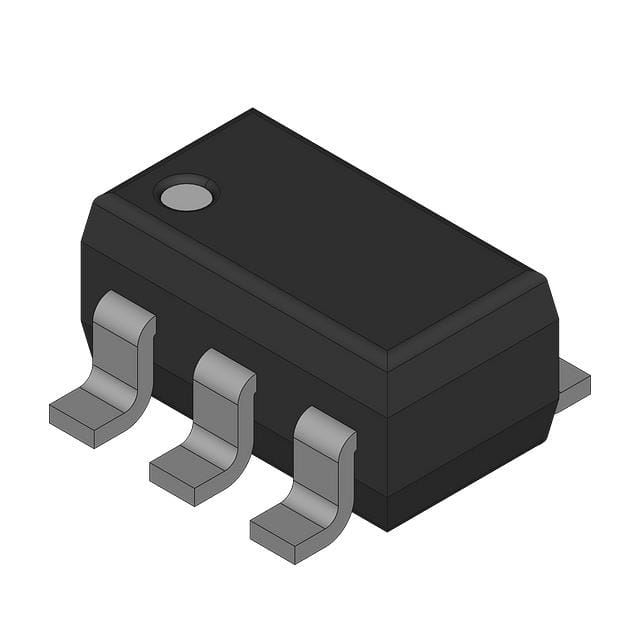
- Part No.:
- MAX1726EUK33-T
- Manufacturer:
- Analog Devices Inc./Maxim Integrated
- Package:
- SC-74A, SOT-753
- Datasheet:
-
 MAX1726EUK33-T.pdf
- Description:
- IC REG LINEAR LDO
- Quantity:
- Payment:

- Shipping:

Inventory:10,000
Please send an inquiry. Send us your inquiry, and we will respond immediately.
Product details
Overview
MAX1726EUK33-T from Maxim Integrated is a fixed-output 3.3V, ultra-low quiescent current (2µA) low-dropout linear regulator in a 5-pin SOT23 package, designed for battery-powered systems requiring long runtime and stable voltage under light loads. It operates from +2.5V to +12V input, delivers up to 20mA output current with ±1.5% accuracy, and features reverse-battery protection, thermal shutdown, and short-circuit foldback-ideal for real-time clock backup and microcontroller power rails.
For engineers reviewing the MAX1726EUK33-T datasheet, MAX1726EUK33-T pinout, MAX1726EUK33-T application, or MAX1726EUK33-T equivalent, key selection criteria include guaranteed 20mA load capability at 3.3V, dropout voltage ≤600mV at full load, 1µF minimum output capacitance requirement, and operation across –40°C to +85°C industrial temperature range.
Technical Context
The MAX1726EUK33-T integrates a p-channel MOSFET pass transistor controlled by a 1.245V internal error amplifier, enabling ultra-low IQ without base-drive losses typical of PNP regulators. Its fixed 3.3V output is internally resistor-divided-no external feedback components required-simplifying layout and reducing BOM count.
Shutdown is active-low via SHDN pin (threshold ≤0.5V), reducing supply current to 0.7µA; reverse-battery protection limits VIN-reverse leakage to <10µA when driven through a 100kΩ resistor. Thermal shutdown activates at +150°C with 15°C hysteresis, and foldback current limiting caps short-circuit current to ~40mA.
Key Specifications
| Parameter | Value and Actual Design Meaning |
|---|---|
| Output Voltage | Fixed 3.3V ±1.5% over –40°C to +85°C - ensures stable logic-level supply for 3.3V microcontrollers and RTCs. |
| Quiescent Current | 2µA typical across full input range and load - extends battery life in always-on smoke detectors and remote transmitters. |
| Input Voltage Range | +2.5V to +12V - supports dual Li+ cells (up to 8.4V) and 9V alkaline batteries without external regulation. |
| Dropout Voltage | ≤600mV at 20mA load - maintains regulation even as battery discharges below 3.9V. |
| Output Capacitor | 1µF ceramic minimum - enables compact, low-cost designs without ESR-sensitive tantalum or electrolytic capacitors. |
| Thermal Shutdown | Activates at +150°C with 15°C hysteresis - prevents permanent damage during sustained overload or poor PCB heatsinking. |
| Reverse-Battery Protection | Limits reverse current to <10µA - protects battery, IC, and load when installed backward in field-replaceable modules. |
Pinout & Package
MAX1726EUK33-T is housed in a RoHS-compliant 5-pin SOT23 package (outline 21-0057, land pattern 90-0174), measuring 2.9mm × 1.6mm × 1.1mm with gull-wing leads. The package supports reflow soldering per JEDEC J-STD-020 (peak 260°C).
| Pin/Terminal | Circuit Role | Design Meaning |
|---|---|---|
| 1 (IN) | Input Supply | Accepts +2.5V to +12V unregulated input; requires 1µF bypass capacitor close to pin. |
| 2 (GND) | Ground Reference | Primary return path for IN, OUT, and internal bias; must connect to low-impedance ground plane. |
| 3 (OUT) | Regulated Output | Delivers fixed 3.3V; connects directly to load and 1µF output capacitor. |
| 4 (GND) | Secondary Ground | Dedicated ground terminal for improved noise immunity and thermal performance-must be tied to main GND. |
| 5 (SHDN) | Active-Low Enable | Pulls low (<0.5V) to disable regulator; floats or ties to IN for always-on operation. |
Key Features
| Feature | Design Value |
|---|---|
| Ultra-low 2µA supply current | Enables >10-year battery life in low-duty-cycle applications like smoke alarms using CR2032 cells. |
| Fixed 3.3V output with 1.5% accuracy | Eliminates external resistors and calibration, reducing design risk for I²C/SPI peripherals and 3.3V logic interfaces. |
| Reverse-battery protection | Prevents destructive reverse current flow without external diodes-critical for user-serviceable battery compartments. |
| Thermal and short-circuit protection | Allows safe operation in sealed enclosures or high-ambient environments without derating calculations. |
| 1µF output capacitor stability | Supports miniature 0402/0603 ceramic capacitors, cutting board area and cost versus legacy LDOs requiring ≥10µF. |
Applications
| Smoke Detectors | Remote Transmitters |
|---|---|
Use Scenario: Standby monitoring with periodic sensor wake-up and RF transmission every 30–60 seconds. IC Role / Device Role / Timing Role: Primary 3.3V supply for MCU, CO sensor interface, and sub-GHz RF transceiver. Use Value: 2µA quiescent current extends CR123A battery life beyond 5 years while maintaining fast turn-on response for alarm events. | Use Scenario: Wireless door/window sensors powered by AA batteries, transmitting status on state change. IC Role / Device Role / Timing Role: Regulated 3.3V rail for ultra-low-power MCU and ASK/OOK RF encoder. Use Value: Fixed 3.3V output eliminates trimming resistors, and 1µF capacitor compatibility reduces bill-of-materials cost by $0.03/unit. |
| Smart Battery Packs | Real-Time Clock Backup Power |
Use Scenario: Secondary power domain for fuel-gauge IC and protection circuitry during main pack discharge. IC Role / Device Role / Timing Role: Low-noise 3.3V supply for SMBus/I²C communication and cell voltage monitoring ADC. Use Value: Reverse-battery protection prevents damage if pack polarity is reversed during hot-swap servicing. | Use Scenario: Maintaining RTC and SRAM state during main system power loss using coin-cell backup. IC Role / Device Role / Timing Role: Precision 3.3V source for RTC oscillator and memory retention circuits. Use Value: ±1.5% output accuracy ensures timekeeping drift remains <2ppm over temperature, meeting ISO 8601 requirements. |
Equivalent & Alternatives
The following parts are listed as comparable options for similar low-quiescent-current LDO applications.
| Alternative Part | Technical Difference | Application Difference | Selection Advice |
|---|---|---|---|
| MCP1700T-3302E/TT | 2.3µA IQ, 3.3V fixed, SOT23-5, but lacks reverse-battery protection and has higher dropout (700mV @20mA). | Suitable for cost-sensitive consumer devices where reverse polarity is mechanically prevented. | Select MCP1700T-3302E/TT only if reverse-battery risk is eliminated by enclosure design. |
| TCS2117-33IDBVR | 1.8µA IQ, 3.3V fixed, SOT23-5, includes enable pin but no thermal shutdown or foldback current limiting. | Better for ultra-low-power IoT nodes with external fault monitoring, not standalone safety-critical systems. | Choose TCS2117-33IDBVR when thermal management is handled at system level and footprint matches. |
Compared with MAX1726EUK33-T, the MCP1700T-3302E/TT trades reverse-battery protection for slightly lower cost, while the TCS2117-33IDBVR offers lower IQ but requires external thermal oversight-neither provides the integrated safety set (reverse-battery + thermal + short-circuit) of the MAX1726EUK33-T.
Availability
MAX1726EUK33-T is available at Aetrix Electronics and suitable for smoke detectors, remote transmitters, and real-time clock backup power systems requiring stable component supply, long-term lifecycle support, and guaranteed industrial temperature operation.
Supply support for MAX1726EUK33-T includes scheduled delivery planning, volume procurement assistance, BOM continuity management, traceable sourcing, and lifecycle availability coordination for OEM customers, industrial embedded developers, connected-device designers, and electronics production programs.
Manufacturer
Maxim Integrated, now part of Analog Devices, designs precision analog, mixed-signal, and power-management ICs for industrial, automotive, and computing applications.
The MAX1725/MAX1726 product line targets ultra-low-power battery-operated systems-specifically engineered to maximize runtime in space-constrained, maintenance-free devices like wireless sensors and portable medical monitors.
FAQ
What is the maximum output current supported by the MAX1726EUK33-T?
The MAX1726EUK33-T guarantees 20mA output current across its full operating temperature range (–40°C to +85°C) and input voltage range (+2.5V to +12V). At 20mA load, dropout voltage remains ≤600mV, ensuring regulation down to VIN = 3.9V. This makes MAX1726EUK33-T suitable for powering low-current peripherals such as RTCs, sensors, and microcontroller I/O banks without external current boosting.
Does the MAX1726EUK33-T require an external feedback resistor network?
No, the MAX1726EUK33-T does not require external feedback resistors. As a factory-preset 3.3V regulator, it uses an internal resistor divider referenced to the 1.245V error amplifier-unlike the adjustable MAX1725 which needs external R1/R2 on the FB pin. This simplifies layout, reduces component count, and improves output accuracy stability over temperature and time for the MAX1726EUK33-T.
How does reverse-battery protection work in the MAX1726EUK33-T?
The MAX1726EUK33-T incorporates internal circuitry that detects reverse polarity at the IN pin and disconnects internal parasitic paths, limiting reverse current to <10µA-even when VIN is forced below ground. For full protection, the SHDN pin must be driven through a 100kΩ resistor. This feature prevents thermal runaway and battery drain in user-replaceable battery compartments, a key reliability advantage of the MAX1726EUK33-T over standard LDOs.
What is the minimum output capacitance required for stable operation of the MAX1726EUK33-T?
The MAX1726EUK33-T is stable with a minimum 1µF ceramic output capacitor-no ESR requirements or damping networks needed. This value is validated across –40°C to +85°C and supports fast load-transient response (±200mV overshoot/undershoot at 1mA→20mA step). Using larger values (e.g., 10µF) further improves ripple rejection but is not required for stability, making the MAX1726EUK33-T ideal for miniaturized designs.
Can the MAX1726EUK33-T operate from a single lithium-ion cell?
No, the MAX1726EUK33-T cannot reliably operate from a single lithium-ion cell. Its minimum input voltage is +2.5V, while a discharged Li+ cell falls to ~2.8V-leaving insufficient headroom for regulation at 3.3V output. It is designed for two Li+ cells (nominal 7.4V, range 6.0V–8.4V) or 9V alkaline batteries. For single-cell applications, consider the MAX1726EUK25+T (2.5V version) or other sub-3V-input LDOs-not the MAX1726EUK33-T.
MAX1726EUK33-T Specifications
- Product attributes
- Attribute value
- Manufacturer:
- Analog Devices Inc./Maxim Integrated
- Series:
- -
- Package/Case:
- SC-74A, SOT-753
- Packaging:
- Bulk
- Product Status:
- Active
- Output Configuration:
- Positive
- Output Type:
- Fixed
- Number of Regulators:
- 1
- Voltage - Input (Max):
- 12V
- Voltage - Output (Min/Fixed):
- 3.3V
- Voltage - Output (Max):
- -
- Voltage Dropout (Max):
- 0.6V @ 20mA
- Current - Output:
- 20mA
- Current - Quiescent (Iq):
- 4.5 µA
- Current - Supply (Max):
- -
- PSRR:
- -
- Control Features:
- Enable
- Protection Features:
- Over Current, Over Temperature, Reverse Polarity, Short Circuit
- Operating Temperature:
- -40°C ~ 85°C (TA)
- Grade:
- -
- Qualification:
- -
- Mounting Type:
- Surface Mount
- Supplier Device Package:
- SOT-23-5
MAX1726EUK33-T FAQ
1.How can I place an order for MAX1726EUK33-T through Aetrix?
Please submit a Request for Quotation (RFQ) for MAX1726EUK33-T on Aetrix. Our sales agent will provide a competitive quotation and guide you through the order confirmation once you accept the terms.
2.Are the price and stock information for MAX1726EUK33-T reliable?
The price and inventory of MAX1726EUK33-T are updated periodically and may fluctuate due to market conditions. Stock and pricing data are typically refreshed every 24 hours. Quotation validity for MAX1726EUK33-T is usually 5 days.
3.What payment methods are accepted for MAX1726EUK33-T?
We accept Wire Transfer, PayPal, Credit Card, Western Union, MoneyGram, and Escrow for MAX1726EUK33-T transactions.
Note: Certain payment methods may incur a processing fee.
4.How is shipping managed for MAX1726EUK33-T?
MAX1726EUK33-T orders can be shipped via leading logistics carriers, including DHL, UPS, FedEx, TNT, or Registered Mail.
Once your MAX1726EUK33-T order is processed, you will receive an email with the shipment details and tracking number.
Note: Tracking information may take up to 24 hours to appear. Express delivery typically takes 3–5 business days.
5.How can I obtain technical support or documentation for MAX1726EUK33-T?
For technical support, including MAX1726EUK33-T datasheets, pinout diagrams, or application guidance, please contact our engineering support team. They can provide detailed documentation and assistance for your MAX1726EUK33-T requirements.
6.How does Aetrix verify that MAX1726EUK33-T is sourced from the original manufacturer or authorized distributors?
All MAX1726EUK33-T products on Aetrix are procured from qualified distributors and authorized channels. Our dedicated quality assurance team conducts strict verification, including traceability checks and, if necessary, third-party testing. This ensures that MAX1726EUK33-T meets industry standards.
7.What is the process for return or replacement of MAX1726EUK33-T?
All MAX1726EUK33-T units undergo pre-shipment inspection (PSI). If there is an issue with MAX1726EUK33-T, returns or replacements are accepted under the following conditions:
1.Quantity discrepancies, incorrect items, or visible external defects (such as breakage or corrosion), acknowledged by Aetrix.
2.The issue is reported within 90 days of delivery.
3.The MAX1726EUK33-T part is unused and in its original packaging.
Return procedure for MAX1726EUK33-T:
1.Submit a request within 90 days.
2.Obtain a Return Material Authorization (RMA) from Aetrix.
MAX1726EUK33-T Tags
-
MIC5504-1.8YM5-TR
Microchip Technology
-
MIC5504-3.3YM5-TR
Microchip Technology
-
MIC5365-3.0YC5-TR
Microchip Technology
-
MIC5365-1.8YC5-TR
Microchip Technology
-
MIC5365-2.5YC5-TR
Microchip Technology
-
MIC5365-3.3YC5-TR
Microchip Technology
-
MIC5365-3.3YD5-TR
Microchip Technology
-
MIC5317-3.3YM5-TR
Microchip Technology
-
TLV1117LV33DCYR
Texas Instruments
-
MIC5317-3.3YMT-TZ
Microchip Technology
-
MIC5528-3.3YMT-TR
Microchip Technology
-
TLV75801PDRVR
Texas Instruments
Tech Hub

A practical engineering and sourcing framework covering lifecycle verification, lifetime-buy calculations, replacement qualification, supplier checks and counterfeit-risk controls.

TTL and CMOS logic families differ in thresholds, loading, output drive, power and timing. This engineering guide compares 74HC and 74HCT, calculates noise margins and checks 3.3 V/5 V compatibility.

A practical engineering guide to 3.3V and 5V logic compatibility, input thresholds, resistor dividers, translator ICs, MOSFET level shifting, I2C pull-ups, timing limits and power-sequencing risks.

The 74HC595 uses push-pull logic outputs, while the TPIC6B595 uses 50 V open-drain DMOS sinks for higher-power loads. This guide compares timing, current limits, 3.3 V interfacing, load wiring, thermal…

The 74HC595 converts serial data into eight stable parallel outputs. This guide covers pin functions, shift and storage timing, OE and MR behavior, drive-current limits, cascading, voltage compatibilit…

A technical comparison of level-sensitive latches and edge-triggered flip-flops, covering timing windows, setup and hold limits, master–slave operation, time borrowing, race-through, HDL inference and…

A D latch stores one bit while Enable controls when data can pass. This reference covers gate-level operation, truth tables, transparency, setup and hold timing, LE versus OE, common ICs and practical …

An SR latch stores one bit through cross-coupled feedback. This engineering reference covers NOR and NAND implementations, truth tables, forbidden-state recovery, gated operation, switch debouncing, fa…

Latch circuits retain one bit through feedback. This technical reference covers SR and D latches, truth tables, transparency, timing limits, latch-versus-flip-flop behavior, applications and common log…

An engineering guide to LED driver operation, constant-current and constant-voltage outputs, linear and switching topologies, dimming, IC selection, calculations, replacement compatibility, and fault c…


