
 My Inquiry
 My Account


Analog Devices Inc./Maxim Integrated MAX1963EZT150+T
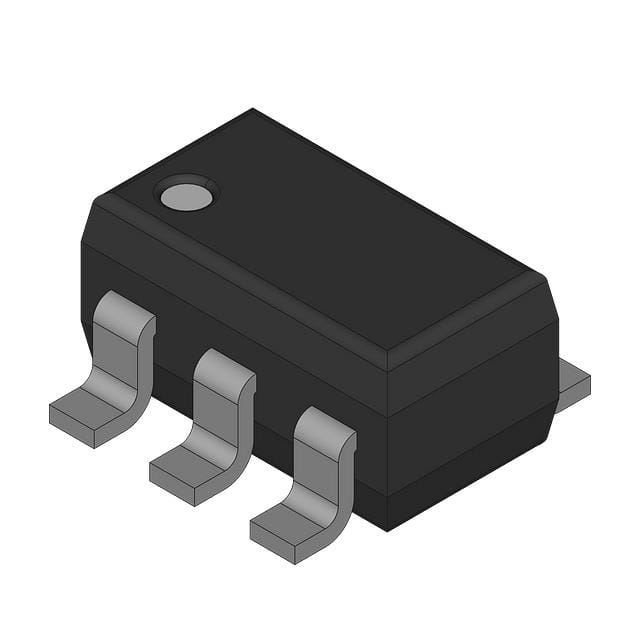
- Part No.:
- MAX1963EZT150+T
- Manufacturer:
- Analog Devices Inc./Maxim Integrated
- Package:
- SOT-23-6 Thin, TSOT-23-6
- Datasheet:
-
 MAX1963EZT150+T.pdf
- Description:
- IC REG LINEAR 300MA LDO REG
- Quantity:
- Payment:

- Shipping:

Inventory:15,000
Please send an inquiry. Send us your inquiry, and we will respond immediately.
Product details
Overview
The MAX1963EZT150+T from Maxim Integrated is a low-dropout linear regulator delivering 300mA continuous output current with ±0.5% output voltage accuracy at 1.5V, 100mV dropout at full load, and active-low open-drain RESET assertion for ≥2.2ms after regulation-designed for power management in space-constrained portable electronics such as notebook computers and cellular handsets.
For engineers reviewing the MAX1963EZT150+T datasheet, MAX1963EZT150+T pinout, MAX1963EZT150+T application, or MAX1963EZT150+T equivalent, this page provides verified technical context, package-specific pin mapping, real-world application constraints, and validated alternative options for LDO selection in battery-powered systems operating down to +1.62V input.
Technical Context
The MAX1963EZT150+T uses an internal P-channel MOSFET pass transistor (RDS(ON) = 0.33Ω) enabling supply current independence from load and dropout voltage-critical for stable operation across battery discharge curves. Its error amplifier compares a trimmed bandgap reference against feedback from a fixed internal divider to maintain 1.5V output.
RESET functionality is implemented via a dedicated comparator monitoring VOUT, asserting low when output falls below 82.5% of nominal (1.2375V), with hysteresis and guaranteed 2.2ms delay after regulation-supporting reliable microprocessor power-up sequencing without external components.
Key Specifications
| Parameter | Value and Actual Design Meaning |
|---|---|
| Output Voltage | Fixed 1.5V ±0.5% over load/line/temp-enables direct powering of core logic rails without external resistors. |
| Max Output Current | 300mA continuous-supports moderate-power digital ICs like baseband processors or memory interfaces. |
| Dropout Voltage | 100mV at 300mA-allows operation down to 1.6V input, extending usable life of single-cell Li-ion batteries. |
| Input Voltage Range | +1.62V to +3.6V-compatible with partially discharged Li-ion, Li-polymer, and regulated 1.8V/2.5V/3.3V system rails. |
| Ground Current | 90µA typical at 300mA-minimizes quiescent loss during active operation, preserving battery runtime. |
| RESET Delay | 2.2ms minimum after VOUT reaches regulation-meets standard µP reset timing requirements for clean boot sequences. |
| PSRR | 70dB @ <1kHz-suppresses ripple from noisy switching supplies feeding the LDO input. |
Pinout & Package
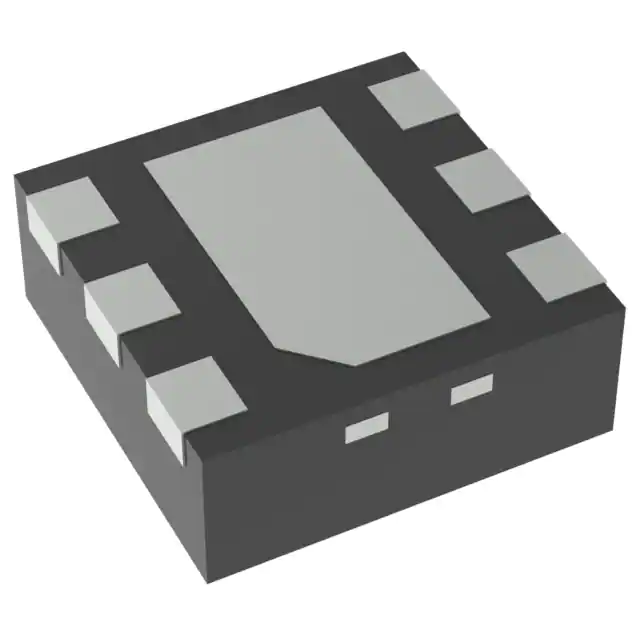
MAX1963EZT150+T is packaged in a 6-pin thin SOT23-6 (Z6-1 package code), height <1.1mm, footprint 2.9mm × 1.6mm-optimized for high-density portable PCB layouts.
| Pin/Terminal | Circuit Role | Design Meaning |
|---|---|---|
| 1 (IN) | Regulator Input | Accepts 1.62V–3.6V supply; requires ≥1µF ceramic bypass to GND for stability. |
| 2 (GND) | Ground Reference & Thermal Path | Primary ground return and heatsink; must connect to large copper pour for thermal dissipation. |
| 3 (SHDN) | Active-Low Shutdown Control | Logic-low (<0.6V) disables regulator, reducing IQ to <1µA; pulled high internally if left open. |
| 4 (RESET) | Open-Drain Reset Flag | Asserts low during power-up/brownout; rises 2.2ms after VOUT stabilizes at 1.5V; requires external pull-up. |
| 5 (I.C.) | Internally Connected | No external connection required; leave floating or tie to GND per layout best practice. |
| 6 (OUT) | Regulated Output | Delivers 1.5V/300mA; requires 4.7µF low-ESR ceramic capacitor to GND for transient response and stability. |
Key Features
| Feature | Design Value |
|---|---|
| Low-input-voltage operation | Starts regulation at 1.62V input-enables use with deeply discharged single-cell batteries. |
| P-channel MOSFET pass element | RDS(ON) = 0.33Ω eliminates base-drive current, maintaining 90µA IQ even at 300mA load and in dropout. |
| Integrated RESET with precision threshold | 82.5% VOUT detection (±2.5%) ensures deterministic reset timing without external comparators. |
| Thermal-overload protection | Shuts down at +165°C junction temperature with 15°C hysteresis-prevents damage during sustained overload or poor heatsinking. |
| Short-circuit protection | Limits output current to ≥450mA min-protects both regulator and downstream circuitry during fault conditions. |
Applications
| Notebook Computers | Cellular Telephones |
|---|---|
Use Scenario: Powering 1.5V DDR memory I/O or GPU core rail in ultraportable notebooks with tight board area and thermal constraints. IC Role / Device Role / Timing Role: Primary low-noise, low-dropout voltage source with integrated power-good signaling for system-level reset coordination. Use Value: Enables extended battery runtime via 1.62V start-up and maintains stable 1.5V under dynamic load transients up to 200mA step change. | Use Scenario: Supplying 1.5V analog front-end (AFE) or RF transceiver bias in GSM/UMTS handsets where input voltage varies from 3.4V (fresh) to 2.8V (discharged). IC Role / Device Role / Timing Role: Regulator with built-in RESET flag to synchronize modem boot sequence with stable 1.5V rail establishment. Use Value: 2.2ms RESET delay guarantees µP initialization only after VOUT settles within ±0.5%, preventing firmware lockup. |
| Personal Digital Assistants (PDAs) | Digital Cameras |
Use Scenario: Delivering 1.5V to ARM9 application processor core in legacy PDAs using Li-ion battery packs with minimal PCB real estate. IC Role / Device Role / Timing Role: High-accuracy LDO with shutdown control for dynamic power gating of non-critical subsystems during sleep mode. Use Value: 1µA shutdown current extends standby time; 100mV dropout preserves usable battery capacity down to 1.6V. | Use Scenario: Providing 1.5V to image sensor interface logic and ISP core in compact digital cameras with burst-mode current demands. IC Role / Device Role / Timing Role: Low-noise regulator with 70dB PSRR suppressing switching noise from adjacent DC-DC converters. Use Value: 86µVRMS output noise prevents corruption of analog pixel data during high-gain image capture. |
Equivalent & Alternatives
The following parts are listed as comparable options for similar LDO regulator applications.
| Alternative Part | Technical Difference | Application Difference | Selection Advice |
|---|---|---|---|
| TPS73115DBVR | 1.5V fixed, 300mA, 150mV dropout at 300mA, no RESET output | Lacks integrated RESET-requires external supervisor IC for power-on sequencing | Choose when RESET is handled separately and lower cost is prioritized over integration. |
| MCP1826-1502E/DB | 1.5V fixed, 300mA, 250mV dropout at 300mA, active-high RESET | RESET polarity mismatch and higher dropout reduce battery efficiency and complicate timing alignment | Use only if board redesign accommodates active-high logic and accepts ~150mV higher dropout penalty. |
Compared with TPS73115DBVR and MCP1826-1502E/DB, the MAX1963EZT150+T uniquely combines 100mV dropout, ±0.5% accuracy, and guaranteed 2.2ms active-low RESET in a 2.9mm × 1.6mm SOT23 package-making it optimal for space- and battery-life-constrained designs requiring self-contained power sequencing.
Availability
MAX1963EZT150+T is available at Aetrix Electronics and suitable for notebook computers, cellular telephones, and personal digital assistants requiring stable component supply with RoHS-compliant, lead-free packaging and tape-and-reel delivery.
Supply support for MAX1963EZT150+T includes scheduled delivery planning, volume procurement assistance, BOM continuity management, traceable sourcing, and lifecycle availability coordination for OEM customers, industrial embedded developers, connected-device designers, and electronics production programs.
Manufacturer
Maxim Integrated (now part of Analog Devices) is a semiconductor company specializing in high-performance analog, mixed-signal, and power management ICs for industrial, communications, and consumer applications.
The MAX1963 series belongs to Maxim's ultra-low-input-voltage LDO family, engineered specifically for battery-powered portable devices needing high accuracy, low dropout, and integrated power supervision in minimal footprint packages.
FAQ
What is the output voltage tolerance of the MAX1963EZT150+T over temperature and load?
The MAX1963EZT150+T guarantees ±0.5% output voltage accuracy across -40°C to +85°C, 1mA to 300mA load, and input voltage from (VOUT + 0.5V) to +3.6V. This specification is production-tested at +25°C and ensured by design over the full operating range-critical for powering voltage-sensitive logic cores without margin loss.
Does the MAX1963EZT150+T require external capacitors, and what values are recommended?
Yes, the MAX1963EZT150+T requires a 1µF ceramic capacitor between IN and GND, and a 4.7µF low-ESR ceramic capacitor between OUT and GND. These values ensure stability across temperature and load, suppress noise, and optimize transient response-using ESR ≤30mΩ on the output capacitor is mandatory for guaranteed stability per the datasheet.
How does the RESET function behave during input undervoltage or shutdown?
During input undervoltage (VIN < 1.3V), the MAX1963EZT150+T asserts RESET low. When SHDN is pulled low, RESET is actively driven low immediately. RESET remains asserted until VOUT rises above 82.5% of 1.5V (1.2375V) and stays high for ≥2.2ms-ensuring robust power-on reset for microprocessors regardless of input ramp rate.
What is the thermal performance limitation of the MAX1963EZT150+T in the SOT23 package?
In the 6-pin thin SOT23 package, the MAX1963EZT150+T has a maximum power dissipation of 727mW at +70°C ambient, derating 9.1mW/°C above that. At +85°C ambient, max continuous output current drops to ~220mA when VIN = 3.6V and VOUT = 1.5V-designers must verify thermal margins using actual board copper area and airflow conditions.
Is the MAX1963EZT150+T pin-compatible with other members of the MAX1963/MAX1976 family?
Yes, all MAX1963 and MAX1976 variants in the same package (e.g., SOT23-6) share identical pinouts and footprints-including MAX1963EZT150+T, MAX1963EZT180+T, and MAX1976EZT150+T. However, RESET delay differs (2.2ms vs. 70ms), so functional substitution requires verification of system timing requirements.
MAX1963EZT150+T Specifications
- Product attributes
- Attribute value
- Manufacturer:
- Analog Devices Inc./Maxim Integrated
- Series:
- -
- Package/Case:
- SOT-23-6 Thin, TSOT-23-6
- Packaging:
- Bulk
- Product Status:
- Active
- Output Configuration:
- Positive
- Output Type:
- Fixed
- Number of Regulators:
- 1
- Voltage - Input (Max):
- 3.6V
- Voltage - Output (Min/Fixed):
- 1.5V
- Voltage - Output (Max):
- -
- Voltage Dropout (Max):
- 0.2V @ 300mA
- Current - Output:
- 300mA
- Current - Quiescent (Iq):
- 140 µA
- Current - Supply (Max):
- 90 µA
- PSRR:
- 70dB (1kHz)
- Control Features:
- Enable, Reset
- Protection Features:
- Over Current, Over Temperature, Short Circuit
- Operating Temperature:
- -40°C ~ 85°C
- Grade:
- -
- Qualification:
- -
- Mounting Type:
- Surface Mount
- Supplier Device Package:
- TSOT-23-6
MAX1963EZT150+T FAQ
1.How can I place an order for MAX1963EZT150+T through Aetrix?
Please submit a Request for Quotation (RFQ) for MAX1963EZT150+T on Aetrix. Our sales agent will provide a competitive quotation and guide you through the order confirmation once you accept the terms.
2.Are the price and stock information for MAX1963EZT150+T reliable?
The price and inventory of MAX1963EZT150+T are updated periodically and may fluctuate due to market conditions. Stock and pricing data are typically refreshed every 24 hours. Quotation validity for MAX1963EZT150+T is usually 5 days.
3.What payment methods are accepted for MAX1963EZT150+T?
We accept Wire Transfer, PayPal, Credit Card, Western Union, MoneyGram, and Escrow for MAX1963EZT150+T transactions.
Note: Certain payment methods may incur a processing fee.
4.How is shipping managed for MAX1963EZT150+T?
MAX1963EZT150+T orders can be shipped via leading logistics carriers, including DHL, UPS, FedEx, TNT, or Registered Mail.
Once your MAX1963EZT150+T order is processed, you will receive an email with the shipment details and tracking number.
Note: Tracking information may take up to 24 hours to appear. Express delivery typically takes 3–5 business days.
5.How can I obtain technical support or documentation for MAX1963EZT150+T?
For technical support, including MAX1963EZT150+T datasheets, pinout diagrams, or application guidance, please contact our engineering support team. They can provide detailed documentation and assistance for your MAX1963EZT150+T requirements.
6.How does Aetrix verify that MAX1963EZT150+T is sourced from the original manufacturer or authorized distributors?
All MAX1963EZT150+T products on Aetrix are procured from qualified distributors and authorized channels. Our dedicated quality assurance team conducts strict verification, including traceability checks and, if necessary, third-party testing. This ensures that MAX1963EZT150+T meets industry standards.
7.What is the process for return or replacement of MAX1963EZT150+T?
All MAX1963EZT150+T units undergo pre-shipment inspection (PSI). If there is an issue with MAX1963EZT150+T, returns or replacements are accepted under the following conditions:
1.Quantity discrepancies, incorrect items, or visible external defects (such as breakage or corrosion), acknowledged by Aetrix.
2.The issue is reported within 90 days of delivery.
3.The MAX1963EZT150+T part is unused and in its original packaging.
Return procedure for MAX1963EZT150+T:
1.Submit a request within 90 days.
2.Obtain a Return Material Authorization (RMA) from Aetrix.
MAX1963EZT150+T Tags
-
MIC5504-1.8YM5-TR
Microchip Technology
-
MIC5504-3.3YM5-TR
Microchip Technology
-
MIC5365-3.0YC5-TR
Microchip Technology
-
MIC5365-1.8YC5-TR
Microchip Technology
-
MIC5365-2.5YC5-TR
Microchip Technology
-
MIC5365-3.3YC5-TR
Microchip Technology
-
MIC5365-3.3YD5-TR
Microchip Technology
-
MIC5317-3.3YM5-TR
Microchip Technology
-
TLV1117LV33DCYR
Texas Instruments
-
MIC5317-3.3YMT-TZ
Microchip Technology
-
MIC5528-3.3YMT-TR
Microchip Technology
-
TLV75801PDRVR
Texas Instruments
Tech Hub
Schmitt triggers use separate rising and falling thresholds to stabilize slow or noisy signals. This guide covers hysteresis, 74HC14 and 74HCT14 selection, comparator calculations, RC oscillators and p…
Counterfeit components can hide behind convincing markings and passing basic function tests. This engineering reference covers source traceability, external inspection, X-ray, XRF, electrical testing, …

A practical engineering and sourcing framework covering lifecycle verification, lifetime-buy calculations, replacement qualification, supplier checks and counterfeit-risk controls.

TTL and CMOS logic families differ in thresholds, loading, output drive, power and timing. This engineering guide compares 74HC and 74HCT, calculates noise margins and checks 3.3 V/5 V compatibility.

A practical engineering guide to 3.3V and 5V logic compatibility, input thresholds, resistor dividers, translator ICs, MOSFET level shifting, I2C pull-ups, timing limits and power-sequencing risks.

The 74HC595 uses push-pull logic outputs, while the TPIC6B595 uses 50 V open-drain DMOS sinks for higher-power loads. This guide compares timing, current limits, 3.3 V interfacing, load wiring, thermal…

The 74HC595 converts serial data into eight stable parallel outputs. This guide covers pin functions, shift and storage timing, OE and MR behavior, drive-current limits, cascading, voltage compatibilit…

A technical comparison of level-sensitive latches and edge-triggered flip-flops, covering timing windows, setup and hold limits, master–slave operation, time borrowing, race-through, HDL inference and…

A D latch stores one bit while Enable controls when data can pass. This reference covers gate-level operation, truth tables, transparency, setup and hold timing, LE versus OE, common ICs and practical …

An SR latch stores one bit through cross-coupled feedback. This engineering reference covers NOR and NAND implementations, truth tables, forbidden-state recovery, gated operation, switch debouncing, fa…


